James Forsyth

James Forsyth

James Forsyth is former political editor of The Spectator.

The Tories give Rayner an open goal

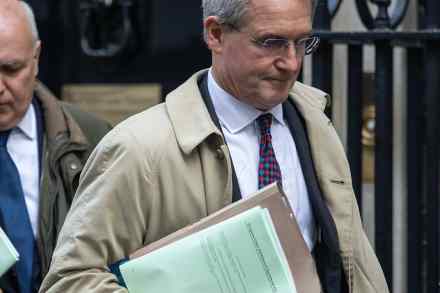
It sums up Keir Starmer’s political luck, or lack thereof, that he was at home with Covid today rather than at PMQs. The Owen Paterson row is an open goal for an opposition leader. The government has decided to whip Tory MPs to vote for an attempt to change the standards ruling. Starmer wasn't there to exploit it, so Angela Rayner got to take the shot. She hammered the Tories on the 'one rule for them, another rule for everyone else' theme. There have clearly been flaws in the way that the standards commissioner conducts her inquiries. But seeking to change the rules right now looks dreadful.

Will MPs save Owen Paterson?

13 min listen

With the fishing war between the UK and France not necessarily over but at least at a ceasefire, today's Shots focuses on the Commons. Conservative MP Owen Paterson was found to have committed an 'egregious' breach of lobbying rules, but some in his party, including Jacob Rees-Mogg, have raised concerns about the investigation. On the podcast, Isabel Hardman says: 'I think a lot of MPs on both sides of this, regardless of their views of Owen Paterson's activities, allegedly on behalf of these companies, feel very uncomfortable about the whole thing.' Also, Rob Roberts, who was suspended for repeated and unwanted sexual advances against a member of staff, is back in the Commons. But how is his return being taken by the Tory MPs he still shares the benches with?

How can we define COP26 success?

13 min listen

COP26 is officially underway with world leaders meeting this morning. But what can these presidents and prime ministers promise given their domestic political challenges and the seeming disinterest of other nations like China? Katy Balls is joined by Fraser Nelson and James Forsyth to discuss the opening of COP26 and the continuing rise in Anglo-French tensions.

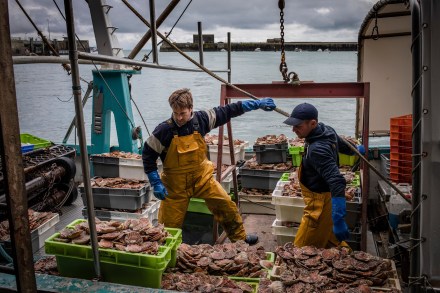
Britain’s fish fight with France risks triggering a new low in EU relations

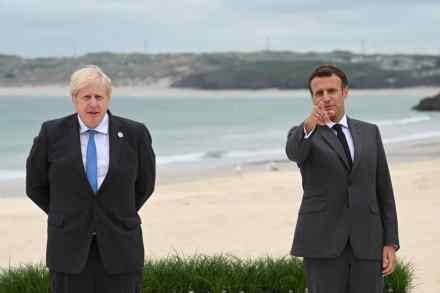
Another day, another troubling development in UK/ EU relations. Earlier this week, a British trawler was seized by France and another fined. Now, France's prime minister has written to the EU asking for its backing for further measures against the UK because of the refusal of various fishing licenses. The letter asks for support because, Jean Castex says, it must be demonstrated that ‘leaving the Union is more damaging than remaining in it.’  It isn't only fishing which is causing tensions The UK, for its part, has summoned the French ambassador over the issue. Britain has made it clear it will carry out ‘rigorous enforcement processes’ on EU vessels fishing in UK waters if the French carry through on their threats.

Will the Tories cut taxes before the next election?

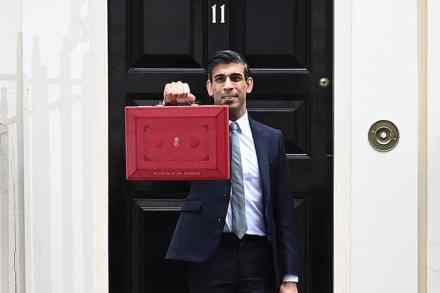
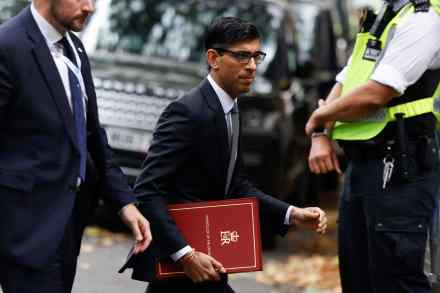
The Tory party has reached a fork in the road, I say in the Times today. One path involves sticking to the spending plans, hoping to cut taxes before the next election and getting rid of the new perception of them as tax raisers. The other drags them into ever more spending, led by big increases in public sector pay, and ends with them going to the country as a high-tax party. In his Budget speech and his address to Tory MPs, Rishi Sunak made clear that his preference was for the former approach, which should cut taxes before the country goes to the polls again. But sticking to even the spending limits set out this week will require tough choices that the Tories have not wanted to make in recent years.

Should the NHS be prescribing e-cigarettes?

11 min listen

The new year is fast approaching and if your resolution is to quit smoking, the taxpayer will now cover the cost for your new vape. Opinions differ on the podcast as to whether this is a good idea. Cindy Yu talks with Isabel Hardman and James Forsyth about this new scheme as well as looking at Labour's reaction to the Budget and our growing tensions with France.

How was the Budget received?

11 min listen

The Budget was revealed yesterday, but what do Rishi Sunak's conservative colleagues make of it? To discuss this, another row with the French about fish, and the end of the Covid travel red list, Isabel Hardman is joined by James Forsyth and Katy Balls.

What this Budget tells us

The Budget and the spending review gave the clearest indication yet of what the post-Covid government might look like. During the height of the pandemic, government spending exceeded 50 per cent of the economy for the first time since 1945-46. Even this year, public spending will be higher than when Denis Healey had to seek a bailout from the International Monetary Fund in 1976. Such spending has long-lasting consequences. The tax burden is now at its highest level in terms of GDP since the 1950s and is likely to stay high for some time. It will take quite an effort to return the government to its pre-pandemic size. The risk is that the UK’s ageing population will make this task particularly difficult.

Verdict: Rishi Sunak’s Budget

21 min listen

Rishi Sunak's Budget, as much as it was trailed ahead of time, still had a couple of surprises - including a return of the 0.7 per cent aid budget and a cut to the universal credit taper rate. Katy Balls talks to James Forsyth and Kate Andrews about the high and lowlights from today's Budget.

The significance of the Universal Credit taper rate cut

Boris Johnson and Rishi Sunak have always been keen to stress that they are low-tax Conservatives — declarations that have previously sounded a bit like St Augustine’s prayer for the Lord to make him virtuous, but not yet. But the Budget announcement that the Universal Credit taper rate will be cut from 63 to 55 pence is a significant tax cut and one aimed at those most in need of it. When the Tories were in opposition, David Cameron railed against the 96 per cent marginal tax rate facing people moving from welfare into work. Universal Credit, introduced by the coalition government, was meant to solve this problem. It did reduce that rate, but the working poor still faced a far higher marginal tax rate than those paying the top rate of tax.

Why is the Speaker so cross?

14 min listen

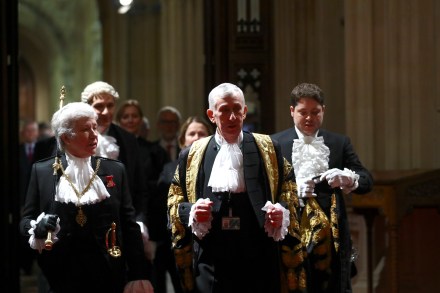
Budget week rolls on. But today in the house the Speaker Sir Lindsay Hoyle voiced his displeasure at how much had been told to the press before tomorrow's unveiling in the Commons. Katy Balls talks to James Forsyth and Isabel Hardman about this tension, the budget, and the sewage situation.

What can we expect from Budget Week?

13 min listen

It's Budget Week and Rishi Sunak has already telegraphed a lot of what we can expect from it, branding it as a good news affair including NHS spending and minimum wage reform...but who stands to feel the pinch? Katy Balls sits down with James Forsyth and Kate Andrews to discuss the Budget as well as the rising Covid numbers and the chances of the implementation of the government's Plan B.

No. 10 moves to kickstart the booster campaign

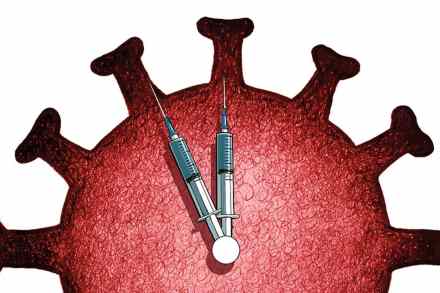
In a move that as important as any in the recent Cabinet reshuffle, Emily Lawson is returning to run the Covid vaccination programme. Lawson headed up NHS England's vaccination team during the rollout, and after its success, she was moved to take charge of the new Number 10 delivery unit. The hope was that she would bring the rollout mindset to public services more broadly. The delivery unit, modelled on its Blair era predecessor, is meant to ensure that the government actually does what it says it is going to do. Such is its importance that Lawson addressed the first meeting of the newly reshuffled Cabinet. The fact that she is now going back to the rollout shows how worried ministers are about the booster programme.

What will Sunak reveal in next week’s Budget?

11 min listen

The Chancellor is making final preparations to his Budget, announced next Wednesday. On the podcast, Cindy Yu talks to James Forsyth and Katy Balls about the major themes coming up, and whether this is the moment when Rishi Sunak sees a turn in his popularity.

Who’s to blame for the booster delay?

14 min listen

Compared to our extremely strong vaccine rollout, the booster numbers are not doing so well. But what is causing the slow take-up? Cindy Yu is joined by James Forsyth and Katy Balls to discuss this as well as the ever-rising covid figures, partisan mask wars, and a potential new trade deal with New Zealand.

Rethinking MPs’ safety is not a victory for terrorism

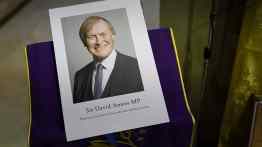
Whenever a killing is investigated as an act of terror, there is always a tendency to think that any changes made are a victory for terrorism. While a few MPs have called for changes to how constituency surgeries are held, many more want them to carry on as they were.  But as I say in the magazine this week, given the circumstances, the rethink of MPs' safety should be a practical exercise, not a philosophical one. In response to IRA bombing campaigns, Margaret Thatcher put a gate across Downing Street. Without it, an IRA mortar would have killed the war cabinet in 1991. That was not a ‘victory’ for the terrorists but a wise security measure. The same applies to the protective cars for US presidents: open-top vehicles were ditched after John F.

Banning anonymity creates more problems than it solves

There are growing calls to end internet anonymity in the wake of Sir David Amess’s death. The Tory MP Mark Francois argued in the Commons this week for a ‘David’s law’ to do this, to try and bring back civility into politics. Today, Matt Hancock and the Labour MP Rupa Huq have stated that the Online Harms Bill should tackle ‘anonymous abuse’. But outlawing internet anonymity would be a mistake. Two members of parliament have been killed in the past five years. This, one long-serving MP laments, is the kind of statistic you would expect in a failing state, as I write in the magazine this week.

The problem with ‘David’s law’

Two members of parliament have been killed in the past five and a half years. This, one long-serving MP laments, is the kind of statistic you would expect in a failing state. One of the shocking things about Sir David Amess’s murder is that many MPs weren’t surprised by it. Parliamentarians are acutely aware that when they are away from the Palace of Westminster, with its armed guards and security scanners, they are a soft target. Their job requires them to mix with the public and that involves a certain level of risk. One senior Tory MP points to how during the Troubles in Northern Ireland, MPs who were thought to be in particular danger were offered a firearm for personal protection, and argues that an offer like this should be extended to all MPs today.