James Forsyth

James Forsyth

James Forsyth is former political editor of The Spectator.

What’s the point of the latest sanctions?

11 min listen

While the world is hearing mummers that Vladimir Putin is considering using chemical weapons in Ukraine, the UK government has imposed sanctions on hundreds of Russian Parliamentarians. But will this latest move make the Kremlin pause or is it a largely symbolic gesture? Katy Balls talks with Fraser Nelson and James Forsyth.
What is the significance of the sanctioning of Roman Abramovich?

13 min listen

After seemingly dragging its heels for weeks, the government is ramping up its individual sanction measures against those close to the Kremlin. When Roman Abramovich bought Chelsea football club it was seen as a symbol of closer Russian and British ties, we will now see what signal him losing it creates. Kate Andrews hosts Fraser Nelson and James Forsyth to talk through sanctions, peace talks and Eurovision.

Rising energy bills are a price worth paying to stop Putin

Nato countries are being careful not to do anything that Russia could claim is an act of war. Just look at the reluctance from the US to provide Ukraine with Polish fighter jets. Yet Britain and other Nato members are involved in a huge effort to break Vladimir Putin’s war machine through supplying Ukraine with weapons and imposing financial pressure on Moscow. Russia, a G20 country, has been severed from the world economy. It has now surpassed Iran as the most sanctioned country on Earth and it is beginning to occupy a similar economic position. The speed with which Russia has been hit by these economic measures has been a display of the West’s financial power. Yet western politicians now have to rally their publics to accept the cost of the sanctions.

What’s behind the Tory revolt on refugee relief?

14 min listen

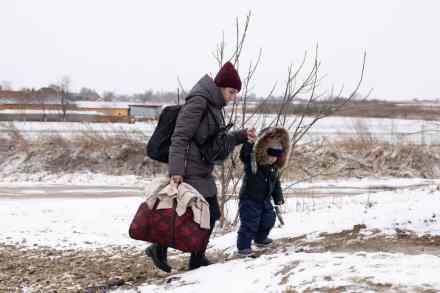
While Europe opens its arms up to the Ukrainians fleeing war, the UK is taking a much slower approach. While people are allowed to come in relatively quickly if they have family here, that definition of family is extremely limited. Our response is causing confusion with the public but seemingly also within the Conservative party.Katy Balls and James Forsyth are joined by Kate Andrews from Calais who has been spending the last two days talking to refugees on the ground looking to seek refuge in Britain.

Can Nato help Ukraine without provoking Putin?

Nato is trying to walk a tightrope in Ukraine. It wants the Russian invasion to be defeated, as the US joint chiefs of staff declaration that 'We will make a second Afghanistan for Russia' in Ukraine makes clear. But it also doesn’t want to do things that would enable Moscow to escalate the conflict on the basis that Nato has entered the war. This dilemma is behind the problem with the Polish MIGs This dilemma is behind the problem with the Polish MIGs. Fighter jets are both offensive and defensive weapons and if they are flown into Ukraine from Nato airspace, things get very tricky. This is why Washington has rejected the Polish scheme to hand them over to the US and then have the Americans get them into Ukraine.

Will Zelensky’s intervention change the mood among MPs?

13 min listen

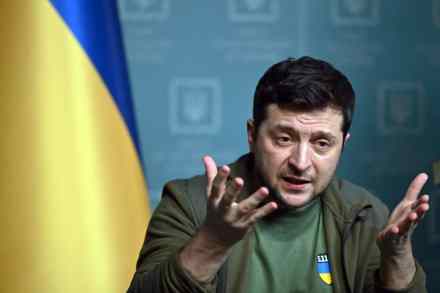
Former Speaker of the House, John Bercow has been banned from the Commons after the publishing of a review that reveals the extent of his bullying behaviour towards members of his staff. How will Labour react to this after welcoming him in with open arms? Also, Ukrainian president Volodymyr Zelensky will today address a number of UK MPs and is expected to ask for more aid on all fronts: sanctions, humanitarian and military. But just how much more can the UK offer without causing an escalation in Putin's brutality?And finally, one look at the Spectator's Data Hub will show a shocking rise in the price of gas in the UK in reaction to the war in Ukraine, but has Boris Johnson prepared the public enough for this shocking rise in cost?Sam Holmes talks with James Forsyth and Katy Balls.

Ukraine: how bad will UK energy prices get?

15 min listen

As the Russian invasion enters its twelfth day, fuel prices hit new records in the UK. Global leaders are preparing for the worst, is the UK braced for this too?Also on the podcast, what's behind Boris Johnson's six-point plan?'I would far rather Boris Johnson wasn't turning away Ukrainian refugees at the border in Calais than coming up with the six-point plan and expecting world leaders to follow' - Fraser Nelson.All to be discussed as Kay Balls speaks to Fraser Nelson and James Forsyth. For more information on Ukraine, The Spectator has the latest data on our Datahub.

Will Europe remain united against Putin?

18 min listen

Kate Andrews talks to James Forsyth and the historian Orlando Figes about whether Europe's united response to the Russian invasion of Ukraine will hold, and the effect of sanctions on Russia's economy and its oligarchs.

Britain should spend more on defence

Britain must spend more on defence. As I say in the Times today the defence budget is already being increased but it is hard to argue that it is sufficient given how changed the security landscape now looks with Putin’s Russia launching an all-out invasion of a sovereign, European state. Until this week, the UK could argue that it would only increase defence spending still further when other European members of Nato had pulled their weight and were hitting the 2 per cent of GDP target. But now Olaf Scholz has announced that Germany will be spending 2 per cent – or more – by 2024, which poses another dilemma for London: does it want to remain the second biggest defence spender in Nato after the US?

Why is the UK so slow in sanctioning oligarchs?

10 min listen

Though Britain has been sending weapons to Ukraine, and led Europe's push to get Russia taken out of the Swift banking system, the government has been criticised for being slow in sanctioning Russian oligarchs. What more should we be doing?Max Jeffery talks to James Forsyth and Katy Balls.

Putin’s rage

38 min listen

In this week’s episode: What’s the mood on the ground in Ukraine and Russia?For this week’s cover piece, Owen Matthews asks whether the invasion of Ukraine will mean the end of Putin’s regime. And in this week’s Spectator diary, Freddy Gray reports on pride and paranoia on the streets of Lviv. They join the podcast, to talk about Russia’s future and Ukraine’s present. (00:49)Also this week: Is Germany ready to tackle its dependence on Russian gas?In response to Russia’s invasion, Germany has abandoned its Nord Stream 2 pipeline, sent lethal weapons to Ukraine and, most strikingly of all, has committed to the Nato target of spending 2 per cent of GDP on defence - a €100 billion fund.

The free world’s new reality

We are about to see brutality in Europe on a scale that will be almost beyond our comprehension. Russia is turning to increasingly indiscriminate bombardment of Ukraine to try to achieve its aims after the failure of its initial military strategy. Vladimir Putin’s invasion has shattered the old belief that the era of wars between European nation states was over because the consequences were simply too grim. The policy of sanctions as a deterrent failed. The assumptions that have driven European geopolitics for a generation are changing before our eyes. Nowhere is this shift more dramatic than in Germany. After reunification, the country’s defence spending plummeted and for decades subsequent governments rejected requests from allies to spend more on military.

What cards does the West have left to play?

11 min listen

PMQs began with a rather unorthodox but touching round of applause to welcome the Ukrainian ambassador to the chamber. While the Commons was united in its support of Ukraine and condemnation of Putin's actions, Labour leader Keir Starmer confronted Boris Johnson about certain Russian individuals who have been sanctioned by our allies but not by the UK. But why is Boris Johnson holding back? Though many talk about the close relationship between the Tories and Russian money, the bitter truth of the matter may be that we are running out of non-military options for opposing Putin.Katy Balls breaks down the session with James Forsyth and Isabel Hardman from the roof of Parliament.

Why is a no-fly zone a no go?

10 min listen

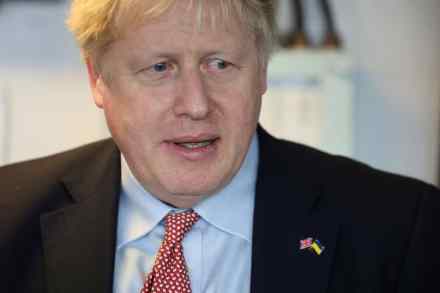
During a press conference in Poland today, Prime Minister Boris Johnson was confronted by Ukrainian journalist and campaigner Daria Kaleniuk, who took issue with the excuse for not imposing a no-fly zone because it may start World War Three, saying it had already begun. While it is completely understandable that on the streets of Ukrainian cities that is how it must feel, the UK and the West are committed to not involving themselves with direct military action against Russia. Though the sanctions that have been imposed on Putin's regime are unprecedented, can they work quickly enough to pause the conflict before things get even bloodier?Katy Balls talks to Isabel Hardman and James Forsyth about how the Prime Minister has been handling this situation so far.

‘Staying Switzerland’ on Ukraine is impossible

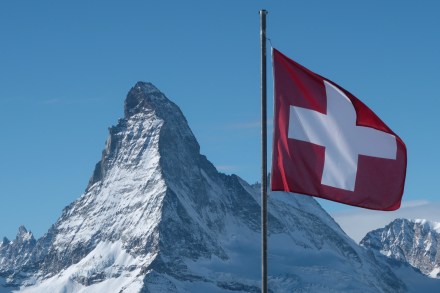
The striking thing about the financial sanctions on Russia is not their severity, but just how many countries are joining in the effort. Switzerland has today announced that it will adopt the EU sanctions on Russia, particularly significant because it has been the biggest recipient of private transfers by Russians in recent years. The fact that such a traditionally neutral country is imposing sanctions will deepen the wedge between Putin and the rest of the ruling elite. Meanwhile in Asia, Japan, South Korea and Singapore have signed on to the economic measures on Russia.

Has Putin underestimated the West?

12 min listen

Over the weekend, the West unveiled further measures to punish Russia for invading Ukraine. The European Union said it would put limits on the Russian central bank's ability to access its reserve of foreign currency, Finland blocked Russia from its airspace, and Germany pledged that it would increase its defence spending to 2 per cent. Has Putin underestimated western resolve? Katy Balls speaks to Fraser Nelson, James Forsyth and Isabel Hardman.

Germany’s defence spending boost will improve European security

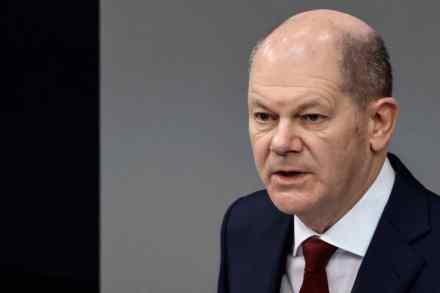
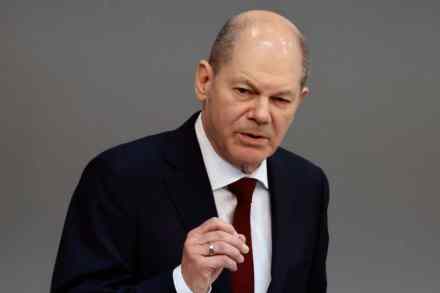
In yet another sign of how dramatically Putin’s invasion of Ukraine has changed Europe’s attitude to both Russia and security, the German Chancellor Olaf Scholz has just announced that the country will spend two percent of GDP on defence by 2024. This is a significant move, Germany currently only spends about 1.5 percent on defence, and will make Germany the biggest defence spender in Europe. Combine this with Berlin’s decision not to certify Nord Stream 2, its acceptance that it needs to reduce its dependence on Russian gas and its change of heart about sending arms into a war zone, and it is quite clear that the country’s strategic posture is very different today than it was a week ago.

A new Europe is emerging from this crisis

With every hour that Kiev holds out, the geopolitics of Europe changes more. Germany, which so values its prohibition on sending weapons into warzones, has just announced that it is sending 1,000 anti-tank weapons and 500 Stinger missiles to support the Ukrainian forces. I expect that defence spending will rise considerably in the coming years Germany is also allowing other Nato members to export arms with German-made parts to Ukraine — which will make a material difference to the supplies that the Ukrainian government receives. Yesterday evening, it was announced that Russian banks are going to be cut off from Swift.

Are Russia’s oligarchs the key to stopping Putin?

12 min listen

Russian forces are attempting to take Kiev, the capital of Ukraine. Ben Wallace, the defence secretary, said he would be spending the day trying to convince European allies like Germany and Italy, who are reluctant to put too harsh sanctions on Russia, to ban them from the Swift payments system. How else can the West put Putin under pressure?Max Jeffery speaks to James Forsyth and Katy Balls.

To hurt Putin, go for oil and gas – not Swift

Both the British and the Americans have been explicit that it is the Europeans who are blocking Russia being cut from Swift. Removing Russia would be a sound step, but it is far less important than a western agreement not to buy Russian oil and gas would be. Sadly, though, there is little chance of this happening — too many countries are dependent on Russian gas — which means $700 million a day will continue to flow into Moscow, strengthening the Kremlin’s belief that it can ride out whatever sanctions are imposed on it. Depressing as this may be, there are things the UK can do using domestic law that would inflict pain on the Putin circle.