James Forsyth

James Forsyth

James Forsyth is former political editor of The Spectator.

Cameron needs to ensure Eurosceptic ire is directed at Labour, the Lib Dems and the Lords – not at him

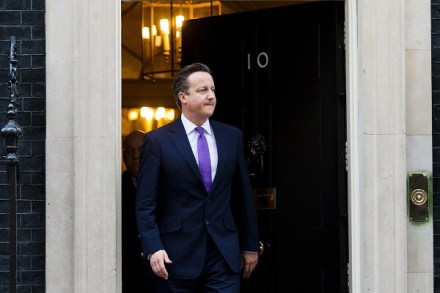
The EU referendum bill has just been knocked on the head in the House of Lords. The peers, led by Labour and Liberal Democrat Lords, have denied the bill the time it needs to get through. So the appointed house has defied the elected house and denied the public a say on a matter of fundamental constitutional importance. This poses a problem for David Cameron. The bill was meant to be one of the ways that the Tories would try and halt Ukip’s advance ahead of the European Elections. The last thing Cameron wants is the Tory party getting in a bate about Europe and complaining that this should have been government legislation not a private member’s bill. So, the Tory leadership has been quick to try and channel Euroscpetic ire.
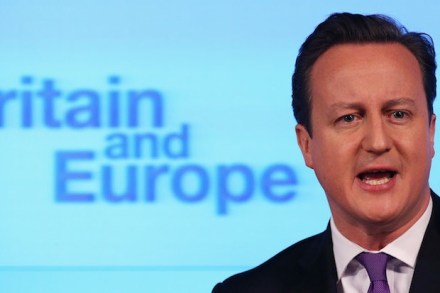
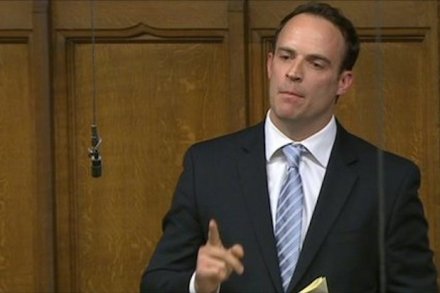
David Cameron and the Tory payroll vote to abstain on the Raab amendment

As we revealed on Twitter earlier, David Cameron and the Tory payroll vote will abstain on Dominic Raab’s amendment. Downing Street’s logic is that they are sympathetic to the amendment’s aims but believe it to be non-compliant, eg not compatible with the law, and so are barred from voting for it by the ministerial code. But the Liberal Democrats will vote against the amendment, which is another sign of how the two coalition parties are now merely cohabiting . Inside Downing Street, they hope that this position will prevent a split in the Tory ranks and I suspect that this will help the whips persuade a few more MPs not to vote for the Mills amendment.

The coalition is now an open marriage

[audioplayer src='http://traffic.libsyn.com/spectator/TheViewFrom22_30_January_2014_v4.mp3' title='James Forsyth and Isabel Hardman discuss the state of the coalition' startat=1275] Listen [/audioplayer]Without any fanfare or formal announcement, the government has moved into a new phase. ‘We’re not in a coalition now. We’re just cohabiting,’ says one Liberal Democrat. ‘We’re a sexless couple. We live in the same house but sleep in separate bedrooms.’ The two parties are governing together but pursuing increasingly separate agendas. As this Lib Dem source puts it, ‘They’re doing what they want and we’re doing what we want.

Class war at PMQs leaves Labour in better heart

It was back to business as usual at PMQs today. Gone was Miliband’s effort to raise the tone, which Cameron ruthlessly exploited last week, to be replaced by an old-fashioned, ding-dong with a bit of class war thrown in. The result: Labour MPs leaving the chamber in far better heart than they did last week.

As Ed Miliband knows, the 50p tax rate will not fix a broken market

Labour’s confirmation that it would restore the top tax rate to 50p was not that much of a surprise, Ed Miliband has always been clear that was what he wanted. But it does raise an interesting question about Miliband’s attitude to the market. Those close to the Labour leader passionately argue that his agenda is actually pro-competition and pro-market, that it not a throwback to the 1970s. As Stewart Wood wrote in these pages recently, they see him as the heir to Teddy Roosevelt. But the 50p rate will hit any successful business person regardless of how open and competitive the market they operate in is. This isn’t action to fix a broken market but a view about how much tax successful people should pay.

What the NHS owes the Tories

[audioplayer src='http://traffic.libsyn.com/spectator/TheViewFrom22_23_January_2014_v4.mp3' title='James Forsyth discuss the NHS with Charlotte Leslie MP' startat=1430] Listen [/audioplayer]Pinned to the wall of Jeremy Hunt’s office in the Department of Health is an A1 piece of paper detailing that week’s ‘Never Events’. It catalogues the mistakes that have been made in NHS hospitals that should never have happened: people having the wrong leg amputated, swabs being left inside patients after surgery and the like. This grim list is a rebuke to the glib, Danny Boyle-style rhetoric which dominates all political debate about the NHS and treats any attempt to examine the failings of British health care as heresy.

Despite Miliband’s best efforts, Cameron still has the upper hand at PMQs

Ed Miliband is still trying to keep his reasonable tone going at PMQs. He led on Syria, pushing David Cameron on the government’s refusal to join in a UN resettlement scheme. Cameron argued that given how many refugees the Syrian conflict had created, a resettlement scheme could only ever deal with a tiny part of the problem. Labour, though, were not happy with Cameron’s answers and will hold a Commons vote on the matter next Wednesday to try and force the government into changing its position. But when Miliband moved onto the economy, he found it far more difficult to keep his tone civil. Tories cheered him saying unemployment had fallen while a confident Cameron took every chance to remind Miliband of just how positive the figures were.

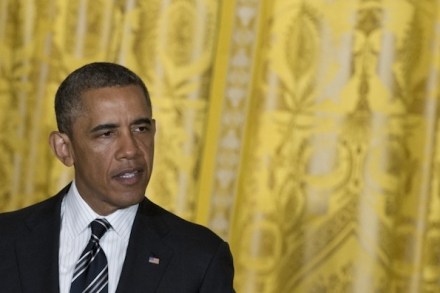
Obama: “There are European governments that we know spy on us”

In an interview with The New Yorker, Barack Obama has hit back at European reaction to the Snowden revelations. He tells the magazine that “there are European governments that we know spy on us” and compares many of the European figures complaining about the allegations to the Vichy police officer in the film Casablanca. It’ll be fascinating to see wow those in the European Parliament who want to use this scandal to derail the talks on an EU-US free trade deal react to Obama essentially calling them out on this. Obama does, however, concede that the allegation that the US spied on Angela Merkel’s mobile phone is serious. He concedes that if it happened it was “a breach of trust and I can’t argue with her being aggravated about that.

Cameron’s mission for 2014: stay out of third place

European elections are normally an afterthought in British politics. As even David Cameron admits, most of us struggle to remember who our MEPs are. Two-thirds of us don’t even bother to vote for them. But this year, the European elections are threatening to dominate politics. Talk to Tory ministers and MPs about the year ahead, and they all look nervously towards May, because they know that the Conservative party is in real danger of coming third in a nationwide election for the first time in its history. In and of itself this need not matter too much. The trouble is that a third place finish would send the party into a panic from which it might not recover before the general election.

Osborne backs minimum wage hike as fundamental to a ‘recovery for all’

George Osborne’s decision to back an above inflation increase in the national minimum wage is his most politically significant decision since his decision to cut the 50p rate. It also makes that decision far less harmful politically. Reducing the top rate of tax might have been the right thing to do economically but it hurt the Tories politically. It enabled Labour to claim that this was a government for the rich and that the recovery was only benefitting the few. By contrast, this decision allows the Tories to emphasise that, in Osborne’s phrase, this is ‘a recovery for all.’ There will be those on the dry right who don’t like this policy. They’ll argue that it’ll cost jobs.

Will a Euro election defeat for Cameron lead to a Tory-Ukip pact?

The Conservative party has never come third in a nationwide election. But as today’s YouGov poll in The Sun shows, they are on course to be beaten into third place by Ukip in the European elections: Now, European elections are normally an after-thought in British politics. As even David Cameron admits, most of us can’t remember who our MEPs are and almost two-thirds of us don’t bother to vote for them. But as I say in the column this week, coming third behind Ukip will send the Tory party into a panic. In the weeks after the result, there’ll be calls for an electoral pact with Nigel Farage and his party, demands for a move to an explicitly ‘outist’ European policy and for a string of more distinctively right-wing policies.

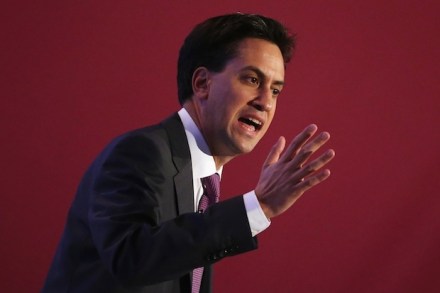
Ed Miliband’s problems are mounting

Today’s PMQs has left Ed Miliband with a strategic headache. Miliband’s new less-Punch and Judy approach to PMQs isn’t working. In large part, this is because Cameron — who thinks he wins more of these sessions than he loses and that the facts on the ground now favour him — isn’t interested in cooperating. So Miliband is faced with the choice of continuing with this approach and being beaten up every Wednesday or abandoning it after just two sessions. If Miliband does continue with it, expect to see the Tories continue to try to goad Ed Balls, one of the Commons’ most enthusiastic hecklers, into responding to them in kind — note how Cameron took repeated jabs at the ‘newly silent shadow Chancellor’.

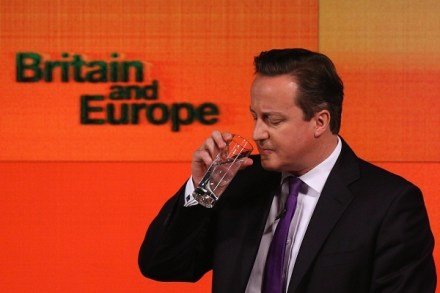
Bernard Jenkin’s letter is just the start – renegotiation will expose every Tory division on Europe

Straight after David Cameron’s speech last January committing himself to renegotiation and a referendum, I asked one Tory minister what he made of it. He chuckled and said that Cameron must be planning to stand down after the next election. The point behind this joke was that renegotiation and the referendum itself would expose every Tory division on Europe there is. Once the renegotiation was under way, he argued, it would no longer be possible to gloss over the fact that Cameron means something different by renegotiation than much of his party. William Hague’s reaction to the Bernard Jenkin letter, which has been doing the rounds of Tory backbenchers since before Christmas, has begun to expose these divisions.

James Forsyth: The Lib Dems’ fight to keep facing both ways

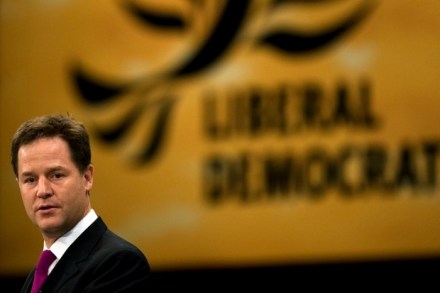
This will be the coalition’s last full year, and it is remarkable how few people are talking about how it will all end. Last January, every conversation in Westminster was about when the two parties would disengage. Tory ministers were eyeing up the jobs that would be available once their coalition partners had left the cabinet table, Liberal Democrats mused on the ways that, once freed from the chains of office, they could demonstrate that they were a truly independent force. Now such chatter has gone. Instead, troops on both sides reluctantly accept that the coalition will continue until the election is called. What’s changed? It’s all to do with Nick Clegg.

If we don’t want prisoners to have the vote, then we’re going to have to leave the European Court of Human Rights

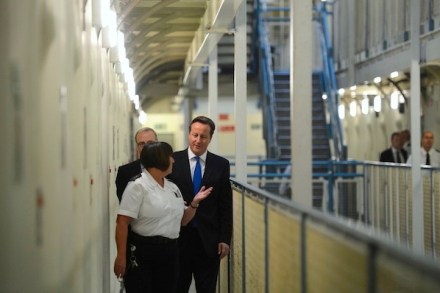
David Cameron’s declaration that prisoners "damn well shouldn't" have the right to vote is a reminder that this issue hasn’t gone away. Cameron was emphatic that the final verdict on this question should rest with the British parliament not the European Court of Human Rights. But this is not the current situation as Cameron admitted with his line that “we need to clip [the court’s] wings". But it is hard to see how Cameron can do that while keeping Britain under the jurisdiction of the court. The attempt to reform the court that Ken Clarke launched as Justice Secretary didn’t get very far. So, it is hard to see what other option there is beyond removing Britain from its jurisdiction.

2013 has been the year of the insurgent party

When you look ahead to 2014, it is hard to escape the conclusion that two insurgent parties are making the political weather. The two big votes of the year are the European Elections, where Ukip may well top the poll, and the Scottish independence referendum, a product of the SNP’s Holyrood majority. The SNP and Ukip are both nationalist parties but they come from very different parts of the political spectrum. But what they have in common is that they have no desire to be part of a ‘consensus’ or be lauded as ‘responsible and respectable’. Instead, they stand passionately for what they believe in, unbothered—energised, even—by the contempt in which they are held by the other parties.

James Forsyth: Insurgents are remaking British politics

Next year will decide the fate of the United Kingdom. The Scottish independence referendum on the 18th of September could destroy the Union, and when we sit down to Christmas lunch in 2014, it could be to the background of independence negotiations. We may all be waiting to see what the Queen says about the end of the Union in her Christmas message. Too much of England is still struggling to take the prospect seriously. The Scottish government’s independence white paper struggled to make it onto the front pages of the next day’s London papers. Why? Because there is an assumption — based on remarkably steady opinion polls — that the Scots will vote no.

It’ll take more than one vote for Britain to leave the EU

What would the exit negotiations look like if Britain voted to leave the EU? Well, Open Europe tried to give us an idea today hosting a war game sketching out what would happen next. (Seb wrote about their work on the renegotiation earlier). It left me with the view that there would be a second vote on the proposed exit terms. If Britain does vote out in a referendum, it is then—under Article 50—a member of the EU for two years while it tries to negotiate an exit deal. I suspect that the package would be, despite the UK’s trade surplus, relatively ungenerous.

Gordon Brown leads tributes to Nelson Mandela in the Commons

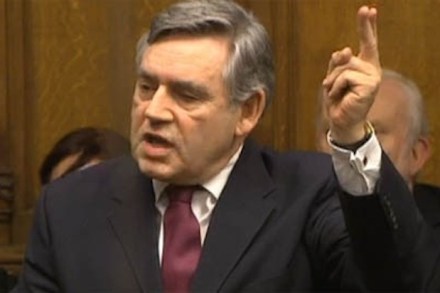
All three party leaders paid eloquent tribute to Nelson Mandela in the Commons. But by far the most powerful speech came from Gordon Brown. His speech, which combined wit with a string of serious points, was a reminder of the qualities that made many in the Labour party prepared to overlook his flaws. Brown, the timbre of his voice so suited to these occasions, spoke movingly about the Mandela he knew. He gave us a sense of the man as well as the statesman. He recalled how at the concert for Mandela’s the 90th, the former president had to sneak off to have a glass of champagne as his wife thought his poor health wouldn’t be helped by drinking.

The Tories have to fight on their ground, not Labour’s

At the beginning of the autumn, strategists from all three parties assumed that the theme of the season would be Labour’s poll lead narrowing as the economic recovery picked up pace. But that hasn’t happened. Instead, Labour’s lead has remained and its own poll numbers have actually ticked up. This is, largely, thanks to Ed Miliband’s reframing of the political debate about the economy, making it about living standards But the autumn statement showed that when the political conversation is focused on the broader economy, the Tories have the better of it. Thursday has weakened Ed Balls, strengthened George Osborne and begun to move the political debate off Labour’s turf of living standards and back onto the Tory question of economic competence.