James Forsyth

James Forsyth

James Forsyth is former political editor of The Spectator.

Ken Livingstone not expelled by Labour for Hitler comments

Listen to Douglas Murray and James Forsyth debating Ken Livingstone's non-expulsion: Ken Livingstone has not been expelled from the Labour party for his comments about Hitler and Zionism. Instead, he has been suspended for two years; but he has already served one year of that suspension. Given the offensiveness of what Livingstone said and the glee with which he expounded his argument, he should have been expelled. Indeed, some of his comments in recent days have been worthy of expulsion on their own. He talked earlier this week of how ‘you had right up until the start of the Second World War real collaboration’ between the Nazi government and the Zionist movement. There is no sign of penitence from Livingstone tonight.
Theresa May is heading for trouble over the Brexit ‘divorce’ bill

ICM, who Vote Leave used for their own referendum polling, have some striking numbers on what elements of an EU exit deal British voters would find acceptable. 54 per cent of voters regard maintaining free movement as part of a transition deal - something that Theresa May wouldn’t rule out in her interview with Andrew Neil - as acceptable. However, there is clearly going to be a big problem with any exit payment. 64 per cent regard a £10 billion payment as unacceptable, with that figure rising to 70 per cent for a £20 billion payment—which is at the low end of what people in Brussels think Britain ought to pay. This, obviously, presents a political problem for May: how does she square the public on such a payment?

Theresa May’s Brexit negotiation has got off to a good start

There’s an awfully long way to go, but the Brexit negotiations got off to a good start for Theresa May this week I say in The Sun today. Number 10’s great worry was that there would be an immediate no from the EU to what it proposed. That is why May’s Article 50 letter was written in such a conciliatory and constructive tone—it was meant to be impossible to simply say no to. This approach has had some success. In his negotiating guidelines, EU Council President Donald Tusk doesn’t suggest that the UK has to hand over the so-called divorce payment before trade talks can start—something which would have been unacceptable to the UK government.

An independent Britain’s top priority: staying friends with the EU

On 29 March 2019 the Queen should have a state dinner and invite the European Union’s 27 heads of state and its five presidents. The evening’s purpose would be to toast the new alliance between the United Kingdom and the EU: one based on free trade, security cooperation and shared democratic values. This celebration of the new alliance will be especially welcome after two years of negotiations which are bound to be fraught and, at times, ugly. The complexity and the sums of money involved pretty much guarantee this. There is, though, a particular onus on Britain to keep things civil. We have chosen to end this failed relationship, so we should brave the insults and not feel the need to respond to every Juncker jibe.

The friendly alliance

On 29 March 2019 the Queen should have a state dinner and invite the European Union’s 27 heads of state and its five presidents. The evening’s purpose would be to toast the new alliance between the United Kingdom and the EU: one based on free trade, security cooperation and shared democratic values. This celebration of the new alliance will be especially welcome after two years of negotiations which are bound to be fraught and, at times, ugly. The complexity and the sums of money involved pretty much guarantee this. There is, though, a particular onus on Britain to keep things civil. We have chosen to end this failed relationship, so we should brave the insults and not feel the need to respond to every Juncker jibe.

Theresa May interview: ‘no guarantee immigration will be significantly lower after Brexit’

Theresa May’s interview with Andrew Neil revealed several significant things about the government’s approach to Brexit. Tellingly, May wouldn’t rule out free movement and the jurisdiction of the European Court of Justice continuing during any Brexit ‘implementation period’. This eases the way for a transitional deal, as the EU is likely to insist on both of these things applying—at least, in some form—during any transition period. Though, it does raise the prospect of the government having to go into the next general election with free movement ongoing There was another olive branch to EU capitals in May’s refusal to rule out preferential treatment for  EU migrants post-Brexit.

Theresa May’s Article 50 letter strikes the right tone

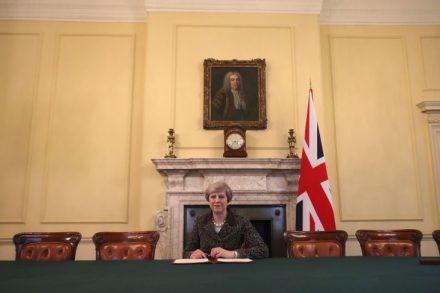
Theresa May is trying to play the role of the great conciliator today. She has avoided any hint of triumphalism or saying anything that the European Union would instantly reject. Instead, she has emphasised her desire for a ‘deep and special partnership’ with the European Union and that the UK wants to be the ‘best friend and neighbour’ to the EU. She has not repeated her Lancaster House message that she thinks ‘no deal is better than a bad deal’ or threatened to change the UK economic model if no free trade agreement with the EU can be struck. The Article 50 letter that May has sent to Tusk also strikes a conciliatory note.

Scottish parliament votes for a second referendum – but Theresa May is unlikely to sway

The Scottish Parliament has voted 69-59 for a second Scottish independence referendum. This is no surprise. But it does lend more force to Nicola Sturgeon’s demand for a second referendum. She can now say that she has her parliament behind her when she presents the UK government with her request for a Section 30 order. Don’t expect Theresa May to move position though: she’ll stick to her line that ‘now is not the time’ for a second vote on independence. The UK government has been, privately, delighted at how May’s position has gone down in Scotland. They feel that there is no groundswell of support for another referendum, something that has been backed up by the polls.

How Britain and the EU can both benefit from Article 50

Theresa May doesn’t do drama. She regards order as both a political and personal virtue. And this goes a long way towards explaining why she is Prime Minister. After the Brexit vote last June and David Cameron’s resignation, the Tories had had enough excitement. They turned to the leadership contender who was best able to project a reassuring sense of calm. It is in keeping with May’s approach that she has drained the drama from the triggering of Article 50, the start of the two-year process for leaving the EU. Other prime ministers might have been tempted to do it with a flourish — to feel the hand of history on their shoulder. But May has removed any sense of surprise by having her spokesman blandly declare that she’ll be sending the letter tomorrow.

James Brokenshire plays for time in Northern Ireland. Will it work?

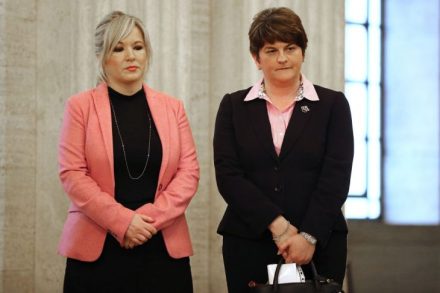
The Northern Ireland Secretary James Brokenshire is playing for time. In a statement made after the 4pm deadline for forming an executive in Northern Ireland was missed, Brokenshire said that he was giving the parties a few more weeks to try and reach a deal. He justified this on the basis that there is no enthusiasm for either early elections or direct rule from Westminster. But even with more time, it is hard to see how an agreement can be reached. Sinn Fein, post Martin McGuinness, is far more determined to cause mischief and senses a Brexit moment of opportunity. This means that it is not keen on joining a power sharing executive. For their part, the DUP are not prepared to drop their leader Arlene Foster after the ‘cash for ash’ scandal.

How both Britain and the EU might claim victory in the Brexit talks

Theresa May doesn’t do drama. She regards order as both a political and personal virtue. And this goes a long way towards explaining why she is Prime Minister. After the Brexit vote last June and David Cameron’s resignation, the Tories had had enough excitement. They turned to the leadership contender who was best able to project a reassuring sense of calm. It is in keeping with May’s approach that she has drained the drama from the triggering of Article 50, the start of the two-year process for leaving the EU. Other prime ministers might have been tempted to do it with a flourish — to feel the hand of history on their shoulder. But May has removed any sense of surprise by having her spokesman blandly declare that she’ll be sending the letter on Wednesday.

3 things we should do to help tackle the Islamist terror threat

Those charged with keeping Britain safe from Islamist-inspired terrorism have always been clear that it was a question of when, not if, there would be another attack as I say in The Sun this morning. The one thing that has surprised the security services about this attack is the age of the terrorist. Up to now, their focus had been on angry young people. No one was planning for a 50 something terrorist. Our way of life should not change in response to this terrorist attack. But there are things we can do to combat this threat more intelligently. The security services don’t have the manpower to follow everyone who appears on their radar as the Westminster attacker Khalid Masood did; it takes 12 people to keep one person under close surveillance.

The scale of Islamist extremism is a problem for MI5

In her statement to the House of Commons, Theresa May said that the man responsible for yesterday’s attack was British-born and had previously been investigated by MI5 ‘in relation to concerns about violent extremism’. However, May stressed that, ‘The case is historic—he was not part of the current intelligence picture.'  Now, the fact that the attacker was known to the security services will lead to questions about why a closer watch wasn’t being kept on him. But there is, frankly, a volume problem here. The number of radicalised individuals is now so large -- there are several thousand Islamist extremists being monitored by MI5 -- that the security services have to be selective about who they keep the closest tabs on.

A way for both sides to claim Brexit victory

Theresa May doesn’t do drama. She regards order as both a political and personal virtue. And this goes a long way towards explaining why she is Prime Minister. After the Brexit vote last June and David Cameron’s resignation, the Tories had had enough excitement. They turned to the leadership contender who was best able to project a reassuring sense of calm. It is in keeping with May’s approach that she has drained the drama from the triggering of Article 50, the start of the two-year process for leaving the EU. Other prime ministers might have been tempted to do it with a flourish — to feel the hand of history on their shoulder. But May has removed any sense of surprise by having her spokesman blandly declare that she’ll be sending the letter on Wednesday.

Theresa May tells the country to go about its business normally tomorrow

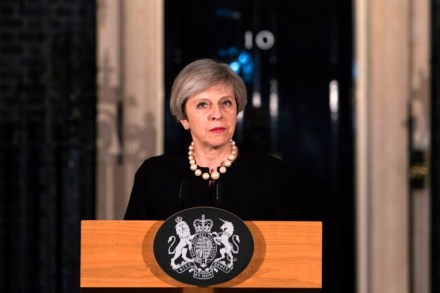
Speaking in Downing Street this evening, Theresa May has urged people to go about their business normally tomorrow. In a statement that struck an appropriately defiant tone, May said that the targeting of Westminster and the Houses of Parliament ‘was no accident’. But that that any attempt to defeat the values of ‘democracy, freedom, human rights, the rule of law’ through ‘violence and terror is doomed to fail’. Talking of the police officer who died in the attack, and the others who have been injured, she praised the ‘exceptional bravery of our police and security services who risk their lives to keep us safe’. This is the first terrorist attack that Theresa May has had to deal with as Prime Minister.

Thanks to the people who protect it, Parliament is a fortress

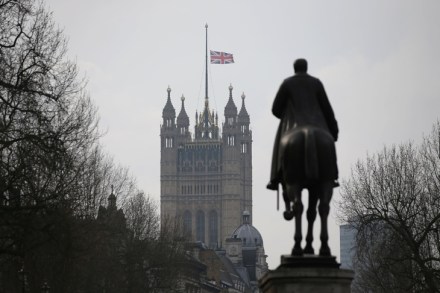
Today was a reminder of the professionalism and bravery of those who protect the Houses of Parliament. I heard an explosion and before I had moved the eight feet or so from my desk to the window to see what was going on, shots had rung out as the police dealt with the situation. The attack today has taken human life, and that is a tragedy. One policeman has died protecting our Parliament and a woman has been killed outside it. But the fact that the terrorists drove a car into people before stabbing a policeman is a reminder that these attackers, who would take as many lives as they could, have not obtained the weaponry that would enable them to kill dozens and dozens of people in minutes.

Jeremy Corbyn finally reads the Tory manifesto

PMQs this week was a rather more even affair than usual. Since the Budget, the Labour leader’s team have clearly spent some time reading the Tory manifesto. Jeremy Corbyn came to the chamber armed with some decent questions about how proposed changes to the national funding formula broke the Tory manifesto pledge to protect the money that followed your child to school. This was a clever subject to go on as the Tory backbenches are not happy about this proposed new national funding formula.  In response, May kept pointing out that the issue of school funding was one that has been ducked for years by government despite a general acknowledgement that the current model is flawed.

How quickly can a reciprocal rights deal be done for UK and EU citizens?

The EU has been adamant that there will be no negotiation with the UK without formal notification that Britain is leaving. But next Wednesday, Theresa May will formally trigger Article 50—beginning the two-year process for Britain leaving the EU.  Many in government expect the start of the talks to be difficult: ‘get ready for a spot of turbulence’ says one of those intimately involved in the preparations for the negotiations. The expectation is that the EU will insist that the so-called ‘divorce bill’ must be settled first while the UK is adamant that it will only discuss that if the future trade relationship between the UK and the EU is also on the table.

Numbers 10 & 11 need to find a better way of working together

Philip Hammond should be sending George Osborne a case of the finest claret. For Osborne’s decision to accept the editorship of the Evening Standard, has distracted Westminster’s from  this week’s spectacular Budget reversal. But, as I say in The Sun this morning, the fallout from it will be felt for some time. Even Hammond’s Cabinet allies admit that ‘Of course, he’s damaged’ by the whole issue. But those in May’s circle are blunter. Pointing out the mistake was ‘staring you right in the face’ before he made it and that the National Insurance hike on the self-employed ‘was pushed back several times' by Number 10.

‘Now is not the time’ – Theresa May plays hardball with Nicola Sturgeon

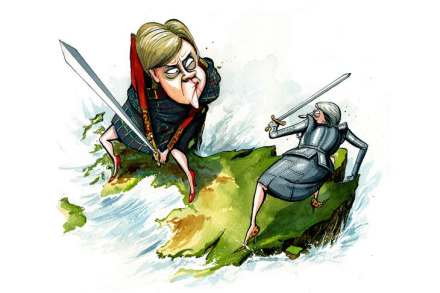
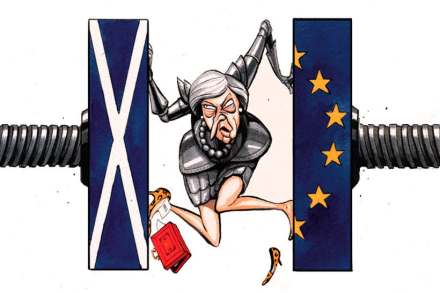
Theresa May has just declared that ‘now is not the time’ for a Scottish independence referendum. Given that no referendum can take place without the UK government’s consent. May is effectively ruling it out whatever the Scottish Parliament decides next week.  Now, it is not a surprise that the UK government won’t let an independence referendum take place during the Brexit negotiations. Scottish voters can’t possibly make an informed decision until they know both the terms of the Brexit deal and what kind of relationship with the EU or the single market an independent Scotland could have. But what is new in May’s statement is her refusal to suggest when she might agree to a second independence referendum.