James Forsyth

James Forsyth

James Forsyth is former political editor of The Spectator.

What does Emmanuel Macron mean for Brexit?

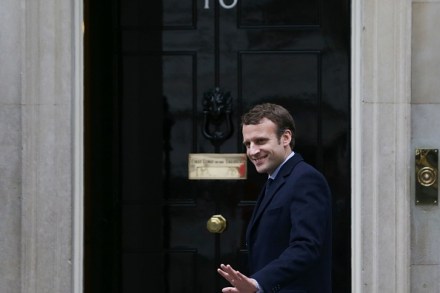
It was a badly kept secret in Westminster that very senior figures in the UK government wanted Francois Fillon to win the French presidential election. He was regarded as being the best candidate for Britain, and the one most likely to be pragmatic on Brexit. But with Fillon out, attention switches to Macron—the overwhelming favourite. Macron is emotionally and ideologically pro-EU. He has been clear that he doesn’t want a sweetheart deal for Britain. On his campaign visit to London, he talked aggressively about luring businesses to France post-Brexit.
Can Labour become a truly national party again?

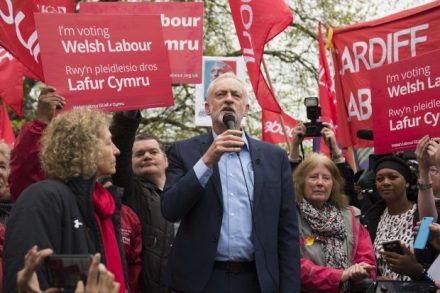
The latest polling marmalade dropper comes from Wales. Labour have won a majority of Welsh seats in every general election for the past eighty-odd years. But the latest Welsh Political Barometer, the most respected poll there, has the Tories on 40 per cent and on course to win 21 seats to Labour’s 15. This poll combined with the fact that Labour is now down to one MP in Scotland shows how difficult it will be for the party to win a UK-wide majority again. They will have to do it without the inbuilt advantage that their Celtic strength used to provide them with. If May can succeed in realigning British politics in this election and flip lots of Labour seats in the North and the Midlands, then it will become even harder for Labour.

Theresa May’s election gamble is paying off

Everything you need to know about the current state of the polls is summed up by the fact that one which puts the Tories at 40 per cent, a level that they haven’t hit in a general election for a quarter of a century, and 11 points clear is presented as a blow to them. Now, the reason that the Mail on Sunday has done this is because other polls have the Tories so far ahead that a mere 11 point lead looks rather anaemic. ComRes has the Tories at a jaw-dropping 50 per cent, with Labour on 25 per cent. YouGov puts the Tories on 48 per cent, and 23 points ahead. Interestingly, it also finds that May is more trusted than Corbyn on the NHS suggesting that even Labour’s banker issue won’t save it this time.

Theresa May’s great gamble

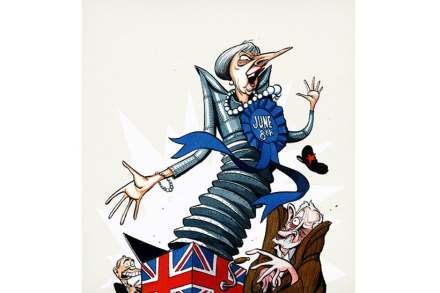
Theresa May has long been clear about what sets her apart from other politicians: she doesn’t play political games. When she launched her bid for the top job last year, she was clear that — unlike her rivals — she hadn’t succumbed to the temptations of Westminster. She told us that she didn’t drink in the bars or gossip over lunch. She invited the TV cameras into her first Cabinet meeting as Prime Minister to record her telling ministers that ‘politics is not a game’. The danger for May in calling an election three years ahead of schedule is that it looks a lot like game-playing. Has a 20-point poll lead proved too much of a temptation, even for this vicar’s daughter?

Theresa May is over her first election hurdle

Theresa May is over the first hurdle of the election campaign, I say in The Sun today. There has been no public backlash to her going back on her word and opting for an early election after all. It has not done the damage to the May brand that I thought it risked. This is testament to how popular she is. In an anti-politics age, where voters are quick to think the worst of politicians, she has been allowed to change her mind. Ministers marvel at how she has got away with such a flagrant u-turn. ‘If I had tried that, I never would have heard the end of it’, remarks one senior minister. With this hurdle cleared, the path is now clear for May to try and use this election to realign British politics.

Islamic State claims responsibility for Paris terror attack

Just days before the first round of voting in the French presidential election, there has been a terrorist attack on the Champs Elysees. A gunman opened fire on police officers, killing one and wounding two others. The terrorist was shot dead at the scene. Islamic State have claimed responsibility for the attack.The claim says that the attacker is Abu Yusuf-al-Belgiki. This is fast by the group's standards, suggesting some level of prior knowledge on their part. Candidates are already cancelling campaign rallies scheduled for tomorrow.

How this election could change British politics for a generation

Two days into the election campaign, and the polls are already jaw-dropping. The latest You Gov has the Tories on 48 percent, 24 points ahead of Labour—and that’s before the Tory attack machine has gone to work on Jeremy Corbyn. Now, there is a chance that the Tory lead is being exaggerated by the methodological changes that the pollsters made after underestimating the Tories in 2015. But talk to pretty much any MP on either side and they’ll say that Theresa May is remarkably popular and Jeremy Corbyn the opposite. There are, as I say in the cover this week, risks to this early election for Theresa May. But two great prizes are within her—and the Tories’—grasp. First, they have a chance to reunite the right.

Theresa’s party tricks

Theresa May has long been clear about what sets her apart from other politicians: she doesn’t play political games. When she launched her bid for the top job last year, she was clear that — unlike her rivals — she hadn’t succumbed to the temptations of Westminster. She told us that she didn’t drink in the bars or gossip over lunch. She invited the TV cameras into her first Cabinet meeting as Prime Minister to record her telling ministers that ‘politics is not a game’. The danger for May in calling an election three years ahead of schedule is that it looks a lot like game-playing. Has a 20-point poll lead proved too much of a temptation, even for this vicar’s daughter?

The Tory party should not forget George Osborne’s role in its revival

George Osborne’s decision to stand down as an MP is a sign of how impregnable Theresa May’s position is perceived to be. Osborne is the most politically formidable of the Tory sceptics of May’s Brexit plan, and his decision to quit the Commons suggests that he doesn’t think she’ll come unstuck in the next parliament. Of course, Osborne has others things to occupy himself with: the editorship of the Evening Standard and his lucrative work for Black Rock. But one suspects that he’d have been prepared to brazen out the criticism over his multiple jobs if he thought there would be a political sea change in his wing of the party’s favour in the next parliament. Osborne’s departure from the Commons will further denude it of experience.

Theresa May shows she is prepared to play political games

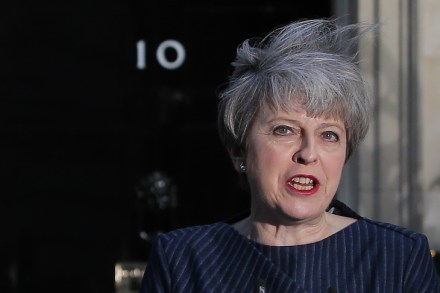
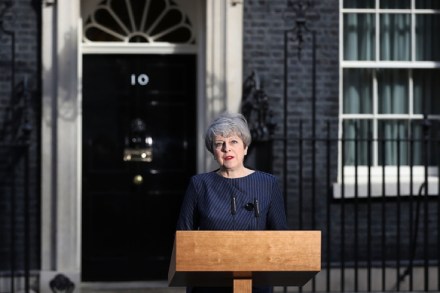
Theresa May has just announced that she’ll move a motion in the Commons tomorrow calling for a general election on 8 June. This is despite May and her team having repeatedly ruled out going to the country early. Much of the May brand, and her appeal, is built on the idea that she is a grown-up who gets on with the job and doesn’t play political games. By going for an election, and especially when the Tories have a record poll lead over Labour, she endangers that. May is clearly aware of this danger. In her statement outside Downing Street, May tried to pitch herself against Westminster. She said that while the country was coming together, Westminster was not.

Donald Trump is listening to his generals – and that’s great news for Britain

‘Great Britain has lost an Empire and not yet found a role’. Fifty-five years on, Dean Acheson’s remark has not lost its sting. British statecraft is, even now, an attempt to lay claim to a place in the post-imperial world. The events of the past few months — Brexit, the election of the most unlikely US president in history and the debate over the Union — all raise the issue of what kind of country Britain hopes to be. The chemical weapons attack in the rebel-held town of Khan Sheikhoun in Syria last week has prompted the first foreign policy crisis of this new era. Britain’s role in the response has become a proxy for the wider debate about our global standing.

Boris was right on sanctions

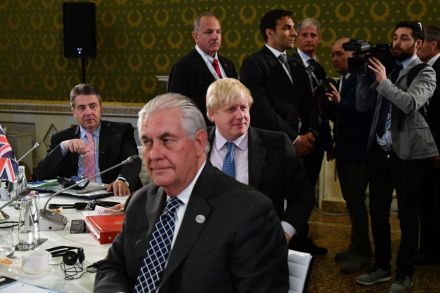
Boris Johnson has received a bit of a kicking this week. There have been no shortage of people wanting to say he has been humiliated by the G7’s refusal to back his call for further sanctions on Russia and Syria after the chemical weapons attack. But I argue in The Sun today, that the real story is the weakness of the EU members of the G7. To be sure, Boris got too far forward on his skis on sanctions. But the bigger issue, by far, is the weakness of those members of the G7 who wouldn’t back them: principally, Italy and Germany. Lenin used to say “Probe with a bayonet; if you meet steel, stop! If you meet mush, then push.” This is, pretty much, Putin’s approach. So, Europe’s unwillingness to push back will embolden him.

Donald Trump turns on Steve Bannon

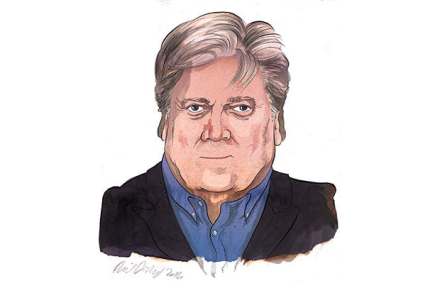
Steve Bannon fast became the most powerful person in the world you’ve never heard of. The man behind the Breitbart website became Donald Trump's chief strategist and was credited with both Trump’s presidential victory and his wholehearted embrace of an America First, nationalist position in his first month in office. But Bannon’s influence has been on the wane in recent weeks. He’s got into a power struggle with the President’s beloved son-in-law Jared Kushner; despite one of the rules of Trump world being that family always wins. The ‘establishment’ have also gained at his expense.

If Trump’s listening to his generals, that’s great news for Britain

‘Great Britain has lost an Empire and not yet found a role’. Fifty-five years on, Dean Acheson’s remark has not lost its sting. British statecraft is, even now, an attempt to lay claim to a place in the post-imperial world. The events of the past few months — Brexit, the election of the most unlikely US president in history and the debate over the Union — all raise the issue of what kind of country Britain hopes to be. The chemical weapons attack in the rebel-held town of Khan Sheikhoun in Syria last week has prompted the first foreign policy crisis of this new era. Britain’s role in the response has become a proxy for the wider debate about our global standing.

The G7 proves too weak to hold Putin to account

The G7 has failed to agree on any new sanctions on Russia following the Syrian regime’s use of chemical weapons last week. This is a blow to Boris Johnson, who has been pushing hard for targeted sanctions on Russian and Syrian military figures thought to be linked to last week’s attacks. But it is worth noting who blocked this push for new measures: the Italians and the Germans. Those who regularly say that the EU is the best way to stand up to Putin’s Russia and that Brexit is, therefore, a mistake, should reflect on this. The Syrian regime is a client of Russia’s; most of Assad’s military success in recent months has been down to Moscow’s help. Putin must, therefore, take responsibility for the Syrian government’s behaviour.

Donald Trump’s plan for bombing North Korea

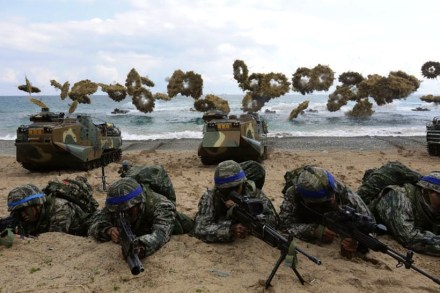
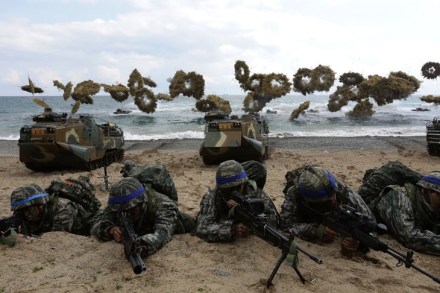
On several foreign policy issues, Donald Trump has toned down the campaign rhetoric now that he is in office. His administration still has concerns about the Iran nuclear deal, but it is backing away from the idea of simply ripping it up or unilaterally rewriting it. On the European Union, he is calming down too; his White House no longer says Brexit marks the beginning of the end of the European project. But on North Korea his positioning is hardening. Hence his warning that ‘if China is not going to solve North Korea, we will’. Not only does Trump want this problem fixed, but his National Security Council is already working on plans to do so. Washington has been trying to work out what to do about North Korea for 20-odd years.

Trump is listening to his generals, that’s reassuring

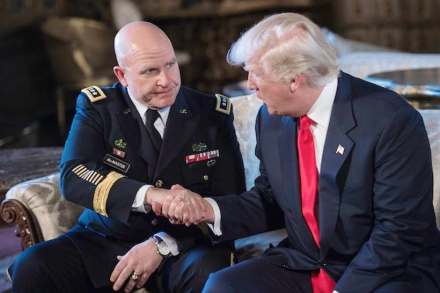
The UK government has been ‘reassured’ by how Donald Trump has handled Assad’s use of chemical weapons, I write in The Sun this morning. The government is right to be reassured. Trump does appear to have done what he said he would do, and listened to his generals. Given that his National Security Adviser H.R. McMaster and his Defence Secretary Jim Mattis are two of the finest military men that the US has produced post-World War Two, Trump is--in this case--listening to the right people. Whether their qualities can make up for Trump’s deficiencies in the long-run is very much open to question, but their growing influence is encouraging.

Donald Trump enforces Obama’s ‘red line’ in Syria

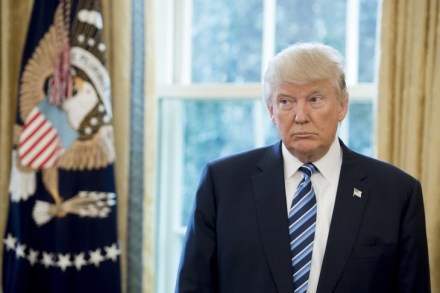
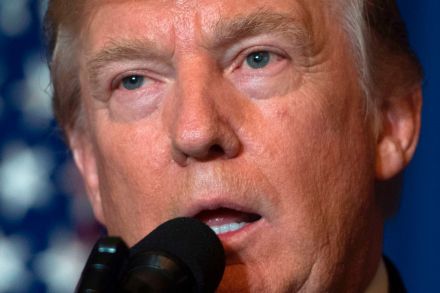
On Donald Trump’s orders, US forces have struck the airfield from which the Syrian military launched Tuesday’s chemical weapons attack. The strikes were limited, only 59 Tomahawk missiles were involved, and the US says that ‘every precaution was taken to execute this strike with minimal risk to personnel at the airfield’. So, what was Trump up to? Well, it was clear that he wanted to send a message that the use of chemical weapons is unacceptable and will have consequences. He was, ironically, enforcing the red line that the Obama administration drew and then refused to enforce.

The real significance of Theresa May’s meeting with Donald Tusk

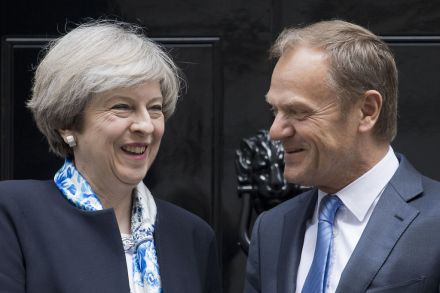
Donald Tusk, the President of the European Council, has been in Downing Street this afternoon meeting with Theresa May. The official readout of their talk is much as you would expect. Warm words about the hopes for a ‘deep and special partnership’, an attempt to calm things down over Gibraltar but nothing major as the EU 27 have yet to agree their negotiating position. But the real significance of this meeting is that it is meant to be one of a series between May and Tusk as the negotiations continue. This shows that the European Council—which represents the member states—wants to keep the Commission on a close rein during these talks. The May/ Tusk dialogue also creates a forum for breaking any logjams that might develop during the formal negotiations.

Trump’s plan for Pyongyang

On several foreign policy issues, Donald Trump has toned down the campaign rhetoric now that he is in office. His administration still has concerns about the Iran nuclear deal, but it is backing away from the idea of simply ripping it up or unilaterally rewriting it. On the European Union, he is calming down too; his White House no longer says Brexit marks the beginning of the end of the European project. But on North Korea his positioning is hardening. Hence his warning that ‘if China is not going to solve North Korea, we will’. Not only does Trump want this problem fixed, but his National Security Council is already working on plans to do so. Washington has been trying to work out what to do about North Korea for 20-odd years.