James Ball

James Ball is the Global Editor of the Bureau of Investigative Journalism, which last month launched a two-year project looking into Russian infiltration of the UK elite and in London’s role in enabling overseas corruption

The new power players running the world

At the opening of The Hour of the Predator, Giuliano da Empoli describes Spain’s conquest of the Aztec empire, its doomed ruler Moctezuma II’s response (ineffective vacillation, delaying any course of action), its consequences and its relevance to politics today. It is a striking introduction to a brief, bracing and profoundly alarming book. The author argues that an alliance of tech bros and authoritarian rulers – whom he calls modern-day Borgias – are sweeping away the rules-based international order. He sees our elected leaders as comparable to the procrastinating Aztec emperor, appeasing and hesitating as the opportunity for action passes into history. Da Empoli has a peculiar vantage point.

Nick Boles, James Ball, Andrew Rosenheim, Arabella Byrne & Rory Sutherland

27 min listen

On this week’s Spectator Out Loud: Nick Boles says that Ukraine must stand as a fortress of European freedom; James Ball reviews If Anyone Builds It, Everyone Dies: The Case Against Superintelligent AI, by Eliezer Yudowsky and Nate Sores; Andrew Rosenheim examines the treasure trove of John Le Carre’s papers at the Bodleian; Arabella Byrne provides her notes on skip-diving; and, in the battle of the sexes, Rory Sutherland says the thing to fear is not feminisation, but emasculation. Produced and presented by Patrick Gibbons.

The end is nigh – or is it?

When most people start screaming that the sky is falling, they can safely be ignored. But Eliezer Yudkowsky is not most people. He was one of the first to take the idea of superintelligent AI – artificial intelligence that greatly surpasses humanity – seriously. He played a role in introducing the founders of Google DeepMind to their first funder; and Sam Altman, the CEO of OpenAI, credited Yudkowsky as a man who was ‘critical in the decision’ to start the organisation. His influence goes still further – he was a key thinker motivating the effective altruism movement and its founders, and the wider rationalist movement to which they belonged.

Even now, Nick Clegg offers too little too late

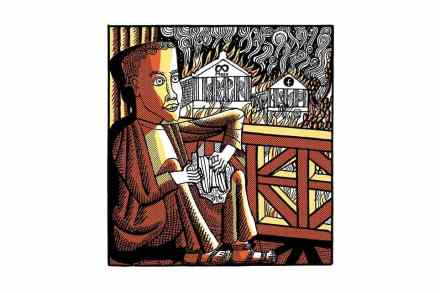
Earlier this year a former staffer of what was then Facebook, now Meta, wrote a gossipy tell-all memoir about her time in the office there. It was a huge hit – especially after the company’s chief global affairs officer Joel Kaplan secured a ruling to prevent its promotion. Careless People, by Sarah Wynn-Williams, proved that there was a considerable appetite for anything that describes what it’s like to work for big tech. All of which boded well for Nick Clegg, who was Kaplan’s predecessor as the public face of Meta to governments across the world – until his departure was unceremoniously announced a few days before Donald Trump’s return to the White House.

The bloodstained origins of the Italian Renaissance

War – huh – what is it good for? According to Duncan Weldon, throughout most of history it’s been fantastic for economic growth and development and has perhaps fuelled technological innovation and more. Blood and Treasure is a delightfully quirky approach to military history. Colonial Spain was thought to be cursed by the gold brought home from its colonies in the New World, since the crown somehow bankrupted itself multiple times during this period, despite the riches. Weldon contends that since the gold meant that Spain’s monarchs did not need to approach parliament for money, it left them untethered from their economies and constraints.

Petty, malicious and tremendous fun – the Facebook office drama

Careless People, Sarah Wynn-Williams’s account of her time at Facebook, has landed top of the New York Times’s bestseller charts and fourth in the UK’s Sunday Times equivalent. It owes its success in large part to a ferocious campaign that Meta – Facebook’s parent company – waged against it on publication. When Meta faces a barrage of public criticism, which it often does, it typically stays quiet and gets on with things. And that approach works – its share price has continued to soar despite scandal after scandal. So when the company not only published a series of furious denials but also had staffers post about the book on their personal social media feeds, and even launched a legal action to prevent Wynn-Williams promoting it, people started to take notice.

The latest Dragon Age game is unbearably right-on

Like all other forms of culture, video games offer a way to escape from, or reflect on, reality through fiction. Unlike almost any other form of culture, they are interactive – you, the player, control the experience. Nowhere is this more true than with immersive role-playing games (RPGs), in which the player embodies a character forced to make moral (or wildly immoral) choices in a fictionalised world, which change the narrative of the game for good or ill. That might sound nerdy (it is), but it’s big business. Baldur’s Gate 3 has comfortably topped $1 billion in global sales, and won numerous industry awards. Baldur’s Gate 3 gives you lots of choices.

Elon’s America, Welby’s legacy & celebrating Beaujolais Day

45 min listen

This week: welcome to Planet Elon. We knew that he would likely be a big part of Donald Trump’s second term, so it was unsurprising when this week Elon Musk was named – alongside entrepreneur Vivek Ramaswamy – as a co-leader of the new US Department of Government Efficiency, which will look at federal government waste. When Musk took over Twitter, he fired swathes of employees whose work was actively harming the company, so he’s in a perfect position to turn his sights on the bloated federal government. It is, writes Douglas Murray, a once-in-a-generation opportunity to strip a whole layer of rot from the body politic. But can he translate his success in the private sector to the public sector?

Conspiracy theories are as old as witch hunts 

To millions of people across America, Hillary Clinton sits atop a global network of satanic child-traffickers and is battling an underground resistance led by Donald Trump to maintain her malign influence. That is the core tenet of the QAnon movement, a conspiracy theory that originated in obscure corners of the internet before being seized upon by members of the Republican elite for their political advantage. Did the Clintons get rich while undertaking a life of public service? Absolutely QAnon is at the heart of Gabriel Gatehouse’s The Coming Storm. But the book begins with a conspiracy theory from centuries earlier, about witches in medieval Europe.

Is now the most exciting point in human history?

Yuval Noah Harari has sold more than 45 million books in 65 languages. He is a professor with a PhD from the University of Oxford, has spoken at TED and the World Economic Forum in Davos, and his latest book, Nexus, is considered ‘erudite, provocative and entertaining’ by Rory Stewart and ‘thought-provoking and so very well reasoned’ by Stephen Fry. This is the story the book’s cover tells us about its contents, and Nexus itself argues that it is stories which are fundamental to shaping the world. It posits that the strength of humanity comes from building large networks in which we work together co-operatively, but that our weakness is that once we have amassed power this way, we use it unwisely.

The dirty war of Sefton Delmer

There is an obvious problem with trying to judge who ‘won’ a propaganda war. Unlike its physical counterpart, there is virtually no real-world evidence either way, and everyone involved has spent years learning how to spin, manipulate and outright lie about reality to try to shape it into what they want. As a result, it remains the conventional wisdom – among those who think of such things, at least – that despite their eventual and total defeat in the second world war, it was the Nazis who won the propaganda war of their era.

What would life on Mars actually look like?

Just as extreme altitudes have notable effects on the human body and mind, so too does extreme wealth seem to have a particular effect on psychology. Or at least that’s how it appears when you look at the shared ambition of two of the world’s most prominent billionaires, Elon Musk and Jeff Bezos. Both men are fixated on the idea that humanity’s future lies beyond Earth and are funnelling fortunes into the vision that we will soon have significant human settlements off-planet, whether on the moon, Mars or elsewhere. It’s an argument grounded not just in exploration and discovery, but in survival. If humanity’s future on Earth looks to be in doubt, is living off-world not the ultimate insurance policy for our species?

James Ball: The Other Pandemic

56 min listen

My guest on this week's Book Club podcast is the investigative and tech writer James Ball, to talk about his new book The Other Pandemic: How QAnon Contaminated the World. In it, James traces the rise and disturbing metastasis of what he calls 'the conspiracy theory that ate all the other conspiracy theories', and argues that what looks from the outside as an extreme set of fringe beliefs about Satanic paedophile rings running the Deep State is something we need to take very seriously indeed.

The bored teenagers who can disrupt the world

Most of us live a strange double life when it comes to hacking. We read headlines saying that our toaster might spy on us, that Russia is trying to hack into our social media, and that society as a whole could be under threat. At the same time, we install smart speakers in every room of our house, post more than ever to social media, and the worst we see of hacking attempts is the occasional email from a Nigerian ‘prince’. Trying to calibrate whether we should be terrified or unconcerned is a difficult task, so it’s refreshing when Scott Shapiro – a Yale law professor who also serves as the director of the university’s cybersecurity lab – says early in his book that neither is the correct approach.

Macron’s last adventure: the President vs the public

36 min listen

On the podcast: In his cover piece for the magazine, journalist Jonathan Miller argues that President Macron is pitting himself against the people by refusing to back down from his plans to raise the age of retirement. He is joined by regular Coffee House contributor Gavin Mortimer, to ask whether this could be Macron's last adventure (01:06). Also this week: In the magazine, travel journalist Sean Thomas says that – in comparison to other cities he has visited – American cities are uniquely struggling to bounce back from the impacts of the covid pandemic. He is joined by Karol Markowicz, columnist at the New York Post and contributing editor at Spectator World, to discuss the decline and fall of urban America (16:29).

At sea: can Sunak navigate the migrant crisis?

36 min listen

On this week's podcast: Can Rishi Sunak steady the ship? Patrick O'Flynn argues in his cover piece for The Spectator that the asylum system is broken. He is joined by Sunder Katwala, director of the think tank British Future, to consider what potential solutions are open to the Prime Minister to solve the small boats crisis (00:52). Also this week: Should we give Elon Musk a break? In the aftermath of his sensational purchase of Twitter, Mary Wakefield writes in defence of the tech billionaire. She is joined by James Ball, global editor of The Bureau of Investigative Journalism, to ask what his plans are for the social media platform (14:27). And finally: Ysenda Maxtone Graham writes in the magazine this week about the joy of hating the Qatar World Cup.

With Mary Wakefield, James Ball and Christopher Howse

22 min listen

This week on Spectator Out Loud: Mary Wakefield tells us about her frustrating experience trying to give blood (00:49), James Ball says that it may be the beginning of the end for Mark Zuckerberg (07:04), and Christopher Howse reads his Notes on... signatures (16:44).Produced and presented by Oscar Edmondson.

Zuckerberg’s empire collapses

Mark Zuckerberg is in a lot of trouble. He has turned away from the slog of running Facebook to focus almost entirely on his ‘metaverse’, a vision of the internet where people enter interactive virtual spaces using virtual reality (VR) headsets. He has pledged investment of at least $10 billion a year for a decade, and investors have been told that profits will be lower for the next decade as a result. He saw the digital future once. Can he repeat the trick? Right now, it seems not. His company’s stock price has more than halved, wiping $600 billion off its market value. Shareholders are worried. Meta is to cut expenses by at least 10 per cent in the coming months, in part through redundancies. More cuts are expected.

Brexit isn’t to blame for sewage dumping at sea

Facing inflation rates in excess of 18 per cent, a painful recession, and the prospect of electricity bills costing more than a mortgage, the UK’s troubles are mounting. But weighing on our minds almost as much is the fact that we seem to be pumping unprecedented levels of sewage into the sea. This would be far from ideal – to say the least – at any time of year, but coming in the peak of August, just as families are out trying to enjoy the beach, the issue is understandably hitting home. But while it’s true that there have been days of huge sewage discharge into the sea, there has also been an awful lot of garbage talked as to why it’s happening.

Blue Murder

47 min listen

In this week’s episode:The knives are out in the Tory leadership fight, who looks likely to make the final two?Fraser Nelson writes this week’s cover piece about the Tory leadership race. He’s joined by the Telegraph’s Allison Pearson (0.49).Also this week:Mary Wakefield challenges Stonewall's guidelines for parents with trans children. One of these parents is Tammy Plunkett, a former nurse, life coach and author of Beyond Pronouns (21.43).And finally: James Ball reviews Matthew Ball’s The Metaverse: And How It Will Revolutionise Everything for the magazine this week. He is joined by Sid Venkataramakrishnan from the Financial Times to discuss the future of the Metaverse (36.