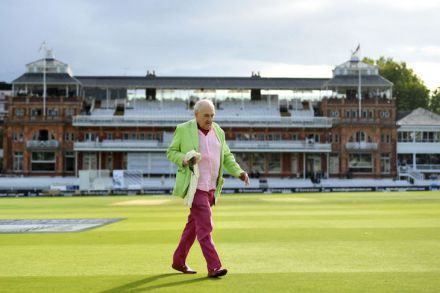
Henry Blofeld

An obituary for Bazball

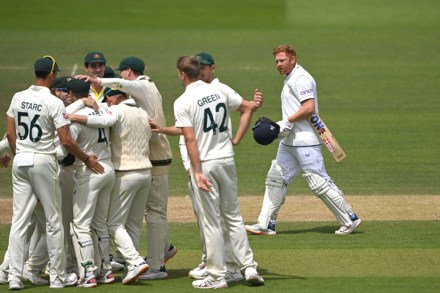
Any account of the third test match, in Adelaide, inevitably becomes an obituary notice on England’s abortive attempt to wrestle the Ashes from Australia’s iron grip. There can be no doubt that trying to win the Ashes in Australia is the hardest task in the world of cricket – if further proof was needed.  The conditions, the ruthless determination of Australia’s cricketers and their huge and intensely patriotic crowds who believe that permanent possession of the Ashes is their God-given right, all help to make it the seemingly impossible task that faced Ben Stokes’s much heralded side. It has been a long time since English cricket and its supporters have experienced quite such a sense of let-down.

England will win the Ashes

The build-up to any Ashes series in Australia provides great entertainment all of its own. This time, as the first test in Perth draws nearer, the contributions from former players in both camps have been unsurprising and surely unnecessary, and also a trifle shrill and irritating. These criticisms can hardly help with preparations for the toughest series of all. Why do old players feel it beholden upon themselves to do this? These ‘has-beens’, as Ben Stokes has pointedly called them, have effectively been saying ‘things ain’t what they used to be.’ They seldom are and these oldies should move with the times. Ian Botham and Graham Gooch have both said England is not preparing enough, with the team having only one three-day in-house practice game.

Max Jeffery, Cosmo Landesman, Henry Blofeld, David Honigmann and Rachel Johnson

29 min listen

On this week’s Spectator Out Loud: Max Jeffery reports from court as the Spectator and Douglas Murray win the defamation cause brought against them by Mohammed Hijab; Cosmo Landesman defends those who stay silent over political issues; Henry Blofeld celebrates what has been a wonderful year for test cricket; David Honigmann reflects on the powder keg that was 1980s New York, as he reviews Jonathan Mahler’s The Gods of New York; and, following the Oasis reunion, Rachel Johnson reflects on her run ins with the Gallagher brothers.  Produced and presented by Patrick Gibbons.

Will Ben Stokes be fit for the Ashes?

What a marvellous summer this has been for Test cricket, which is sadly at risk of becoming an endangered species. The dramatic world of the T20 franchise, fuelled by the outrageous success of the Indian Premier League (IPL), has pushed traditional Test cricket uncomfortably close to the margins. The Test matches began with South Africa’s remarkable win over Australia at Lord’s in the World Test Championship final in June. This has been followed by a thrilling drawn series against India. These matches have perfectly illustrated the greater variety and more exciting possibilities the two-innings game has to offer. In two-innings cricket a side can be bowled out for 40 in the first innings and go on to win the match.

In defence of Australia

What a week it has been for cricket. It began with that scalding ICEC report on the ‘racist, sexist and elitist’ state of the game in England. This report was commissioned by Ian Watmore, briefly the chairman of the England and Wales Cricket Board, as a kneejerk reaction to Azeem Rafiq’s accusation of institutional racism. The report was presided over by Cindy Butts, who has been an activist for Black Lives Matter and perhaps has an axe to grind. As it stands, the report is devastating for English cricket, but much more needs to be known about the way in which it was put together and about the credentials of those who did so. I have spoken since its publication to a number of people who have played and been involved with the game for many years.

My 46 days on the road with John Woodcock

Although it was a miracle that he survived until a few weeks before his 95th birthday, the death of John Woodcock, the unrivalled cricket correspondent of the Times from 1954 to 1988, has left an enormous hole in many people’s lives, not least my own. I first met Wooders, as he was known to one and all, at a party at the old Hyde Park hotel in Knightsbridge in May 1962. Two days later as a result of our conversation, I found myself at the Bat and Ball ground in Gravesend on behalf of the Times, without ever before having written a word in anger, trying to put together 500 words about the first day of Kent’s game with Somerset. I had been working in the City and hating it.

Nanny Boris: the PM’s alarming flight from liberalism

42 min listen

What are the pros and cons of vaccine passports?(00:33) Also on the podcast: Is it time for restaurant kitchens to ditch their toxic masculinity?(18:00) And finally... Cricket, what does the new tournament, the Hundred mean for the sport?(30:14)With: Fraser Nelson; Melanie Phillips; Olivia Potts; the chef and owner of Darjeeling Express, Asma Khan; Freddie Wilde, an analyst for Cricvis and legendary sports journalist Henry Blofeld.

Close of play | 21 September 2017

This retiring is a hectic business. When I said in June that it was going to be my last year with Test Match Special, it never occurred to me that I would have to do much more than float quietly into the sunset. Yet I suddenly became a much greater object of interest than I had managed to be in my previous 46 years behind the microphone. In no time at all, I found myself sitting on Andrew Marr’s sofa, before shifting to Piers Morgan’s boudoir for Good Morning Britain. And on it went. I flitted from studio to studio and on the journeys in between I was bombarded with calls from local radio stations as far apart as Radio Cornwall and Radio Norfolk. On one such journey, a remarkable coincidence occurred.