Fraser Nelson

Fraser Nelson

Fraser Nelson is a Times columnist and a former editor of The Spectator.

David Cameron needs to learn how to deal with nationalists

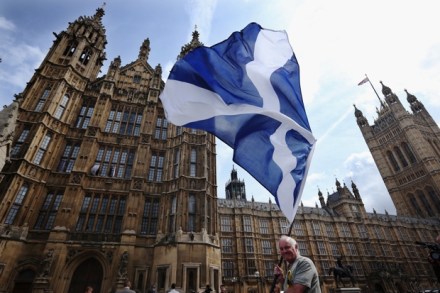
David Cameron still has much to learn about dealing with nationalists. Theirs is a very different kind of politics – one where flags, language and choreography matters. Nicola Sturgeon is hawking a false premise: l’Ecosse c’est moi. That Scotland is her country, that David Cameron can visit (as he does today) in the same way he visits France or America. It matters to Sturgeon that the talks are presented as those between two heads of state (with the flags arranged in that way), that the premise of the talks is what more he can give her government (which she abbreviates to ‘Scotland’). And Cameron falls into her trap. The SNP won a great victory last week, but it’s no more a cry for independence than the referendum was.

The polling debacle – and the wisdom of Walt Whitman

I was at the IEA/Taxpayers' Alliance post-election conference yesterday, listening to Lord Ashcroft giving facts and figures about why voters chose the Tories. Given how wrong all of the pollsters were, I did find myself wondering whether it was worth listening to this. A Tory majority government has just been elected, confounding every single bookmaker and pollster in the land. As Ashcroft was telling us that X per cent of Tories believed in Y sentiment, I thought: statistically, what percentage of these statistics are pure bollocks? How many of the polls I've been reporting for the last few weeks and months have been pure bollocks?

It’s not just pollsters. David Cameron has also confounded economists with his jobs miracle

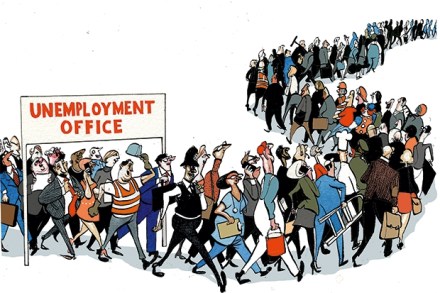
David Cameron realised rather late on that the job miracle, rather than George Osborne's dubious claims about deficit reduction, was the main economic boast of the last few years. And rightly: he is the first Prime Minister in the history of these islands to have presided over the creation of 1,000 jobs a day. His detractors argue that this numbers thing is simply a function of immigration. That of the 2 million jobs he boasted about creating, 1m of them are foreign-born workers. This is broadly correct (below). But let's look at unemployment as a share of the workforce. This time last year, where did the economic forecasters think it would go? The answer comes in the blue and yellow lines.

How David Cameron can unite the Tories behind his One Nation conservatism

The Cabinet reshuffle is now underway, with IDS back in welfare and Michael Gove as Justice Secretary, with a brief to sort out the Human Rights Agenda mess. So David Cameron is opening a new stage in his leadership – and one that moves beyond the weird world of Tory factionalism. I’m hoping that the One Nation conservatism he spoke about after his triumph last week will now become the theme of his leadership. And that, with this reshuffle, he will start with One Party conservatism. Uniting the party is easier than it sounds – he just has to persuade diehards on both sides that the war is over. They're still at it. The Tory wars of 1990-2005 were traumatic, and its veterans emerged with kind of post-traumatic stress disorder.

Michael Gove, legal reformer

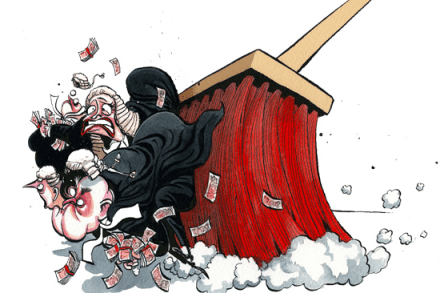
At first sight, it may seem odd to make Michael Gove the new Justice Secretary. But he has had experience - all too much of it. His job will be to clean up the mess of the Human Rights Act. In the Department for Education he saw for himself how the rule of law was degenerating into something different: the rule by lawyers. Any time civil servants don’t want to carry out a reform, they invoke the Human Rights Act – or the Equalities Act, a booby trap planted in the dying days of Gordon Brown's government. The aim was to make it a lot easier to sue conservatives. Gove came up against the effect of this the whole time. Lawyers seemed to rule the roost.

With 56 SNPs and just one Ukip MP, how can the Commons reflect the UK’s political will?

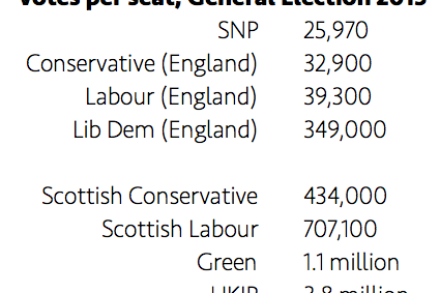
Firm, but unfair – that’s the motto of Westminster’s first-past-the-post voting system and Conservatives will today be raising a glass to it. But the House of Commons is now a very poor reflection of Britain’s political sympathies. It took just 25,970 voters to return an SNP politican to parliament. This compares 34,240 for a Tory and 40,280 for Labour. In the circumstances, the Tories needn’t moan so much about the boundaries: the system paid out for them pretty well. But the other parties? For a Scottish Conservative, the vote-to-seat ratio is an almighty 434,000 to 1. And if you think that’s bad, consider Scottish Labour: 707,147 voters are now represented by one lonely MP. And if you think that’s bad, consider the Greens: 1.

Ed Miliband may soon be gone. But let’s remember what he got right

Most Conservatives I have spoken to in the last couple of hours are optimistic, hoping the prospect of RedEd in power has inspired a higher turnout amongst Tory voters. The Tories could still win, the polls could be as wrong as they were in 1992. But my concern is about the campaign. I hate to say that I think the Labour party fought the better one (not saying much, admittedly). Just as after the Scottish referendum I felt depressed that the unionists had relied so heavily on negativity, I find it depressing that the Tory campaign relied on anti-SNP sentiment. Yes, it has proved the most effective card they played - but let's not pretend that it was inspiring. Ed Miliband is utterly wrong on almost everything and his government would be a Hollande-style calamity.

How reforming Conservatives fall: an interview with Fredrik Reinfeldt

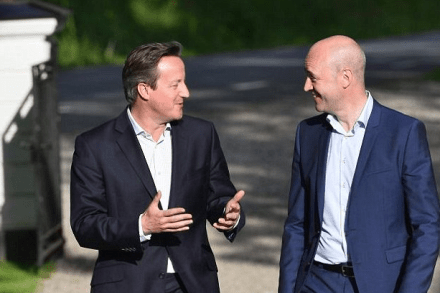
A modernising, young Prime Minister advocates free schools, cuts taxes and oversees a job creation miracle – could voters really kick him out? It happened in Sweden six months ago when Fredrik Reinfeldt lost the general election, even though his successor failed to win a majority. Earlier this year, I caught up with Reinfeldt to talk to him about politics - and the problems of converting economic success into political capital His defenestration seemed horribly unfair. While much of Europe was in economic agony, Sweden was not: at the time, if you asked about the recession you were met with a blank stare. To an outsider visiting Sweden, its economic recovery was extraordinary. But to Swedes, it was rather boring.

Nick Clegg got coalition wrong. Tomorrow, he’ll pay the price

It’s hard not to feel a bit sorry for Nick Clegg. He’s a decent man who took a tough decision to put his party into coalition with the Conservatives, and lost half of his support as a result. Tomorrow, his party will be hammered. His great miscalculation was imagining that in England the Lib Dems would emerge with a list of achievements voters would applaud – as they did in the 2003 Holyrood elections when, after four years of coalition, the Lib Dems overtook the Scottish Conservatives to become the third-largest party. On the radio the other day Clegg vainly paraded his boast list, his own version of Kelly Clarkson’s Because of You. 'It’s because of us that 27 million people have received huge tax cuts.

Why has Rachel Reeves tried to blame the OBR for Ed Miliband’s job predictions?

Who is to blame for Ed Miliband getting the job projections so embarrassingly wrong? Famously, he used to go about advocating his ratio of doom: that there would be one private sector job lost for every state sector job shed by the coalition. Given that George Osborne intended to shed half a million government jobs, Miliband's maths predicted a million jobs lost. Instead there were two million created - with 5 jobs created for every 1 shed by the government. His employment spokeswoman, Rachel Reeves, was challenged about this today in the welfare debate on BBC Two's Daily Politics. She replied: 'We were quoting numbers from the independent Office for Budget Responsibility... So the Office for Budget Responsibility got that wrong.' Really?

Ed Miliband still isn’t being honest about debt. And yes, that matters

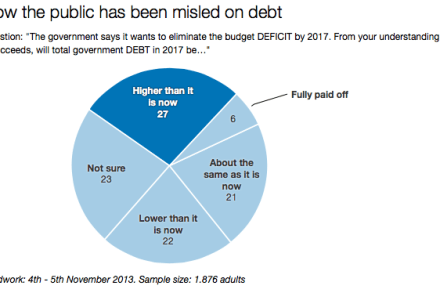
The Guardian’s superb live blog was even better than usual this morning when it covered Twitter’s reaction to the Ed Miliband interview: eight tweets, of which five came from Spectator staff. That’s what I call balance: opinion from the full spectrum of opinion in 22 Old Queen St. We were challenging Miliband's claim when he said the debt was "lower than what we inherited" - it was about £200bn higher. I can’t imagine these tweets went down too well with Guardian readers, because an update emerged later saying that the debt/GDP ratio fell. So was Ed speaking the truth after all? I’m rather keen on this topic.

A Labour-SNP alliance will be a political remake of Stephen King’s ‘Misery’

On the radio this morning, Ed Miliband spoke as if he could get a Queen’s Speech passed without speaking to the SNP. This struck some as implausible, but it sounds right to me. Here's the transcript:- Q: Well let’s just be absolutely clear... neither you nor any of your colleagues will have any conversations with anybody from the SNP at any point after the election. A: We’re not going to negotiate about a Queen’s Speech, no. We’re not going to negotiate with the Scottish National…(Interrupted) Q: Well you’re refining my question a little bit aren’t you. A: I don’t think I am John.

The truth about Labour and overspending

Ed Miliband's worst moment in the Question Time debate came when he refused to accept that Labour had spent too much before the crash. The audience reacted with fury: how could he be trusted if he has yet to work out what he did wrong? This is toxic for him because his denial is completely genuine: he has convinced himself that the debt crisis is unconnected to what he got up to when serving in HM Treasury.

The Spectator’s election briefing, tomorrow night: join us!

Our last five Spectator debates have sold out, so tomorrow night we’re holding a subscriber-only election briefing. James Forsyth and I will go through the campaign as it looks so far, discuss the latest polling (and how to interpret it), what the campaign chiefs are thinking - and then talk about what lies ahead. Normally, the events are about £40, and even then they sell out. But this one will be at a special subscriber rate of £12, thanks to the generous sponsorship of the gorgeous Corinthia Hotel, where it will be held. It's just next to Charing Cross tube, and a five minute walk from Westminster. A caveat: James and I are not promising good news (unless you're a Scottish nationalist).

One-nation Boris

[audioplayer src="http://rss.acast.com/viewfrom22/theelectionwhereeverybodyloses/media.mp3" title="Tim Montgomerie and Ryan Bourne discuss Boris' vision for conservatism" startat=758] Listen [/audioplayer]Boris Johnson strides into the Uxbridge Conservative Club, asks after the barmaid’s health and sits down beneath a portrait of Margaret Thatcher. Churchill and Harold Macmillan are on the other walls. The room comes from the days when the Conservatives were not just a political party but a huge social network: a natural party of government. Times have changed, however. The Conservatives’ membership has dwindled and the party is in a desperate fight to hold on to power. But Johnson is full of optimism. He assures everyone that this election is going to have a happy ending.

Economic confidence comes flooding back, just in time for the election

If there is any link between economic optimism and politics than David Cameron should easily win the general election next week. Today’s figures show consumer confidence around 30-year highs. The number who think now’s a good time to by a house (above) is surging. Not since 1987 have we had so many saying that the UK’s general economic situation has improved over the last 12 months.  As Michael Saunders of Citi puts it (pdf):- With strong job growth (especially full-time employment), record level of vacancies and rising real wages, the “feel-good” factor is clearly back. It’s odd to think that, even with all of this going on, the election still hangs in the balance. Proof, if any were needed, that recoveries never speak for themselves.

Ed Miliband is right – first-time buyers need a tax cut

I hate to admit it, but Ed Miliband has a point about the need for raising the stamp duty threshold to £300,000 for first-time buyers. (The FT has the story tomorrow, and Sky News has the £300k detail). The tax was invented to give the government a slice of the more expensive housing transactions –  the higher-rate threshold of £250k was introduced in 1997 when the average house cost £60k. Now, the average house is closer to £250k. This failure of stamp duty thresholds to rise with the market has been a way for Chancellors to cash in on the asset bubble. Stamp duty cost homebuyers £9.5bn last year - Osborne plans to jack this up to £18bn by 2019/20.

George Osborne has squeezed more from the rich than any UK Chancellor, ever

The Sunday Times Rich List is out today – and it says a lot about Britain. Mainly: what type of country are we? One that reads that supplement with admiration, or with outrage? I’d argue that the former, but this runs contrary to the bovine populism being encouraged by Labour. Ed Miliband wants to raise the top rate of tax to 52 per cent which, as he knows, will raise next to no money. The real purpose of that tax rise is to perform a basic populist manoeuvre: identify an enemy (the highly-paid) and then promise to hurt them. Today, it’s landlords: rent would be capped by the government. Like all left-wing populists, he is out to draw dividing lines: tenant vs landlord, worker vs employer, rich vs poor.

Spectator subscriber event: Mayday pre-election briefing

Our last five Spectator debates have sold out, so we’re adding a new one at short notice - only for our subscribers. It's an election briefing on Friday, 1 May where James Forsyth and I will go through the campaign as it looks so far, discuss the latest polling (and how to interpret it), what the campaign chiefs are thinking - and then talk about what lies ahead. There'll be a cash bar, and we may need the drink. Normally, the events are about £40, and even then they sell out. But this one will be at a special subscriber rate of £12, thanks to the generous sponsorship of the gorgeous Corinthia Hotel, where it will be held. It's just next to Charing Cross tube, and a five minute walk from Westminster.

At last, tax receipts are surging as Osborne’s recovery continues

The economic good news continues. Until now, the Achilles' heel of the recovery was weak tax revenue – in part deliberate, as Osborne’s tax cuts meant the thousands moving into work got to keep more of their money. But figures out today (pdf) show that the tax haul was up 5.3 per cent in the second half of the financial year, twice the rate of the first half. Wages are finally rising – in the private sector (i.e. most jobs) wage growth is at a six-year high. All this means a deficit of £87bn last year, better than the OBR’s forecast £90bn. In short: it’s all coming good for George Osborne. But at this stage in the election campaign, he’ll be lucky if anyone notices.