Fraser Nelson

Fraser Nelson

Fraser Nelson is a Times columnist and a former editor of The Spectator.

The dangers of political prosecution

31 min listen

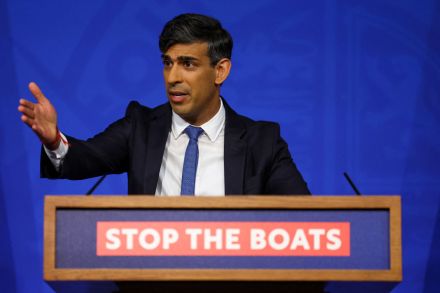
This week: the usual targets First: Trump is on trial again – and America is bored rather than scandalised. This is his 91st criminal charge and his supporters see this as politicised prosecution. As an American, Kate Andrews has seen how the law can be used as a political weapon – so why, she asks, is Britain importing the same system? In less than 18 months, the police have been sent to investigate Rishi Sunak for his seat-belt, Nicola Sturgeon for campaign funds, and Angela Rayner over her electoral registry: each time, the complainant is political and the process is the punishment. Kate joins the podcast alongside The Spectator’s editor Fraser Nelson to discuss. (01:34) Then: Confessions of a defecting Starmtrooper.

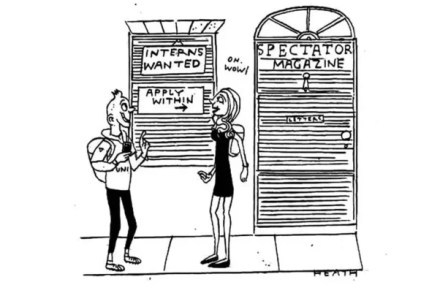
The Spectator’s 2024 no-CV internship scheme is now open

The Spectator runs the UK’s only double-blind internship scheme. We don’t ask for a CV, we don’t use your name. We don’t care where (or whether) you went to university, we anonymise your application. We give each applicant a city name, mark out of 100 and give offers to the best ones. You’ll come in for a week of your choosing. It’s a useful window into journalism and gives us the chance to meet new talent. When jobs come up, as they do in various fields, we look to hire past interns. About a third of our editorial staff came through this way: online (Gus, John and Max), broadcast (Cindy and Oscar), management (Lukas), data (Michael), Ukraine (Svitlana – we made a job for her), social (Margaret) and tech (Fabian, a former chef). Full list below.

Liz Truss returns – again

14 min listen

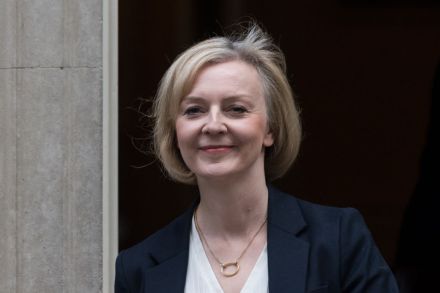
It's 18 months since Liz Truss left Downing Street and her new memoir, Ten Years to Save the West, is out. She gave her first interview to Fraser Nelson on Spectator TV, covering why she wants to abolish the Supreme Court, Donald Trump, her husband's warning that her leadership bid would end in tears, and so much more.   We also cover Iran's missile attack on Israel, and what might come next.  James Heale speaks to Katy Balls and Fraser Nelson.  Produced by Megan McElroy.

What Iran’s failed attack says about Israel

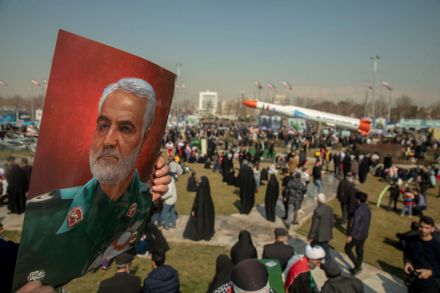
Some 300 missiles and drones were dispatched by Iran towards Israel last night, the largest such assault in history. The IDF say 99 per cent of them were shot down by the air forces of Israel, the UK, US and Jordan. So rather than weaken Israel, Iran’s attack has ended up convening showcasing an extraordinary military alliance – with Arabs, Israelis, Americans and British acting as one to neutralise the assault.  Not a single one of the 200 drones or cruise missiles made it into Israel. Only some faster-moving ballistic missiles hit their target and even they inflicted only light damage to the Nevatim air base.

Iran has struck back – but is it war?

When Israel assassinated a top commander in Iran’s Quds Force in Damascus a fortnight ago, it knew that Tehran would have to respond with a direct attack. So news this evening – that Iran has sent a swarm of kamikaze drones that will take nine hours to reach Israel – is in line with those expectations. Israel had already called up reserve units for its air defence: tonight’s dispatch of about 50 Shahed drones (used regularly in Ukraine) was the minimum of what was expected. Israel says it will try to take them out as they fly over Iraq (they have already been filmed en route). The question is whether Iran will later reinforce with missiles. A cruise missile will take two hours and a ballistic one about 12 minutes according to Israel’s N12 news.

Is Angela Rayner unsackable?

13 min listen

The row over Angela Rayner's tax affairs has deepened today. This morning, Greater Manchester police have announced that – following a reassessment of the case – they will open a formal investigation into Angela Rayner. What does this mean for Keir Starmer? And why would it be so difficult for him to sack her?  James Heale speaks to Katy Balls and Fraser Nelson.  Produced by Oscar Edmondson.

Is William Wragg a victim?

9 min listen

On Thursday night, Conservative MP William Wragg admitted that he handed over the phone numbers of MPs, aides and a journalist to a man he met on a dating app. William Wragg will retain the whip after apologising for his actions. Meanwhile, Rishi Sunak is eager to talk about the National Insurance cut that comes into place tomorrow – has this given him political credibility? Cindy Yu speaks to Fraser Nelson and James Heale.

There’s nothing conservative about the Tories’ free childcare rollout

On Monday, the UK welfare state will expand to cover 15 hours of free childcare for working parents with two-year-olds. In September, this will be extended to infants of nine months or more. Next year, cover doubles to 30 hours. The total cost: £5.3 billion a year. It's the 'largest ever expansion of childcare in England’s history,' says Gillian Keegan, the Education Secretary. This Easter weekend we see the bizarre spectacle of Tories attacking Labour from the left What is conservative about this? Nothing, of course. It pushes up costs and taxes. But the idea, at the time, was to to do this before Labour proposed it. To shoot Labour’s fox. The problem is that fox is running around because even Labour think this is too much, and is perhaps undeliverable.

Labour’s pledge to ‘take back control’

10 min listen

Labour kicked off their local elections campaign today with a joint op-ed from Keir Starmer and Angela Rayner in the Times promising to empower localities and put an end to the regional divide. This is all encompassed in their Take Back Control Act … where have we heard that before? Rather than a seamless launch, the Labour leader has been met with difficult questions over Angela Rayner's tax affairs and the suggestion that the shadow education secretary could scrap the £4 billion expansion of free childcare.  Oscar Edmondson speaks to Fraser Nelson and James Heale.  Produced by Oscar Edmondson.

The UAE bid for The Spectator is over

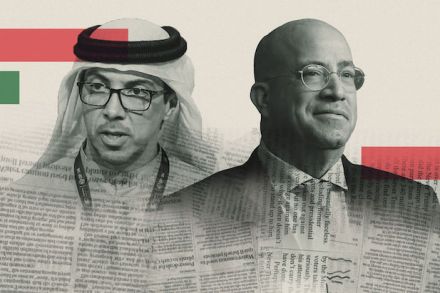
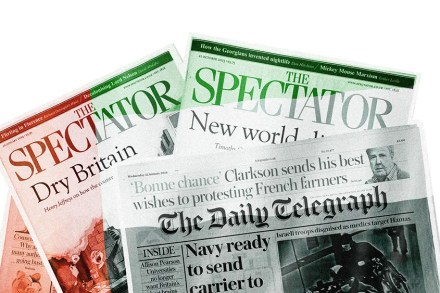
In the end, it was watertight. The House of Lords has just voted through a new law banning foreign governments from owning British newspapers and magazines. Any ‘material influence’ has been banned, so neither the United Arab Emirates or any ‘foreign power’ will be allowed so much as a 0.1 per cent stake in The Spectator, Daily Telegraph or any similar publication. The Emiratis had agreed to buy both titles through RedBird IMI, a vehicle majority-funded by vice-president Sheikh Mansour. Tina Stowell, the Tory baroness who led the campaign, has now stopped this deal in its tracks. She drew from the government an amendment to the Digital Markets Bill which has just passed its third reading and will soon become law.

Will Sunak renege on ‘foreign powers’ owning newspapers?

Last week, a rebellion in the Lords drew a government pledge to ban foreign governments and their proxies from owning British newspapers and magazines. It was a historic moment for the defence of press freedom in the era of acquisitive, well-connected autocracies. It will have global significance. But the devil was always going to lie in the detail, and that will come in the third reading of the Digital Markets Bill due Tuesday. The risk is that ministers may row back and allow the Emiratis to become part-owners of this magazine and the Telegraph by keeping a low stake of 5 per cent or even 1 per cent. This would still grant them the ownership status that they seek, albeit on a far-diminished basis. If so, would it matter? I think so, for the following reasons.

Will Penny Mordaunt be the next prime minister?

14 min listen

Over the weekend, speculation about a plot to oust Rishi Sunak and replace him with Penny Mordaunt circulated the papers. It came after one of the worst weeks of the Prime Minister’s premiership and the looming May elections. This morning, key Cabinet ministers including Kemi Badenoch and Ben Wallace have come out in support of 'sticking to the plan’. Can Rishi Sunak keep the party calm ahead of a gruelling month? And what's the strategy behind opting for an autumn election? Cindy Yu speaks to Katy Balls and Fraser Nelson.

Vaughan Gething’s very British victory

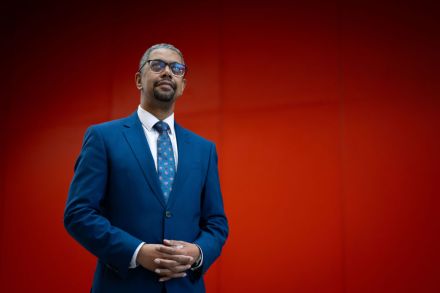
Something happened today which, if it were any other country, would be seen to be remarkable: Vaughan Gething, the new First Minister of Wales, became the first black leader of any country in Europe. But having a non-white leader is not remarkable in British politics. The governments of London Scotland, Wales and the UK governments are now led by what no one calls ‘politicians of colour’. In the past few years we have seen a Buddhist Home Secretary (Suella Braverman), a black Foreign Secretary (James Cleverly) and a British Asian (Sajid Javid) rival Churchill for the number of Cabinet jobs held. They are all admired or criticised for a whole bunch of reasons but their skin colour is seldom a point for discussion.

How to sell The Spectator

No foreign power will ever be allowed to buy a UK newspaper or magazine: that’s the upshot of this week’s debate in parliament. The new law, due in a few weeks, is also expected to rule out minority stakes. So what next for us – and the Telegraph? It has been said that the Emiratis may have been our best bet because no one else wants to invest in newspapers and magazines. The opposite is true. It’s a point that needs to be more widely understood, so I’d like to say something about the auction we came so close to completing last December.

Rishi Sunak rules out general election in May

9 min listen

Rishi Sunak has finally confirmed what most MPs already knew: there won’t be a May general election. Speaking to ITV News West Country on Thursday night, the Prime Minister was asked if there would be a general election at the same time as the local elections on 2 May. He replied: ‘There won’t be a general election on that day but when there is a general election, what matters is the choice.’ So, when will it be?  Also on the podcast, after James Heappey became the latest MP to announce he will step down at the next election, can the Tories stop the exodus?  Natasha Feroze speaks to Katy Balls and Fraser Nelson.  Produced by Natasha Feroze and Oscar Edmondson.

How to survive the 11-plus interview: a parent’s guide

Newcomers to England who start a family are often slow to realise that one of the biggest factors in the Game of Life here starts with the 11-plus exam. If your children are at a school where anyone is sitting such exams, you may find – as I did – that your children want to have a go. You then realise, as Alan Bennett put it in The History Boys, that ‘the boys and girls against whom your child is to compete have been groomed like thoroughbreds for this one particular race’. And after the exam comes the interview. Another race. As a parent, this process is hateful. The idea of someone passing judgment on so young a child is awful Scots have nothing like it and I’m not sure many other countries do. The 11-plus is perhaps the world’s toughest test for children of that age.

A free press means freedom from government

In a landmark ruling for press freedom in Britain, the government has today moved to outlaw ownership of national newspapers and magazines by foreign powers. The text of the proposed new law has not been published but it would appear to rule out any Emirati ownership – in whole or in part – of the Daily Telegraph and The Spectator. The move came after backbenchers in the Lords and Commons gathered in such numbers that, had the government not acted, Parliament would have done. It's a case study of democracy at work. Tina Stowell, a backbench Tory peer, organised an amendment in the House of Lords to be voted on today - galvanising the debate.

Will the government vote to veto foreign press ownership?

At about 4 p.m. this afternoon, the government is expected to break its silence on the UAE-backed bid for the Telegraph and The Spectator. Ministers have until now been quiet, saying they didn’t want to prejudge the inquiry process, but a rebellion from both houses and all parties in parliament has focused ministerial minds. The question is whether ‘foreign powers’, as defined by the National Security Act, should be allowed to own newspapers in whole or in part. And whether parliament should have the power of veto. The test is whether ministers would allow any kind of part ownership on behalf of Sheikh Mansour or another ‘foreign power’ Tina Stowell, a Tory peer, has drafted an amendment to the Digital Markets Bill that would, if passed, give parliament this power.

Should the Emiratis be allowed a minority stake in the Telegraph?

How much of The Spectator and the Daily Telegraph should the United Arab Emirates be allowed to own? Tomorrow, the Lords will debate whether ‘foreign powers’ (as defined by the National Security Act) should be allowed to own national publications in light of the RedBird IMI bid for the two titles. The government may table an amendment to the Digital Markets Bill to diminish the chance of a rebellion via Tina Stowell's amendment. However the vote goes, the debate will be a landmark. The consensus is that blocking the Emirati bid is (as Michael Forsyth put it in the Lords) an 'absolute no-brainer'. As the Lib Dem MP Jamie Stone put it 'the mood of the House (of Commons) is that this is simply not on'.

Lee Anderson defects: what next?

13 min listen

Lee Anderson has defected from the Tory party to Reform. In a press conference this morning, Anderson said ‘I want my country back’ and said that his parents had urged him to change party allegiance. How much of a headache is Anderson’s defection for Rishi Sunak, and will more Tory MPs quit the party? Max Jeffery speaks to Fraser Nelson and Katy Balls.