Fraser Nelson

Fraser Nelson

Fraser Nelson is a Times columnist and a former editor of The Spectator.

Was Lord Wolfson right?

26 min listen

Natasha Feroze hosts as Fraser Nelson and Kate Andrews debate Lord Wolfson’s recent BBC interview in which he called for the UK to import more low skilled workers in order to fill the country’s job vacancies.

Bright green: the case for eco-optimism

Of all the world leaders at the Cop27 summit today, I suspect Rishi Sunak will be one of the least comfortable with the whole jamboree. How can he justify a £50 billion-a-year net zero programme without anyone having worked out what difference, if any, the proposed extra taxes and regulations would make? How can a PM jet off to a luxury Egyptian resort and pledge this kind of cash – then fly back to London and constrain NHS and school spending, slash aid money, hike taxes, impose deep real-terms cuts in public pay – all to plug a £35 billion hole? No wonder Sunak said, at first, that he would not attend. The whole Cop27 agenda is a festival of fiscal cognitive dissonance: a malady that Sunak believes led Britain to its current economic mess.

Is now the time to make peace in Ukraine?

Since Russia’s invasion of Ukraine in February, British press and public opinion has been firmly behind Volodymyr Zelensky. But is it healthy to look at any subject so uncritically? If a year or more of fighting will achieve nothing, then why prolong the bloodshed? The How To Academy has just held a debate about this delicate subject in London. The motion was ‘Now is the Time To Make Peace in Ukraine’. I went along, with some of the Spectator team. Our colleague Svitlana Morenets, who writes our weekly Ukraine email (sign up here), was speaking against the motion. It was a fascinating debate. Peter Hitchens, opening for the motion, said that the British press was very good at whipping up fervour for war but not so good at campaigning for peace.

Why have the RMT cancelled the strikes?

14 min listen

Today the planned rail strikes have been cancelled at the 11th hour. Is this an indication that a deal may be soon reached to end the months of disruption?  Also on the podcast, after it was announced that Arts Council England would cut its funding, it looks like the English National Opera will be forced out of London. Is this 'levelling up'?  Katy Balls speaks to Fraser Nelson and James Forsyth.  Produced by Oscar Edmondson.

Are we heading for a recession?

11 min listen

Alongside an interest rate hike of 3 per cent, the Bank of England have today warned the economy will 'be in recession for a long period'. How much of the blame can we place on Truss's economic policy? What will this recession look like?  Also on the podcast, Rishi Sunak plans to remove the 'legal but harmful' censorship clause from the Online Harms Bill, what will this mean for online safety? Katy Balls speaks with Fraser Nelson, James Forsyth and Kate Andrews.  Produced by Natasha Feroze and Oscar Edmondson.

Sunak drops ‘legal but harmful’ censorship clause

For some time now, The Spectator has been highlighting the danger posed by the so-called Online Safety Bill which would order social media firms to censor content regarded as ‘legal but harmful’. This was, in effect, a censorship diktat. Rather than have Orwellian figures employed by the government to censor articles, the Online Safety Bill would use the Chinese method of censorship-by-proxy and order digital giants to do this instead. A radical threat to free speech – but one only a handful of politicians spoke out against. One of them was Rishi Sunak. A new version of the Online Safety Bill is soon to be published, and we’re told it will be shorn of obligations over ‘legal but harmful’ content that will be seen by adults.

Why is Rishi now going to Cop?

13 min listen

Rishi Sunak has said that he will now attend the Cop 27 summit in Sharm el-Sheikh, which begins on Sunday. What's behind the U-turn, and should we expect more policy reversals from the new PM?  Katy Balls speaks to Fraser Nelson and James Forsyth. Produced by Oscar Edmondson and Max Jeffery.

Robert Buckland: ‘Let asylum seekers work – and pay tax’

When the small boats crisis began, it was seen by some in government as a positive sign. ‘It was an emblem of success,’ says Robert Buckland, who was solicitor general at the time. ‘If you remember, the previous mode of entry for migrants was on lorries.’ Heat scanners had been introduced at the Channel Tunnel in 2015, which meant more stowaways were being caught. The switch to boats, it was argued at the time, was a desperate tactic on the part of the people-smugglers. No one guessed what a problem it would become. Back in 2014, the UK asylum system was coping: 87 per cent of cases were handled within six months. Now that number is just 7 per cent. The challenge of accommodating tens of thousands of applicants is too much for the Home Office to handle.

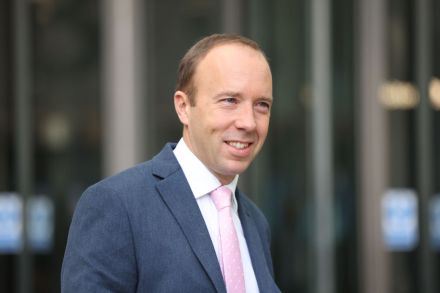
What’s Matt Hancock up to?

17 min listen

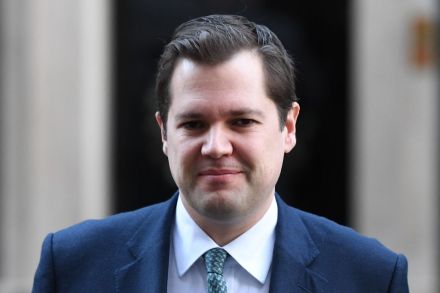
Matt Hancock has signed up to be a contestant on I'm a Celebrity... Get Me Out of Here! What's behind the former health secretary's move into reality television? Robert Jenrick, the immigration minister, took to television studios this morning to defend how the government has handled overcrowding at the Manston processing centre for asylum seekers. Is there a rift growing between him and the Home Secretary, Suella Braverman? Max Jeffery speaks to Fraser Nelson and Katy Balls.  Produced by Max Jeffery.

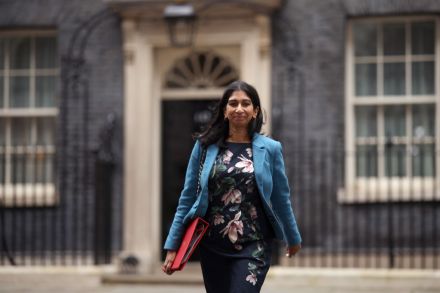
Could Robert Jenrick end up replacing Suella Braverman?

Why did Rishi Sunak reappoint Suella Braverman? Her decision to back him rather than Boris Johnson was probably the most decisive endorsement of the recent campaign – this might well have been done with the understanding that she’d be Home Secretary. If so, it would have been an understandable trade. She had been a Johnson uber-loyalist and if even she was not backing his return, her support for Sunak was the biggest symbol of the game being up for Boris Johnson. Her reappointment drove her critics wild and she has become the new lightning rod. Her performance in the Commons yesterday showed her doubling down. If people want to depose her, she said yesterday, then: 'Let them try'. Braverman’s critics say she is ungovernable, a verbal flame-thrower.

How much trouble is Suella in?

14 min listen

Suella Braverman is under attack for sharing confidential documents with other members of parliament, and has admitted to sending official documents to her personal email on six occasions. Could she be forced out, again?  Also on the podcast, as Rishi Sunak faces pressure on the small boats crisis as well as his decision not to attend the COP27 climate summit, what sort of leader will he be? Will he buckle under the pressure? James Heale speaks with Fraser Nelson and Katy Balls.  Produced by Natasha Feroze and Oscar Edmondson.

Ready for Rishi?

12 min listen

After Boris pulled out of the leadership race last night, all eyes are on Rishi Sunak who could be Prime Minister by lunchtime. Can Rishi rescue the Conservatives?Kate Andrews speaks to Katy Balls, James Forsyth and Fraser Nelson.Produced by Natasha Feroze.

Six reasons to be optimistic about a Rishi Sunak premiership

For the last few days and weeks, the political news from Britain has been unremittingly grim. But Rishi Sunak in No10 represents a new start - but before he starts, it is worth considering the case for optimism for his premiership. Here goes:- At a time when market-literacy is at a premium, we’ll have the most market-literate PM in history. Sunak has a clearer grasp of finance than anyone to sit in No. 10 or No. 11. Gordon Brown was regarded as a details man because he read original academic papers. Sunak, a Goldman Sachs alumni, had a Bloomberg terminal on his desk to follow the metrics from which such papers are drawn. Treasury officials make the same joke about him: no matter how detailed the briefing, he was more on top of the issue than they are. We need that right now.

The gig economy – how far have we come?

32 min listen

When Uber arrived in Britain ten years ago, the app transformed the way people move around cities. All of a sudden, at the click of a button, city dwellers could order a car for a competitive price which would arrive within minutes.To some policymakers, this hailed a new way of working and putting consumers first. Since then, a lot has changed. Uber came under strict regulatory obstacles and many more app-based competitors have entered the market. But the business has transformed with the times. Whilst emblematic of the gig economy, are the critics right about driver treatment? And does more regulation create barriers for the customer?

Might Tory MPs refuse to recognise Boris Johnson as PM?

Might Tory MPs refuse to recognisee Boris Johnson as leader if party members choose him? George Osborne raises the prospect on the Andrew Neil Show today saying: I think there’s a real chance the Tory parliamentary party says ‘we don’t accept the result of the members’ ballot. We don’t accept that 200 of us are going to serve under a PM we didn’t want’. And so I think the crisis will develop sooner than the privileges committee. It will develop at the end of this coming week and the beginning of this coming week, the beginning of next week, if Johnson gets through. This might reflect the attitude of Osborne’s contacts in Parliament (who found Boris V1 hard enough to deal with) but it’s not, so far, hugely widespread.

Does Boris really deserve a second chance?

The original fans of Boris Johnson feel a special kind of disappointment about his disastrous premiership. He’s the best campaigner of his generation, he governed London well, his superpower is to find and devolve to brilliant people who can implement a vision of liberal conservatism that he articulated over a 20-year career. Judge him, we’d argue, by his achievements. That’s what we argued in 2019, anyway. If we judge him by his record in No. 10, it was one not just of disaster – but of doing the precise opposite of what he promised. As we argued in The Spectator, he was becoming the very prime minister that, as a journalist, he warned us about. That’s why, as I argue in today’s Sunday Telegraph, I cannot cheer him on this time.

Penny reign: how Mordaunt could be kingmaker

Tory MPs will likely have three candidates to vote for in Monday’s leadership race: Boris Johnson, Penny Mordaunt and Rishi Sunak. If Johnson runs, gets to the final two and it goes to the Tory membership, then he’s probably be back in No. 10 within days. Polls of Tory members put Boris ahead by a three-to-two margin in a multi-candidate scenario. To stop Johnson getting in the final two, Tory MPs would need to cast their votes tactically to engineer a Sunak-Mordaunt playoff amongst members, in which Sunak would likely win. Why would she be Sunak’s lobby fodder? But all this assumes Penny Mordaunt plays ball. Why would she be Sunak’s lobby fodder?

Why Liz Truss had to go

The Liz Truss survival plan was, in the end, unworkable. She not only hired her enemies – Grant Shapps and Jeremy Hunt – but let them govern: tearing up her policies, while she held on in No. 10. She thought the Tory right had no candidate to replace her with and the Tory left would be happy because there had been a Cameroon restoration. So yes, it was a humiliation – but one that was supposed to keep her in post. The wheels feel off yesterday, and Truss had to accept that her game was over Could it last? Earlier this week I spoke to several MPs who could see Truss surviving in this way, as Theresa May did after the 2017 election. Staggering on, zombie-like, politically undead, waiting for her party to agree on who to succeed her.