Fraser Nelson

Fraser Nelson

Fraser Nelson is a Times columnist and a former editor of The Spectator.

Darling has a point

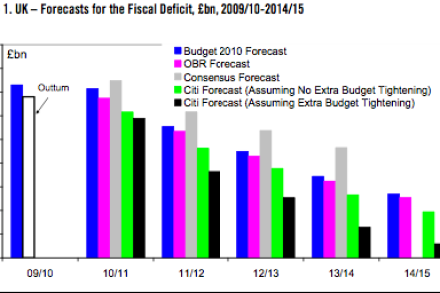
I had expected Alistair Darling to have slumped off to spend more time with his memoirs after the election, but here he is, fists aloft, fighting the government. About the only member of the Labour front bench effectively doing so. He has a point. The economy is looking better than expected, not worse – as

Events that are shaking the special relationship

Barack Obama knows language and innuendo: he will know what he’s doing by deploying what Boris Johnson rightly calls “anti-British rhetoric” in the BP disaster. BP has not – for many years – stood for British Petroleum’ – you won’t find the two words anywhere in its annual report. But you hear them plenty tripping

Cable, the free radical, dreams of a grand future

What is Vince Cable up to? He is on manoeuvres, keeps making attempted power grabs from George Osborne. Barely a week passes without him rattling the cage to which Cameron and Clegg have confined him  – that is, the unwieldy and yet fairly powerless Department for Business, Innovation & Skills. For all its bulk, the

The other Rachel

The boat the Israelis peacefully intercepted was called Rachel Corrie  – named after a young American protester accidentally killed when  offering herself as a human shield in Gaza. Her name became immortalised, some 30 songs have been written for her, a London play named after her and a film last year. But another Rachel, completely

The Commons' bizarre new chemistry

It still looks like your TV set is on a horizontal flip when you see Cameron at the government dispatch box. Even more disorientating to see Chris Huhne on the front bench and Nick Clegg beside Cameron – making supportive facial gestures on areas he agrees with (pupil premium), and looking quizzical on areas on

The rise and fall of David Laws

A weekend is a long time in politics. On Friday night, David Laws was the toast of Westminster. Last week, he seemed able to make the case for cuts better than many on the frontbench. His self-confidence sprang from that rare quality in politics: expertise. As a former stockbroker and self-made millionaire, he understood money. And understood

Now the war on poverty can begin

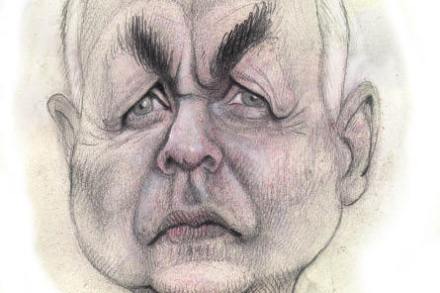
Iain Duncan Smith comes striding into his office with the look of a man who still can’t quite believe his luck. Even the very un-Conservative artwork on the walls of his office can’t dampen his spirits. He explains that it was the choice of his predecessor (‘what was her name? Ed Balls’s wife…’). Yvette Cooper’s

The death of the male working class | 27 May 2010

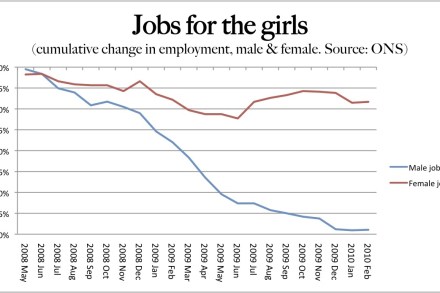
Gender discrimination is illegal in Britain – but tell that to the recession. It has hit male jobs harder than female jobs and in a cover story for this week’s Spectator, Matthew Lynn looks behind it. This has been, he says, a Mancession, where “the jobs lost in the last two years have tended to

Gove must guard against the vested interests

Polly Toynbee was on ‘mute’ on Sky News in my office, the remote wasn’t working, which is frustrating because I’d love to hear how someone mounts a passionate defence of why local government should have monopoly control of state schools. Very few things in politics are indefensible, but a system which doles out sink schools

A show of Cameron's adaptability

Great to hear that David Cameron has decided to keep the 1922 committee reinstated. This is a significant, unexpected development – and sign of strength, not weakness. Interestingly, I hear that George Osborne had not been properly consulted about last week’s events: ie the way in which MPs were asked to vote into effectively abolishing

Osborne needs to make the moral case for cuts

Gordon Brown may have been defeated, but you can hear his voice in the broadcast reports this morning about the £6 billion cuts which George Osborne will mention today. The BBC was still expressing this in terms of frontline service cuts – the equivalent of 150 schools, apparently. This was the root intellectual error which

Cameron should seek the common ground

Last weekend, David Cameron had few rebels at all in his party. This week, he has 118. The vote on the 1922 Committee membership was a free vote, of course, so this can by no means be compared to a proper, whip-defying Commons rebellion. But we have seen there are scores who are not prepared

Can Cameron assuage the Tory tribes?

Amid the chaos in the House of Commons, with newly elected MPs finding their offices and newly appointed ministers being kicked out of them, Graham Brady is the picture of calm. As the only MP to resign on principle from David Cameron’s front bench (over grammar schools), he knew there would be no phone call

Graham Brady on 1922 and all that

In tomorrow’s Spectator we have an interview with Graham Brady, tipped to be chairman of the 1922 Committee of backbench MPs – which David Cameron has just proposed to abolish in his 4.30pm meeting with MPs today. Technically, he is proposing to dilute its membership by including the payroll vote, thereby making it synonymous with

The Bill of Rights would be useless anyway

I would like to defend the coalition from allegations that there has been a deplorable Tory concession on the Human Rights Act. Tearing it up was never in the Tory manifesto. Dominic Grieve, who drafted the Tory plan, is one of those lawyers who is rather passionate about the European Convention of Human Rights (ECHR)

Why Labour is still within striking distance

Things are looking good for Cameron – his coalition has 60 percent approval rating, he has managed to persuade the Lib Dems to support what always was a liberal Tory agenda. There is plenty for Conservatives to celebrate, especially on welfare reform and education. But, still, things could be a lot worse for the Labour

A lesson for all new MPs

Ed Miliband has given a surprisingly good speech this morning: free from all the junk language that his older brother has a weakness for. But he raises an interesting question: Why did Gisela Stuart win in Birmingham Edgbaston? Why did Karen Buck win Westminster North? Why did Andy Slaughter win in Hammersmith? Might it have

Reasons for real hope amid the misplaced optimism

Today’s civil partnership between two men who look uncannily like each other will, I suspect, be remembered as a festival of misplaced optimism. Cameron overdid it a little, making out that this was his ideal outcome. It seems rude to point it out, but there were two podiums in that rose garden because he flunked

The government takes shape

Here are some details of the LibCon deal, and my brief comments: 1. Clegg as Deputy PM. It’s a non-job, but a senior one – it means Clegg will take PMQs in Cameron’s absence, and will defend all those nasty cuts (sharing the blame for these cuts is the main rationale for coalition). This follows

Brown saves the worst till last

We have just witnessed Gordon Brown’s last and most audacious confidence trick. “Gordon Brown to resign” says the television newsflash: but the story was the very opposite. Gordon Brown is staying on, saying – pretty much – that it will take an SAS operation to get him out of No.10 before the autumn. He declared