Emily Rhodes

Childhood illnesses and instability left Patti Smith yearning for ‘sacred mysteries’

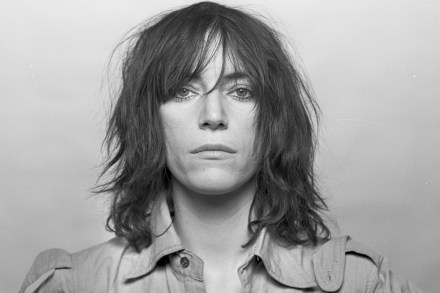
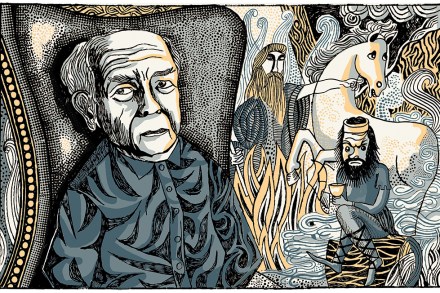
The punk icon Patti Smith’s latest memoir stretches from 1940s Michigan to present-day Nice, weaving around and complementing her other works of autobiography in its rendering of formative scenes. These include descriptions of periods of childhood illness, displays of sibling loyalty, powerful encounters with art and poetry, attachment to beloved clothes, marriage to Fred and the deaths of people close. Smith looks ahead to a time when she and her dwindling companions are gone: ‘Write for that future, says the pen.’ Our attention is periodically drawn to the pen’s motion as it ‘scratches across the page’, conjuring a lifetime of fluctuation.

A portrait of alienation: The Loneliness of Sonia and Sunny, by Kiran Desai, reviewed

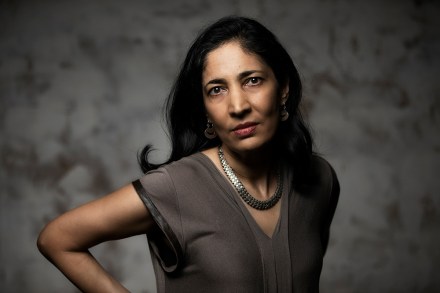
Twenty years on from winning the Booker Prize with The Inheritance of Loss, Kiran Desai returns with a vast masterpiece of a love story which has been longlisted for this year’s prize. Our two protagonists, Sonia and Sunny, come from wealthy neighbouring families in Allahabad, but both are in America when the novel begins. Sonia is in Vermont, working for the college library while finishing her studies, and Sunny is in New York, as a reporter for the Associated Press. When Sonia flees a coercive relationship after suffering depression and Sunny agrees to help a childhood friend choose a bride, they both return to India, where they encounter one another on a train from Delhi to Allahabad.

Mothers’ union: The Benefactors, by Wendy Erskine, reviewed

This blistering debut novel from the acclaimed short-story writer Wendy Erskine circles around a case of sexual assault, expanding into a polyphonic story that is at once an evocative fictional oral history of contemporary Belfast, a powerful depiction of trauma and a provocative exploration of social power dynamics. Erskine teases out narrative strands through a handful of characters’ viewpoints and intersperses these with vignettes written in a first-person verbatim style from a wider cast. She has carefully selected her main parts. Alongside Misty, the assaulted teenager, the focus is on the three women whose 18-year-old sons were the perpetrators.

Highs and lows: The Boys, by Leo Robson, reviewed

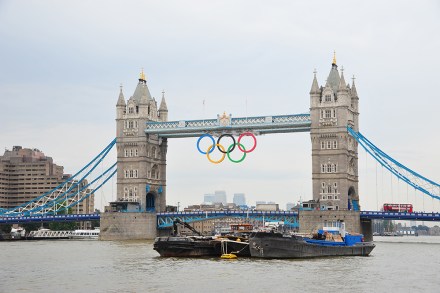
The Boys, the entertaining debut novel by the literary critic Leo Robson, is set in Swiss Cottage during the 2012 London Olympics. Johnny Voghel is ‘methodically lying about’, home on leave from an admin job in the West Midlands and grieving both for his mother, who died the previous year, and – by extension – his father, who died when he was a child. A typical day is spent ‘smoking badly rolled cigarettes, watching the ring-fenced patches of grass suffer in the heat, nodding at passers-by, tweezing grey hairs from my nostrils and popping the spots on my chin’, before walking into the centre to gaze at the BT Tower with its Olympics countdown.

No place is safe: The Brittle Age, by Donatella di Pietrantonio, reviewed

This slim, unsettling novel opens with Lucia trying to navigate the ‘mess’ of her daughter Amanda’s return home to their apartment near Pescara, in Italy’s Abruzzo. Pieces of torn bread, a heaped-up blanket and other strange ‘traces’ are indications of Amanda’s emotional disarray after hastily leaving Milan on the eve of lockdown. But she’d already abandoned her university studies by the time she’d been violently mugged. Lucia attempts to achieve the difficult balance of caring for, but not suffocating, her daughter, resigning herself to Amanda’s ‘unpredictable comings and goings’ while leaving her ‘something nourishing in the fridge in case she skips breakfast’. But she has already spectacularly misjudged this.

Time travellers’ tales: The Book of Records, by Madeleine Thien, reviewed

Those who have read Madeleine Thien’s bestselling Do Not Say We Have Nothing will recognise The Book of Records as being the title of the manuscript at its heart – a dangerously dissenting history of China. In her latest novel, Thien uses the title to explore the future rather than the past – or so it seems at first. Extensive flooding has caused Lina and her father to leave Foshan and retreat to ‘the Sea’, a labyrinthine ‘nothing place’ where people usually shelter just for a short while before moving on. It resembles Kowloon Walled City, the immense, densely populated structure that, before being demolished, was close to where Thien’s mother grew up.

Orphans of war: Once the Deed is Done, by Rachel Seiffert, reviewed

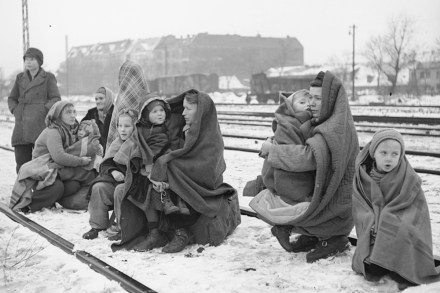
In Rachel Seiffert’s searingly beautiful fifth novel, the author returns to Germany, 1945 – ground she previously explored in The Dark Room, her Man Booker-shortlisted debut. Once the Deed is Done opens with a boy, Benno, looking out of his window at night, having been woken by sirens from the munition works. Elsewhere in the town, Hanne and Gustav discover a runaway woman and young child sheltering in their shed. In the morning, the woman has fled, leaving just ‘the winter child’. Hanne decides to care for her, in secret, ‘because she was a child – just a child – left behind in this cold time... What else could she do but hold her?’ They call her Ditte, although ‘the child wasn’t theirs to be naming’.

Evie Wyld’s latest novel is unsettling yet hopeful

From our US edition

Evie Wyld’s powerful fourth novel opens from the perspective of Max, a ghost who haunts the south London apartment where he lived with his girlfriend Hannah. A ghost story is new ground for Wyld, the multi-award-winning Anglo-Australian writer, but her signature traits are immediately evident — poetic observations of unusual details; a pervasive sense of grief and palpable trauma, leavened with a wry sense of humor (Max notes his "strong urge to file a complaint" about being a ghost); and an intricate plot that compels readers to delve into complex past events.

Wyld

Mounting suspicion: The Fate of Mary Rose, by Caroline Blackwood, reviewed

‘She was dead even before I became aware of her existence.’ The menacing opening line of this gripping novel is not about the title’s Mary Rose but about another six-year-old girl, Margaret Sutton, who has been abducted, raped and murdered in the Kent woods. The story is told from the perspective of Mary Rose’s father, Rowan Anderson, who spends most of his time in London, writing a biography of the scientist Hertha Ayrton and feuding with his possessive girlfriend, Gloria. He periodically visits his daughter and his wife, Cressida, in their country cottage.

Labour’s China pivot, Yvette Cooper’s extremism crackdown & the ladies who punch

48 min listen

Successive governments have struggled with how to deal with China, balancing them as a geopolitical rival yet necessary trade partner. Recent moves from Labour have sent mixed signals, from the free speech act to the return of the Chagos Islands. Further decisions loom on the horizon. As Rachel Reeves seeks some economic wiggle room, can Labour resist the lure of the Chinese market? The Spectator’s Katy Balls, and visiting fellow at the European Council on Foreign Relations (ECFR) James Crabtree, join the podcast to discuss further (02:05). Plus: as the first issue under The Spectator’s new editor Michael Gove, what are his reflections as he succeeds Fraser Nelson? He reads an excerpt from his diary (19:05).

The ladies who punch

Double jab, right, hook body, duck, right… Right, left, right, upper, four hooks… Ten straight punches… And ten more… Twenty roundhouse kicks… Now the other leg… When I tell people that I’ve started kickboxing, they tend to think they’ve misheard. It’s true I’m not who one might think of as a typical fighter. I’ve spent my life working with books and now along with the books I juggle three kids and a dog. The closest I usually get to fighting is when I drag my whippet away from a scuffle in the park, or get elbowed out of the way in the school bake-sale scrum.

A necklace for the Empress Josephine: The Glassmaker, by Tracy Chevalier, reviewed

The latest book from Tracy Chevalier, author of 11 novels, including the bestselling Girl with a Pearl Earring, tells the captivating story of Orsola Rosso, whom we first encounter in 1486 as a young girl on Murano, the glassmakers’ island in the Venetian lagoon. Within a few pages, her father, the maestro at the family’s workshop, is dramatically killed by a shard of glass flying ‘like a hot dart straight into his neck’. Orsola’s lazy, impetuous brother Marco, less skilful than their father, must take over, but orders soon begin to dwindle. How will Orsola help her family recover and prosper?

A haunting theme: The Echoes, by Evie Wyld, reviewed

Evie Wyld’s powerful fourth novel opens from the perspective of Max, a ghost who haunts the south London flat where he lived with his girlfriend Hannah. A ghost story is new ground for Wyld, the multi-award-winning Anglo-Australian writer, but her signature traits are immediately evident – poetic observations of unusual details; a pervasive sense of grief and palpable trauma, leavened with a wry sense of humour (Max notes his ‘strong urge to file a complaint’ about being a ghost); and an intricate plot that compels readers to delve into complex past events.

Notes on the natural world: an exquisite collection from Kathleen Jamie

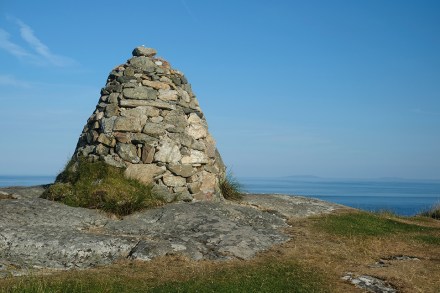
‘Let me leave Cairn here as a trail marker, a moment noted, a view from the strange here-and-now,’ Kathleen Jamie states towards the end of the prologue to her exquisite new collection of writings. In more than 40 micro-essays and poems, her keen-eyed view encompasses both an uninhabited island far out at sea and a piece of flint in her hand; it accommodates surfacing memories and also peers into the uncertain future awaiting the next generation. A balanced tower of ultra-short pieces is a new form for Jamie, the Scottish makar (or national poet), who also pens longer pieces of nature writing, collected into the genre-expanding works: Findings, Sightlines and Surfacing.

London’s dark underbelly: Caledonian Road, by Andrew O’Hagan, reviewed

‘The Cally’s named after an orphanage for kids from Scotland or some shit. Didn’t we learn that in school?’ So says Big Pharma (real name Devan Swaby), drill rapper from the Cally Active gang – one of the many characters populating Andrew O’Hagan’s vast and riveting Caledonian Road. The novel opens with a 59-strong cast list, representative of contemporary London society. At the heart of this web, spanning aristocracy, gangs and trafficked migrants via an oligarch and the middle-classes, are the celebrity art historian Campbell Flynn and his student and hacker protégé Milo Mangasha. As with the Cally and its links far beyond the capital, so O’Hagan demonstrates that his characters’ connections reach across the globe.

Boxing clever: Headshot, by Rita Bullwinkel, reviewed

Rita Bullwinkel’s knockout debut novel adopts the structure of the boxing tournament it vividly describes. Eight teenage girls are competing in the ‘Daughters of America Cup’ at Bob’s Boxing Palace, Reno. We encounter them in the ring as they progress through four opening rounds and two semis to the final. The author details the exhilarating, pummelling progress of the fights – ‘the hit is quick, like a jump rope whipping forward’ – and the physicality of the girls’ bodies, ‘so close to each other that, from far away they look like two parts of the same animal’. She also nimbly delves beneath the protective headgear into the girls’ interior worlds and circles out to explore their life stories, revealing where they have come from and where they’re going.

Flaubert, snow, poverty, rhythm … the random musings of Anne Carson

Anne Carson, the celebrated Canadian-American poet, essayist and classical translator, is notoriously reticent about her work. She agreed to just these three sentences appearing on the cover of her first book in eight years: Wrong Norma is a collection of writings about different things, like Joseph Conrad, Guantanamo, Flaubert, snow, poverty, Roget’s Thesaurus, my dad, Saturday night. The pieces are not linked. That’s why I’ve called them wrong. Not only does this suggest the range of subjects explored but also Carson’s idiosyncratic, playful humour. Of course there are links between the pieces, and of course they are anything but wrong. Wrong-footed by the blurb, it’s thrillingly difficult to find one’s balance on opening the book.

The wit and wonder of Alan Garner

Alan Garner is sitting in a high-backed leather porter’s chair right inside the hearth enclosure of an immense fireplace, with a chimney stack stretching up 27ft and a very strange-looking firepit. I duck under a beam to join him. He adds a log to the fire and says: ‘This firepit is made from a disused steam engine we found in an old lead mine and the rear brake-drum of a Model T Ford lorry.’ The flames give a crackling warmth and smoke swirls up the vast chimney, down which whooshes, periodically, the thunder of a passing train. I recognise this as the sound of ‘Noony’ from Garner’s most recent novel, Treacle Walker. I perch on a low beam and Garner tells me that this is where his protagonist Joe Coppock sits. ‘The chimney wrote Treacle Walker, I didn’t,’ says Garner.

A bird’s-eye view: Orbital, by Samantha Harvey, reviewed

This slender, gleaming novel depicts a day in the life of six astronauts at the International Space Station – but a day isn’t a day for a crew orbiting Earth at more than 17,000 miles an hour. Space ‘takes their 24 hours and throws 16 days and nights at them in return’. Weaving a line of philosophical enquiry through her luminous prose has become something of a trademark for Samantha Harvey, who probed the elasticity of time through a portrayal of Alzheimer’s disease in her prize-winning debut The Wilderness and, in All is Song, transported Socrates to the 21st century.

Blighted island: Strangers at the Port, by Lauren Aimee Curtis, reviewed

Lauren Aimee Curtis, born in Sydney and recently named one of Granta’s Best of Young British Novelists, sets her intriguing second book on the Aeolian island of Salina in the late 19th century, when the arrival of phylloxera destroyed the island’s vines and economy, prompting mass emigration. These facts are easy to deduce, especially with the clarification provided in the author’s note, but in the novel itself Curtis names the island ‘S’ and the time becomes ‘that spring, when the men arrived’. She entices us into the mythical realm of not-quite history. Part One is narrated by Giulia, looking back to when she was ten years old and telling her story to a ‘professor’ who has written a book.