Elisa Segrave

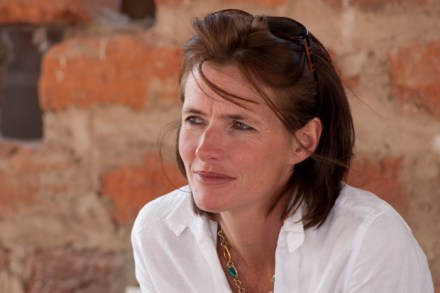
Elisa Segrave is an author whose books include The Girl from Station X: My Mother's Unknown Life.

Life with old father William

This intensely written memoir by Adam Mars-Jones about his Welsh father, Sir William, opens with the death of Sheila, Adam’s mother, of lung cancer in 1998: ‘She died with self-effacing briskness in little more than a month.’ Adam too is self-effacing, moving in while his mother was dying, then staying on as his father’s main carer. The second of three brothers, he explains away this generous act: ‘As an under-employed freelance, I had time to spare.’ ‘Dad’, diagnosed informally as ‘demented’, was by then a retired High Court judge granted a low rent for a large flat in Gray’s Inn. Adam lived in the flat’s converted attic. Adam is thorough and, it appears, fair.

Diary – 18 June 2015

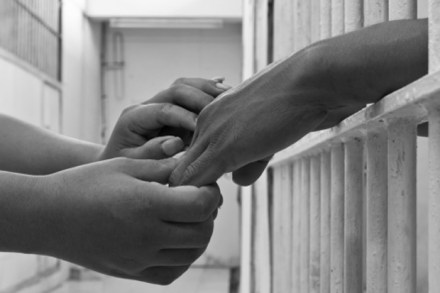
Off to prison to visit a writer friend, first jailed led some years ago for trying to find a hit man to kill his mother’s toy boy. My friend had no objection to his mother having boyfriends per se, but what irked him was that she’d left the toy boy her house. After good behaviour, my friend was released on the condition that he would not leave the UK. But he did, phoning every so often from unexpected places such as Lake Geneva and Chartres. A court meanwhile had awarded him the house, so the hit man had been unnecessary. Last year, re-entering the UK by plane, my friend was met by police and taken away in handcuffs. Thanks to the Howard League for Penal Reform and English PEN, the ban on prisoners receiving books is over, so at least he can read.

Alexandra’s Fuller’s parents are the stars even when their daughter is divorcing, in this sequel to the bestselling Don’t Let’s Go to the Dogs Tonight

‘Double ouzo, hold the Coke,’ Mum ordered at the Mkushi Country Club bar, during spanikopita night. ‘My daughter’s a lesbian.’ The Greek farmers blinked at her uncomprehendingly. ‘Oh, don’t pretend you don’t know what I’m talking about. You bloody people invented it.’ Alexandra Fuller’s wild parents make good copy, as was clear in Don’t Let’s Go to the Dogs Tonight, her bestselling 2002 memoir about her chaotic, often tragic, childhood in Zimbabwe (then Rhodesia).

No pains spared

Matthew, the author’s son, and the subject of this memoir, had Downs Syndrome, but I should state at once that the book is much more than a guide for parents, or carers, of such children. It stands on its own as a work of literature and should win the PEN/Ackerley prize for memoir and autobiography. The author, in her poised, sometimes old-fashioned prose, beguiles the reader. As a little girl, she befriended a neighbour’s child whom she first saw through the hedge: Large and silent … she wore a bow in her hair and usually carried a doll in her arms. Her smile melted my heart, and though I could not understand the reason for this, it sometimes brought tears to my eyes.

Remembrance of girls past

Past Imperfect, by Julian Fellowes ‘But why should people want to read about us?’ exclaimed my cousin, a debutante of the season of 1968, which forms the backdrop of this new novel by Julian Fellowes, author of Snobs, winner of an Oscar for Best Original Screenplay (Gosford Park) and screenwriter of the new film, The Young Victoria. Fellowes, a ‘debs’ delight’ of that year, has set himself up as the chronicler of the more old-fashioned members of the upper classes and their hangers-on. Snobs, which featured a middle-class girl with a socially aspiring mother, was about choices; Past Imperfect is more ambitious, with many more characters and a time-span of several decades. Its plot cannot fail to grip the reader.

Scared of Christmas presents

In this fascinating book about her two autistic sons Charlotte Moore describes what would be a nightmare life for most of us. I’d like to be able to have a bath without anybody else joining me in it … to open my handbag without finding a bitten-off lipstick or a capless, leaking pen … to leave a pot boiling on the stove while I answer the door, without finding that an ingredient I hadn’t bargained for has been added in my absence … to be able to watch television; usually I can’t, because the boys go to bed late. I’d love to be . . . secure in the knowledge that my sons are all safely and constructively occupied without my constant vigilance. But this is just how life is, and I don’t waste time or energy fretting about it.

Angels and ministers of grace

Despite its provocative title, this is not a salacious book. Any reader hoping for disclosures about Woolf's lesbian love affairs will be disappointed. But do we really need another book on Virginia Woolf when there are already two excellent biographies, by Quentin Bell and Hermione Lee, and numerous essays - such as Helen Dunmore's perceptive Virginia Woolf and her Relationships with Women in Issue 23 of the Charleston Magazine? Wouldn't we do better to reread Woolf's own extraordinary prose in, say, The Waves, which I am now doing, encouraged, I admit, by reviewing the above? Vanessa Curtis is co-founder of the Virginia Woolf Society of Great Britain and editor of the Virginia Woolf Bulletin.