John Lee

John Lee

Dr John Lee is a former professor of pathology and NHS consultant pathologist.

The dangers of a Covid ‘elimination’ policy

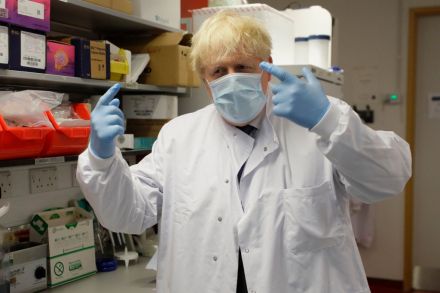
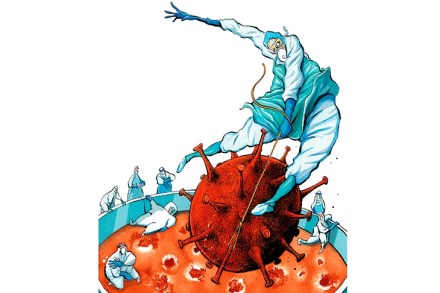
It’s understandable that, in a crisis, politicians reach for wartime metaphors – but they don’t always fit. There was the 'war on terror'. Now we have politicians talking about the need to vanquish Covid-19. This is about more than language. There’s a big difference between a Covid-19 eradication strategy and one that seeks to find a way to live with this virus, in the way we learned to live with Swine Flu (or, as it’s now called, flu.) The Prime Minister is leading by example. Addressing a committee of conservative MPs on Thursday, he said: 'We have to make sure that we defeat the disease by the means we have set out.' Later he said: 'We must, must defeat this disease.
Our immune system is the pandemic’s biggest mystery

What have we been witnessing these past few months? A worldwide crisis caused by the arrival of a new virus of exceptional virulence — or a crisis of awareness, in which incomplete information led to a wildly disproportionate reaction? Have lockdowns, face coverings and the rest saved millions of lives worldwide? Or have they had relatively little effect on the course of the pandemic, and ended up causing more harm than good? And why, so far, is Britain not seeing the surge of Covid-19 infections reported in Spain and France? What are we missing? We still know a lot less about Covid-19, and about viruses in general, than you might have been led to believe.

The fatal mistakes which led to lockdown

Over the past few weeks, my sense of the surreal has been increasing. At a time when rational interpretation of the Covid data indicates that we should be getting back to normal, we instead see an elaboration of arbitrary responses. These are invariably explained as being ‘guided by science’. In fact, they are doing something rather different: being guided by models, bad data and subjective opinion. Some of those claiming to be ‘following the science’ seem not to understand the meaning of the word. At the outset, we were told the virus was so pernicious that it could, if not confronted, claim half a million lives in the UK alone. Its fatality rate was estimated by the World Health Organisation at 3.4 per cent. Then from various sources, we heard 0.

Science, doubt and the ‘second wave’ of Covid

In taking a position on an issue, most of us like to think that we accumulate evidence, consider the pros and cons, and then rationally come to a view that we’ll be willing to change if and when the evidence demands it. But it turns out that this is very much a minority way of going about things. The psychological evidence is very clear. What most people do is take a position very soon after being presented with an issue, and then accumulate evidence and reasoning to justify that position. This goes some way to explaining the increasing polarisation of views about coronavirus, which have been hardening over the last few weeks.

Audio Reads: Katy Balls, Dr John Lee, and Lionel Shriver

24 min listen

Hear Katy Balls on the long term impact of the Cummings affair; Dr John Lee on the problem with the way we are counting Covid deaths; and Lionel Shriver on how life isn't worth living without a little risk.Get a month's free trial of The Spectator and a free wireless charger here.

The way ‘Covid deaths’ are being counted is a national scandal

As a pathologist, I’m used to people thinking that my job mainly involves dealing with death. But nothing could be further from the truth. That is why I and many of my colleagues are so dismayed by changes introduced during the coronavirus epidemic which mean that pathology has not been able to play the role that it should have in helping to understand this new disease. The word ‘pathology’ tends to conjure up images of body bags, mortuaries and murder investigations. ‘Ho ho,’ people say, ‘your patients can’t answer back.’ They imagine days spent trudging across fields to reach murder scenes, Silent Witness-style, and nights sifting through arcane evidence to catch the perpetrators.

What the Dominic Cummings saga tells us about lockdown

Remember 'following the science' on Covid? It feels like a while. That was supposed to be about how we responded to a new virus posing an existential threat to society. But we now seem to have moved on to a purely political phase, focussed on rules written in the early phase of the epidemic (based on incomplete and mistaken information) before it became clearer that the threat we face is pretty far from existential. While there’s plenty we don’t know about Covid, the big-picture science has been settled for some time already. As epidemics go it’s not that bad. It kills mainly the very old and infirm; children and fit people under 60ish often get away with mild or asymptomatic infection. Those who become ill do not, in fact, die like flies.

Ten reasons to end the lockdown now

Writing in this magazine a month ago, I applauded the government’s stated aim of trying to follow the science in dealing with Covid. Such promises are easier made than kept. Following science means understanding science. It means engaging with rival interpretations of the limited data in order to tease out what is most important in what we don’t know. Instead, the government in the UK (and many other places) seems uninterested in alternative viewpoints. The chosen narrative – that lockdown has saved countless lives – has been doggedly followed by all spokespeople. No doubt is allowed. We have been seeing the groupthink response to a perceived external threat that Jonathan Haidt describes so lucidly in his excellent book on human moral thinking, The Righteous Mind.

Covid’s metamorphosis: has lockdown made the virus more deadly?

‘Nothing makes sense in biology, except in the light of evolution,’ the splendidly named biologist Theodosius Dobzhansky wrote in 1973. It’s a good rule of thumb. Despite near-miraculous advances in medical science we remain biological beings, subject to biological laws. None is more central to our understanding of disease than evolution. Yet this theory remains poorly understood and poorly utilised in medicine. And an evolutionary perspective raises important questions about the drastic action we have been taking to confront Covid-19. Most doctors are too busy dealing with the day-to-day deluge of cases to have much time for what they may consider abstruse academic ideas.

Could the lockdown have side-effects no one has considered?

From our US edition

‘Nothing makes sense in biology, except in the light of evolution,’ the splendidly named biologist Theodosius Dobzhansky wrote in 1973. It’s a good rule of thumb. Despite near-miraculous advances in medical science we remain biological beings, subject to biological laws. None is more central to our understanding of disease than evolution. Yet this theory remains poorly understood and poorly utilized in medicine. And an evolutionary perspective raises important questions about the drastic action we have been taking to confront COVID-19.Most doctors are too busy dealing with the day-to-day deluge of cases to have much time for what they may consider abstruse academic ideas.

effects

Do face masks work? A note on the evidence

Should we, or should we not be compelled to wear face masks during a virus epidemic? It sounds a simple enough question. Indeed the answer seems so obvious to many, including the Mayor of London, Sadiq Khan, that they are questioning why this measure is not already mandatory. Surgeons wear them; they filter the air we breathe; viruses are in the air; let’s get everybody wearing them. Other countries have, so they must be helpful. It seems so straightforward. Unfortunately it’s not as simple as that, and the obvious becomes less obvious the more you look at it.

Where is the vigorous debate about our response to Covid?

After a career as a scientist and clinical academic, I have been struck by how often they (we!) have very complicated and exceedingly well-reasoned ways of getting things quite wrong. That’s why I have always thought it best for the recommendations of experts to have ‘advisory’ status only. Experts’ roles are to examine the minutiae of a small subject area – with a view to gaining or advancing understanding. It is the job of our politicians and civil servants to develop appropriate policies.  Experts can be guilty of being monomaniacs, interested only in the thing they are studying. That’s understandable, of course, because many of these things are hard to comprehend.

How to understand – and report – figures for ‘Covid deaths’

Every day, now, we are seeing figures for ‘Covid deaths’. These numbers are often expressed on graphs showing an exponential rise. But care must be taken when reading (and reporting) these figures. Given the extraordinary response to the emergence of this virus, it’s vital to have a clear-eyed view of its progress and what the figures mean. The world of disease reporting has its own dynamics, ones that are worth understanding. How accurate, or comparable, are these figures comparing Covid-19 deaths in various countries? We often see a ratio expressed: deaths, as a proportion of cases. The figure is taken as a sign of how lethal Covid-19 is, but the ratios vary wildly. In the US, 1.8 per cent (2,191 deaths in 124,686 confirmed cases), Italy 10.8 per cent, Spain 8.

How deadly is the coronavirus? It’s still far from clear

In announcing the most far-reaching restrictions on personal freedom in the history of our nation, Boris Johnson resolutely followed the scientific advice that he had been given. The advisers to the government seem calm and collected, with a solid consensus among them. In the face of a new viral threat, with numbers of cases surging daily, I’m not sure that any prime minister would have acted very differently. But I’d like to raise some perspectives that have hardly been aired in the past weeks, and which point to an interpretation of the figures rather different from that which the government is acting on.