Dominic Green

Dominic Green

The Green Room: Spectator USA’s Life & Arts podcast: Talking blues with Chris Thomas King

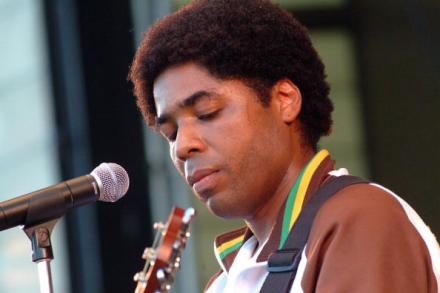
This week on the Green Room, I’m talking the blues with Grammy-winning blues artist Chris Thomas King. Earlier this week, King wrote for Spectator USA a scathing criticismof the policies of the Grammys’ Blues category. King is an African American from Louisiana. He is the son of a blues musician, and grew up in his father’s juke joint. He was one of the last blues musicians to be ‘discovered’ by anthropologists from the North. He has won two Grammy awards, in 2001 for the soundtrack of the Coen Brothers’ film O Brother, Where Art Thou?, in which he starred as a blues singer who has sold his soul to the devil, and in 2002 in the category of Best Historical Album, for his tribute to Charley Patton, Screamin' and Hollerin' the Blues.
Court with its pants down

From our US edition

Queen Anne (1701-14) is remembered, if at all, for a school of doughty, dark furniture design which no one likes these days; for signing the paperwork that joined England and Scotland to form the United Kingdom, which fewer and fewer people like these days; and for enduring 17 pregnancies. Only five of these carried living children to term, and none of the infants survived past the age of two. She died depressed, obese and crippled with gout, and the House of Stuart ended its short and ignominious run on the throne when she did.Queen Anne probably did not go in for red-hot lesbian romping with her favorite, Sarah Churchill, wife of the Duke of Marlborough and distant ancestor of Winston Churchill.

emma stone olivia colman the favourite

George H.W. Bush was the representative president

From our US edition

The chapters of the life of President George H.W. Bush, who died on Friday night aged 94, are the history of an era. If he was not one of Emerson’s ‘representative men’, it was to the good. The ‘representative man’ of Emerson’s imagination was Carlyle’s ‘great man’, a conqueror who stamped his mark on his age by forcing his environment to reflect his inborn character. G.H.W. Bush’s character reflected its environment, and represented the virtues of a vanishing class and suddenly distant age. Born in 1924 a senator’s son, Bush was educated at Phillips Academy and Yale, decades before the acronym WASP was coined. In 1942, he enlisted in the US Navy on his 18th birthday. As a naval aviator, he returned to duty after being shot down and rescued from the Pacific.

george bush representative

The Green Room Podcast from Spectator USA: What do we get? Pete Shelley of Buzzcocks

Two poets named Shelley have graced the English language. One was Percy, and the other is Pete. Just as an intellectual is someone who can hear the William Tell Overture without thinking of the Lone Ranger, so a true lover of a three-minute pop song is someone who, hearing the words ‘Shelley’ and ‘Manchester', thinks not of ‘The Masque of Anarchy’ and the Peterloo Massacre, but of ‘What Do I Get?’. ‘Ever Fallen In Love (With Someone You Shouldn’t Have)?’, ‘I Don’t Mind’, and the dozens of other songs that Pete Shelley wrote and sang with Buzzcocks.

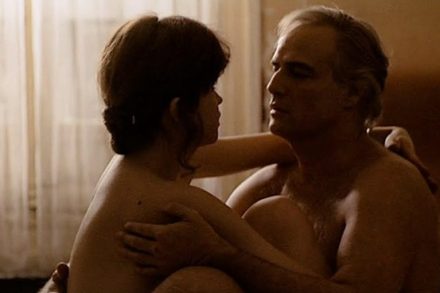
Bernardo Bertolucci was more pervert than genius

From our US edition

Connoisseurs of anal sex are mourning the death of Bernardo Bertolucci, who died yesterday aged 76. He was a titan of Italian cinema in the Sixties and Seventies, so younger readers will need to be told who he was. Bertolucci should not be confused with another director whose name will also forever be associated with anal sex, John Stagliono, the pornographic actor-auteur who works under the nom de rectum ‘Buttman’ and entered European cinema through the backdoor in 1991 with Buttman’s European Vacation. Bertolucci was in no way vulgar and low-minded like Stagliono. He was vulgar and high-minded. He was the Buttman of the intellectuals. There was plenty of sex in Bertolucci’s films, but you had to stay awake for it.

bernardo bertolucci

’Twas the night after Thanksgiving

From our US edition

’Twas the night after Thanksgiving 2028, and all the White House was dark, except for the kitchen. President Trump leant against the range, sipping from a can of Poland Spring cranberry seltzer as she watched the First Husband scraping the last of the stuffing from the cavity of the giant turkey. ‘Harder,’ she ordered. ‘Ivanka, I’m trying,’ Jared said. He was glad MBS and Kanye had already left. Thanksgiving 2028 had been just like Thanksgiving 2018, except for the moment at the table when they had been taking turns to say what they were grateful for, and Jared’s electronic ankle bracelet had gone off.

after thanksgiving

The Green Room podcast: Nicolas Roeg and Performance

From our US edition

The director Nicolas Roeg, who died on Friday aged 90, was a master of daring, dreamlike cinema — so daring and dreamlike, in fact, that the studios often didn’t know what to do with his films. Walkabout (1971) lost money on its release, but slowly became a cult classic. Bad Timing (1980) so alarmed the Rank Organization that they billed the film as ‘a sick film made by sick people for sick people’. But as Roeg showed with 1973’s Don’t Look Now or 1985’s Insignificance, he was more than a purveyor of shocks and chills, or split-screen, time-jumping Sixties’ tricks. Roeg had risen through the ranks of the British film industry, from one indispensable role to another: teaboy to director.

The Green Room podcast from Spectator USA: What a Performance!

‘You’re a comical looking geezer. You’ll look funny when you’re fifty,’ Chas the gangster says to Turner the rock star in Performance, Donald Cammell and Nicholas Roeg’s notorious Sixties movie. ‘A heavy, evil film,’ the reviewer from It magazine wrote when Warner Brothers finally released Performance in 1970. ‘Don’t see it on acid.’ Fifty years on, I’m casting the pod on this week’s Green Room with cinema historian Jay Glennie, author of a definitive account of the legendary and still alarming making of Performance.

Airbnb’s boycott and Facebook’s child bride: the moral vacuum of the internet

From our US edition

A wise meme once said that you should never attribute to malice that which can be adequately explained by stupidity. If you want to know who said that, you can look it up online. But you don’t need to look it up online, because the internet has freed us all from the bonds of copyright law and common decency. If you did look it up online, you will find that this aphorism was originally popularized in the 1980s in The Jargon File, a computer programmers’ handbook. So needy were the nerds to avenge themselves on the physical world, source of their steamy-spectacled, spotty-faced humiliations, that they tossed this aphorism around without tracking down its source.

Airbnb’s

As Robert the Bruce, Chris Pine smolders like a castle the morning after its sacking

From our US edition

Old age, Bette Davis said, ‘ain’t no place for sissies’. Neither was the Middle Ages. They were the Dark Ages, a world lit only by fire, in part because you had thrown the innards of your enemy onto the flames. The roads were terrible, and the primeval forest had recovered the farmland once worked by retired Roman legionaries. No wonder Dante’s traveler got lost in the woods in middle age. In Britain, civilization collapsed when the Romans went south. A long night of Scandinavian noir ensued, as raiders with names like Erik Bloodaxe set the social tone. For nearly a millennium, no one in England built a flushing lavatory, because there were no drains to hook it up to. Everyone stank. The peasants were especially revolting, and the nobles were notably ignoble.

chris pine outlaw king

Why is Tommy Robinson banned from America?

From our US edition

What does Tommy Robinson, reformed soccer hooligan and English nationalist, have in common with Daniel Pipes, unreformed policy wonk and president of the pro-Israel Middle East Forum? Islam, that’s what. Not that Robinson and Pipes are joining the Sons of the Prophet. Rather, they’re joining forces against Islamist influence in their societies, and against two related, and perhaps more serious problems: the stifling of debate about Islamism and immigration, and how unaccountable social media companies censor the opinions they dislike, even if those opinions have broken no law. On Wednesday, Pipes and the MEF hosted British speakers for a panel in Washington, DC on ‘de-platforming’. The location was kept secret, for security reasons.

tommy robinson stephen yaxley-lennon

‘The Green Room’ Podcast from Spectator USA: the virtue of nationalism, with philosopher Yoram Hazony

‘Patriotism is the exact opposite of nationalism,’ French president Emmanuel Macron said at last weekend’s Armistice Day ceremonies. ‘Nationalism is a betrayal of patriotism. In saying ‘our interests first, whatever happens to the others,’ you erase the most precious thing a nation can have, that which makes it live, that which causes it to be great and that which is most important: its moral values.’ You’d have to be a philosopher to make sense of that. My guest this week on The Green Room, Spectator USA’s Life & Arts podcast, is one: I’m casting the pod with the Israeli philosopher Yoram Hazony, an expert on the philosophies of both religion and politics.

Donald Trump, Democratic president?

From our US edition

We’re all Trumpologists now. Like the Kremlinologists of the Cold War, monitoring the line-ups at missile parades to see who was in or out of the Politburo, we track the president’s Twitter twitches and off-the-cuff quips, then guess which way he’s going to go next. The Soviets were rational actors, and so was Donald Trump when he responded to the midterms. He called the split Congress a ‘beautiful, bipartisan-type situation’ — beautiful because the situation places Trump at the fulcrum of power, bi-partisan because no legislature will pass without both sides on board. Trump is the president who spent his first few days in the White House annulling Barack Obama’s executive orders.

donald trump democratic nancy pelosi

The Marie Colvin biopic is a study in compulsion

From our US edition

The truth hurts, and the standard of truth in war reporting requires eyewitness accounts of suffering and death. Marie Colvin of the Sunday Times of London, killed at Homs, Syria in 2012 in a targeted bombardment by Assad’s army reports, was the most accomplished war reporter of her time, and saw more war than most soldiers. Matthew Heineman’s A Private War, with Rosamund Pike as Colvin, is a cruel and haunting study in compulsion — the compulsion to tell the truth, the compulsion to live near death, and the compulsion to repeat the experience until death gets too near.

Rosamund Pike as Marie Colvin in A Private War

Only an idiot would predict tonight’s midterm results. So let me oblige

From our US edition

If a midterm is a referendum on a presidency, it is one that presidents usually lose, especially Republican presidents. Since the Civil War, the president’s party has gained seats one only three occasions: 1934, 1998 and 2002. Only on the last of those was recipient of the public’s inexplicable affection was a Republican president, in this case George W. Bush. And in that instance the public’s affection was explicable in the aftermath of the 9/11 attacks. So yes, Republican losses tonight will constitute a diminution of Donald Trump’s presidency. The question is not one of nature but of degree. Will the diminution resemble a mild paddling of the kind that a pornographic actress might perform on the presidential backside with a rolled-up magazine?

midterm results

Life & Arts Podcast: Heather Mac Donald on how race and gender pandering corrupts universities

This week on the Spectator USA Life & Arts podcast, I’m casting the pod with Heather Mac Donald. A scholar at the Manhattan Institute, Heather is the author of The Diversity Delusion: How Race and Gender Pandering Corrupt the University and Undermine Our Culture, a scathing and accurate critique of just about everything that’s gone wrong with American higher education. In her previous book, The War on Cops, Heather tried, she says, “to give voice to the millions of law-abiding minority residents of high-crime areas who support the police and are desperate for more law enforcement protection.

Axios on HBO: dumb TV for people who think they’re smart

From our US edition

We are so plagued by experts and inundated with know-it-alls that the popular reaction is to turn out the technocrats and embrace the know-nothings. A cynic might wonder if Axios, the political website that promises to cover issues with a series of bullet points totaling no more than 300 words, is a technocrat’s way of heading off the know-nothings, if only by ensuring that the people who still believe in expertise know a little. Brevity might be the soul of wit, but is it the meat of political analysis? Axios describes its info-gobbets as ‘smart brevity.’ Like smart foods and smart phones, this means pre-digested information, shot out in hard, pre-formed pellets. Axios offers smart conclusions, delivered with digital smartness.

jonathan swan axios jim vandehei trump hbo
orson welles

A bitter kind of greatness

From our US edition

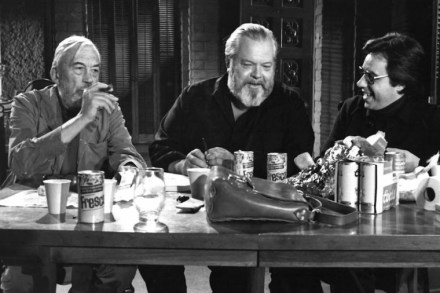
‘Have you seen the new Orson Welles?’ is not a question I ever expected to hear. I had heard about The Other Side of the Wind, the film that Welles tried to make after his return to Hollywood in 1970 and failed to finish over the next six years. I had read that Welles’s later career had been marred by uncannily bad luck, just as his early career, from the Bard-on-Broadway of Caesar (1937) to the radio broadcast of War of the Worlds (1938) to Citizen Kane (1941) had been propelled not just by prodigious energy and talent, but also by good luck.

Another Robert Redford obituary for the heroic white misfit

From our US edition

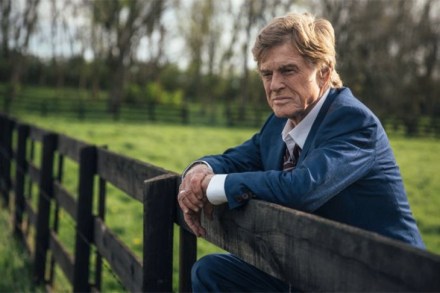
The Old Man and the Gun is a second farewell to film for Robert Redford. His first farewell, All is Lost (2013), made occasionally heavy weather of allegory on the high seas — the lone American yachtsman, asleep in his cabin despite the storm warning of 2008, springs a leak when his boat collides with a Chinese shipping container. This time, Redford is back on American soil, and on familiar ground, as the geriatric bank robber Forrest Tucker. After an allegory about the old man and the sea, the myth of The Old Man and the Gun. In Oklahoma in the early 1980s, Forrest meets the widowed Jewel (Sissy Spacek) when her car has broken down and his is being pursued by the police.

robert redford the old man and the gun

In a tech-obsessed world, only Generation X can fight back

This week on the Spectator USA Life ’n’ Arts podcast, I’m casting the pod with Matthew Hennessey. He’s an editor at the Wall Street Journal, and also the author of Zero Hour for Gen X: How the Last Adult Generation Can Save America from the Millennials (Encounter Books). It’s a fascinating read: part-political obituary of a generation that, squeezed between two larger cohorts, the Boomers and the Millennials, may have missed its historical cue; part-rallying cry because, as Matthew explains in our midlife crisis of a conversation, it’s not over yet. Generation X was raised with the manners and assumptions of the pre-digital world.