Diane Cole

The auteur Eugène Atget

From our US edition

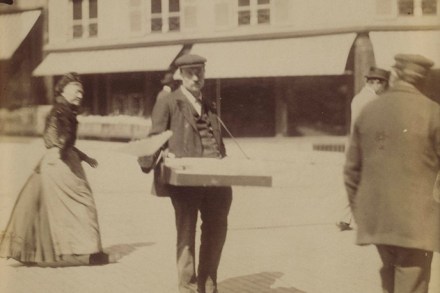
Few connoisseurs of the image are unfamiliar with the great French photographer Eugène Atget (1857-1927). But his name is, unfortunately, unfamiliar to the lay person. This is a shame: his gloriously detailed, sharply focused black-and-white images of late 19th- and early 20th-century Paris evocatively conjure the shadows and lights of the boulevards, parks and alleyways of the Belle Époque. His astonishing close-ups of finely crafted architectural details are as striking as his sometimes surreal views of storefront windows and food-stall displays. Whether training his bulky large-format view camera on scenes interior or exterior, he reveals an aesthetic sensibility exquisitely sensitive to the world around him.
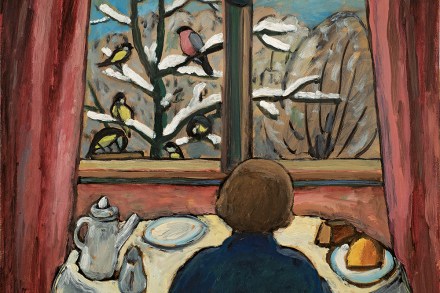
A vibrant, partial look at Gabriele Münter

From our US edition

Recognition can be late in coming for many artists, but perhaps especially so for women whose originality and talents too often become overshadowed by their more famous romantic partners. Museums are often eager to put on shows making this very argument as women artists are rediscovered. Sometimes the thesis succeeds; other times, it does not. The latest of these is the case of the German artist Gabriele Münter (1877-1962), whose reputation, until recent decades, rested less on her own body of work than on her long-time connection to her mentor and lover, the Russian expressionist Wassily Kandinsky (1866-1944). The Guggenheim Museum’s exhibition, Gabriele Münter: Contours of a World, attempts to rectify the imbalance.

In defense of Renoir’s pretty pictures

From our US edition

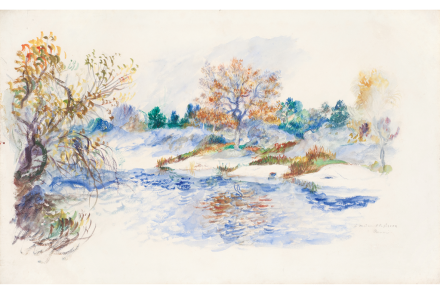
Those who think it’s chic to dismiss Renoir have a rethink coming, courtesy of the absorbing, highly informative exhibit Renoir Drawings, now on view in New York. Not so long ago, the idea of ousting Pierre-Auguste Renoir (1841-1919) from the canon of western art sparked a movement of sorts. “RENOIR SUCKS AT PAINTING,” proclaimed a protester’s sign at the Museum of Fine Arts in Boston in 2015. The performance artist Max Geller had organized the demonstration to condemn Renoir as a purveyor of “treacle.” His female nudes objectified women, it charged; even when clothed, they smiled and blushed too prettily. Indeed, Renoir’s work held value only for the unsophisticated and its popularity represented the triumph of the cliché.

renoir

Monet’s Venetian moment

From our US edition

If you crave art that will envelop you, book a ticket, pronto, to Monet and Venice at the Brooklyn Museum. Enveloppe was the term the French impressionist artist Claude Monet (1840-1926) used to describe the “beauty of the air around” the objects and landscapes he painted. “Other painters paint a bridge, a house, a boat… I want to paint the air in which the bridge, the house, and the boat are to be found – the beauty of the air around them, and that is nothing less than the impossible,” he said.

Monet

Ben Shahn’s work remains as timely as ever

From our US edition

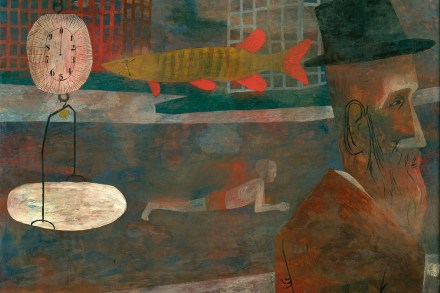
How can an artist express social and political dissent in a polarized, volatile time? Look no further than the sobering and rousing Ben Shahn: On Nonconformity. Throughout his decades-long career, Shahn (1898-1969) crafted paintings, murals, posters, drawings, photographs and prints chronicling the news of the world, with a focus on the suffering of society’s most wounded. This is the first major retrospective of his work to appear in the US since 1976. The country has changed, and yet Shahn’s work remains as timely as ever.  His social-realistic approach fell out of fashion as critics came to prefer abstract and pop art. But Shahn remained true to his own aesthetic, as the show’s 175 works demonstrate.

Shahn

How Esther inspired the imagination of Rembrandt

From our US edition

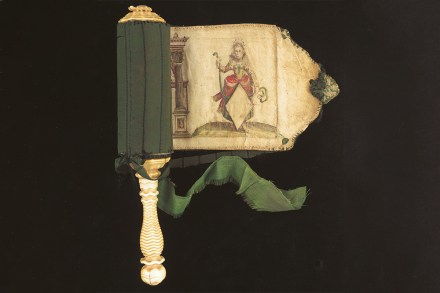
If you attended Sunday or Hebrew school, you know the story. There once lived in the ancient Persian city of Susa a King Ahasuerus and his Jewish wife, Queen Esther. At first she hid her Jewish identity from the king, only revealing it in order to foil the plot hatched by Haman, her husband’s Jew-hating second-in-command, to exterminate all who shared her faith. In doing so, Esther saved her people from destruction – and earned a volume in the Hebrew Bible named for her. Less well-known is that centuries later, in the Amsterdam of Rembrandt van Rijn (1606-69), Esther’s valor also made her a heroine to the citizens of the predominantly Protestant Dutch Republic.

Esther