Diana Hendry

Why it’s permissible to betray family secrets

Blake Morrison is the quintessential man of letters. More exactly, he’s a man of genres – poet, novelist, playwright, essayist, librettist and, most notably, memoirist. (Four memoirs so far, each a prize winner and/or bestseller). Although in the introduction to On Memoir he refutes the notion that he established the genre of life writing in the UK (he was professor of creative and life writing at Goldsmiths University, London for 20 years) or that he has ‘encouraged its growth’, he has somehow become its guru, the critic every literary editor turns to on the publication of yet another raw family story or celebrity revelation.

Memory test: The Candy House, by Jennifer Egan, reviewed

On page 231 of The Candy House, a sequel – no, a ‘sibling’ says Jennifer Egan – to the Pulitzer prize-winning A Visit From the Goon Squad, we meet a character called Noreen. Wasn’t she in Goon Squad? Quick check and yes, there she is playing a bit-part peeping through a fence. Now she’s older, madder and still obsessed with the fence. It’s hard to decide if it’s an advantage to have read the previous novel, or if it just makes reading The Candy House like the sort of memory test that could mess with your head. This is unfortunate, since memory is key to its themes: the future of technology and the quest for authenticity. A tech tycoon, Bix Bouton, has created ‘Mandala’, a revolutionary way of externalising your memory.

Am I the target of a publishing scam?

Recently I’ve been bombarded with emails from people who apparently are keen to promote or market one or other of my children’s books. A few appear to have actually read a book of mine and to know the name of the characters, others clearly haven’t. What they all have in common is that the book in question was published some years ago. A favourite seems to be The Very Snowy Christmas, a picture book published in 2020. Carmen would like to make sure it’s ‘cherished, shared and remembered in the conversation of parents, educators and readers’. It’s ‘about legacy’, she says. Sarah seeks to connect my book to ‘curated reading groups, parent-child clubs, seasonal reading circles’. Martin wants to make sure my story doesn’t ‘just sell but echoes, lives, endures’.

Am I ready for Turkey teeth?

My parents both had false teeth. My mother had all her teeth taken out one winter afternoon. I can remember her huddled by the electric fire with a small bowl of blood beside her, mourning their loss. It was a loss not just of teeth but of youth. She can’t have been much over 40. Because of her I feel rather proud of the fact that I’ve managed to hang on to mine. I tell this to my dentist, Marcus. He’s not impressed. I should have guessed by my stint watching the video in the waiting room of a blonde whitening her teeth and smiling. Just hanging on to them isn’t quite good enough. I haven’t had mine straightened, realigned or veneered. I haven’t had ‘a smile make-over’. Actually, I have rather large teeth.

Misfits unite: The Emperor of Gladness, by Ocean Vuong, reviewed

As a poet, Ocean Vuong has won every prize going. Now here’s The Emperor of Gladness, his second novel. His first, On Earth We’re Briefly Gorgeous, a coming-of-age story, is currently being filmed. This latest oneis wild, unwieldy and too long. It is fiction/autofiction mixed with 19th- and 20th-century warfare, plus contemporary angst and craziness. It has one preposterous scene that you wish were true, and never has a title been so misleading. It’s a book of moral, imaginative ideas with gripping stories, wonderful characters and writing that’s poetic and witty. I loved it. It opens with an introduction to the rural town of East Gladness, Connecticut, its citizens ‘not ambivalent to hope’.

Mothers and daughters: I Couldn’t Love You More, by Esther Freud, reviewed

A new novel by Esther Freud — her ninth — raises the perennial but always fascinating question about the use of autobiography in fiction. Since her first novel, Hideous Kinky, Freud has frequently used an underpinning of autobiography, but mostly it’s been discreet. You didn’t need to distinguish what was life, what fiction. But with I Couldn’t Love You More the auto-biographical element has become overt and somehow obtrusive. Freud’s previous novel, Mr Mac and Me, concerned with Charles Rennie Mackintosh’s stay in Suffolk at the start of the second world war, is on the cusp of being an historical novel. This one is close to autofiction.

Stationery is quietly making a comeback

All of a sudden, our local stationery shop – the Write Stuff – has grown a shelf labelled ‘Letter Writing & Correspondence: Original Crown Mill’. And there, in ranks, are pads of beautiful writing paper – vellum and laid, cream or white, A4 or A5 – plus boxed writing sets, decorated top and bottom with flowers and/or butterflies. All with colourful envelopes to match. ‘Goodness!’ I said to Antonia, who owns the shop. ‘Who is writing letters these days?’ ‘The young,’ she said. I was astonished and charmed. Immediately, I bought a pad of Original Crown Mill Laid (Finest quality since 1870) and decided to write to the granddaughter currently studying philosophy at York University, whom I rarely see or hear from.

A haunting mystery: Enlightenment, by Sarah Perry, reviewed

As ghosts go, Maria Vaduva, who haunts Enlightenment, is not a patch on the wild, tormented figure who stalks the pages of Sarah Perry’s previous novel, Melmoth. Where Melmoth, in rage and despair, haunts everyone complicit in history’s horrors, Maria is crossly plaintive. The disappearance of this unrecognised 19th-century Romanian astronomer from Lowlands House, a manor in the fictional small Essex town of Aldleigh (where marriage has brought her), becomes the obsession of Thomas Hart. He is an unlikely columnist of the Essex Chronicle, and Enlightenment’s central character. It could be said that he is at odds with life and that achieving harmony (on Earth and in heaven) is the novel’s underlying theme.

How I rank my friends

I like to think of myself as good at making friends. I tend to rank them. There are kindred spirits (rare), very good friends (perhaps five at the most), and good (ten or more). Friendships, like plants, need looking after; they require time and attention. One rank below friends are acquaintances. Acquaintances add warmth and comfort to life but are not essential. You can abandon an acquaintance without much compunction. But good friends nurture the heart and soul and are therefore vital. Kindred spirits? By them you know you’re not alone, not mad, not a terrible person and, amazingly, that you’re loved. I think back to childhood when the need for a best friend was absolutely paramount. I suppose it’s an early version of wanting a mate.

I love Edinburgh. I’m not sure it loves me

This year I shall have lived in Edinburgh for a quarter of a century. I fell in love with the city on the 23 bus travelling from the New Town to the Old Town. There was so much architecture. Gothic and Georgian, medieval, baronial. So many turrets and finials, tollbooths and towers. I was drunk on the stuff. Add pomp – a Royal Mile, a castle, a palace. Then the libraries, art galleries, museums. And that’s before you get to bookshops and Edinburgh’s proud moniker, the first Unesco City of Literature. What other city has a railway station (Waverley) named after a novel or a high street (Princes Street) with shops on one side and gardens on the other? The 23 bus was taking me to the psychiatric hospital just beyond Morningside Edinburgh doesn’t love me.

A painful homecoming: The Visitor, by Maeve Brennan, reviewed

Maeve Brennan (1917-93) was a supremely gifted Irish/American writer, whose work is periodically rediscovered, only to vanish again. It’s as if her literary reputation (she has been compared with Joyce, Flaubert and Chekhov among others) won’t stay fixed and is as homeless as she herself became. Arriving home to Dublin, Anastasia expects a warm welcome – only to be steadily spurned by her grandmother Aged 32, she secured a job at the New Yorker, contributing sardonic observations of city life as well as wry, melancholy short stories, part-fiction, part-memoir. The Visitor, her only novella, written in her late twenties when she was working as a journalist in Manhattan, remained unpublished in her lifetime.

The politics of the hospital ward

Before the op, I was going to write a jaunty piece about how getting yourself ready to go into hospital is like getting ready to go to a wedding. Both require new clothes – that is unless you feel confident that your jimjams – dressing gown, slippers and, for goodness’ sake, knickers – are all presentable. Now, back home after quite a major op for bowel cancer, I’m not feeling quite so jaunty. At a time when the NHS is described as broken and in need of reform, I know I’ve been lucky. I was diagnosed early, had a brilliant consultant surgeon whose communication skills were equal to his surgical skills, and a specialist nurse who was able to talk me through my many anxieties.

Life in the slow lane

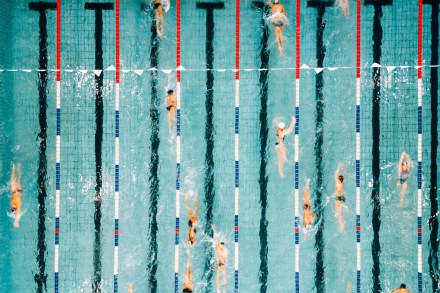
Mondays and Thursdays are my days. Eight a.m. Before breakfast. The pool opens at seven for those zealous souls who like to swim before going to work. They’re gone by eight when the pool is divided into five lanes with arrows telling you which way up and which down. I like lanes. You know where you are with lanes. Let those mad fools in the fast lane work up a storm with their splashy-flashy butterfly, the sexy crawl, the somersault flip back to the beginning and off again. I’m in the slow lane. It could be a metaphor for my life. I like lanes. You know where you are with lanes I grew up by the sea and learnt to swim when I was six.

Small but perfect: So Late in the Day by Claire Keegan reviewed

In an email from Claire Keegan’s Fiction Clinic, I learned that she’d be delivering three seminars in Wexford on ‘How Fiction Works’, while down the road, at the Write by the Sea Festival, Faber would be launching her new hardback. I was excited. I’m a Keegan fan. I even considered going to Wexford. Keegan’s method is to take a big issue and then put a small, homely example under the microscope So I was a little miffed when the hardback turned out to be a large-print 47-page story. Faber has been publishing short stories in small pleasing paperbacks, modestly priced (£3.50) for years. It did Keegan’s The Forester’s Daughter in this way. Usually the stories are not new but reprints from larger collections. Well, maybe new equals hardback equals £8.99. Phooey!

The long journey from Lindisfarne: Cuddy, by Benjamin Myers, reviewed

Benjamin Myers had a lucky break with his 2017 novel, The Gallows Pole. First published by a small indie press, it won the Walter Scott Prize for historical fiction, garnered a two-book deal from Bloomsbury and this year is to be adapted by Shane Meadows as a BBC television series. It’s a humble orphan girl, not one of the Lindisfarne monks, who is given a vision of Durham cathedral He is something of a maverick – his work a mix of Hughesian lyricism and noir violence – and his success has been hard won.  He has been working the literary coal face for almost 20 years, trying every kind of genre while knocking on publishers’ doors and finding them shut.

Three men on a pilgrimage: Haven, by Emma Donoghue, reviewed

I used to envy Catholic novelists – Graham Greene, Muriel Spark, François Mauriac – as having that extra point of view, namely eternity. The Irish-Canadian novelist Emma Donoghue doesn’t entirely qualify as a Catholic writer, even though she’s on record as saying she’s currently obsessed with Catholic theology, specifically Purgatory, but there’s a thread of Catholicism (particularly the Irish variety) in many of her books. Also, it has to be said that she’s frightfully good at suffering and endurance. I thought this when reading her 2020 novel The Pull of the Stars, set in the 1918 flu epidemic, and Haven is no exception. This must surely be her most Catholic novel.

Compassion and a gift for friendship are touchingly evident in Ann Patchett’s These Precious Days

It has to be one of the most extraordinary stories of lockdown — how Tom Hanks’s assistant Sooki Raphael, undergoing treatment for recurrent pancreatic cancer, came to be living in the basement of the American novelist Ann Patchett and her husband Dr Karl VanDevender. How it happened is told in the title story of These Precious Days, Patchett’s second collection of essays. Asked to endorse Hanks’s short story collection, Uncommon Type, and then to interview him on stage during his tour, Patchett first meets Sooki in the wings of a Washington theatre. Hanks, by way of reciprocation, agrees to do the audio recording of Patchett’s eighth novel, The Dutch House, and a ‘sporadic email exchange’ between Patchett and Sooki develops into a friendship.

Dublin double act: Love, by Roddy Doyle, reviewed

Far be it from me to utter a word against the patron saint of Dublin pubs, Roddy Doyle. Granted he’s a comic genius, his dialogue comparable with Beckett and that this, his 12th novel, is garnering rave reviews in America. But is not Doyle’s trademark conversation between two men in a pub not just a little interminable? Love follows on from Two Pints (a play), Two More Pints and (last year) Two for the Road – two men chewing the fat on news events from 2014 to 2019. Squibs compared to Love, which is bigger, deeper, longer — but still two men in a pub. Joe and Davy, fifty-plus drinking buddies, meet again after a long gap. Davy, now living in England, is in Dublin on a visit.

Unreliable memories: Laura Laura, by Richard Francis, reviewed

Just imagine: you reach a certain age and you become your own unreliable narrator. Gerald Walker, the protagonist of Richard Francis’s 12th novel, is a retired history professor who fears that ‘chunks of his life might go missing’. Laura Laura describes a year in his life which, in seamless flashbacks, encompasses most of his past. It opens with Gerald’s late-night encounter with a homeless, possibly suicidal, waif called Laura. She revives his suppressed memory of a previous Laura, a research student with whom he’d had an illicit fling, best forgotten.

Violence and cross-dressing in post-bellum Tennessee: A Thousand Moons, by Sebastian Barry, reviewed

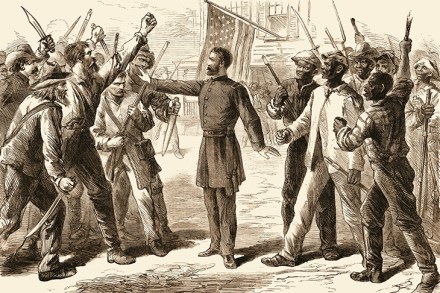
It was perhaps a mistake to re-read Sebastian Barry’s award-winning Days Without End before its sequel, A Thousand Moons, since the two soon began to swim together in my head — not least because Moons is a kind of mirror image of Days.Winona, the Indian orphan girl adopted by the Union soldiers Thomas McNulty and ‘handsome’ John Cole in Days, takes over the narration. We’re now post-civil war, and the three are scraping a living on a farm in Tennessee. Days (with Thomas as narrator) began with two starving émigré boys earning their keep as ‘prairie fairies’ in a Missouri saloon before joining the army. Moons opens with Winona in her teens.