Debbie Hayton

Debbie Hayton

Debbie Hayton is a teacher and journalist. Her book, Transsexual Apostate – My Journey Back to Reality is published by Forum

Labour’s schools trans policy is pretty sensible

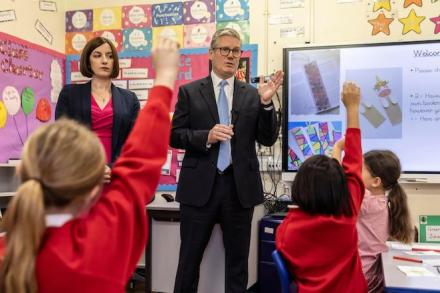
According to some of this morning’s headlines, from next September children will be allowed to change their gender at school and use different pronouns. No doubt some adults will be horrified by this, while others will be outraged by the restrictions placed on these so-called trans kids. While it is easy to criticise this guidance as ‘choose your gender, choose your pronouns’, that’s not what the draft document says The truth is that a small number of children have been changing their gender – and requesting that other people refer to them by different pronouns – for more than ten years.

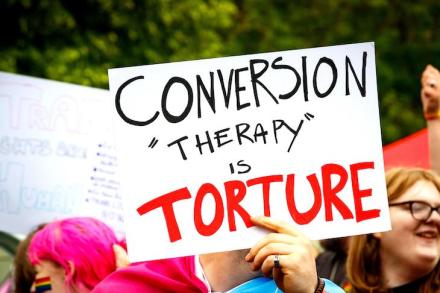
Why this trans person is troubled by a conversion therapy ban

Conversion practices are in the news again, at least if you listen to the BBC. We woke up to the Today programme on Friday recounting appalling stories of Electric Shock Aversion Therapy (ESAT) from years past. Further instalments were delivered on the corporation’s Six O’Clock News. Gay and lesbian people were subjected to those horrors in a futile attempt to change their sexual orientation. Outrageously, this happened within the beloved NHS. Following a BBC investigation, the government will now investigate the historical use of ESAT in NHS hospitals. Good, but this horse has already bolted. ESAT is not supported by professional bodies, and it is no longer used by NHS clinicians. Were any quacks to use it elsewhere, they would be wide open to accusations of abuse.

A four-day week won’t save teachers from burnout

Campaigners have urged Bridget Phillipson to give teachers in England and Wales a day out of school every week with no loss of pay. The 4 Day Week Foundation believes that shorter working weeks can reduce burnout, improve productivity and support better work-life balance. What’s not to like about that? Quite a lot, actually. The aim is not to introduce three-day weekends but allow teachers to work from home one day in every five. Teachers like me certainly need time to plan schemes of work, prepare lessons, mark our pupils’ work, and deal with the next crisis. We need more of it during the school day. But that does not seem to be the plan.

Why are we testing puberty blockers on children again?

Puberty blockers are powerful drugs with unproven benefits and significant risks. Those were not my words, they came from a statement by Dr Hilary Cass when this off-label use of injectable gonadotropin-releasing hormone agonists was banned indefinitely last December. Streeting needs to change tack. For the children, if not his own reputation However, there was a loophole. Cass went on to recommend that puberty blockers, ‘should only be prescribed following a multi-disciplinary assessment and within a research protocol’. Over the weekend, it was reported that scientists at King’s College London have been granted ethical approval to administer these drugs to dozens more children. Why? What more is there to be learned?

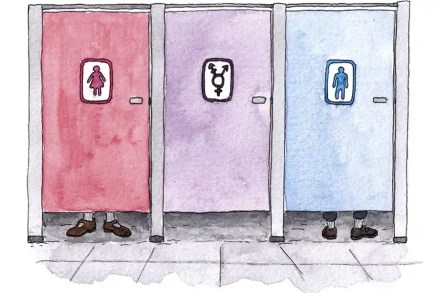
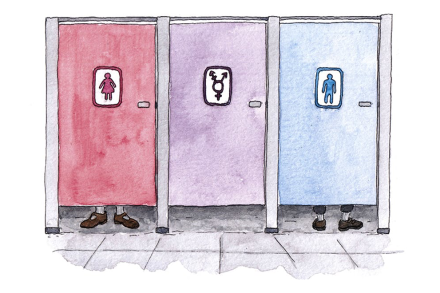
There’s no easy way to manage single-sex spaces

Transgender people could be banned from single-sex spaces based on how they are perceived by other people according to the Times. The newspaper reports seeing a copy of the Equality and Human Rights Commission’s transgender guidance that was handed to ministers in early September. The EHRC was never going to please both sides of what has become an impassioned debate. Now it seems that they have come up with a code of practice that will please neither. The gender identity lobby will hate it because it will require transgender people to put on some sort of performance to access spaces designated for the opposite sex.

Why has Martine Croxall been censured by the BBC?

Martine Croxall’s eyes spoke louder than her words when she corrected the clumsy and unnatural use of ‘pregnant people’ on her autocue earlier this year. As a result, the newsreader found herself slap bang in the middle of the toxic dispute over the language of ‘inclusion’. Despite being congratulated at the time by viewers who were relieved that at least one person at the BBC still knew that women give birth to the next generation, Croxall has now been censured by Corporation’s Executive Complaints Units. Her facial expression, it was ruled, expressed a ‘controversial view about trans people’. 🚨In June, a BBC teleprompter instructed presenter, Martine Croxall, to say ‘pregnant people’.She, bravely, corrected this term by saying ‘women’.

Where’s the money for Labour’s triple science plan?

Science, which has been kicked about since GCSEs replaced O-Levels in 1986, is in for another shake-up. The latest review of the curriculum – commissioned by Education Secretary Bridget Phillipson – is set to recommend that all schools must teach separate sciences to children in Years 10 and 11. That should be a good thing. ‘Triple science’ won’t be mandatory, but it will become a statutory entitlement alongside the usual diet of ‘double science’.  If a child wants to learn an extra dollop of science then that will be their right. What’s not to like about that?

Should teachers be allowed to work from home?

Teacher recruitment and retention have been associated with the word 'crisis' since I joined the profession thirty years ago. But Daniel Kebede’s idea to give teachers a day each week to work and ‘mark from home’ is not the answer. Kebede is the general secretary of the National Education Union. His job is to speak up for his members – many of whom, like me, work very long hours. According to the Department for Education, full-time teachers put in an average of 52.4 hours per week during term time. The work might be rewarding but it is also gruelling and often challenging. Yes, the holidays and the pension are nice but, less than three weeks into term, I am sinking under the sheer volume of work that needs to be done by the end of the week, never mind half term.

Why is the YHA allowing males to stay in women’s dorms?

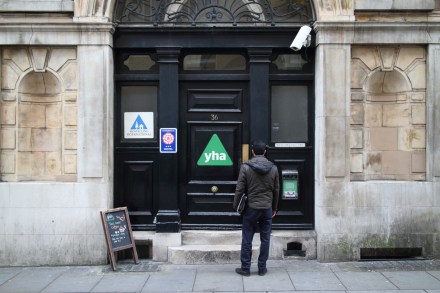
On April 16, the Supreme Court ruled that the meaning of the terms  ‘sex’, ‘man’ and ‘woman’ in the Equality Act refer to biology. More than three months later, you might think that the Youth Hostels Association (YHA) – an organisation that provides single sex dormitories in hostels across England and Wales – would have reviewed their policies to ensure that they were consistent with the law. They need to review their arrangements for transgender guests as a matter of urgency I did and, perhaps naively, I wondered if the ruling might actually work in my favour. I know I am not a woman and so I pay extra for a private room when checking into their hostels.

ITV’s Transaction is painfully unfunny

The plot of Transaction, a six-part comedy currently showing on ITV2, is simple. A supermarket accused of transphobia hires a transgender night shift worker to protect themselves from an activist mob hammering on the doors. The problem for manager Simon (played by Nick Frost) is that he employs a transwoman on a mission to be outrageous, vulgar and crude, and to lecture the audience on trans rights. Promoted as humour, there's a big problem: it just isn't funny. https://www.youtube.com/watch?v=RtqwcOHCFM4 Transaction was written and created by Jordan Gray who also plays the part of egocentric transwoman Liv, someone more accustomed to sponging off friends and surfing the internet than earning a living stacking shelves on the night fill.

No, British trans people aren’t at risk of ‘genocide’

The Supreme Court judgment on the definition of a woman on 16 April restored a degree of sanity to a world that was in danger of going mad. Even Keir Starmer now knows that a woman is a matter of biology rather than ideology. Can somebody please tell the Americans? Or, more precisely, those progressive types over the pond who like to concern themselves with other people’s business. The Lemkin Institute for Genocide Prevention and Human Security is an American non-profit organisation that started out to address concerns about the situation in Iraq in the wake of Isis. The institute claims to connect ‘the global grassroots with the tools of genocide prevention’, and generally to do a bit of good in the world.

Bristol museum’s trans exhibition is like something out of a cult

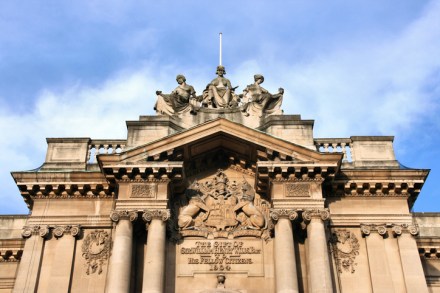
The Bristol Museum and Art Gallery is one of those places that makes me feel uncomfortable. I feel picked-on even visiting the website. At the top of the screen – before any mention of the collections and exhibitions – we are all told that 'Bristol Museums welcomes trans and gender-diverse visitors, volunteers and members of staff'. Perhaps this is a response to the Supreme Court judgement that biological sex quite rightly takes precedence over paperwork when distinguishing women from men? But I find it unhelpful and intrusive. I might be transsexual, but I am a human being just like everyone else, and I don’t need special treatment.

The tyranny of GCSEs

Deep within the workings of an electric motor lies a split-ring commutator. It reverses the current flowing through the coil every half rotation so that the force on the coil also reverses as it spins between a pair of opposing magnetic poles. If ever it was necessary to recall such esoteric minutiae, the time is now – if you are 16 years old and facing the prospect of GCSE exams, that is. Hundreds of thousands of children in Years 11 and 13 are currently in the middle of exam season, but for what purpose? We need to do better for the next generation and for schools I cited the electric motor because I teach science in a secondary school in the West of England.

The truth about trans rights in Britain

The Supreme Court judgment on sex and gender was a welcome return to common sense. As far as the Equality Act is concerned, even Keir Starmer now knows that a woman is a biological female and a man is a biological male. The task of producing new – and legally compliant – guidance for employers and service providers falls on the Equality and Human Rights Commission (EHRC). The organisation has moved quickly.

Starmer’s words about ‘trans women’ are too little, too late

When will Keir Starmer finally show some leadership over the most fundamental distinction in human society: the difference between men and women? The Prime Minister's silence after the Supreme Court judgement last week had been deafening. The ruling – which stated that sex is binary – brought clarity and restored sanity; it's a pity the same could not be said about the PM's thinking when it comes to defining what a woman is. When put on the spot by ITV News in an interview yesterday, and asked: ‘Do you believe a transwoman is a woman?’, Starmer could not give a straight answer. https://twitter.

This legal definition of ‘woman’ has restored sanity to the law

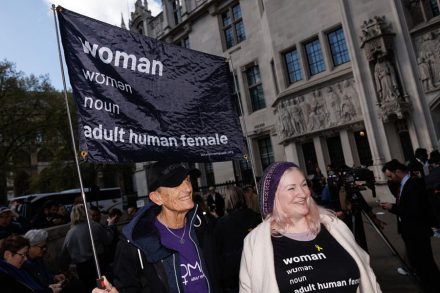
The UK Supreme Court has ruled that a woman is someone whose sex is female. The judgment, handed down this morning by Lord Hodge, sought to establish coherence in an area of law that has become the focus of an emotional, and sometimes heated debate. For that we should all be grateful. The law as it stands is a mess. On one hand, the long-established principle that being a woman is a matter of biology underpinned the Sex Discrimination Act of 1975 – which stated most clearly that, ‘“woman” includes a female of any age, and “man” includes a male of any age'. When the law was updated in 1999 to include protections against discrimination on the grounds of gender reassignment, it did so without changing the meaning of sex.

What happened to the Birmingham I love?

My beloved Birmingham, the city I called home for 26 years and where my children grew up, is drowning in a sea of black bin bags. It's a shocking sight to see this once proud city, that was arguably the centre of the industrial revolution, in such a state. Thousands of tonnes of rubbish is piling up, rats are everywhere – and the stench is dreadful. As the weather warms up, life in Britain's second city might become unbearable. It wasn't always like this in Birmingham. Two hundred years ago, great thinkers met here: Erasmus Darwin, Joseph Priestley, Josiah Wedgwood, James Watt and Matthew Boulton among them. Towards the end of the nineteenth century, George Cadbury established his Bournville 'factory in a garden'. Later, the British motor industry set up shop in the city.

How the NHS gave up on recording biological sex

If data is worth collecting, then surely it is worth collecting properly. As a scientist I’d argue that unreliable data is worse than no data at all. At least if there is nothing recorded, then there is nothing to mislead. On one of the most basic categories of all – sex – it seems that official records are all over the place. According to Sullivan’s review, ‘gender’ – whatever that is – started to replace sex in the 1990s Readers of The Spectator are probably well aware of the issues already, but Professor Alice Sullivan – Head of Research at the UCL Social Research Institute – has led a review into the mess that society has found itself in. Previously, in these pages, she discussed the impact of dodgy data in the 2021 Census.

Why isn’t Streeting cracking down on puberty blockers?

If a government’s first duty is to protect its citizens, then Wes Streeting must step up to defend some of society’s most vulnerable. Instead, the Health Secretary is reportedly refusing to intervene over NHS plans to test puberty blockers on children. Nearly £11 million has been allocated to experiment with drugs that may prevent children’s bones from developing normally. Streeting knows these drugs are potentially dangerous when used to stop the natural development of healthy children. He banned the practice last December after the Commission on Human Medicines found that there was an ‘unacceptable safety risk in the continued prescription of puberty blockers to children’. So why is Streeting not cracking down now? Puberty blockers are not a new treatment.

The legacy of Covid will stay with children for life

Five years ago in March 2020, schools fell silent as Covid-19 swept across the world. At first, there was a tinge of excitement among some students and staff; it was as if, perhaps, we had been told that the whole country was going to be snowed in for six weeks.  Had the restrictions thawed within a couple of months, the impact on at least some children’s education might even have been positive. New experiences stretch the mind, after all. But it didn’t work out like that. While pubs, restaurants and hairdressers re-opened on 4 July, schools stayed on remote teaching until September.