David Starkey

How Kemi Badenoch’s Tories can rebuild Britain

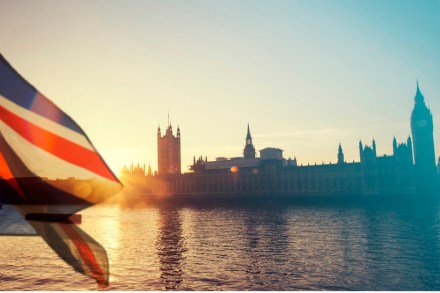
The Conservatives finally have a new leader. But Kemi Badenoch must be under no illusions: after the disastrous July election, we have a mountain to climb and a revolution to undo. But we can remain hopeful, because we have been here before – and found a way out. In 1974, the Conservative prime minister Edward Heath, having taken Britain into Europe, blown up the economy and been humiliated by the miners, was defeated by Labour’s Harold Wilson. The future of the Tory party was in doubt. Surveying the wreckage, Sir Keith Joseph, who had served in Heath’s cabinet, had a revelation: 'I had thought I was a Conservative, but now see that I was not really one at all'.
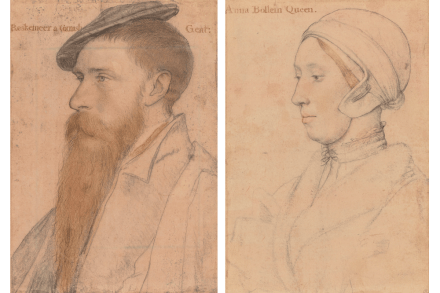
David Starkey on the inventor of the portrait

On 12 November 1549, the 12-year-old Edward VI, newly liberated from the tutelage of his overweening uncle, Lord Protector Somerset, was at last able to enter his father Henry VIII’s private apartments in the Palace of Whitehall. From the extraordinary mixture of treasures and bric-à-brac he found there, he chose one thing: ‘a book of patterns of physiognomies’ by his father’s court painter, Hans Holbein, who had died in 1543. Edward was already familiar with his fellow European rulers from their portraits in the long gallery at St James’s, which seem to have been labelled and arranged as a teaching tool for the boy. Now, on the threshold of power, he wanted to familiarise himself with the establishment of Tudor England.

A King in a hurry: what will Charles III’s reign look like?

38 min listen

This week: In his cover piece for the magazine, Daily Mail writer, author of Queen of Our Times and co-presenter of the Tea at the Palace podcast, Robert Hardman looks ahead to the reign of King Charles III. He joins the podcast alongside historian David Starkey, who is interviewed in the arts pages of The Spectator by Lynn Barber (01:10)  Also this week: Sean Thomas writes about generational reparations, that is: whether families with murky pasts should pay compensation for their ancestors’ wrongdoings. He is joined by Professor Christine Kinealy, historian and author This Great Calamity: The Irish Famine 1845-52, to ask whether generational reparations are simply a token gesture (20:58).

I’ve been investigated by the Keystone Cops

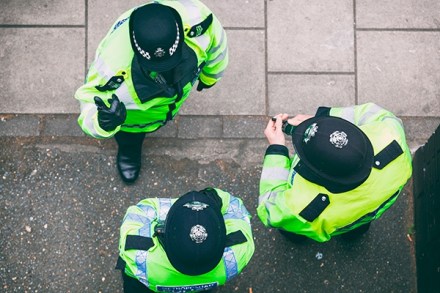
Even in this bizarre year of Covid (for everybody) and ‘cancellation’ (for me), the last week or two has stood out as strange. Things began on a Friday morning with a brief and cryptic email from Toby Young. ‘Can you call me, David?’ it read. ‘I have a criminal solicitor for you if you don’t already have one.’ I replied with bemusement: ‘A bit lost on this one. What might I need one for?’ Toby, clearly surprised at my surprise, filled me in. Two days earlier the Met had summoned Darren Grimes for an interview under caution; threatened him with arrest if he didn’t show up and informed him that he was suspected of offences for broadcasting his interview with me.

Diary – 19 July 2018

It was blessedly cool inside the Romanesque nave, its massive arches resisting the heat as they had done everything else that history had thrown at them in the past thousand years. Through the great west doors, which had been left open for ventilation, I could glimpse the ruins of the adjacent Norman castle, bleached white by the intense sunshine. In front of me were the serried ranks of prep school pupils at their speech day and I was presenting the prizes. The boys were in blazers; the girls in boaters and the staff were gowned. The head opined sensibly and the dean prayed. The organ thundered; the choir sang exquisitely and the soloist soared with that fragile, plangent beauty of the boy treble. It was quintessential England.

Blatant not latent

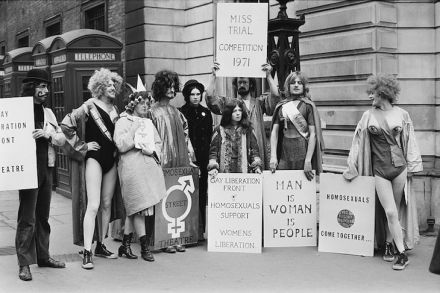
It’s exactly 50 years since the Sexual Offences Act, which partially decriminalised male homosexuality, received the Royal Assent on 27 July 1967 after an impassioned late-night debate in the Commons. I wish I could say — death of Kennedy-like — that I remember where I was. But I don’t. I had only one concern that summer. It was to get the First which would enable me to return to Cambridge to study for my PhD in Tudor history under Geoffrey Elton. The goal achieved, I relaxed like a spent fish. But I did do one thing that mattered. I lost weight and changed from a fat and frumpy teenager into a svelte and rather fetching young man. Which stood me in good stead for the next milestone in gay history.

Diary – 16 April 2015

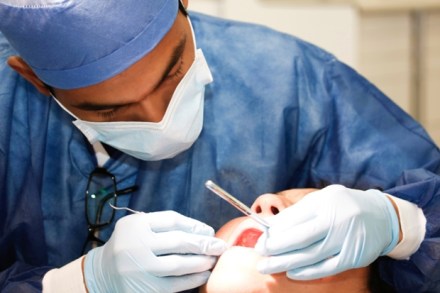
To the dentist. And for an extraction. I hadn’t had a tooth out in decades. But the twinges when I bit on a nut warned me that my problem molar — much abused by a badly fitted bridge in the 1970s — had finally given way. My usual dentist confirmed as much with a poke and an X-ray. Then came the surprise. ‘I’m going to hand you over now,’ he said. Having a tooth out has ceased to be a hazard of life to be borne and grinned at. Instead it’s become dental surgery. And it requires a specialist. Mine was a man with a mission. ‘My job is to make sure you feel no pain,’ he said. And he proceeded, with skill, charm and patience, to do just that.