Daniel Hannan

LIVE: is it time for a Tory-Reform pact?

51 min listen

As Reform chips away at the Tory vote, the Conservatives face a stark choice – join forces with Nigel Farage or fight alone. James Heale, The Spectator’s deputy political editor, will be joined by Conservative peer Daniel Hannan, journalist and politician Paul Goodman, shadow cabinet member Victoria Atkins, and former Brexit secretary David Davis as they lock horns over what a Conservative–Reform pact might look like – and whether it should happen at all.
The truth about ‘UK-born’ criminals

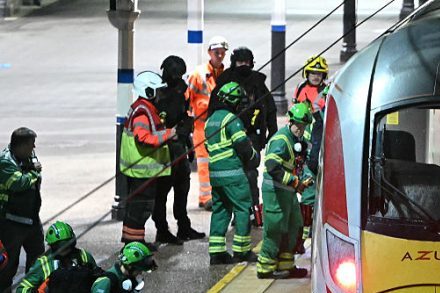
The police want us to know one thing about Anthony Williams, the alleged LNER knife attacker. We can only speculate about his motives, his record or whether he was responsible for an earlier attack in the London Docklands. But one fact was broadcast almost immediately: he was British-born. The police put out a statement soon after arresting him (along with a second man, who was released afterwards): A 32-year-old man, a black British national, and a 35-year-old man, a British national of Caribbean descent, were both arrested on suspicion of attempted murder. Both were born in the UK. OK, he was born in the UK. So were three of the four 7/7 bombers. So were the men who murdered Lee Rigby outside Woolwich Barracks.

Reversing our economic decline is not easy, but it is simple

Our immiseration came swiftly and stealthily. At the start of the 21st century, Britain was a prosperous country. Ambitious people fought to come here. We trusted that, over time, we would become wealthier – an expectation that had been accurate for most of the previous two centuries. Since the millennium, Britain and western Europe have pretty much stopped growing – especially if we ignore the impact of immigration and calculate GDP per head. Reversing this slowdown should be the top issue at every election, but it is surprisingly under-discussed. In theory, almost all our politicians want growth. Keir Starmer and Rachel Reeves keep describing it, nasally and tautologically, as their ‘number one priority’.

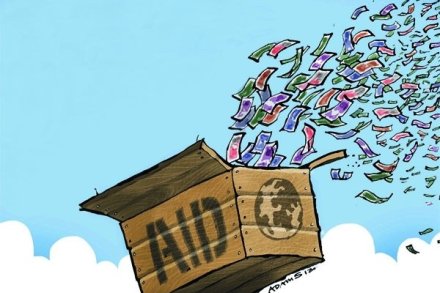
Podcast special: the global role of British aid

45 min listen

Putin’s invasion of Ukraine shocked the world. Whilst fighting is happening in Europe, repercussions have been felt around the globe. Disruption to trade and supply chains means a rapidly worsening outlook for international development, making it harder to reach those that need support the most. Meanwhile the UK’s Covid recovery and the growing fiscal blackhole have forced Britain to make tough decisions on where our money goes, throwing into question our position as a world leader when it comes to international development and, with it, the reputation of ‘global Britain’.  Britain has always been a nation with a global mindset. But in times of crisis, do we need to reprioritise our commitments?

A show of ample and eerie majesty: British Museum’s Peru: A Journey in Time reviewed

Growing up on a farm outside Lima, I was aware that indigenous Peruvians did not understand time in the same way that their white countrymen did. On our visits to the highlands, we would encounter a very different mode of thinking. Ask an Andean villager where the next settlement was and you’d be told, ‘aquisito no más’ — just over here. Whether ‘aquisito’ meant around the next bend or four days’ schlep across the mountains was, for aboriginal people, a meaningless question. They were not ruled, as their European-descended neighbours were, by clocks. You’d sometimes see Quechua-speaking herdsmen sitting motionless for so long that they seemed to have switched off and become part of the landscape.

A decade in crisis

‘I voted to stay in a common market. No one ever mentioned a political union.’ It is the complaint of an entire generation — the generation, by and large, that switched its vote between 1975 and 2016. It is also, as Robert Saunders shows in this eloquent history of the earlier poll, based on a false memory. Anti-Marketeers in 1975, especially Tony Benn and Enoch Powell, constantly talked about ‘our right to rule ourselves’. Supporters of the EEC, for their part, were never happier than when lecturing voters about the benefits of swapping theoretical sovereignty for actual power. But the voters — empirical, practical, Anglo-Saxon — wanted examples. Abstract nouns like ‘sovereignty’ left them cold. What did sovereignty mean?

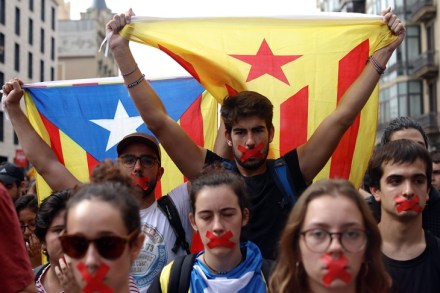
Madrid’s violent tactics will only push Catalans towards independence

In October 1936, on the anniversary of Columbus’s discovery of the New World, a ceremony was held at Salamanca University, in the heart of the nationalist Spain, to celebrate the ‘Day of the Race’. The Bishop of Salamanca, who had recently offered up his episcopal palace to be Franco’s headquarters, stood in the great hall next to the founder of the Spanish Foreign Legion, General José Millán Astray, a one-armed and one-eyed thug of a man. Also present was the university rector, Miguel de Unamuno, an eminent Basque philosopher who had supported the nationalist coup when it was launched four months earlier, but had since become disillusioned with its viciousness.

Spanish practices

In October 1936, on the anniversary of Columbus’s discovery of the New World, a ceremony was held at Salamanca University, in the heart of the nationalist Spain, to celebrate the ‘Day of the Race’. The Bishop of Salamanca, who had recently offered up his episcopal palace to be Franco’s headquarters, stood in the great hall next to the founder of the Spanish Foreign Legion, General José Millán Astray, a one-armed and one-eyed thug of a man. Also present was the university rector, Miguel de Unamuno, an eminent Basque philosopher who had supported the nationalist coup when it was launched four months earlier, but had since become disillusioned with its viciousness.

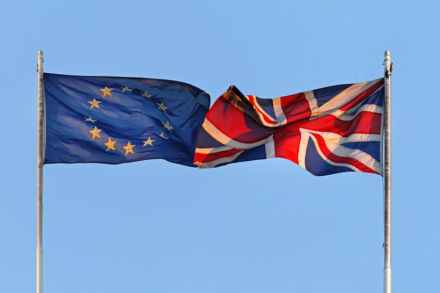
Who’s afraid of a ‘hard’ Brexit?

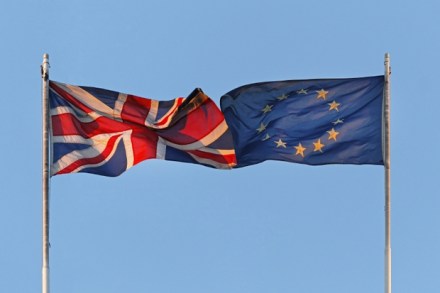
Pull yourselves together, you wusses. It’s a minor readjustment of our tariff arrangements we’re talking about, not an epidemic or a foreign invasion or an asteroid strike. Not that anyone would guess it from the apocalyptic vocabulary you’re using. 'A hard Brexit,' says Keir Starmer for Labour, 'would be catastrophic for our economy, living standards, jobs and future prosperity'. Tim Farron, the Lib Dem leader, agrees it would be 'economically disastrous'. The CBI calls it 'very negative'. Sound familiar? We became accustomed to such over-the-top language during the referendum campaign. The very act of voting Leave, we were told, would cause an immediate recession. Unemployment would surge and the stock exchange would collapse, destroying the value of our pensions.

Put out more flags

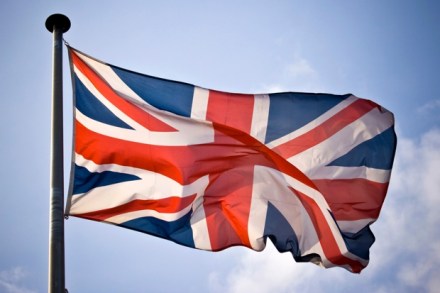
Did you know that 190 out of 200 nations in the world have either red or blue on their flags? (The wheel in the middle of India’s flag is blue, for example, and the Vatican flag has a red cord hanging from the keys.) Did you know that four of those 190 — Andorra, Chad, Moldova and Romania — have pretty much the same blue-yellow-red tricolour? Or that the stripes of the French flag are not of even width, but are proportioned 30-34-37? It’s an optical illusion: if the red, white and blue are of equal breadth, the flag looks curiously unbalanced. These are among the facts that you won’t find in Tim Marshall’s Worth Dying For, a vexillological miscellany. I bring them up in no carping spirit.

The six best reasons for Brexit

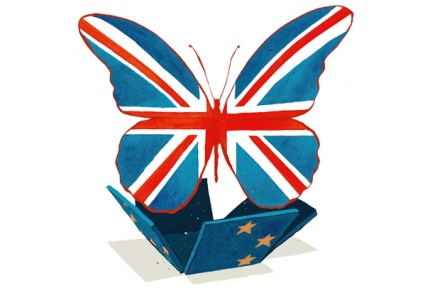
We’re closing 2016 by republishing our ten most-read articles of the year. Here’s No. 8: Daniel Hannan's piece from June, in which he argues why voting 'Leave' is the right decision For me, as for so many people, it’s a heart versus head issue. I’m emotionally drawn to Europe. I speak French and Spanish and have lived and worked all over the Continent. I’ve made many friends among the Brussels functionaries. Lots of them, naturally, are committed Euro-federalists. Yet they are also decent neighbours, loyal companions and generous hosts. I feel twinges of unease about disappointing them, especially the anglophiles. But, in the end, the head must rule the heart. Remainers often tell us to think of our children, and I’m doing precisely that.

President Islam Karimov: ‘He may be a son of a bitch, but he’s our son of a bitch’

Islam Karimov, President of Uzbekistan from 1990 – 2016, died yesterday following a stroke. Here's what Daniel Hannan wrote about him in 2003: A strange little row has been bubbling away over the past two months concerning our ambassador to Tashkent. You may have seen the odd headline about it in the inside pages of the broadsheets but, unless you have a particular interest in diplomatic affairs, I suspect your eye will quickly have skipped on to the next story. Why, after all, should we be especially interested in Uzbekistan? A tremendously important region for Britain during the Great Game, of course, but hardly of vital strategic interest today.

Brexit means sovereignty

We know what people voted against,’ say half-clever ­pundits, ‘but it’s far from clear what they voted for.’ Actually, it’s very clear: the ­British voted to leave the EU and take back control of their own laws. They didn’t ­dictate precisely what kind of deal we should have with our neighbours after leaving: that is for ministers to negotiate. But when Leave campaigners invited people to ‘take back ­control’, voters understood what that meant: legal supremacy should return from Brussels to Westminster. Remainers spent the campaign trying to suggest that the EU was just one among several international associations in which Britain participated.

Daniel Hannan: Brexit will be a gentle process

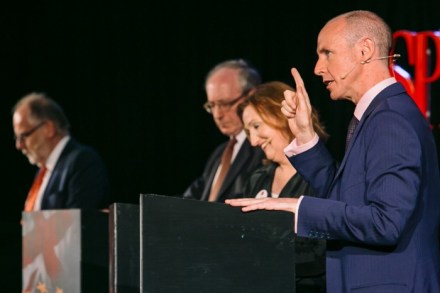
This is the transcript of speech delivered by Daniel Hannan during the Spectator's second Brexit debate. Full coverage of the event can be found here.  I heard today what must be reckoned to be the single worst argument that we’ve had from any major figure on either side of this campaign. It came from Ed Balls. What he said is, we should vote to remain in and then reform it. Why has nobody thought of that before, what a good idea! Think of the story of our involvement with the European Union these past four decades. If you have been listening for at least five minutes to politicians of any party, they will all have given you the same line.

The six best reasons to vote Leave

For me, as for so many people, it’s a heart versus head issue. I’m emotionally drawn to Europe. I speak French and Spanish and have lived and worked all over the Continent. I’ve made many friends among the Brussels functionaries. Lots of them, naturally, are committed Euro-federalists. Yet they are also decent neighbours, loyal companions and generous hosts. I feel twinges of unease about disappointing them, especially the anglophiles. But, in the end, the head must rule the heart. Remainers often tell us to think of our children, and I’m doing precisely that. I am thinking, not just about the EU as it is now, but about the diminished role that a surly, introverted Europe will have in their lifetime. And that makes my decision very easy. 1.

Bought off by Brussels

A letter appeared in the Independent a few weeks ago signed by various environmentalist grandees — heads of green lobby groups, former chairmen of eco-quangos and the like. It warned against Brexit on the grounds that EU laws had ‘a hugely positive effect’ on the environment. It didn’t explain why a post-EU Britain wouldn’t retain, replicate or even improve these ‘hugely positive’ laws. As usual, it implied that voters needed to have such things dictated to them. The really interesting thing, though, was the list of bodies that followed the signatories’ names: Natural England, the Green Alliance, the RSPB, the Natural Environment Research Council, a couple of universities — you get the picture.

What Brexit looks like

‘So what’s your alternative?’ demand Euro-enthusiasts. ‘D’you want Britain to be like Norway? Or like Switzerland? Making cuckoo clocks? Is that what you want? Is it? Eh?’ The alternative to remaining in a structurally unsafe building is, of course, walking out; but I accept that this won’t quite do as an answer. Although staying in the EU is a greater risk than leaving — the migration and euro crises are deepening, and Britain is being dragged into them — change-aversion is deep in our genome, and we vote accordingly. Europhiles know that most referendums go the way of the status quo, which is why their campaign is based around conjuring inchoate fears of change. What is the alternative?

David Cameron will secure all of his EU reforms — because they will alter nothing

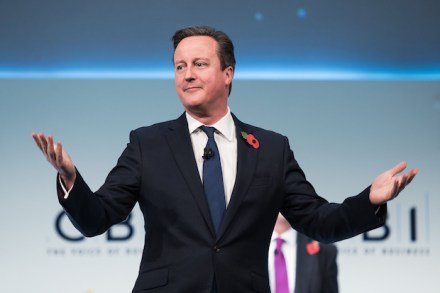
I have no doubt that David Cameron will secure 100 per cent of his stated aims vis-à-vis the EU. The reason he is stating them in public is that the other members have already agreed to them in private. They have done so cheerfully, incredulous at how little is being asked. The other heads of government know, as the PM knows, that his four 'reforms' will alter nothing. Think about it. 1. Opting out of the words 'ever closer union' Just the words. Not the fact of ever closer union. The real way to opt out would be to end the automatic supremacy of EU over British law. As long as European Commissioners and judges, who loudly proclaim that deeper integration is their supreme goal, can over-ride UK statues, nothing will change. 2.

Gove vs the Euro-judges

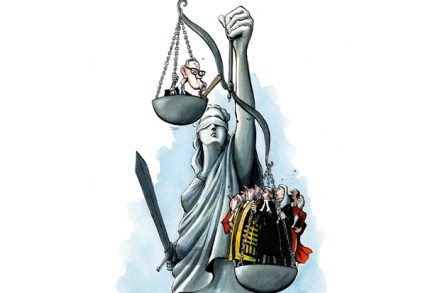
[audioplayer src="http://rss.acast.com/viewfrom22/michaelgovesfightforjustice/media.mp3" title="Daniel Hannan and Greg Callus discuss the battles ahead for Michael Gove" startat=42] Listen [/audioplayer]They have taken to calling themselves the ‘Runnymede Tories’: those Conservative MPs who, knowing that David Cameron has a majority of just 12, want to sabotage his manifesto commitment to end the direct jurisdiction of the European Court of Human Rights in Britain. Well, sorry chaps, but that name is taken. The actual Runnymede Tories — that is, the Conservatives elected to Runnymede Borough Council — will be gathering next month on the bank of the Thames to celebrate the anniversary of Magna Carta.

The same old song

T.S. Eliot liked to recall the time he was recognised by his London taxi driver. Surprised, he told the cabbie that poets weren’t often recognised. ‘I’ve an eye for celebrities,’ the driver replied. ‘I ’ad that Lord Russell in the back o’ the cab the other day. I said to ’im, “All right, then, Bertrand, so wossit all about?” And, you know what, ’e couldn’t tell me.’ I’ve always felt the story reflects well on the cabbie. While it may have been asking too much of Bertrand Russell to condense his philosophy into the length of a taxi journey, he surely ought to have been able to say something useful. George Steiner is a public intellectual almost of Russell’s stature.