Christopher Woodward

Orpheus meets Escher

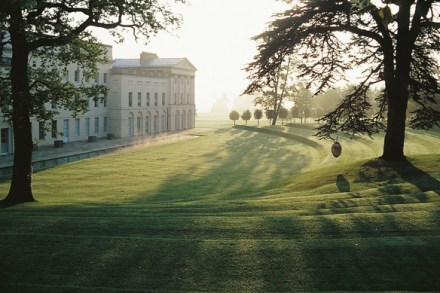
The landscape architect Kim Wilkie grew up in a house on the edge of the Malaysian jungle. ‘Things decayed as fast as they grew.’ Leather shoes would fur over with mould within hours if left outside. His father was posted to Iraq next. ‘Everything was brown.’ But stare long enough at the sand and you would see a coin, or a shard of ancient glass. Back home his parents bought the ancient flint and brick farm in Hampshire with which this book ends. Longhorn cattle graze beside the spiral grass mounds which are his best known signature as a designer of parks and gardens. In the last year of a history degree at Oxford Wilkie discovered that there was such a thing as ‘landscape architecture’.
A dramatic streak

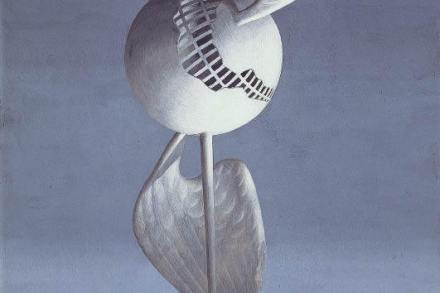
Late in the 19th century, archaeologists digging in the Roman Forum discovered a lime kiln. It had been built to incinerate marble into an aggregate for the mortar for the new structures of the Middle Ages. Inside were statues of six Vestal Virgins, stashed together like firewood. Their arms had been snapped off. The image came to mind as I read this excellent new book on the artist John Armstrong (1893-1975). In the 1930s he painted a series of ruined streets, with broken statues and broken monuments. They are bare and stark, and there is nothing like them in 20th-century British art. The first Armstrong I saw stopped me short: ‘Phoenix, 1938’, in Leeds City Art Gallery. When the guard turned I took a photograph, and still have the bright blue slide.

The master left without masterpieces

Sir John Soane is London’s lost architect. You can visit his museum in Lincoln’s Inn Fields, and the picture gallery he designed at Dulwich. But since his death in 1837 his greatest masterpieces have gone. The Victorians demolished the law courts at Westminster, and the glittering royal entrance to the House of Lords. The RAC club-house stands on the site of the Marquis of Buckingham’s palace on Pall Mall. His Bank of England was demolished in the 1920s —– to Nikolaus Pevsner the city’s greatest loss of the 20th century. Happily, this book by the architect Ptolemy Dean brings into the balance a multiplicity of new discoveries. It is the companion piece to Sir John Soane and the Country Estate which he published in 1999.

A question of all hanging together

The Royal Academy has had the brilliant and brave idea of asking James Fenton to write its history. Fenton is not only a great poet, but also one of Britain’s most interesting writers on art. In his first collection Terminal Moraine (1972) he published a beautiful poem on the Pitt Rivers Museum in Oxford, and I find that I have carried with me from one museum job to another cuttings of his articles from the New York Review of Books and the Guardian. He begins with Zoffany’s group portrait of the 36 artists who founded the Academy in 1768 in order to exhibit contemporary art and to teach young artists to be as good as the French and Italians.

Posh versus popular

On 12 November 1759 London’s leading artists assembled at the Turk’s Head pub on Gerrard Street and decided to put on the first ever exhibition of contemporary art in Britain. They became the Society of Artists, and Matthew Hargreaves is the first scholar to tell their story. The Society tends to be written up as an amateur dress rehearsal for the Royal Academy, but what this excellent book shows us is that in its short life — little more than a decade — it transformed the British art scene for ever. The Society printed 1,000 catalogues for its first exhibition in 1760. In the end, it sold six times as many. The next year Samuel Johnson wrote a foreword justifying the imposition of an admission charge: if it was free, he observed, the room would be too crowded.

The invisible patient

Recently an auction house in Swindon sold for more than £11,000 a cracked tooth of Napoleon’s, extracted during his exile on St Helena. Although Napoleon did little except talk, write and dig and garden, his final six years have been the subject of more books than any other period of his life. It was recently announced that Al Pacino will play the dying Boney in a new feature film. The memoirs of three of the four doctors who looked after him on St Helena have been published. This is the missing manuscript. Dr James Verling was a 31- year-old surgeon in the Royal Artillery appointed to the job in July 1818. He was given a room in the long, white, wooden bungalow called Longwood which Napoleon shared with his court.

The ogre of lullabies

For six months I have been waking up on the island of St Helena. At nine o’clock I walk to my office in Bath; two hours earlier I am at work on a pile of diaries kept by Napoleon’s courtiers during the six years of the emperor’s captivity. The mind flies 5,000 miles across the Atlantic to an island I have never seen and a white bungalow named Longwood. There are sublime moments. ‘I who was master of the world!’ Napoleon shouts as he walks up and down the narrow corridors of the wind-battered house inside which he was exiled. Then he chuckles to General Gourgaud, ‘Ah, it was a pretty empire, was it not?’ And it can be ridiculous. At dinner Napoleon comments on how much he has enjoyed the day’s good weather.

To and from Russia without love

My Ladybird book of The Story of Napoleon had two pages to illustrate 1812. Napoleon sits on a white horse and watches Moscow burn, torched by fleeing Russians. Then the Grande Armée retreats, a column winding into a blurry, white oblivion. ‘With the thermometer seventy degrees below freezing’, read the text, ‘few of those who had crossed the river Niemen into Russia in June ever got back to France.’ But for a few images such as this — and War and Peace — not many English people know what actually happened. I didn’t, until I read this magnificent book. Adam Zamoyski is the first writer in English to have properly researched Russian, Polish and French sources.

More respected than admired

At the Italian seaside last week I flicked through the hotel’s copy of a translation of Gombrich’s Story of Art. The publisher had reproduced Reynolds’s portrait of his friend Giuseppi Baretti to a larger size than any other British picture. ‘Ottimo,’ said the text, and by some odd process of displacement I was all the more happy to read the praise of a favourite picture in Italian. It is a picture of a short-sighted and unhandsome man squinting at a book, his scrunched sleeve rubbing the velvet of the chair. But to me — and many others — it is one of the greatest examples of male character ever captured with a brush, a piece of cloth, and some wet paint.

How the master of landscape was transformed

In 1760s Bath, the promenade from the Pump Room to the tree-lined Walks of Orange Grove passed a row of luxury shops and a sign reading 'Mr Gainsborough, Painter'. The artist's showroom shared the ground floor of a handsome town house with his sister's millinery shop, and the smell of the perfumes on sale mingled with the oil paint drying on masterpieces such as 'Countess Howe' and 'The Byam Family'. In London, prints publicised an artist; in the crowded winter resort a showroom invited visitors with time and money on their hands to judge the likeness of a celebrity who might have been glimpsed in the Pump Room a few minutes before. If tempted, the client ascended to the artist's studio on the floor above.