Christian Wolmar

Christian Wolmar is the author of British Rail, a new history published by Penguin, and writes a column for Rail magazine.

Don’t wait for the chairlift – try a ski ‘safari’

The problem with conventional ski holidays is that every day is more or less the same. You step eagerly out after your hotel breakfast to take the same ski-lifts and ski on the same slopes every day, and return to the same room every night. It can feel like a work commute, albeit a bit more fun.  Ski ‘safaris’, by contrast, offer a far less humdrum experience; but the terrain must be right. In the case of the Dolomites, a ski safari works precisely because the ski area is made up of loosely interconnected resorts with, crucially, a series of rifugi (mountain huts) high up on the slopes providing food and accommodation for an overnight stay.

The glorious ventilation shafts hiding in plain sight

In the centre of London’s Paternoster Square there is a tall column on a heavy octagonal base that provides a few seats and shelter from the winds whipping around St Paul’s. If you look closely, you see a mishmash of styles, with the Corinthian column topped by a gold-covered flaming urn and various baroque flourishes. Passers- by might be surprised to find such an ode to eclecticism amid the rather modern neoclassicism of what was a highly controversial development in 2008 that attracted the attention of the then Prince of Wales. What few of them will know is that the column is not just a decorative addition to a dull square but has a function. It is a ventilation shaft (vent for short) whose primary use is to extract air and, crucially, fumes from the car park below.

How to survive a Chinese banquet

From our US edition

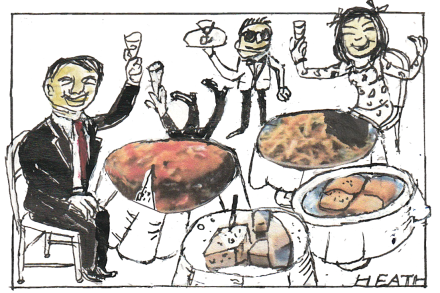
When heading to China on a business trip, I was somewhat bemused to be warned about the banquets I would be attending. Do not sit next to the host, I was told. I was to find out why. Learning the rituals of banquets is an essential part of doing business in China. I was treated to at least one every day on a ten-day trip around the country – and sometimes two or three. There is no such thing as a casual business lunch. Any meal will turn into a semiformal event held in a private room and hosted by the most senior person in the organization. The meal starts slowly, with a few rather unappealing cold dishes laid out on a lazy Susan that sits on a round table, though initially no one sits down.

chinese banquet

Starry starry night: the return of the sleeper train

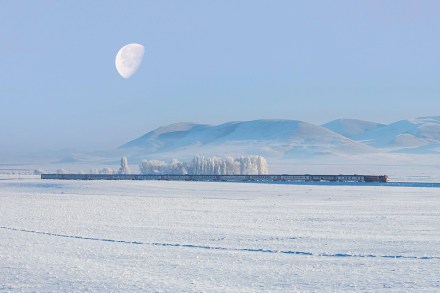
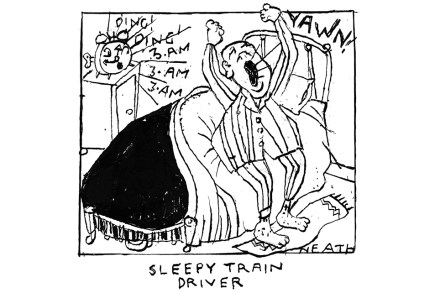
The railways have survived into the 21st century by constantly reinventing themselves. Written off all too frequently by parsimonious politicians as a 19th-century invention made redundant by the car and the aeroplane, trains have enjoyed a remarkable renaissance. Most happily, the sleeper has made a comeback, despite the fact that towards the end of the past century the mostly state-owned rail companies decided it was too much hassle to provide couchettes and compartments on trains running through the night. These trains got in the way of essential track maintenance; their use tended to be seasonal, and much of the rolling stock was well past its sell-by date. Budget airlines and high-speed rail further contributed to their demise.

Border lands, 200 years of British railways & who are the GOATs?

38 min listen

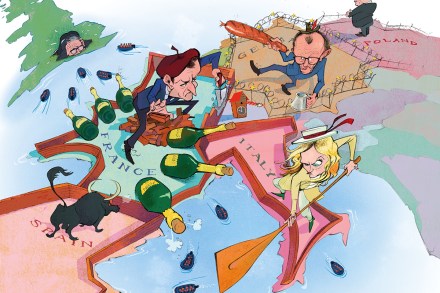
First: how Merkel killed the European dream ‘Ten years ago,’ Lisa Haseldine says, ‘Angela Merkel told the German press what she was going to do about the swell of Syrian refugees heading to Europe’: ‘Wir schaffen das’ – we can handle it. With these words, ‘she ushered in a new era of uncontrolled mass migration’. ‘In retrospect,’ explains one senior British diplomat, ‘it was pretty much the most disastrous government policy of this century anywhere in Europe.’ The surge of immigrants helped swing Brexit, ‘emboldened’ people-traffickers and ‘destabilised politics’ across Europe. Ten years on, a third of the EU’s member states within the Schengen area have now imposed border controls. Can freedom of movement survive in its current form?

The demise of the Royal Train was inevitable

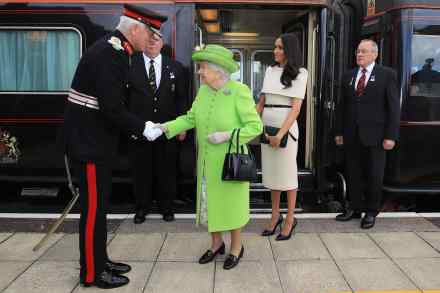
The news that the Royal Train is heading for that great siding in the sky appears to be at odds with the monarch's longstanding and keenly felt support for environmental causes. King Charles took up issues of sustainability long before they became fashionable and he even runs one of his Bentleys on biofuel. The timing does seem particularly bad – as this year celebrations are being held to mark the 200th anniversary of the opening of the Stockton and Darlington Railway. The train is only used very infrequently, not least because it is so expensive to move out of its shed at Wolverton near Milton Keynes.

How to survive a Chinese banquet 

When heading to China on a business trip, I was somewhat bemused to be warned about the banquets I would be attending. Do not sit next to the host, I was told. I was to find out why. Learning the rituals of banquets is an essential part of doing business in China. I was treated to at least one every day on a ten-day trip around the country – and sometimes two or three. There is no such thing as a casual business lunch. Any meal will turn into a semi-formal event held in a private room and hosted by the most senior person in the organisation. The meal starts slowly, with a few rather unappealing cold dishes laid out on a spinner that sits on a round table, though initially no one sits down.

The shocking truth about the Paedophile Information Exchange

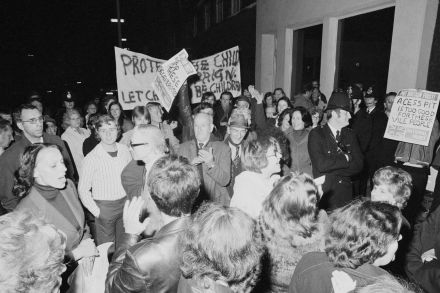
The man who walked up the stairs was the embodiment of the cartoon image of a paedophile. Grey, thinning hair, a couple of days’ stubble and a gabardine raincoat. He had come to persuade us that the age of consent for sexual activity should be reduced to four years old ‘because that’s when children have the ability to express themselves’. The group managed to fool many liberals into thinking free love for children was the logical next step The ‘us’ was the small collective who worked for Release, a charity that helped young people who had got in trouble with the law, usually over drug use. This was 1976, a time when liberation was in the air and social mores had changed more rapidly in the past two decades than in the previous two centuries.

The Japanese are in for a big TfL culture shock

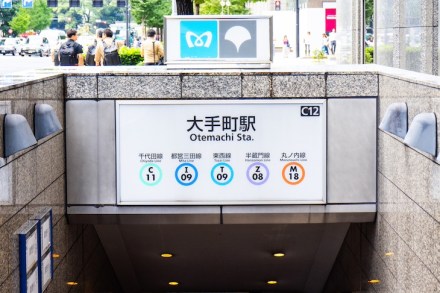
Tokyo Nothing can prepare the good people from Tokyo Metro – who are coming to London to run the Elizabeth Line – from the culture shock they will undoubtedly suffer here. Japan, as we all know, is a very different place and the way they operate their transport system is very different to how business is conducted here. To make it even harder for those plucky Japanese managers to adapt, the key difference is one that can only be felt rather than seen – the utter divergence in the business ethos of the two nations. Nowhere is that better expressed than in their respective railway networks. For a start, Tokyo Metro is not, unlike Transport for London, responsible for all the underground lines in the Japanese capital. Far from it.

Can HS2 be fixed?

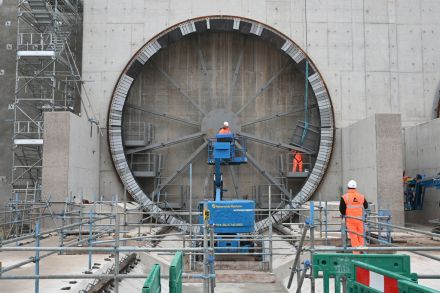
Choose your expression: ‘stuck between a rock and a hard place’; ‘I wouldn’t start from here if I were you’; or simply ‘this is the biggest omnishambles in history’. All these apply to HS2 as Louise Haigh, the Secretary of State for Transport, attempts to come up with a coherent strategy for a project that has now run for 15 years and has worked its way through around £35 billion – but is still only less than half-completed. Worse, on its way it has shed most of its sections, such as running to Manchester and Leeds or connecting with HS1, that would at least have made the end product a worthwhile addition to the country’s railway infrastructure.

Trams make a comeback

Earlier this month, the fortunate folk of Frankfurt were entertained by the 11th annual tram-drivers competition, with entries from 26 teams representing 20 countries across Europe. This is as crazy as it sounds, a kind of Olympiad for trams. How do trams compete, given they are not exactly flexible in terms of where they can go and cannot spin round Le Mans-type racetracks? Well, the devisers of this contest have created a series of challenges for the teams of three – two tram drivers, one male and one female, and an assistant. The obvious tests included coming to a halt within a centimetre of a stop along a 300-metre track and rushing out, fire extinguisher in hand, to put out a lineside fire.

Don’t blame health and safety for killing the Harry Potter steam train

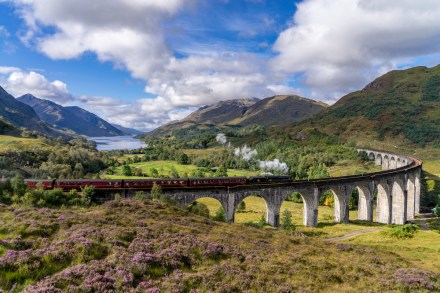
When the operators of the most popular steam train service in Britain decided to challenge the safety authorities, they were confident that sentiment and nostalgia would win out. They’ve been proved wrong. The health and safety brigade has triumphed and consequently the Jacobite train, popularised in a Harry Potter film and running along one of the nation’s most attractive rail lines between Fort William and Mallaig on the West Coast, will no longer operate. It’s the culmination of a lengthy battle between the train-spotters and the grey men of the Office of Road and Rail (ORR), who are insistent that a temporary concession to allow the trains to operate without key safety equipment cannot be extended.

Why is HS2 costing so much?

The members of the Denham Waterski Club are among the few people in the Chilterns who are grateful for HS2. They have a superb new clubhouse overlooking the tiny lake where their motorboats whizz round in ever tighter circles, thanks to the fact that their old one was in the way of the massive viaduct being built over the Colne Valley for the new line. The heavy concrete structure does somewhat blight their view but they are undoubtedly delighted with their Faustian deal.

The wonders of the Paris Metro

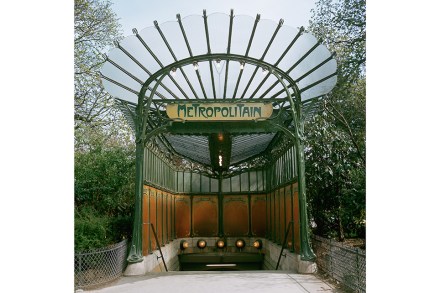
Andrew Martin is in love. Head over heels in love, quite unable to control himself in his appreciation of the object of his affection, which is, believe it or not, an underground railway network. While this may seem an irrational attachment, it becomes easier to understand as his account of the origins, history and, most importantly, design of the system unfolds. ‘What most distinguishes the Metro,’ Martin tells us, ‘is its beauty.’ Its eroticism is, too, ‘expressed in diverse ways’, notably condom machines dotted around the system, advertisements for vibrators and the revelation that Ticket de Metro is ‘the name of the most popular bikini wax among Parisian women’.

The new age of sleeper trains

It’s a fabulous combination: travelling by train and sleeping. And the good news is that the concept of sleeper trains is being revived. The bad news is that, like trams and trolleybuses, a wonderful form of travel was allowed to decline in the first place. The first sleeper carriages – as opposed to trains you happened to fall asleep on – were introduced in the US in the late 1830s, but these provided little more than hard wooden benches. It was George Pullman who built the first luxury sleeper coaches when he founded his eponymous company in 1867. America, with its vast expanses and a newly opened transcontinental line, was fertile territory, and Pullman coaches were soon being attached to long-distance trains.

The Queen’s final journey should have been by train

The Queen loved the royal train. The Royal yacht was a luxury that was more for show than convenience but the train was a unique way for her to travel in comfort and without the hassle of flying. Modestly fitted out in a seventies vinyl panelled style with little extra decor, the Royal Train suited her unfussy taste and was easily accessible for her at Windsor. Therefore it was no surprise that the plan for a final rail journey had long been part of the London Bridge operation if she passed away in Scotland. It was envisaged that the Royal Train, which incidentally was not owned by the Queen but by the German state owned railway company DB Cargo, would be used to take her body down to London. She would have approved of this for good reason.

What the UK can learn from the demise of British Rail

British Railways lives again. Well sort of. The Queen’s Speech is expected to contain plans for a Transport Bill, the centrepiece of which is the creation of Great British Railways which will take over many aspects of the nation’s rail system. However, before the nostalgics start dusting off their Ian Allan Locospotters’ annual, this new beast will be nothing like the old one. British Railways was much more than just a railway.

Biden’s Burden: can he save the free world?

42 min listen

Joe Biden wants his administration to be a departure from the days of Donald Trump, but will a change in foreign policy harm American interests? (01:00) Why is it taking so long to reach a Brexit deal? (17:10) And finally, should cyclists be given priority on London's roads? (29:35)With The Spectator’s deputy US editor Dominic Green, Chatham House's Leslie Vinjamuri, The Spectator's political editor James Forsyth, EurasiaGroup's managing director Mujtaba Rahman, journalist Christian Wolmar and writer, actor, and comedian Griff Rhys Jones.Presented by Lara Prendergast.Produced by Max Jeffery, Matt Taylor and Alexa Rendell.

Box clever: the surprising history of signal boxes

Petersfield signal box is in the wrong place. Or at least it is now. When it was built in the 1880s, it was in precisely the right place, near the tracks and next to the level crossing that the signalman controlled. It had to be. Signal boxes had a series of big levers which controlled both signals and the points on the track. In the days before electric motors, the boxes had to be as near as possible to the points or shifting the levers became too difficult, especially in cold weather. Petersfield is Grade II listed because it is a rare example of a box containing equipment developed by the London & South Western Railway, which built most of the lines out of Waterloo.

League of nations: guessing our way out of lockdown

38 min listen

European countries all seem to be doing something different, so what are the lessons from the continent (00:45)? Plus, how the West's lockdown impacts the developing world in a very real way (13:05). And last, rediscovering the joy of driving on the country's empty roads (24:55).With economist Fredrik Erixon, the Economist's Anne McElvoy, Stanford Professor Jayanta Bhattacharya, Indian economist Ashwini Deshpande, writer Alexander Pelling-Bruce, and transport journalist Christian Wolmar.