Chloë Ashby

Chloë Ashby is the author of Wet Paint and Second Self

Messy family matters: Bad Relations, by Cressida Connolly, reviewed

Cressida Connolly’s new novel begins with a couple of endings. It’s spring 1855, and on the battlefields of the Crimea William Gale is mourning the deaths of his brother Algernon and his friend Mr Lockwood. He writes to his wife Alice, who back home has befriended the progressive Dr Nolan, and asks her to call on Mrs Lockwood in Cheltenham. Upon returning from the war a medalled hero, William isn’t himself, and after meeting the ‘good lady’ widow and her two little girls, Molly and Kitty, he makes a rash decision that reverberates across generations. It’s hard not to play favourites with a novel divided into three fairly distinct parts, and I admit I would happily have spent all 280 pages of Bad Relations in Part Two.
Momentous decisions: Ruth & Pen, by Emilie Pine, reviewed

Emilie Pine writes about the big things and the little things: friendship, love, fertility, grief; waking, showering, catching the bus. She did so in her startling collection of essays Notes to Self, and she does it again in this, her equally startling debut novel Ruth & Pen. As Ruth (‘Counsellor. Patient. Wife. Wife?’) tells herself in the morning: ‘Swing the wardrobe door open, make a choice. To run. Or to stay. Or just which jacket to wear...’ This short novel takes place in Dublin on Monday 7 October 2019. It’s a significant day for our protagonists, two strangers who briefly cross paths. Ruth, 43, is deciding whether to end her marriage to Aidan, which is falling apart in the wake of four failed attempts at IVF.

An ill wind in Buenos Aires: Portrait of Unknown Lady, by María Gainza, reviewed

How to review a book that pokes fun at critics? When the protagonist of María Gainza’s Portrait of an Unknown Lady reads reviews, she tends to ‘scan the first five or six lines, skip to the last two or three, and end up thinking, what’s with these people?’ When she becomes an art critic, she takes up the ‘language of the shyster, empty language, language just to occupy column inches’. And you can bet she has readers hanging on her every word – as we do in this story of the quest to find a legendary art forger who one day disappeared. It feels like the Argentine writer is having fun in the follow up to her dazzling debut Optic Nerve. A detective novel of sorts, this second novel is set in the Buenos Aires art world.

That sinking feeling: The Swimmers, by Julie Otsuka, reviewed

Julie Otsuka has good rhythm, sentences that move to a satisfying beat. Even as her tone shifts — from tender to funny to cynical to sinister — the beat goes on uninterrupted. In this, her third novel, the narrative has a steady flow. The Swimmers traces the cracks that develop in an underground pool, and in a woman’s mind, and the slow and unavoidable deterioration of both. It opens with an introduction to the pool that reads like a guided tour from the swimmers themselves. We learn about their rituals: ‘Some of us have to swim 100 laps every day, others… until the bad thoughts go away (Sister Catherine, lane two).’ There are dos and don’ts and people to watch out for — ‘tailgaters, lane Nazis, arm flailers’.

Wrapped up in satire, a serious lesson about the fine line between success and scandal

Have you heard of champing? Neither had I. Turns out it’s camping in a field beside a deserted church. When it rains, you abandon your flimsy tent and instead bed down in the hushed aisles. At the beginning of Ferdinand Mount’s new novel, Making Nice, Dickie Pentecost and his wife Jane, together with their daughters Flo and Lucy, are doing just that. In the morning they meet fellow champer Ethel, short for Ethelbert, a bewitching man with stony eyes and sticking-up hair. ‘Ethel,’ says Dickie. ‘I suppose they could have shortened it to Bert instead.

Sweet and sour: Barcelona Dreaming, by Rupert Thomson, reviewed

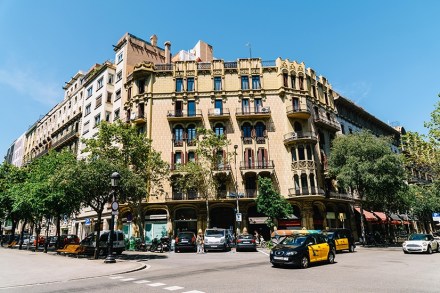
I’ve never been to Barcelona, but Rupert Thomson makes it feel like an old friend. The hot, airless nights and the car engines, ‘exhaust fumes mingled with frangipani’ and beneath the smell of jasmine ‘the stale, slightly medieval smell of drains’. Cafés con leche and jugs of caipirinha with wedges of lime and crushed ice. The clutter of pink-and-white buildings and the port, ‘the masts of boats swaying and clicking in the offshore breeze, the sunlight glassy, dazzling’. In places, those buildings give way to dusty wastelands — ‘areas like this were common in Barcelona’.

An independent observer: Whereabouts, by Jhumpa Lahiri, reviewed

After falling in love with Italy as a young woman, the Pulitzer Prize-winning author Jhumpa Lahiri broke with English and began writing in Italian. Her new novel — a slim and bewitching tale of a woman at her midpoint — she wrote first in Italian and has since translated. The story is told in a series of vignettes, the lengthiest six or so pages. Each is titled with the setting — in the office, at the register, on the street — and paints an exquisite picture of a single soul moving thoughtfully about her city. ‘I don’t share my life with anyone,’ says that soul early on. She lives alone in a spartan apartment, and with only herself to worry about she never fills the fridge.

A celebration of friendship: Common Ground, by Naomi Ishiguro, reviewed

Naomi Ishiguro began writing Common Ground in the aftermath of the Brexit referendum. The title refers to both Goshawk Common in Newford, Surrey, where 13-year-old Stanley Gower meets 16-year-old Charlie Wells, and the threads that bind the boys despite their differences. Stan isn’t a talker; he tends ‘to stay quiet and stare at people’, which, together with his second-hand clothes and his desire to learn, has made him a target at school. Charlie is the opposite, with ‘his cigarettes and talk of girls and his recklessness and messiness’. Yet a friendship blooms on this ‘scrubby grass and tumbling hillside in the south of England’ — on common ground.

The plight of the evacuee: Asylum Road, by Olivia Sudjic, reviewed

Olivia Sudjic’s second novel, Asylum Road, is a smart and sensitively layered story that’s told through niggling memories, unspoken thoughts, white space. The past interrupts the present, which in turn tugs at the future. It begins and ends in a car — a couple ‘side by side, in motion with a change of view’ – and all the while the reader too is in a state of flux, unsettled. That’s a state Sudjic’s protagonist, Anya, is familiar with. Along with other unaccompanied children, she was evacuated from Sarajevo during the Bosnian war. Sent to live with her aunt in Glasgow, she’s been searching for a sense of belonging ever since.

Sarah Maslin Nir enjoys the rides of a lifetime

The appeal of a book called Horse Crazy risks being limited to those who are. Yet many moments in Sarah Maslin Nir’s restorative memoir will chime with readers indifferent to things horsey. Part love letter, part reportage, it niftily braids together her family history, the history of horses, and the stories of the humans on and around them. The result is a tender and at times funny book about belonging. Nir grew up between New York City and the tip of Long Island. Her parents — struggling professionals, ‘two doctors seeking to climb a ladder of affluence’ — had bought a Park Avenue apartment for $45,000 and a beach shack in a patch of East Hampton too shabby for swank Manhattanites.

Family secrets: Love Orange, by Natasha Randall, reviewed

The line between obsession and addiction is as thin as rolling paper. Neither are simple and both stem from absence, avoidance or — as Jenny, the dissatisfied housewife in Natasha Randall’s droll debut novel, calls it — life’s ‘marshmallow numbness’. Jenny’s drug? The sticky, sweet-smelling orange glue that seals the intimate letters she receives from a prison inmate called John — ‘just a little lick’ and a liquid warmth surges within her, letting her breathe, making the ground feel solid. But she isn’t the only Tinkley family member with a secret. Which brings us to the question posed by the outwardly forward-thinking Father Brian: ‘What sort of family is this?