Charlie Taylor

Charlie Taylor is His Majesty’s Chief Inspector of Prisons.

Why are so many prisoners accidentally released? With H.M. Chief Inspector of Prisons

15 min listen

Britain’s prisons are a legislative problem that has beset successive governments. New revelations show 91 accidental early releases in just six months, the latest in a growing pattern of administrative chaos across the criminal justice system. Between drones delivering drugs, crumbling Victorian buildings, exhausted staff and an ever more convoluted sentencing regime, what is the cause of so many blunders? And what will Labour’s promised reforms actually fix – and are more crises inevitable? James Heale speaks to Charlie Taylor, H.M. Chief Inspector of Prisons. Produced by Oscar Edmondson and Megan McElroy.
Can anything solve Britain’s prisons crisis?

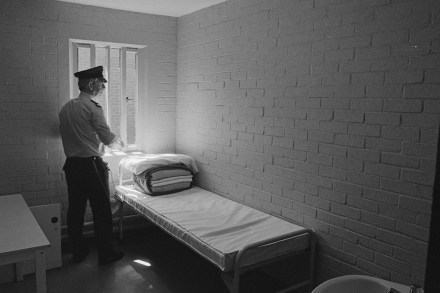
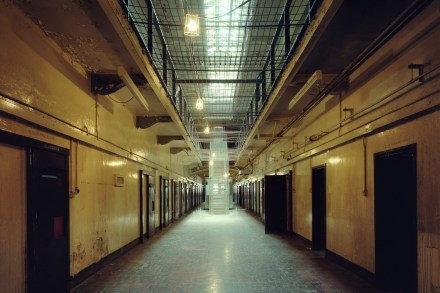
While we were inspecting HMP Elmley on the Isle of Sheppey, a commotion broke out on one of the wings. ‘What’s up?’ one of my team asked the nearest prison officer. ‘Bloke who’s getting out tomorrow has just been told he’s being shipped to Rochester jail.’ The man was manhandled towards a prison van. ‘If I was him, I’d kick off too,’ the officer added quietly. Reducing the prison population will do nothing to stem the flow of drugs pouring into every jail in the country That week things were so desperate in the south of England that the prisoner was being forced to spend one night in a jail 20 miles away so that new arrivals could be squeezed in that afternoon.

Can Labour solve our prisons crisis?

There is no doubt that the new government (and in particular the prisons minister, James Timpson) is faced with a serious prison population crisis. Original thinking and a willingness to challenge the system will be the only way out. As HM Chief Inspector of Prisons, I know this all too well. Last month I inspected Durham, a Georgian reception jail which regularly vies for the dubious honour of being the most overcrowded prison along with Leeds, Bedford and Wandsworth. Half of all prisoners are functionally illiterate and yet few are taught to read With remand populations (those who have yet to be convicted) at historic highs, reception prisons across the country are busier than ever.

Cindy Yu, Charlie Taylor and Petroc Trelawney

17 min listen

Cindy Yu tells the story of how she got to know Westminster’s alleged Chinese agent and the astonishment of seeing herself pictured alongside him when the story broke (01.12), Charlie Taylor, His Majesty’s Chief Inspector of Prisons, talks breakouts, bureaucracy and stabbings, and wonders – where have all the inspirational leaders gone (06.45), and Petroc Trelawney shares his classical notebook and describes a feeling of sadness as the BBC Proms wraps up for another year (11.54). Produced and presented by Linden Kemkaran.

Bombshell: Why aren’t we giving Ukraine what it needs?

36 min listen

On the podcast this week: Boris Johnson writes The Spectator’s cover piece, urging the West to supply more military assistance to Ukraine, in order to bring a swift end to the war. Former commander of the joint forces Sir Richard Barrons and The Spectator’s Svitlana Morenets join the podcast to ask why aren't we giving Ukraine what it needs? (01:21) Also on the podcast:  Charlie Taylor, His Majesty’s chief prisons inspector, writes in the magazine about the state of crisis in British prisons. This is in light of Daniel Khalife's escape from Wandsworth prison last week. Charlie is joined by David Shipley, commentator and former inmate at Wandsworth to discuss the state of crisis in British prisons.

Our prisons are in crisis

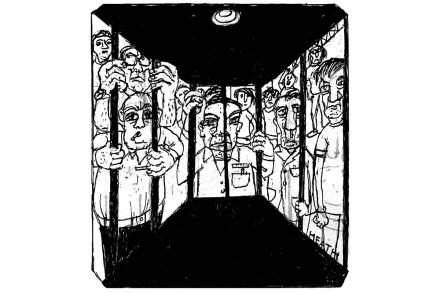
Just as the drama of the escape and recapture of Daniel Khalife settled down, HMP Wandsworth returned to more routine problems. On Sunday, another prisoner was hospitalised, having been stabbed by a fellow inmate. Quality of staff is critical. The best officers have an intuitive sense that something is going on This sort of violence is all too common, especially in the overcrowded Victorian local prisons that hold often volatile remand prisoners. In the past year there have been 1,878 serious assaults on prisoners, an increase of 32 per cent on the previous 12 months. The cause is usually a score being settled between gangs or the failure to pay a debt.

Gender wars: the Union’s new battle line

39 min listen

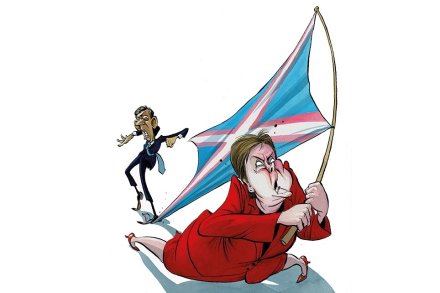
On the podcast this week:  In his cover piece for the magazine Iain Macwhirter writes in the aftermath of the government’s decision to block the Scottish Gender Recognition Reform Bill from gaining Royal Assent. He joins the podcast with Observer columnist Sonia Sodha to discuss the Union’s new battle line (01:03).  Also this week: why are our prisons still in lockdown?  Charlie Taylor, HM’s Chief Inspector of Prisons writes about some of his recent observations visiting institutions around the country. He says that control measures are failing both inmates and the taxpayer. He is joined by journalist David James Smith to examine this post-Covid inertia in UK prisons (16:48).

Why are our prisons still in lockdown?

When the Covid pandemic began, one fear was that the virus would tear through prisons and cause up to 5,000 deaths. The prison service, at its best in a crisis, introduced lockdowns and control measures. These were effective and, from March 2020 to September last year, only 207 prisoners died having tested positive for Covid-19 within the previous 60 days or with the virus confirmed as a contributory factor post-mortem. Locking down was always going to be the easy bit – there is an old prison-officer saying that ‘happiness is door-shaped’ (meaning that prisoners who are locked up can’t do any harm). The hard bit is getting prisoners back into work, education or training. And the lingering effect of lockdown policies still makes it hard today.

We must stop treating juvenile offenders as lost causes

At the end of October, just before I started as HM Chief Inspector of Prisons, the inspectorate and Ofsted visited Rainsbrook Secure Training Centre near Rugby. Rainsbrook was built by the Blair government to house the increasing numbers of children imprisoned as a result of policing targets and tough-on-crime policies and it was one of four centres contracted out to private providers. The great hope was that these better-funded centres would provide a more humane alternative to Young Offender Institutions. Rainsbrook holds children aged mostly 15 to 18, but on our inspection we discovered that for their first two weeks, new arrivals were being locked in their cells for 23½ hours a day.

Diary – 3 December 2011

Last Easter I left the special school for children with behaviour problems, where I had been head for six years, for a job advising on behaviour at the Department for Education. Recently, I went back to my school and bumped into a boy called Jack in the corridor. He looked at me for a few seconds as if trying to remember who I was and then said, ‘You were a useless head teacher,’ and walked off. A few of the children ran up and hugged me, but many of them barely acknowledged my presence. Our pupils have often been brought up in families where men come and go and each new one is a potential threat, so it can take them years to learn to trust adults. I had become another transient man who had come into their lives and then abandoned them.