Bethany Lorden

Eyes of the Storm revisits an era

From our US edition

At Eyes of the Storm, the de Young Museum’s exhibition of photographs taken by Paul McCartney, mainly on the Beatles’ first American visit, the typical viewer will be surprised to find herself empathizing more with the rock stars than the audience. In early photos, the crowds – and the band members – are eager, curious and frank. But through the months and the cities and photoshoots, the Beatles learn to pose. They soon find themselves flattened by a camera’s gaze in a way all too familiar to just about everyone today. The collection opens with the Beatles’ British tour in 1963 and residency in Paris in early 1964. “We were just wondering at the world,” McCartney writes, “just excited about all these little things that were making up our lives.

McCartney

A Gen Z defense of America

From our US edition

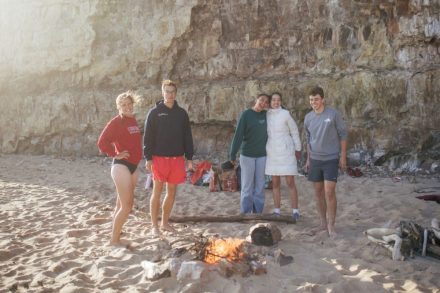
I am twenty-one. Not being on social media, I am ill-informed of the true depth of rage and fear available to the human psyche. Even so, I’ve heard that the planet will overheat. My pastor tells me the churches will sit empty, and the WSJ warns I’ll never buy a home. Boomers bemoan the laziness of my generation. Given these prophecies of doom, it is no wonder that we are a bit anxious. But if we were ever to look up from our screens and allow the evidence within sight to form our perception of reality, we might be pleasantly surprised: America’s social fabric is strong, and so are we.  I went on a run on the prairie today.

gen z

Chicago Public Schools have failed. But there’s another option

From our US edition

Illinois recently released its 2024 Educational Report Card. The grades are, not surprisingly, bleak. Eighty schools reported not a single student who reached grade proficiency in math. Of the state’s low-income students, only 24.6 percent are proficient in reading, and 13.7 percent in math. The Chicago Teachers Union – with impeccable grammar and punctuation – blames insufficient funding: “[Governor JB] Pritzker cries poor, he is leaving $10 billion in billionaire and big tech tax breaks on the table. Reversing just a fraction of that windfall would provide [Chicago Public Schools] and all Illinois schools the funds they need to thrive.” Not that the CPS or the CTU have proven themselves emblems of fiscal responsibility.

Elites keep making education about themselves

From our US edition

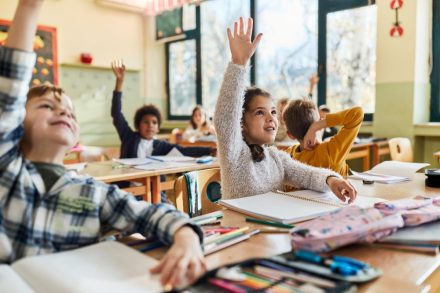
This month, Congress put school-choice funding on offer to the states as part of the Big Beautiful Bill. Progressives have bashed the provision for the harm they claim school choice will do to under-resourced school districts. But the program saps not a dollar from public schools, which shows the protest for what it is: elitist bluster. The same progressives who fumbled their schools’ Covid responses, instituted woke curriculum and pushed adolescent gender transitioning should not decree to parents which school is best for their children. Public schools have not earned Americans’ trust over these past few years; many private schools have. Under the new measure, families can receive a tax credit for donations to an approved scholarship-granting nonprofit organization.

Elementary school

A road to healthier forests

From our US edition

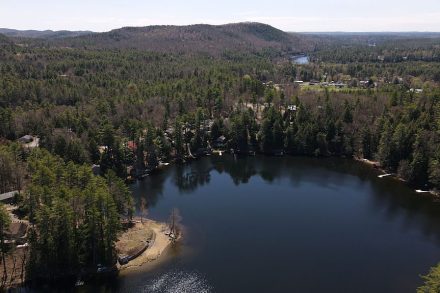
The US Department of Agriculture rescinded the 2001 Roadless Rule last week, a regulation that restricted road building and timber extraction in about 30 percent of land managed by the National Forest System. Judging the pushback from environmentalists, you might think that President Trump was selling Yosemite to a logging company. But the red-tape cutting actually increases public recreation access and opens neglected forests to fire-mitigation projects. Conservationists should be celebrating. On paper, the Roadless Rule preserved America’s most beautiful landscapes. In practice, the regulation proved burdensome and ecologically counterproductive. For instance, some 2,400 Tinglit Native Alaskans reside on islands in the Tongass National Forest.

forests road