Ben Domenech

Ben Domenech

Ben Domenech is a US editor-at-large of The Spectator and a Fox News contributor.

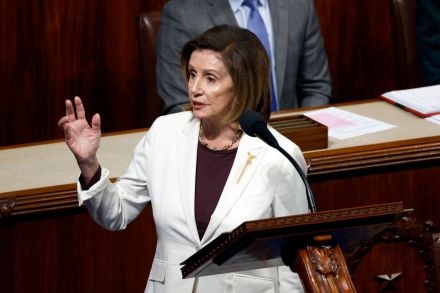
Nancy Pelosi won’t go away

From our US edition

House Speaker Nancy Pelosi announced today that in the wake of Republicans taking the House, she's doing exactly what the octogenarian leadership class in this era of American decline does every time voters invite them to gracefully leave the stage: hold onto power. The decision by Pelosi to not seek election as leader of the Democratic minority, choosing instead to stay on as a kind of speaker emeritus, means she will be effectively looking over the shoulder of her successor, be that Hakeem Jeffries or another unfortunate soul. She's Democratic Speaker for Life in all but name. She will be feted by a sycophantic media, which will glorify her and build her up, even as she overshadows the people actually tasked with running Congress. But then, that's mostly just the media anyway.
Rick Scott is right to challenge Mitch McConnell

From our US edition

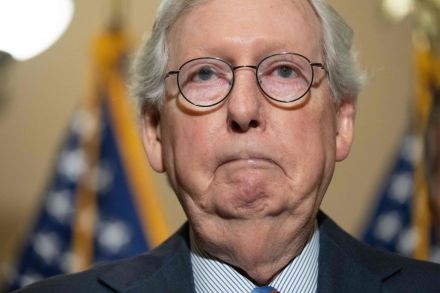
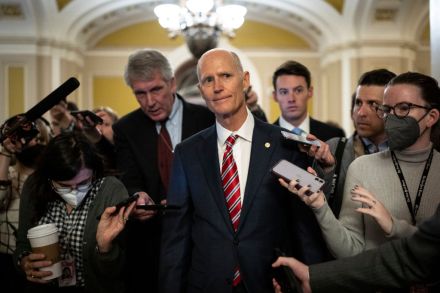
In a move that he's been telegraphing for some time, Florida senator Rick Scott is challenging Mitch McConnell to be leader of the Senate GOP. Scott and McConnell have openly feuded about the Senate candidates this cycle, with Scott embracing a big tent approach even as McConnell spent more according to who he thought would back his stance for leadership than out of interest in achieving a GOP majority. His expenditures in Alabama, Alaska and New Hampshire are now examples deployed by those who blame McConnell and his attendant groups for the failures of the cycle. Whether this blame is deserved is dependent on who you're asking — but there certainly is some blame directed at Mitch and the choices his allies made.

rick scott

We can blame Mitch McConnell, too

From our US edition

So now it's time to figure out who to blame. The post-election spin from the world of Mitch McConnell is that the GOP's failure to flip the Senate is on Donald Trump and National Republican Senatorial Committee head Rick Scott, and that candidate selection and expenditures are the reason that we don't have a Republican majority in the upper house. For anyone who paid attention, this doesn't pass the smell test. In the wake of a number of fractious primaries, GOP Senate candidates essentially went dark in the summer, their ad budgets expended and without the resources to get back on the air. Meanwhile, Chuck Schumer and the DSCC defined the Republican outsiders for a new audience of general election voters.

mitch mcconnell

The time to move on from boomer Republicanism is now

From our US edition

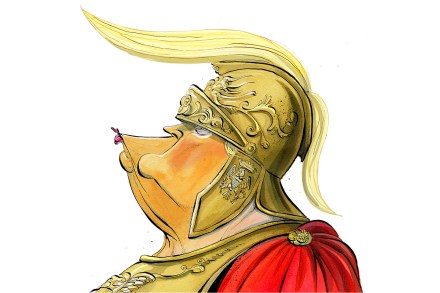
Having been saddled by everyone involved with the largest portion of blame for Tuesday's election disappointment, Donald Trump's descent into the pit of despair takes exactly the form you could expect: a series of Mean Girls rants about everyone more popular than he is in the Republican Party. There has been much talk over the years about how there's a Good Trump and a Bad Trump, but the truth about our 45th president is that, just like the Marvel Cinematic Universe's version of the Hulk, he's always angry — he just controls it better when times are good. Now that times are bad — or as bad as they can be when you have millions more Republicans voting than Democrats and you just dislodged Nancy Pelosi from power — he is reverting to his true form. It ain't pretty.

genghis donald trump boomer republicanism establishment

The winners and losers of the 2022 midterms

From our US edition

In every election, there are the winners and losers, but there are also winners and losers away from the ballot box, which oftentimes are more important and have a longer tail than the vote-getters. In the 2022 midterms, here are the winners and losers as I see them. Loser: Donald Trump Well, this one is obvious. The former president weighed in with all his political energy behind multiple candidates in this cycle, particularly in divisive primaries and statewide races where he often chose outsiders over more experienced candidates. The Trump fatigue factor was clearly a problem this time around, with his choices in some races utterly rejected by voters.

Why the red wave never crested in the US midterms

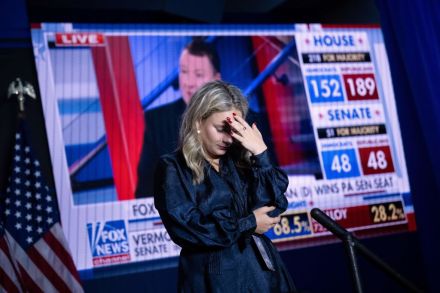
The 2022 midterm election was supposed to be a red wave. Instead, it turned out to be a night of razor-thin victories for Republicans, disappointment for many Donald Trump-backed candidates and a sigh of relief from Democrats. It was nothing approaching the wave some polling suggested. And it raises fundamental questions about the direction of the GOP in an era of party factionalism. There are two fundamentals that consistently indicate the outcomes of most midterms: the approval rating of the president and the right track/wrong track question on the direction of the United States. Both indicators strongly showed a Republican wave was imminent, leading the overwhelming majority of prognosticators, myself included, to conclude that a major House sweep was incoming.

Get ready for the return of Covid if Republicans win

From our US edition

If all indications are correct, Election Day will see a massive red wave, sweeping Republicans into power in the House, Senate, governorships, and statehouses across the country. The mood will be grim for Democrats — the night is dark and the knives are long — but there is hope right around the corner in the form of a tool they have long had at the ready: the return of Covid. Understand, there will be no actual return of Covid in anything resembling its initial offering. It is unlikely to kill more people than it has in recent months. But what will change is Democratic acceptance of the idea that Covid is over, or that it can no longer be used as justification for emergency steps and massive spending packages.

Why Trump jumping in early would be a mistake

From our US edition

Donald Trump is expected to announce that he is running for president again next week on November 14, according to multiple reports and chatter near the Trump Organization. The only question is whether he does it even earlier — listening to allies like Matt Gaetz who think he should announce as soon as tonight to take credit for what Republicans anticipate will be a clear red wave. This seems like an uncharacteristic mistake on Trump's part. The announcement, whether it comes this week or next, is premature. It's unlikely to forestall any significant potential competitors — and might actually serve to embolden some. The most powerful tool Trump has is the ability to jump in as a former president overwhelmingly popular with Republican voters and instantly clear the field.

trump

Will this election finally be the end of Betoism?

From our US edition

Democrats across the country should be grateful for what Republicans are about to do: rid them of a nagging disease known as Betoism. Beto O'Rourke, the erstwhile congressman from El Paso, Texas, who has far more glossy national magazine profiles than winning campaigns, is about to go down to defeat in his attempt to unseat centrist conservative Governor Greg Abbott. Abbott is a popular governor and quite capable in his own right of popping wheelies over most Democrats. But Beto has approached his run with all of his usual nationally tested talking points recycled from his idiotic presidential crusade, designed to go viral on Twitter, Instagram, TikTok, and via the T-shirt worn by your daughter's boyfriend who is still trying to find himself after sophomore year.

Kitchen tables versus kitchen tablets: the real election divide

From our US edition

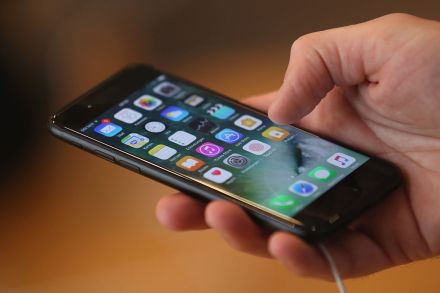
It’s useful to think of this election as a contrast between how, in the simplest understanding, people see the world from two very different perspectives. It’s simple, but it’s important. There was a line on the edge of my memory the other day from a certain victorious congressional candidate: Carry the word throughout this district, the word we said was true: that we do stand for the people who push a grocery cart and worry about the grocery prices, that we do stand for the people who care about this country and their children's future.

gadgets

Letting John Fetterman debate was political malpractice

From our US edition

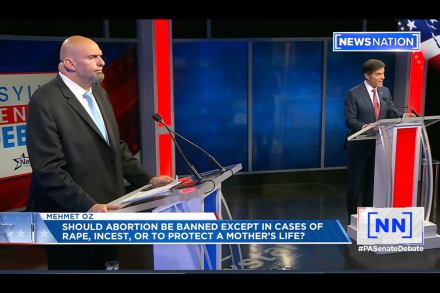
Like the proprietors of a gimp show at a carnival, Pennsylvania Democrats apparently get off on making the average viewer of their sideshow candidate feel deeply uncomfortable. Lieutenant Governor John Fetterman, hobbled by a stroke that has done significant damage to his capacity, was wheeled onto stage at the sole Pennsylvania Senate debate against Dr. Mehmet Oz where the performance was cringe-inducing to a point that it made you want to change the channel, as if upon returning perhaps the dark joke that this man could be a senator would be over. This was a travesty.

john fetterman

Evan McMullin is the candidate from the deep state

From our US edition

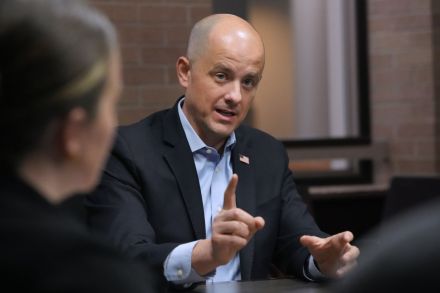
Many Republican observers of the Utah Senate race have noted Evan McMullin's obviously false claims at anything approaching ideological conservatism. But it strikes me that this is the wrong understanding of the bald Mormon CIA agent who seeks to unseat constitutional conservative Senator Mike Lee. McMullin is more properly understood as a deep state plant who will represent the interests of the likes of Peter Strzok if elected by voters apparently unaware of his completely fictionalized position matrix. I interviewed McMullin when he was running against Donald Trump as a "principled conservative," hoping to twist Utah into the Democratic column and drive the 2016 presidential stakes into the Congress.

The data is in and the cost of school closings was terrible

From our US edition

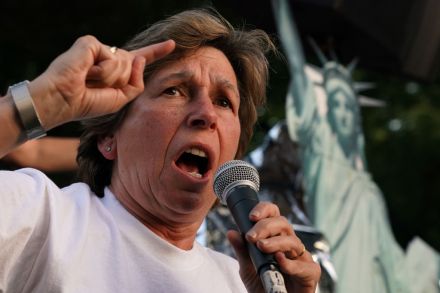
Monday's release of the nation's report card on the academic performance of schoolchildren is just the latest stunning measure of how closed schools damaged young Americans. The National Assessment of Educational Progress, which looks at the test scores of fourth and eighth graders in math and reading, is a devastating indictment of the nation's political leaders and teachers' unions, who collaborated to shut down schools and keep them shut for in-person learning long after those across most of the West had already reopened. We're only just beginning to comprehend the wreckage, which has had significant effects on school districts across the country, even after it was clear they could reopen safely. When Covid first arrived in America, its danger to young students was unclear.

randi weingarten

Pat Buchanan and thirty years of culture wars

From our US edition

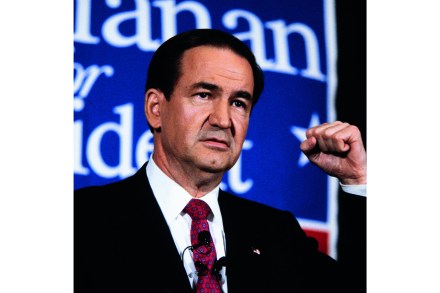
It was a relatively cool 85 degrees in Houston on the August evening thirty years ago when Republicans gathered at the Astrodome to renominate George H.W. Bush for the 1992 presidential election. The opening session’s speakers included Senator John McCain, Stanford professor Condoleezza Rice, and re-election campaign co-chairman Ken Lay, later to gain fame as a major figure in the Enron scandals. But the speech that would be the most memorable by far was delivered by a television commentator, syndicated columnist and former Richard Nixon hatchet man — the fifty-four-year-old Irish Catholic Pat Buchanan, who delivered what came to be known as “The Culture War Speech.

culture

Will the Nury Martinez fallout break Los Angeles politics?

From our US edition

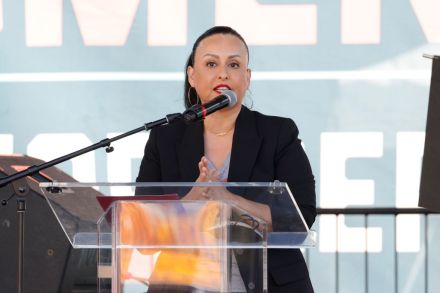
The resignation of Nury Martinez, the first Latina president of the Los Angeles City Council, is a dramatic development that could have wide ranging ramifications for the future of LA politics. In the wake of the release of an October 2021 conversation where Martinez and other council members made racist remarks in the context of a discussion of redistricting, acting council head Mitch O'Farrell has also demanded the resignations of Kevin de León and Gil Cedillo, saying the "people's business cannot be conducted" until they step down. https://twitter.com/MitchOFarrell/status/1580386608729112576 There are immediate consequences to this explosive story, but then there are also potential long-term implications which are worth considering.

nury martinez

The Raphael Warnock debate gaffe the media missed

From our US edition

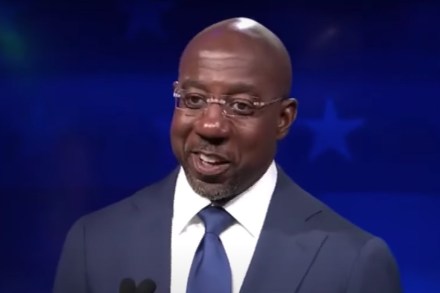
Herschel Walker's performance in Friday night's Georgia Senate debate provided a good example of the benefits of lowered expectations and the difficult task facing Democrats in November. Walker's country drawl came across as charming and allowed him to navigate the thornier questions that have faced his campaign in recent weeks. Incumbent Senator Raphael Warnock, meanwhile, struggled to defend his avowedly partisan record during his brief time in office. Campaigns will spin even in the face of clear losses, but the Walker campaign was ecstatic over their candidate's performance, which they view as a definitive boost in the closing weeks of the election cycle.

Down with the debate dodgers

From our US edition

Friday night brought Georgia voters the sole debate in the contest between Herschel Walker and Senator Raphael Warnock, with the pair meeting on stage at the J.W. Marriott in Savannah. Thanks to Axios, you could play debate bingo if you wanted to, thereby officially informing your friends you have the saddest social schedule imaginable. Debate dodging has been a major feature of the 2022 cycle. In Arizona, Democrat Katie Hobbs has said she's too busy to debate her gubernatorial opponent Kari Lake — who as it happens is far more telegenic than she is. In Pennsylvania, Democrat John Fetterman has agreed to just one Senate debate with Republican Mehmet Oz, with a long series of stipulations about closed captioning and multiple practice opportunities for the setup.

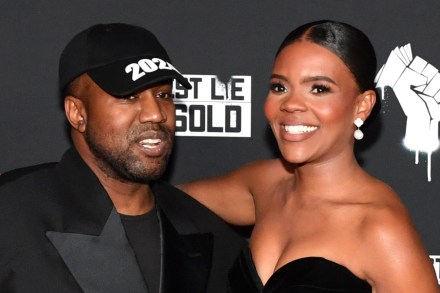
We deserve better than Candace Owens

From our US edition

Candace Owens's latest foray into the sphere of defending antisemitism ought to be something everyone can easily condemn. Discussing rapper Kanye West's controversial post, which has gotten him locked out of his social media, Owens said Monday: "If you are an honest person, you did not think this tweet was antisemitic. You did not think that he wrote this tweet because he hates or wants to genocide Jewish people. This is not the beginning of a Holocaust." https://twitter.

candace owens

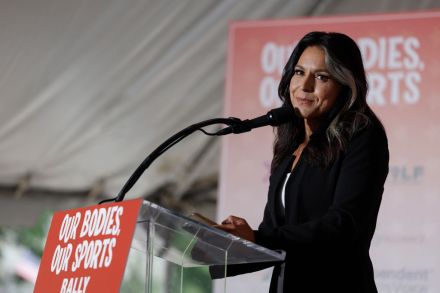
Tulsi Gabbard’s road not taken

From our US edition

Tulsi Gabbard has been a de facto outsider within the Democratic Party for a long time. Now, she's finally made it official, leaving the party she served first in the Hawaii State House and then in Congress for eight years. Tulsi also announced a new Substack and a podcast as her next moves. Gabbard's path to this moment was marked by fascinating developments within the culture wars that came to characterize the Obama-Biden era of the Democratic Party. Once viewed as a rising star within the ranks — she was the first Hindu woman and the first female combat veteran in Congress — she was unanimously elected as vice chair of the party in 2013.

Where the Tea Party went wrong

From our US edition

In the world of American politics, 2010 feels like a very long time ago. The wave of Tea Party candidates swept into office in response to the overreach of Barack Obama belonged to a party that had as its champions the likes of George W. Bush, John McCain and Mitt Romney — all people who would ultimately be rejected by its nominee in 2016. The Republican Party of 2010 nominated and elected a swath of candidates bent on changing Washington. They were elected in states as diverse as Kentucky, Florida, Wisconsin and Utah. And they represented a push designed to shift the party, to transform what it did in the capital. They advocated for change that would be long-standing, not just a brief change in personnel.

tea