Arabella Byrne

Arabella Byrne

Arabella Byrne is the co-author of In The Blood: On Mothers, Daughters and Addiction.

The trouble with French rap

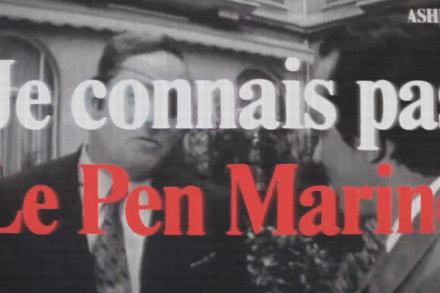
Last Monday, a group of 20 French rappers released a video entitled ‘No Pasarán’. Evoking the Republican resistance against Franco in the Spanish civil war and before that, the resistance of the French against the Germans during the Great War, the phrase called for people to resist Marine Le Pen’s Rassemblement National. If last night’s second round election results in France were anything to go by – with the Rassemblement National finishing third – the rap did the trick.

Childcare is mothercare

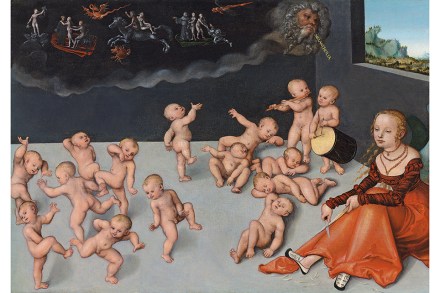
When I was a small child, my mother left me in the charge of an elderly neighbour so that she could write. My grandmother lived far away in Scotland and no formal childcare existed. Still, my mother wanted to write. In bald economic terms, you could say that she was trying to rejoin the workforce to boost GDP and spare the state handouts. Forty years on, she doesn’t see it like that. ‘I needed to work to feel normal again – I didn’t want to go mad,’ she says, unapologetically. Had she been in the same predicament now, she could have looked forward to the welfare reforms that promise working parents of children in England between the ages of nine months and two years up to 30 hours of funded childcare.

The unending pain of Andy Murray

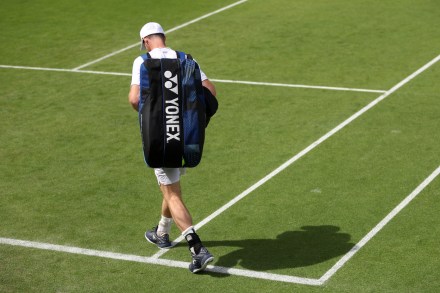
Just after Andy Murray made the winning pass that won him Wimbledon for the first time in 2013, he looked up to the sky in pain. Not laughing with joy as Djokovic does when he wins a slam or weeping graciously as Federer did before he quietly put on his Rolex, but a sheer plea of existential pain. And wasn’t pain what Andy Murray was really all about? The emotional pain of the press conferences where he could barely conceal his dislike for the journalists, the pain of a nation’s expectation on his shoulders, and, latterly, the endless physical pain that he spoke of so often. His audience knew his pain too.

Who cares if Ascot is not what it was?

I’ve never liked Ascot. On the occasions when I have dressed up and flogged across the south-east on a series of trains to get there, I have always regretted it. The pinching shoes, the faux-snobbery of the Royal Enclosure, the traipsing around the grandstand that resembles an airport crossed with a shopping mall, the feigned interest in equestrianism, the footballers in toppers and tails. All in all, I find it hollow. But there’s a certain sadness here; I want to like Ascot. I want to see what others see: the champers, the races, the hats, the larks, the British at play. Instead, I just find it a bit naff; the Season equivalent of nude tights à la Pippa Middleton.

Have you had the school gate VAT chat?

Another day closer to the general election and I’m at my daughter’s prep school in Oxfordshire. As has come to be the norm, I’m having a ‘VAT chat’ with a fellow mother. Of course, we’ve known about Labour’s plan for months. It will lead to a likely 20 per cent rise in private-school fees. Recently, however, these VAT chats have intensified and become louder. ‘To think that other parents would vote Labour given what’s coming enrages me,’ a friend says I begin with my usual opening gambit. ‘Isn’t it awful?’ I say, trying to convey my real sense of desperation that I will have to take my daughter out of the school that she loves, that our way of life is for the chopping block.

The desperate world of babytech

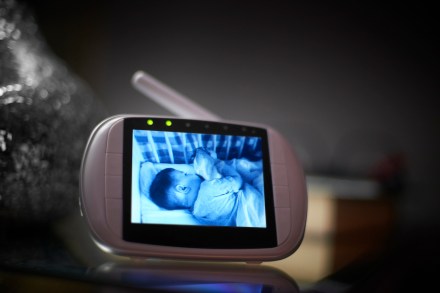
In the penumbra cast by the light of my phone, I can dimly see the wreckage of a night with a newborn baby: half-drunk bottles of milk, the tangled cord of the monitor, muslins strewn across the bed. It is 3 a.m. and the baby has gone back to sleep. I, however, am wide awake. Or rather, the consumer in me is wide awake. I decide to buy a Dreamland Baby weighted sleep sack costing £79. Its promises are seductive, outrageous even, to my crazed mind: ‘Our mission is to help your baby feel calm, fall asleep faster & stay asleep longer, so your whole family can get the sound sleep they deserve!’ The sleep they deserve. Yes, I think, we are owed sleep and I’m prepared to pay over the odds for it.

Why Mummy smokes

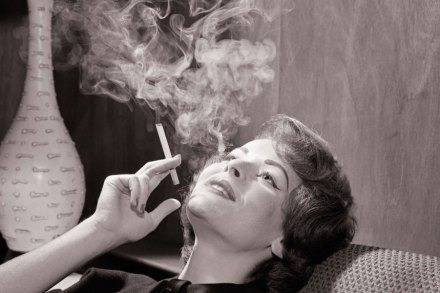
It’s 7.02 p.m. and I’m standing outside my house by the bins smoking a fag. Upstairs, I can hear that my six-year-old is awake but I’m choosing to ignore her. How repellent, I hear you murmur. And it is repellent, in many ways. I am a smoker and a mother, hardly the Madonna and child. How can these two realities ever be reconciled? They jam against each other all day long, uncomfortably.  Smoking is bloody great. If you’re a smoker that is. Otherwise it’s just disgusting It’s OK, I tell myself, every single day. I never smoke in front of them. Instead, I smoke when they’re in bed, when the day is done, and the bedroom doors are firmly shut. Often, I smoke during the day too.

I’m trapped by the village WhatsApp

I live in a village in Oxfordshire. Before we moved here, a WhatsApp group was set up to help the community navigate the pandemic. It was, other villagers tell me, a lifeline. But the village WhatsApp is still going. No longer a herald of government diktats, it is now a busy forum with photos of abandoned parcels, a slow cooker in an unknown kitchen, someone’s cat staring blankly at me, and, most worryingly, a snap of the village playground littered with beer cans. The WhatsApp group seems to have exposed the realities of the rural social contract There are village announcements too, stories of the occasional lost dog and items that people don’t want to flog but are happy to give away.

The strange feminism of Ivana Trump

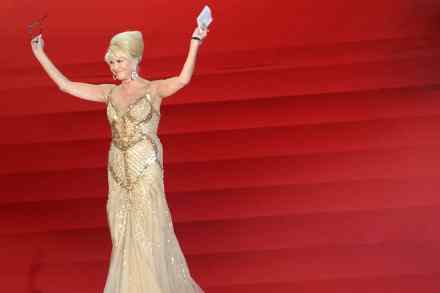
For a woman whose life was all about ascent, there is a cruel irony to the fact that Ivana Trump was found dead at the age of 73 at the bottom of the stairs of her Upper East Side apartment last Thursday. Born in 1949 in Communist Czechoslovakia, the girl whose father was an electrical engineer made her name on the basis of dizzying verticals: first as a professional skier and then as billionaire’s wife and manager of her second husband Donald Trump’s eye-bending skyscrapers in New York and Atlantic City. After her acrimonious tabloid divorce from Donald in 1991 following his affair with chorus-girl Marla Maples, Ivana made her name from surviving - and exposing - the indignities of her marriage’s collapse.

How not to live a life

From our US edition

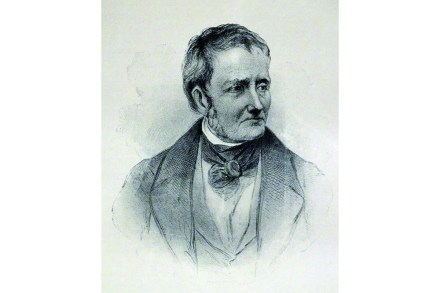
When Thomas de Quincey wrote Confessions of an English Opium-Eater in 1821, he could not possibly have guessed what he would set in motion. Over two hundred years later, the addiction memoir looks different: less subversive, more sentimental, undeniably more commercial. Since the advent of Alcoholics Anonymous in Akron, Ohio, in 1935, the formula of the recovery memoir now yokes the moral to the medical: alcoholism may be a moral disorder, but it is underwritten by a chemical condition marked by incessant craving — in recovery parlance, an “allergy,” a state of “dis-ease.” For Matt Rowland Hill, the two are inextricably combined. Original Sins is the debut memoir from a writer whose two great loves, “Jesus and heroin,” never quite slip out of one another’s grasp.

original sins

What Wimbledon gets wrong about tennis fans

Brace yourself for the unmistakable sound of a tennis ball thwacking away in the background of your living room for two weeks - Wimbledon is finally upon us. As skilled as the players on the court are, it's the delightful spectacle of my family's amateur commentary that I enjoy the most. 'Who on earth is that?' my grandmother used to ask, unfailingly, when anyone unseeded dared to play against her beloved Steffi Graff. 'The Spaniard is touching his bum again' is the refrain in our house when Nadal prepares to serve. For the casual spectator, it's our lack of true tennis expertise that makes the tournament such a delight to watch: we like to gaze at its alchemy, without knowing too much about how the magic comes about.

Nothing beats a vélo in the Vaucluse

Michelet may have called Northern France 'la vraie France' and the wild and rocky outpost of Provence the 'rude pays', but for me, France is in Provence, in the dusty and strange contours of its angular landscape, in the rhythms of the day dictated by the heat. This is a feeling as much as a place; a subterranean and unformulated attraction for the land of Cézanne, Sade and latterly, Peter Mayle.  You can imagine my unformulated joy then, when my sister and I found ourselves most unusually without small children, husbands, or dogs in the lush surroundings of La Coquillade Provence in the Parc du Luberon.

Americans are as class-obsessed as the British

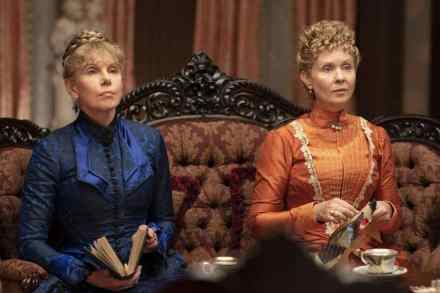
The 'American Downton' has just hit our screens in the form of The Gilded Age on HBO, a busty, curtain-heavy romp through the moneyed boudoirs of late nineteenth-century New York starring Cynthia Nixon and Christine Baranski. Written by Julian Fellowes, the man who has done more PR for the upper classes than the Windsors could ever dream of, the drama sets its sights on that most nebulous of concepts, American aristocracy. But wait, they don’t have an aristocracy, I hear you cry. Oh but they do, retorts Fellowes. Just look at all the upstairs downstairs drama, sudden destitution of young fatherless women a la Sense and Sensibility, and bitchy sniping in earshot of the servants.

The fatal flaw of Keeping up with the Aristocrats

'An aristocracy in a republic is like a chicken whose head has been cut off; it may run about in a lively way, but in fact it is dead'. So said Nancy Mitford as far back as 1955 in her Enquiry into the Identifiable Characteristics of the English Aristocracy. More than half a century later, English aristocrats though – just about, even in the era of Prince Andrew – living in a monarchy, are still running about like headless chickens. This time, however, there are camera crews following them offering the entire thing up for public consumption on ITV’s new three-part series Keeping Up With The Aristocrats, the first episode of which aired last night. Are they dead? The jury’s out on that one but they do want you to know that they’re broke.

The rise of dream therapy

'The interpretation of dreams is the royal road to a knowledge of the unconscious activities of the mind.' So said Freud in 1899 as the world was about to tip over into the dream obsessed twentieth century and its many decades of tortured introspection. For years, Freud has been roundly discredited. But it seems that, even if Freud remains unfashionable, his belief in the meaning of dreams is making a return, namely in the form of dream retreats and therapies marketed at our pandemic-addled subconscious. Whilst it was once formerly the duty of the long-suffering spouse to listen to last night’s dream – naked in an exam, driving down the M40 backwards and on fire, giving birth to the wrong child etc.

The rise of Emma Raducanu

British teenager Emma Raducanu’s straight set victory (6-1, 6-2) at the US Open last night was exciting. Exciting for all the reasons we love to watch tennis; the thrill of the underdog triumph, the inevitable comparisons with other, prodigal, teenage stars like Becker, and of course, the very fact of her Britishness. In this, our Brexit era, Raducanu took her best to the world stage and outperformed all expectations. Virginia Wade, the last British woman to win the title at Flushing Meadows in 1968 and grand dowager of the British women’s game, rose to her feet in the stands applauding the guts of the 18-year old as she won 12 of the final 13 games to send American Shelby Rogers packing in just over an hour.

Something borrowed: the rise of the pool renter

Here’s a question for you: if you were lucky enough to own a swimming pool or a tennis court – or indeed both – would you want to rent it out per hour to the hoi polloi, the great unwashed, the General Public? Although I am not in the happy position of being able to answer this question personally, I would have thought the answer would be a hard no. No to other people’s verucas, no to other people’s splashing and cavorting in earshot, and absolutely no to other people’s children bombing into your pool all day long. I concede that tennis might be a different matter. A quick set or two, the odd grunt and then time’s up.

It’s time we stopped treating dogs like gods

News that the gourmet dog food company Butternut Box has raised forty million pounds to expand its services in the wake of the pandemic puppy boom will surprise no one. More dogs means more chum, after all. But this isn’t just any old chum. This is gourmet dog food, the like of which you may not even sup on yourself. Founded by two former Goldman bankers, Butternut Box promises to deliver a balanced meal of chicken, turkey, fish, or lamb with vegetables to your dog, perfectly tailored to weight and calorie intake. David Nolan and Kevin Glynn who form the savvy former banking duo, even promise that someone will taste the food before it is dispatched to your hound’s high table.

Why the British love charity shops

In Mary McCarthy’s 1954 novel The Group, Mr Andrews describes the contents of a charity shop (or thrift store if you hail from the States) as an 'instructive inventory of the passé'. And indeed, all charity shops are repositories of the recent past - a perfect distillation of expended trends and fashions. Worthy of an anthropologist’s eye, charity shops are living museums; rail after rail of cultural history infused with the faint smell of other people’s washing detergent and mothballs. But Mr Andrews missed one vital point: charity shops are not simply about the past. They are also caverns of possibility, where formerly prized objects become affordable, and where the taste of the customer reins supreme. There is no type of shop quite like it.

‘Gumtree for the posh’: why Sloanes have embraced Radio H-P

In 1983 Cambridge academic W.G. Runciman, reviewing Peter York and Ann Barr’s The Official Sloane Ranger Handbook, described the work as an 'anthropological survey' in the mould of such distinguished scholars as Malinowski and Veblen. Veblen’s late-nineteenth century The Theory of the Leisure Class was, Runciman explains, an 'earnest social-Darwinian exercise in the analysis and survival of certain archaic behavioural traits'. By attempting to define the Sloane ranger, York and Barr were Veblen’s disciples he concluded, albeit unintentional ones.  Nearly forty years later, eons from the Harpers & Queen heyday of the Sloanie, driven by Princess Diana and Fergie, we must ask ourselves this: where have they all gone?