Anthony Seldon

Anthony Seldon is head of Epsom College and the inspiration behind the ‘AI in Education’ initiative.

I regret my intolerance over Brexit

Cannabis smoke lingering along the sidewalks of Washington D.C. was the most palpable fruit of liberty since my last visit to the US capital. I’m in town to give a talk at Britain’s dazzling Lutyens Residence about the evergreen ‘special relationship’ ahead of the US’s 250th anniversary next July. Acting ambassador James Roscoe has stepped up with aplomb to fill Peter Mandelson’s big shoes, aided by his renaissance wife, the musician, author and broadcaster Clemency Burton-Hill. America’s anniversary will fall on the watch of its 47th President.

With many despairing academics packing it in, who will solve the problem of the universities?

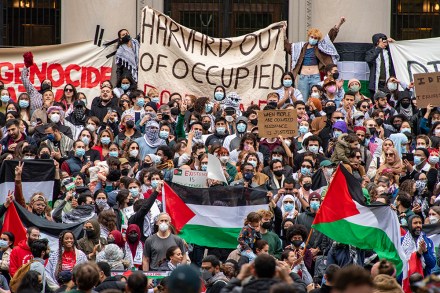
Whatever happened to universities, beacons of the liberal enlightenment? Well, according to both these authors, they are in deep trouble. Cary Nelson is a distinguished literature academic who for six years was president of the American Association of University Professors, set up in 1915 by John Dewey to advance standards of excellence and academic freedom. His book Hate Speech and Academic Freedom: The Anti-Semitic Assault on Basic Principles, published last year, has now been supplemented by this powerful thesis published by the Jewish Quarterly. Even before the 7 October 2023 Hamas attacks on Israel, he argues, campus anti-Semitism was rife across the West.

Can our universities be saved? 

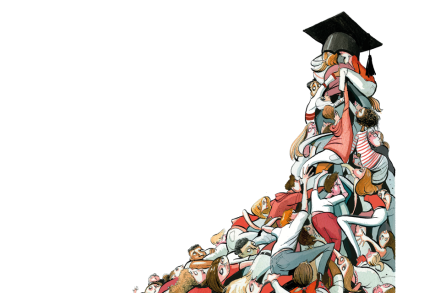
Universities are facing their biggest crisis in modern history, yet most are in denial and living in la-la land. Warning bells have been ringing for some years, but the descent has been precipitous. Just 25 years ago, Tony Blair unveiled the ‘knowledge-based economy’ to be powered by universities. They stood tall, untouchable, almost universally admired. As late as 2020, despite Britain having less than 1 per cent of the world's population and 3 per cent of global GDP, it had 11 of the world's top universities, including more in the top 50 than the whole EU combined. London alone boasted four of the top 100, the capital outperforming some entire G20 nations, including South Korea and Japan. It was a golden age.  But now?

Why homeschooling rates have doubled

Schools are a relatively new phenomena in human history. In Britain, they expanded in the 19th century and early 20th century in step with industrialisation and urbanisation, but in many places in the world, what little education the young receive occurs at home. The assumption most share, not unreasonably, is that where there are schools to attend, parents should send their children to them so they can avail themselves of the opportunities for academic learning, for socialisation and working through what they might do after they leave with the rest of their lives.

Why are politicians so ignorant about history?

The news over the weekend that Russell Group universities are letting in students from overseas on lower grades than home students has provoked understandable fury. Having been the proud vice-chancellor for five years of the university Margaret Thatcher helped found, Buckingham, I wince at the story. The fact that undercover journalists for the Sunday Times winkled out the widespread practice made it sound even murkier than it is. The response of the Russell Group that the lower offers applied to ‘foundation’, not undergraduate degrees, and that numbers of domestic students are rising more quickly than overseas students, has been lost in the noise. Universities need to get their act together and be on the front foot, focusing more on the experience they are giving students.

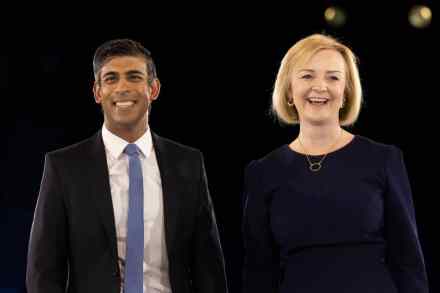
Get Rishi: the plot against the PM

35 min listen

This week: For her cover piece, The Spectator’s political editor Katy Balls writes that Boris Johnson could be attempting to spearhead an insurgency against the prime minister. She joins the podcast alongside historian and author Sir Anthony Seldon, to discuss whether – in light of the Privileges Committee's findings – Boris is going to seriously up the ante when it comes to seeking revenge against his former chancellor. (01:02) Also this week: In The Spectator journalist Paul Wood writes about how Saudi Arabia is buying the world, after the Saudi Arabia Public Investment Fund negotiated a controlling interest in the main US golf tournament, the PGA. This took many people by surprise.

My pilgrimage on the Western Front Way

Daunt Books in Marylebone was full last Tuesday evening for the launch of The Path of Peace, my book about walking from Switzerland to the North Sea, to help realise the vision of a young subaltern, Douglas Gillespie, killed in September 1915 shortly after unveiling his idea in a letter to his headmaster at Winchester College. He envisaged after the war a ‘via sacra’ being created along the entire Western Front and he wanted every man, woman and child to walk the trail as a reminder of where war leads ‘from the silent witnesses’ on both sides. A ‘brilliant idea’ was how The Spectator described the suggestion during the war. But the vision lay buried for 100 years.

More exams, less education

At this time of year, like every head in the country, I watch over my school with a mixture of pride and concern: pride that so many of our pupils have obviously prepared well for their exams (and have turned up!), and anxiety for those who are finding the ordeal difficult or who will be failing to do themselves justice. But I have a wider concern, too. I have been progressively losing faith in the examination system to inspire stimulating and exciting lessons, and to assess pupils in ways that challenge and that properly differentiate between them. The cry every August, when the exam results come out, is that they are becoming easier, that standards are being ‘dumbed down’, and that there is ‘grade inflation’.

Have we let exams become too important in shaping schools?

I was working in my study at Brighton College one summer term afternoon when my PA banged on the door: someone at The Spectator wanted to speak to me urgently. An animated editor burst on the line, audibly back from a very good lunch, barking: ‘What’s all this you’re saying about exams and tests squeezing scholarship and rounded learning out of schools?’ ‘Sitting exams in rows in sports halls has little bearing on what school pupils will ever do later in life,’ I spluttered, my fumbled response sufficient for him to commission an article ‘by tomorrow’.

Will Boris Johnson be one of the great prime ministers?

Boris Johnson may have been unable to work his magic on the burghers of Chesham as he did on fellow G7 leaders last weekend at Carbis Bay. But as he approaches his second anniversary in power next month, it is worth asking whether he is on track to become one of the landmark prime ministers in British history. Since the office was created 300 years ago this April, just nine prime ministers have emerged as giants. These eight men and one woman changed the course of history, and had successors who tried to emulate them, or distance themselves – but none could escape their shadow. Of the remaining 46 PMs, the majority departed Downing Street leaving little or no trace. No landmark PM has held office since Margaret Thatcher in 1979.

Liberal arts education has been under attack – we need to rediscover its profound wisdom

England did so deplorably in the Ashes in part because of an obsession with data, including minutely detailed plans on diet and exercise. Excessive bureaucracy can squeeze the lifeblood out of sport, the arts, and indeed education. Bureaucracy gone mad. Michael Gove, aided by Michael Wilshaw, has massively improved the standards of schooling in Britain. Their insistence on top quality teaching for all, and a will to smash the mediocre, lies at the heart of all they have achieved. They will go down in history as great education secretaries and chief inspectors respectively. But for all that, they do not sit comfortably in the same railway carriage as the principle of a liberal education. They are on a crusade, relentlessly driving our schools forward.

After three centuries, we need a museum of British premiership

Thursday 3 April 1721 was an unremarkable day in political London. No fanfare or ceremony surrounded King George I’s appointment of Robert Walpole as First Lord of the Treasury (Prime Minister), merely a paragraph buried in the press: ‘We are informed that a Commiffion is preparing appointing Mr Walpole Firft Lord…’ Yet here was the start of what has become the longest-lasting head of government job in the democratic world — and its 300th anniversary falls on 3 April this year. Expect no fanfare or drone pyrotechnics in political London to mark the occasion. Our leaders will, inevitably, be attending to the pandemic and other pressing concerns. But that does not mean that we should let the moment pass.

Sixth-formers are now questioning whether university is right for them

The traditional edifice of sixth form, university in Britain, and a job for life is still the norm for many, but major cracks are beginning to appear in the infrastructure. As the father of three children, two of whom have been through university and one who is still there, as well as headmaster of a school which sends more than 200 young -people to university each year, I have to say that I am neither surprised, nor indeed sorry, that the traditional model is beginning to implode. Increasing numbers are beginning to question whether higher education is right for them at all. Too few ask themselves the question, ‘Why am I going to university?’ Too many sleepwalk their way through the experience, without making the most of it as a result.

Those who can, teach

This book shouldn’t work. A memoir written by a 40-year-old, who has never written a book before, hardly sounds promising. The topic, education, moreover is death to good literature: barely has a book been written about the subject that is not dull beyond belief. Yet, against all the odds, this book turns out to be an enthralling read. Teach First is one of the most inspiring ideas around in 21st-century Britain. The book tells the story of its first decade, from 2002-12. Rising from nowhere, it has become one of the top graduate employers in Britain and is slowly achieving its mission of transforming opportunities for socially disadvantaged young people.

Training does not make the best teachers

None of us would accept being treated by a doctor or by a nurse who hadn’t had extensive training, nor would we want legal advice from someone who hadn’t been through law school. Nor would we be comfortable with our company accounts being managed or audited by anyone not trained to a high level in accountancy. So why should we accept teachers coming into our schools who haven’t been properly professionally taught how to teach in a college or university? Schooling is a once-in-a-lifetime opportunity, and poor teachers, as research shows, destroy life chances. How can we play dice with our children’s lives?