Anne Applebaum

Anne Applebaum’s books of the year

Snowdrops, A. D. Miller’s literary thriller, has to qualify as the book I was ‘most unable to put down’ this year. It’s set in a contemporary Moscow which I instantly recognised — glamorous, vicious, amoral and terrifying all at once. Miller puts his finger right on what makes modern Russia so compelling to outsiders. When his main character, a bland Englishman, allows himself to be enticed into a scam involving beautiful girls, phony building permits, and enormous amounts of money we intuitively understand why. For those who prefer their scams closer to home, The Big Short: Inside the Doomsday Machine, Michael Lewis’s book on the 2008 sub-prime mortgage crash is a brilliant read, and highly educational.
Thus do empires end

‘This book is a chronicle of one day in the history of one city.’ As first sentences go, that one is hard to beat — particularly given that the ‘one day’ is the last day of the Soviet Union, the city is Moscow and the author, an Irish journalist, was there and knew most of the principal actors. ‘This book is a chronicle of one day in the history of one city.’ As first sentences go, that one is hard to beat — particularly given that the ‘one day’ is the last day of the Soviet Union, the city is Moscow and the author, an Irish journalist, was there and knew most of the principal actors.

Is Nato finished?

After Muammar Gaddafi and his ghastly children fled Tripoli, Libyans desecrated his statues and stamped on his posters. As it turned out, the Libyans really did hate Gaddafi enough to rise up, arm themselves and overthrow him. Gaddafi’s own elite units mostly melted away when the rebels advanced into Tripoli, and even the dictator’s tatty palaces (where did all that oil money go, one wonders) were abandoned by his personal guard. Backed by western airpower and special forces, the rebels entered many of these ramshackle structures unopposed. The Libyans have a right to be proud, and we in the West have a right to feel relieved. This wasn’t Suez, in the end, and the most dire predictions have so far failed to come true.

High noon

The American left is revelling in Rupert Murdoch’s British troubles – and it’s America that has the power to really hurt him Washington DC Let’s start, first, with the bare facts: a British newspaper has been found to have broken British law. The proprietor has closed the paper and apologised profusely. Some British policemen have resigned. Some British journalists have been arrested. While all of this is happening, wars are being fought in Libya, Iraq and Afghanistan. The baseball season is progressing. Goldman Sachs has reported a disappointing $1 billion profit. The US Congress is wrangling over the national debt and, as a result, the American government may be about to default.

Deluded and abandoned

Once, while travelling in an odd part of Siberia, I was told of a place called ‘the English colony’. A remote spot — it was said to be several hours from the nearest town, but trains were infrequent and roads non-existent — the ‘English colony’ was the site of a former Soviet camp: a small piece of the gulag where the prisoners had been British. Or so the story went. Allegedly, a railwayman had once found the remnants of a British uniform on the site of the former barracks there, but no one was quite sure what had happened to it. Supposedly, some of the locals had once heard the prisoners singing English songs. Later, in Moscow, I tried to find a mention of the ‘English colony’, or something like it, in the Russian archives, but I could not.

The new alliance

‘Freedom fries,’ served instead of French fries back in 2003, are no longer on the menu in Washington DC. French wine, out of fashion after Jacques Chirac refused to join our ‘coalition of the willing’ in Iraq, is no longer shunned. Au contraire. In one Washington restaurant last Saturday night, someone at my table raised a toast to the new leaders of the free world: ‘Vive la France!’ What else could we do? Our president was on his way to Brazil. Over in Old Europe, the President of France and his new best friend, the British Prime Minister, had just put themselves in charge of a new ‘coalition of the willing’ in Libya.

The sensational truth

For a man who earns his living by publishing other people’s email, Julian Assange has a high opinion of himself. You can hear that in his rhetoric, which combines the paranoia of the early Bolsheviks with the arrogance of a teenage computer hacker. When a subordinate dared threaten him a few months ago, Assange slapped him down by declaring himself ‘the heart and soul of this organisation, its founder, philosopher, spokesperson, original coder, organiser, financier, and all the rest’. When others threatened to leave, he declared, in the manner of the young Lenin, that the organisation was in ‘a Unity or Death situation’. His goals are as vast as his self-esteem: chief among them is the destruction of the American government as we know it.

A far-fetched war

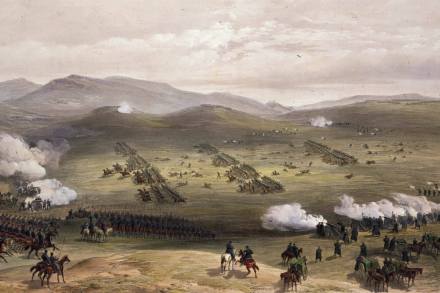
First, a disclaimer: this review will not touch upon some recent, odd behaviour of this book’s author, Orlando Figes, because I can’t see that it’s relevant. First, a disclaimer: this review will not touch upon some recent, odd behaviour of this book’s author, Orlando Figes, because I can’t see that it’s relevant. The history of the Crimean war is far removed in time and in space from contemporary literary politics, and I think we should keep it that way. Second, an unexpected fact. Although the Crimean war is also far removed in time and space from contemporary American politics, while reading this excellent book I could not help but marvel at the many parallels with the present.

Proscribed reading

In 1948, Poland’s new communist government was badly in need of legitimacy and desperate for international recognition. So they did what any self-respecting left-wing government would do, back in those days, in order to win a bit of respect; they held a cultural Congress. In 1948, Poland’s new communist government was badly in need of legitimacy and desperate for international recognition. So they did what any self-respecting left-wing government would do, back in those days, in order to win a bit of respect; they held a cultural Congress. They invited Picasso, A. J. P. Taylor, Aldous Huxley, a host of prominent Soviet literary bureaucrats and whichever left-leaning writers they could dredge up from anywhere else.

Paranoia and empty promises

It has taken more than half a century, but at last the Anglophone world has woken up to the fact that 20th-century communist history makes a superb backdrop for fiction. So extreme and dramatic were the Russian revolution, the arrests and the purges, Hitler’s invasion of the Soviet Union and the imposition of Stalinism on the eastern half of Europe that all you have to do is write down what really happened and it sounds like fiction anyway. English historians such as Catherine Merridale (Night of Stone) and Simon Sebag-Montefiore (The Court of the Red Tsar) have known this for a while now. Now English novelists, from Martin Amis to Sebag-Montefiore himself, are finally catching up. The Betrayal is Helen Dunmore’s most recent contribution to this general awakening.

Ghosts from the Soviet past

Above all, it is the inhuman scale of things which impresses the visitor to Moscow: the vastness of Red Square, the width of the uncrossable streets, the implacability of the traffic. The city’s history seems equally inhuman, haunted as it is by centuries of tyrants, millions of political prisoners, countless wars. Impossible to navigate and impossible to know, Moscow doesn’t exactly embrace the casual tourist. But Rachel Polonsky was not a casual tourist. A scholar of Russian literature who lived in Moscow for a decade, she knew better than to start looking for the essence of the city in Red Square. Instead, she began on a single street, inside a single flat. The street was her own: Romanov Lane.

A flicker of light in a dark Russian forest

Anne Applebaum says the catastrophic plane crash near Smolensk, which killed so many of Poland’s leading figures, may hasten a rapprochement between Warsaw and Moscow The President, the First Lady, the chairman of the National Bank. Fifteen members of parliament. Ten generals. Anna Walentynowicz, 80-year-old heroine of the Solidarity strike of 1980. Ryszard Kaczorowski, the 91-year-old former president-in-exile. The list of Polish dignitaries who died in the tragic plane crash in the forest near Smolensk, Russia, not far from where 20,000 Polish officers were secretly murdered by Stalin 70 years ago, is extraordinarily long. Yet this time around, nobody suspects a Russian conspiracy.

Skeletons in the cupboard

Freudian analysis, Soviet communism and the garment industry: what do all of these things have in common? If your answer has something to do with central and east European Jews born at the end of the 19th century, you wouldn’t be far off. Freudian analysis, Soviet communism and the garment industry: what do all of these things have in common? If your answer has something to do with central and east European Jews born at the end of the 19th century, you wouldn’t be far off. That generation formed an important part of the intellectual and mercantile elite of Europe, but not the political elite — which is partly why some of them wound up in the radical communist anti-elite instead. In some families, various members dabbled in all of these worlds.

Success at last

A couple of years ago, Adam Zamoyski — who is, yes, a friend — told me that he was revising The Polish Way, a history of Poland he had published back in 1987. At first he had thought merely to shorten a few over-long paragraphs and check facts. But as he re-read his work, he decided it needed more dramatic changes. In 1987, Poland had not been a sovereign country: Polish domestic and foreign politics were still directly controlled by the Soviet Union, which itself was still very much in existence. That meant, he explained, that he was writing the history of a country which had failed. His task, as a historian, had been to explain that failure.

Arthur at Camelot

Journals: 1952-2000, by Arthur Schlesinger, Jr, edited by Andrew Schlesinger and Stephen Schlesinger Before sitting down with this hefty doorstopper of a diary, first ask yourself whether you agree — or can imagine yourself agreeing — with the entry Arthur Schlesinger, Jr made on 27 March 1950: ‘I adore sitting around hotel rooms with politicians and newspapermen exchanging gossip over drinks.’ If you do, or can, then you will enjoy this book, for it largely consists of a half-century’s worth of gossip, most of it obtained by sitting around hotel rooms with politicians and newspapermen over drinks.

The spectre of Spielberg

Searching for Schindler, by Thomas Keneally Which would you rather read, The Great Gatsby or F. Scott Fitzgerald’s day-by-day account of the whisky he drank and the cigarettes he smoked while writing it? La Comédie humaine or a list of the cups of coffee Balzac downed, between midnight and sunrise, while putting all of those words down on paper? Barchester Towers or Trollope’s fond recollections of the time he spent in composition (wake up at 5:30, write until 8:30, leave for the post office, go home. Next day: wake up at 5:30, write until 8:30, leave for the post office, go home…) Descriptions of the process by which novelists come to create their works are invariably far less interesting than the works themselves.

In Poland you can’t get hold of a Polish plumber

Warsaw ‘Hmm, let me see,’ said Tomasz the painter, rubbing his temples. He was trying to think of a plumber who could install a new bathroom shower. ‘Well, there’s Jacek — no, sorry, he’s gone to Dublin. There’s Lech — no, I’m afraid he’s away, I think in Bristol. There used to be that guy, what was his name, Jackowski — no, he’s in London.’ He thought for a few more minutes. ‘Sorry,’ he said at last. ‘Can’t recommend anyone.’ Thus did I discover that within a hundred-mile radius of my Polish country house — a territory that includes the city of Bydgoszcz (pop.

Memory speaks volumes

It’s a dangerous business, oral history, at least when you try it in Russia. Without oral history a complete history of the Soviet Union is almost impossible to write. Archival documents are dry, containing only the official point of view; memoirs, often written years later, are unreliable and frequently slide over important details. In an interview, by contrast, one can pose questions, prompt forgotten memories, or ask an eyewitness about things no one would put in print. It is no accident that many excellent books on Soviet history written in recent years (Catherine Merridale’s Ivan’s War or Simon Sebag-Montefiore’s Court of the Red Czar) have made extensive use of interviews.

The children of Marx

Italian intellectuals, Cambodian peasants, Hungarian workers, Russian colonels, Angolan insurgents, French philosophes, American actors, British miners, Chinese craftsmen, Nicaraguan labourers: over the years, the adherents of the international communist movement have been so geographically and socially diverse as to defy classification. During the 100-odd years of the movement’s existence, nations as different as Czarist Russia, semi-feudal China and post- colonial Cuba subsequently developed into communist states. Marxist literature has been translated into hundreds of languages and read, by somebody, in all of them. Perhaps as a result of this diversity, the literature on the international communist movement is stunningly weak.

Extraordinary champion of ordinary people

Some years ago, I went to visit the offices of a small Moscow newspaper, Novaya Gazeta.   Novaya Gazeta has always led a precarious existence — it is one of the few publications that has consistently opposed the Kremlin — and that day the editor was particularly distracted. While I was talking to him, the telephone kept ringing: one of his reporters had been arrested in Chechnya. Since another Novaya Gazeta reporter had recently died in mysterious circumstances, and since yet another had been beaten up quite badly, he was worried. The Russian authorities, he said, were capable of anything. That reporter, Anna Politkovskaya, was later released. But as it turned out, her editor was right to be worried.