Annabel Denham

Annabel Denham is a column and acting comment editor at the Daily Telegraph

How to avoid repeating the mistakes of the HS2 fiasco 

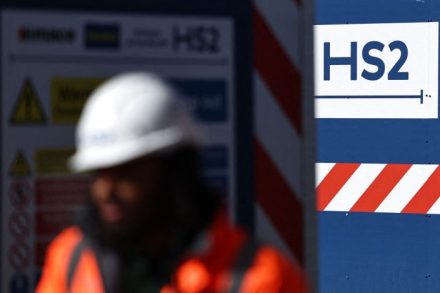
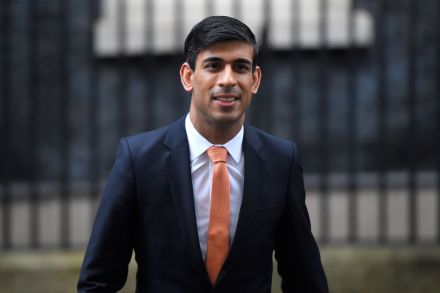
Rishi Sunak has finally slayed the white elephant that is HS2 or, perhaps more accurately, cut off its hind legs by scrapping the northern leg. It’s been a tortuous process: remember the proposals to link it with HS1 to Europe (March 2014), the spur to Heathrow Airport, and the Eastern leg to Leeds? The hope must now be that future policymakers will look back on this debacle and avoid repeating its mistakes. We must ask what this embarrassing episode tells us about the way in which infrastructure is planned in Britain, and the massive, costly barriers to building.

The BMA isn’t striking to protect patients or the NHS, just itself

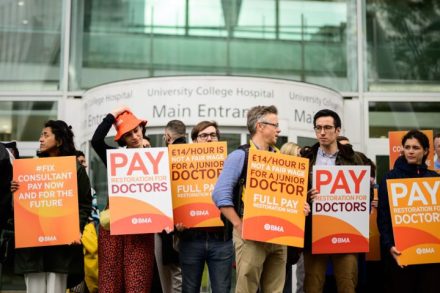
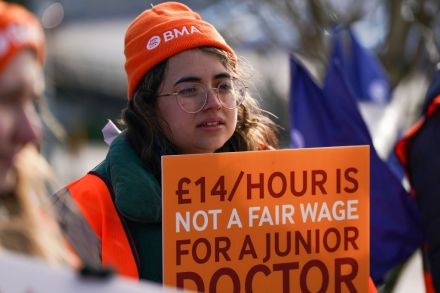
What a fall from grace. Three years ago, the British Medical Association (BMA) could barely put a foot wrong. It could moralise over Tory failures – austerity, health inequalities, poverty, chronic underfunding of the NHS, mishandling of the pandemic – and even Tory politicians would quietly nod along. Its members were national heroes, even angels within the country's national religion. And, importantly, most people believed the BMA was a medical body. Now, people will be far more aware that the BMA is a militant trade union for doctors, representing their financial interests above the welfare of patients or the reputation of the institution they purport to protect.

The problem with the ‘right to strike’

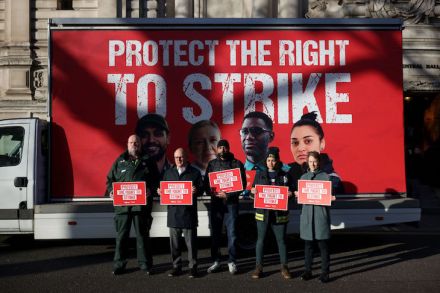
The Trades Union Congress (TUC) has vowed to report the government to the UN workers' rights watchdog over its controversial strikes bill, but how seriously can we take this threat? The TUC's leader, Paul Nowak, certainly sounds like a man on a mission: earlier this year, Nowak claimed the legislation was 'almost certainly illegal', a curious assertion given it was going through parliament at the time. Now that the bill has received royal assent, it appears the TUC is doubling down on its war on the strikes bill. Yet it's hard not to see the TUC's complaint as anything other than a stunt designed to further denigrate the Tories who, to the union's mind, have spent 13 years wickedly chipping away at workers' rights.

The SNP’s four day week won’t work

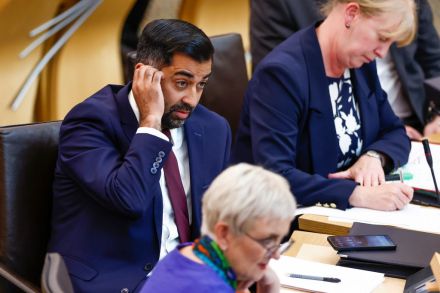
Pigs will surely sooner fly over Glasgow Pollok than business will take inspiration from Humza Yousaf's approach to running government. Nonetheless, the claim made by Scotland's First Minister and his advisers is that moving state employees to a four-day week could be a catalyst for the private sector to follow suit. In the clearest sign yet that the SNP exists for the welfare of its public sector workers at the expense of the taxpayer, Yousaf has announced a pilot scheme in his programme for government, Holyrood's version of Westminster's King's speech, despite warnings that it could 'blow a £2.5 billion hole' in his budget. The SNP's day-to-day spending is already on course to exceed their funding by £1 billion in 2024/25, rising to £1.9 billion in 2027/28.

‘Lazy girls’ aren’t what’s hurting the British economy

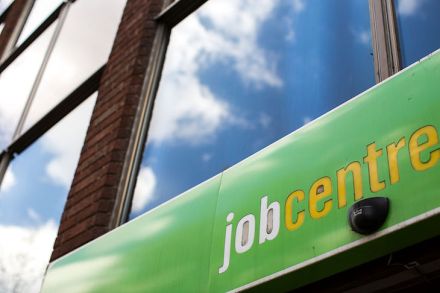
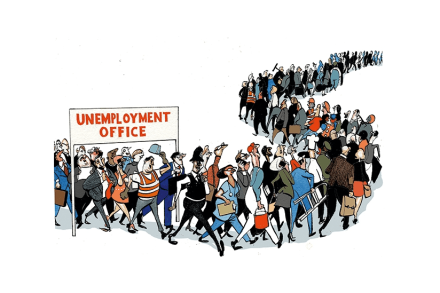
The current government will do almost anything to avoid reforming welfare or the NHS. Last month, we were informed school leavers might be allowed to train as doctors without a traditional medical degree in an ill-conceived cosplay scheme. And it was reported yesterday that GPs may be encouraged to refer patients to life coaches, rather than issue sick notes, to help people get back into work. Between the starts of 2019 and 2023, the number of economically inactive working adults with depression or anxiety jumped by 40 per cent to hit 1.35 million. There are 400,000 more people on long-term sickness than before the pandemic. Yet rather than hiring more staff to carry out face-to-face ‘fit to work’ tests, the government is proposing to scrap capability assessments altogether.

The BMA shouldn’t look down on cleaners

During the lockdown, there was a cohort of workers who toiled through the night in what was described as a 'fairly thankless job that is taken for granted day to day.' Those workers were cleaners, who decontaminated buses and trains so that commuters could remain safe. We didn't clap for them on our doorsteps, nor did they even receive the inadequate praise we gave to supermarket shelf stackers or lorry drivers.  It is telling that these workers were the subject of Professor Phil Banfield's disdain earlier this week. The Head of the British Medical Association's council appeared outraged that junior doctors – whose takeaway salaries average around £37,000 (not including a pension) – could in theory earn less than he pays his cleaner.

Is Labour really a credible government-in-waiting?

How long do you give it before Labour abandon their promise of golden hellos for new teachers? Shadow education secretary Bridget Phillipson has insisted their proposed £2,400 welcome bonus wheeze will be fully costed, funded by a tax raid on fee-paying schools. It is not yet clear whether Labour has considered that putting private education beyond the reach of tens of thousands will mean many pupils pouring into the state system, at a cost of hundreds of millions every year. Nor whether party strategists realise they may be slightly overestimating how far they can make the £1.6 billion raised annually from this levy go.

The Bank can’t blame wages for out of control inflation

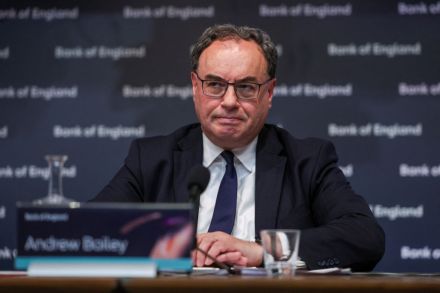
After a bruising week, perhaps Andrew Bailey could take some solace in Rishi Sunak’s interview with Laura Kuenssberg this weekend. For a start, the Prime Minister threw his support behind the Bank of England governor, after senior figures within the Conservative party accused Bailey of being ‘asleep at the wheel’. But it was also a reminder that, no matter how bad things may seem at Threadneedle Street, they’re probably worse in No. 10.

Ministers are addicted to intervention

This week Rishi Sunak ruled out direct government intervention to protect homeowners from impending catastrophe. It’s a welcome development – bailing out mortgage debtors would be financially ruinous and grossly unfair on renters. But just a few days ago the Prime Minister was ordering banks to shield borrowers from surging rates, and the Treasury still insists that the chancellor wants banks to 'live up to their responsibilities' – the vagueness of which leaves a lot to be desired. There are reports of ministers working with banks to offer more indirect help, like payment holidays. The government has led people to believe that politicians will shield them from any hardship It's unclear whether the Tories will buckle and end up subsidising mortgages anyway.

Starmer’s economic promises would spell disaster for the UK

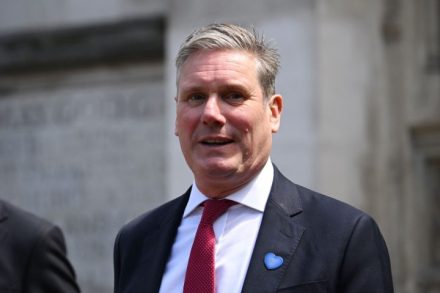
Britain is paying a terrible price for two decades of fiscal incontinence. Our borrowing costs have risen to the highest amongst advanced economies. Core inflation (which excludes food and energy) is actually rising. Mortgage costs are spiking as expectations mount that interest rates will be raised once again. Chancellor Jeremy Hunt has conceded he would be comfortable with a recession if it brought down inflation. We have been living beyond our means, and the day of reckoning is here.  Rishi Sunak has lost any claim of being a 'safe pair of hands' at the tiller; all the opposition really needs to do is sit back and watch the Conservatives lose the next general election. Labour now have a 17-point lead over the Tories.

‘Protect the NHS’: The nanny state is waging war on life’s pleasures

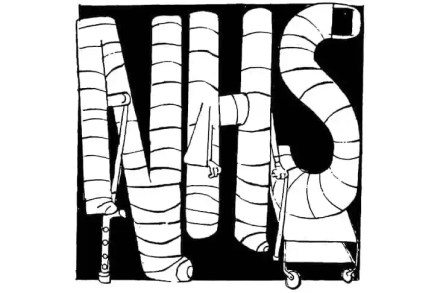
British political discourse has barely progressed since David Cameron told voters in 2010 that he represented the ‘party of’ our revered healthcare service.  Over the past few weeks we’ve heard pledges – all clearly with an election in mind – ranging from the inconsequential to the ridiculous. Tired promises about community-led treatment. Receptionists-turned-‘care navigators’. School leavers working as doctors. But more often than not, they have been laced with the same pernicious message: that it is the behaviour of the British public that must change, rather than our healthcare model. That people must be regulated, even though failure is in the NHS’s DNA. This is nothing new, of course.

Forget the EU: Britain’s own red tape is strangling the economy

Ministers are considering scrapping the EU Working Time Directive. The news has been met with predictable howls from the usual suspects. This is the ‘health and safety’ law which limits most people’s working hours to 48 hours a week on average, including overtime. It has long been unpopular with employers, who warn it stifles productivity by preventing people from working longer hours. It has also been blamed for NHS waiting times. Vested interests, regulators and HR managers benefit from regulatory complexity, and are remarkably effective at snuffing out attempts to reduce it Despite this, following reports it might be ditched, one frenzied SNP MP responded that ‘it feels there is no basic human right that is not under threat from this Tory government’.

Our nanny state holds back Britain’s young

Clever people often believe that their cleverness gives them the right to control other people. Nowhere is this more manifest than in nanny state Britain.  So fixated was Public Health England on shielding us from our own bad decisions that when an infectious disease arrived on our shores the quango was woefully unprepared. Junk food advertising bans were prioritised over protecting us against an epidemic.  And so determined are politicians to insulate us from hardship that they attempt to regulate anything that moves. Arguably the most troubling recent development concerns the tacit raising of the age of majority. Since 1969 it has been accepted that we are treated as adults by law from 18. The age had broadly trended down over the years.

Junior doctors’ pay demands aren’t reasonable

Is a 35 per cent pay rise reasonable? That's the question which, rightly or wrongly, is at the heart of the junior doctors row.  We are part way through a 96-hour walkout which the NHS national medical director for England warned would cause ‘unparalleled levels of disruption’. Coming straight after the Easter weekend, coinciding with Ramadan and Passover, and lasting longer than any other walkout in NHS history, it has been timed for maximum impact. The health of sick people will be compromised: hernias will rupture, appendixes burst, cancer treatments will be delayed. But it will have subtler effects, too. One letter in yesterday’s Telegraph expressed dismay at the advice to ‘avoid risky behaviour’ during the strikes.

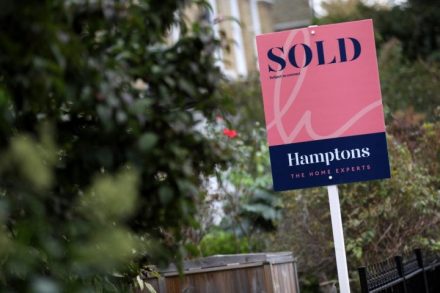
In defence of landlords

Whisper it millennials, but YIMBYism (Yes In My Back Yard) might be gathering momentum. Recent surveys have found more people agree than disagree that there is a housing crisis in their local area, and more would support building houses than oppose it.  They may be given the chance to do so. Last year, government announced plans to give residents the power to opt into more development on their own street through 'street votes'. And the Levelling Up and Regeneration Bill includes 'community land auctions', which would give councils much stronger incentives to permit more housing development.  We shouldn't let politicians wriggle out of difficult conversations over the housing shortage But while YIMBYism is strong in principle, it is weaker in practice.

Sadiq Khan’s green vision risks impoverishing Britain

Earlier this week, Chris Skidmore and Sadiq Khan announced they were 'teaming up' to defeat the politicians they believe are attempting to thwart climate action. In an article for the Guardian, the duo has put aside political differences to 'set an example' of what is possible. Those differences could be disputed: the Conservative member for Kingswood is further to the left than many MPs on the Opposition benches. But it was by no means the most dubious claim in their piece. Consider, for instance, Khan’s assertions over Ulez, London’s Ultra Low Emission Zone.

Who will pay for Hunt’s ‘free’ childcare hours?

People love free stuff. Why wouldn't they? Free healthcare, free education, free childcare – what's not to like? Expanding free childcare hours doesn't change the fact that a full-time nursery place costs around £15,000 a year Of course, government provides nothing for free. When the economist Milton Friedman appropriated the adage 'there's no such thing as a free lunch' for his 1975 text of the same name, he was describing in layman terms the concept of opportunity cost. For every choice made, there is another which cannot be.  When 'our' NHS absorbs nearly half of day-to-day public service spending, it is money that could have been deployed elsewhere.

In defence of the supermarket

Supermarkets are once again back in the firing line. Henry Dimbleby, the Leon co-founder turned government food tsar, has blamed the current food shortages on their ‘weird culture’. When food is scarce UK supermarkets won't raise their prices, he claimed. It leads to growers selling less here and more in Europe, exacerbating shortages. He wasn’t alone in blaming supermarkets. Last month, in an attempt to absolve the government of blame, food and farming minister Mark Spencer demanded the heads of big chains join him for a discussion on 'what they are doing to get shelves stocked again.' In the end, only middle-management showed up.  The average supermarket stocks 20,000 items with around 40 types of vegetables on the shelves. Over 1.

Why is the NHS denying women pain relief in childbirth?

Over the weekend it was reported that hospitals are implementing a ban on the gas and air used by women giving birth over concerns it could be harmful to NHS employees. A survey of 20,900 women by the NHS regulator recently found 63 per cent said they had been unable to get a member of staff’s attention during labour. Likewise, it is not believed that any workers have become ill as a result of long-term exposure to nitrous oxide, but here we are. The whole notion of a birth 'plan' is now farcical. Women might want an epidural, but only 30 per cent receive them here compared with around three-quarters in the US. They might request a birthing pool, but it’s unlikely to be granted due to shortages.

What Miriam Cates gets right – and wrong – about declining fertility

Fulfil your civic duty. Get married. Have children. That was the message from Miriam Cates, the increasingly prominent Conservative backbencher, to guests at a drink reception earlier this week. In what even her fiercest critics would have to concede was an impressively bold speech, Cates suggested that many of her female constituents want to work less and spend more time with their children. She claimed that politicians belonged to a class that had been protected by marriage and family, insulated from family breakdown to such a degree that they fail to realise how important it is. Few politicians can ride out a Twitterstorm without some sort of retraction, and Cates is no exception.