Andrew Motion

The short, unhappy life of Ivor Gurney — wounded, gassed and driven insane

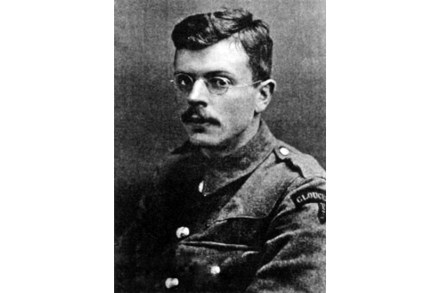
The poet and composer Ivor Gurney (1890-1937) is a classic but nevertheless shocking example of literary neglect. Although he brought out two respectfully received collections of war poetry during his lifetime, the idiosyncrasies of his style have prevented him from being widely recognised as the equal of his greatest contemporaries. His history of mental illness has further destabilised the reception of his work, not just by encouraging people to think of him as crazy, but by compounding practical difficulties surrounding its publication. In the 1980s Michael Hurd wrote a somewhat sketchy biography, and P.J. Kavanagh edited an expanded, but still partial, sample of his work.
Happy 80th birthday, Bob Dylan

40 min listen

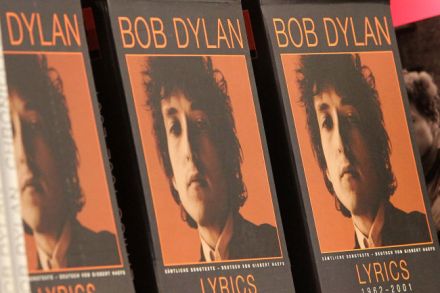
In this week's Book Club podcast, we're celebrating the 80th birthday of Bob Dylan. My guests are the former Poet Laureate Andrew Motion, and Clinton Heylin, the Dylanologist's Dylanologist and author most recently of The Double Life of Bob Dylan: A Restless Hungry Feeling 1941-66. I ask what makes Dylan special, whether what he does - even if we admire it - can be called literature, how Dante and Keats found their way into his work, whether there's anything he does badly (spoiler: yes); and if it can really be true that he writes songs with a typewriter rather than a guitar.

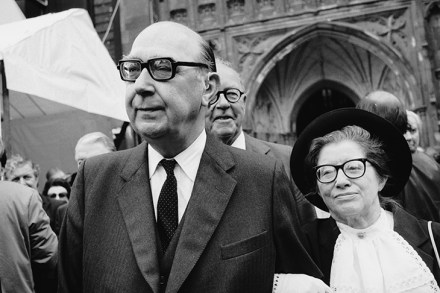
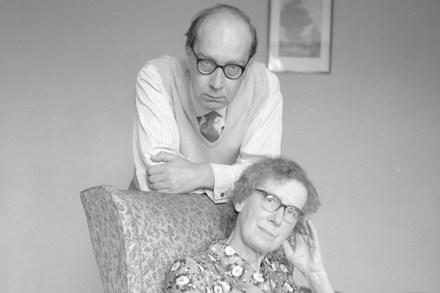
Two of a kind: Monica Jones proved Philip Larkin’s equal for racism and misogyny

By the time Philip Larkin died in 1985, he’d long since achieved national treasure status: his poems were critically admired as well as widely read; his reticence (‘the Hermit of Hull’) was a matter of affectionate respect; and his cantankerous published remarks about ‘difficulties with girls’, children, left-wing politics, and ‘abroad’ were generally embraced as proof of valiant individualism — or possibly a grouchy kind of joke.

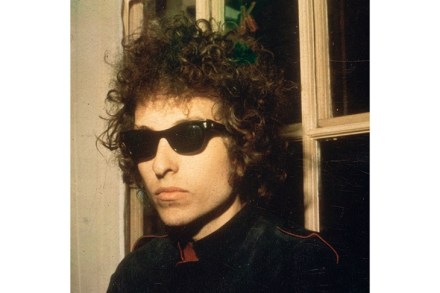
Bob Dylan — from respected young songwriter to Voice of a Generation

Clinton Heylin is the eminence grise of Bob Dylan scholars: co-founder of Wanted Man (the magazine dedicated to studying Dylan’s life and work), long-time editor of its quarterly magazine the Telegraph, compiler of Stolen Moments: The Ultimate Dylan Reference Book and also the author of Behind the Shades, which, when first published in 1991, was rightly praised as the most reliable account of Dylan’s life and career up to that point. Dylan has accomplished a great deal since then, including becoming a Nobel Laureate, so it’s not surprising that Heylin should want to bring his account up to date, especially since a large new collection of Dylan material has recently been deposited in the Gilcrease Museum in Tulsa.

Village voices

Max Porter’s first book, Grief is the Thing with Feathers (2015), got a lot of credit for finding original ways to talk about two of the oldest subjects under the sun: human love and human death. It’s hero is a young father writing a book about Ted Hughes, whose distress at the death of his wife, and whose efforts to look after their two children, are shaped by the appearance in his life of Hughes’s celebrated figure of the Crow, a real/metaphorical creature who is on the one hand disgusting, violent, abusive, anarchic and gloating, and on the other bracingly vigorous, unkillable and transformative. The bird’s dynamism blows apart familiar structures of narrative and prevents any one point of view from achieving a steady control.

A remarkable show of devotion

On 13 September 1964, at the age of 42, Philip Larkin began writing to his mother Eva (his ‘very dear old creature’) by taking stock: Once again I am sitting in my bedroom in a patch of sunlight, embarking on my weekly task of ‘writing home’. I suppose I have been doing this now for 24 years! on and off, you know: well, I am happy to be able to do so, and I only hope my effusions are of some interest to you on all the different Monday mornings when they have arrived. A great deal of what is characteristic about Letters Home is evident here.

In two minds | 16 August 2018

‘I have a very poor opinion of other people’s opinion of me — though I am fairly happy in my own conceit — and always surprised to find that anyone likes my work or character.’ This admission by Robert Graves — made to his then friend Siegfried Sassoon in the mid-1920s — goes to the heart of his character as a man and a poet. It projects a powerful mixture of defiance and neediness, which in his personal life produced a series of highly disruptive assertions and reversals, and in his writing life an equally striking set of commitments and walkings-back. Jean Moorcroft Wilson, who has previously published fluent biographies of Sassoon and Edward Thomas, is a reliable guide to all these contortions.

Intimations of mortality | 9 February 2017

In Deaths of the Poets two living examples of the species, Paul Farley and Michael Symmons Roberts, retail the closing moments of close on 30 poetical lives, ranging from Thomas Chatterton to Robert Frost, Lord Byron to Rosemary Tonks, John Clare to Thom Gunn. Why? Because they feel the influence on ‘our’ generation (Farley was born in 1965 and Symmons Roberts in 1963) of the ‘confessional’ American poets, several of whom cast a solemn glamour over their calling by killing themselves — John Berryman, Sylvia Plath, Anne Sexton.

A gift from beyond the grave

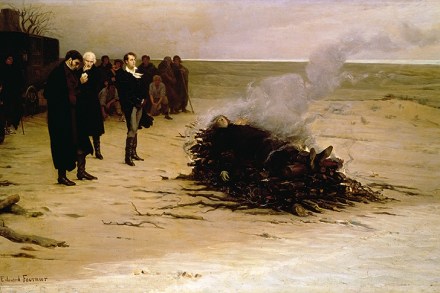
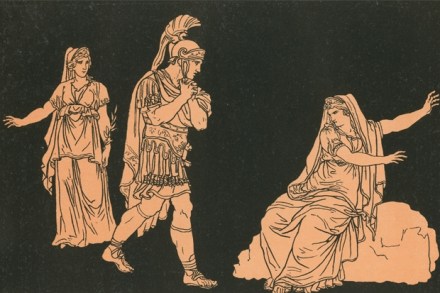
When Virgil died at Brindisium in 19 bc, on his way back to Rome from Greece, he left the Aeneid unfinished. When Seamus Heaney died in Dublin in 2013, his translation of Book VI was also unfinished, but like the whole of the original, his 1,222 lines were found to be in a publishable condition (‘final’, he wrote on the last draft, which allows for it not being ‘complete’). The coincidence is touching. So too is the fact that this book is concerned with news from the afterlife. Aeneas descends into the underworld to visit his father, Anchises, and receives there a history lesson that leads beyond the founding of Rome to the glories and struggles that lie in the future. Heaney’s version is also a kind of gift from beyond the grave.

The Camp

Near the dogleg turn of the lane down to the ponies’ field, skulking in summer among cow parsley and meadow sweet, in winter with their streaked black corrugated walls laid bare, were the half-dozen Nissen huts my father refused to mention. A prisoner of war camp for Italian soldiers, my mother told me, but also part of the silence my father had brought back with him ten years before from Germany which now could not be ended although the reason for that was one more thing he never gave. Why spoil an early morning stroll bringing halters for the ponies so we could lead them home to the stable yard then saddle up?