Andrew Hankinson

Andrew Hankinson is a freelance journalist and author. His new book, 'Don't applaud. Either laugh or don't', is out now.

Few people are as dangerous as an insecure man mocked

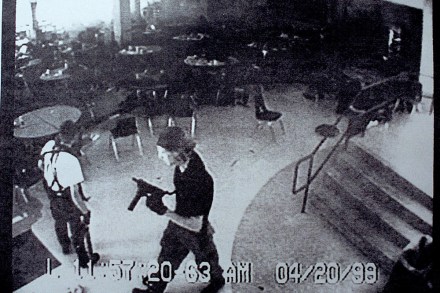
‘I have had more direct clinical experience than almost any other forensic psychiatrist of assessing and managing lone-actor perpetrators of massacres,’ writes Paul Mullen, professor emeritus at Monash University in Australia, in his introduction to Running Amok. He’s got non-clinical experience, too. In 1990, when he lived near Aramoana in New Zealand, he was disturbed by gunfire one night. It turned out that the neighbour of one of his patients was busy killing 13 people. Afterwards, Mullen supported the survivors and his patient, who felt ‘anguish’ at not spotting the red flags to prevent the massacre.
Owen Matthews, Bijan Omrani, Andrew Hankinson, Laurie Penny & Andrew Watts

29 min listen

On this week’s Spectator Out Loud: Owen Matthews says that Venice’s residents never stop complaining (1:11); Bijan Omrani reads his church notebook (7:33); Andrew Hankinson reviews Tiffany Jenkins’s Strangers and Intimates: The Rise and Fall of Private Life (13:54); as 28 Years Later is released, Laurie Penny explains the politics behind Alex Garland’s film franchise (18:25); and, Andrew Watts provides his notes on Angel Delight (25:09). Produced and presented by Patrick Gibbons.

Is nothing private any more?

How did the UK become a place where young people think it’s permissible to record a relative at home and make that recording public? Why has privacy been so easily discarded, and why have people welcomed its demise so they can control the behaviour of others? A few years ago, when I taught at university, a student who lived with their parents told me they had argued with their mother about what they described as ‘queer identity’. The student had secretly recorded the argument and wondered what I thought about them using it for a piece of writing. I think their assumption was that because I’m a journalist I would embrace the idea. I did not.

In defence of working from home

Working from home has had a terrible effect on my state of mind and it’s one of the best things that’s ever happened to me. Which is why I want to defend it in a week of it being under attack. On Monday, on the BBC’s Panorama, Stuart Rose, former chairman of Asda, said he believes ‘productivity is less good if you work from home. I believe that your personal development suffers’. In the US, Donald Trump set the global social media agenda by ordering the end of ‘remote work arrangements’ for government workers. I get the sentiment, but completely disagree. In the UK it is not a problem to be fixed. In fact, it could even be a shortcut to levelling up.

Murder in the dark: The Eighth House, by Linda Segtnan, reviewed

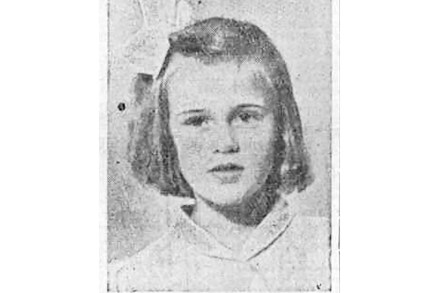
It takes a Scandinavian mother to write like this: ‘Why murder a nine-year-old girl? She wasn’t raped. Rape is the only motive I know of for the murder of little girls, unless the killer is a close relative.’ Linda Segtnan’s The Eighth House benefits from this bluntness. Its author, a historical researcher based in Stockholm, was browsing through a newspaper archive in 2018 when a photograph of nine-year-old Birgitta Sivander caught her attention. The girl lived in a village called Perstorp in southern Sweden until one evening in May 1948 she went out to the football field and did not return. A search was organised, the human chain making its way into the nearby forest in the middle of the night to look for her. They found her clogs.

How much would your family stump up for your ransom?

‘I can’t quite believe I’m here, having a steak dinner with a killer,’ writes Jenny Kleeman, as she sits with a hitman for the big opening to her book about the price we put on life. Someone paid to take lives is about to spill the beans on his dark trade. There should be tension. There should be jeopardy. We should be worried about Kleeman’s safety. So why does it feel a bit flat? It is difficult to find a hired gun, obviously. This one is John Alite, who was ‘a hitman for the Gambino dynasty’. However, he is now ‘a motivational speaker’ and ‘host of several podcasts’, and seems a lot more podcaster than hitman. Kleeman writes that he went to prison after he ‘pleaded guilty to charges that included two murders’.

Welcome to the age of uncancelling

In September 2019 my fear was that comedian Shane Gillis might throw himself off a bridge. Just hours after being hired by Saturday Night Live, one of the world’s biggest TV shows, he was fired. The reason: journalist Seth Simons had posted clips of Gillis disparaging Chinese people. The clips, from 2018, showed Gillis on his podcast mimicking the accent of an old-fashioned racist as he said, ‘Let the fucking Chinks live there.’ Then he used his natural voice to have an ugly conversation about Chinatown. Another clip showed Gillis saying ‘faggot’ and using ‘gay’ as an insult. Gillis being fired from Saturday Night Live isn’t a free speech issue His Saturday Night Live dream was over.

Have we all become slaves to algorithms?

Here I am, a human, recommending Kyle Chayka’s book about the negative impact of algorithms on our culture. Hopefully that will calm him down a bit, because he worries a lot, possibly far too much, at least as it seems to someone who is less online. Chayka is a staff writer at the New Yorker and he is concerned about the effect of the Filterworld, his word for the ‘network of algorithms that influence our lives today, which has had a particularly dramatic impact on culture and the ways it is distributed and consumed’. He is referring to the songs Spotify cues up, the films Netflix suggests, the stories Facebook feeds its users, the broken flush of TikTok videos.

An untrue true crime story: Penance, by Eliza Clark, reviewed

Remember the teenage girl who was murdered in Crow-on-Sea in 2016? A horrific story. Google it. Or the journalist Alec Z. Carelli, the guy who went to school with Louis Theroux, Adam Buxton and Giles Coren and wrote a book about it? Remember how it was pulled because of the controversy over the way he obtained some of his material? Well, the publisher has decided to release that book after all. There will be no upset loved ones –except perhaps those who were affected by the true crimes mentioned None of this is true.

Is Julian Assange on a hiding to nothing?

A question looms throughout this book: is it better to die rather than experience the wrath of a publicly shamed America? The story begins in 2018 when Nils Melzer, a UN Special Rapporteur on torture, received an email: ‘Julian Assange is seeking your protection.’ Melzer’s office receives approximately 50 requests for help each week, and he was initially dismissive of this one. He believed the founder of WikiLeaks was ‘hiding out in an embassy somewhere because of rape allegations’. A few months later, Assange’s lawyers made contact again. This time Melzer read the documents forwarded to him and changed his mind: ‘I began to wake up to my own prejudice.

Parents are being gaslighted about home-schooling

Forgive me, I’m not going to go through all the tragedies of the pandemic in this piece, not because I don’t care, but because I've got no time and I’m writing under very harried circumstances: the kids are still up, my deadline's looming, and my wife keeps sending me WhatsApp messages about emailing the headteacher again. Oh boy. Things are very tense for parents. My wife’s been googling when she should be sleeping. I wake up to emails about my schedule or screenshots of government guidance, which is what this article’s about: we read this guidance, which is published for parents, and we listen to what politicians say, and we read the news, but the things we hear and read do not match reality.

The five best comedy clubs in New York

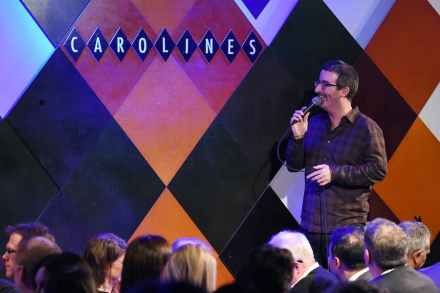
New York’s comedy clubs are back in fashion thanks to being championed in films and on television by superstar comedians such as Louis CK, Chris Rock and Amy Schumer. Here’s where to get the most from your two-drink minimum Comedy Cellar, MacDougal StreetThe comedy club ideal: low ceiling, brick wall backdrop and about 130 seats. It’s a showcase club, which means half a dozen of the city’s best comedians do short sets each show. Louis CK (you might recognise the club from the intro to his TV show Louie), Chris Rock and Amy Schumer sometimes turn up unannounced to work on material, and the comedians hang out between shows at a table upstairs in the Olive Tree Cafe (part of the same business). The downside: almost all shows sell out, so reserve tickets in advance.

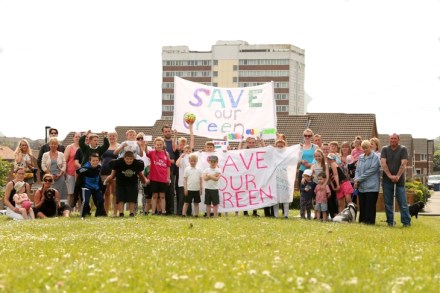
Save our green! The local battle which exposed the war against Britain’s green space

One of the 12 'principles' of the government’s National Planning Policy Framework is that planning should be 'genuinely plan-led, empowering local people to shape their surroundings.' This is how that empowerment works in reality. Stephanie and Adam Sutton live on the Montagu Estate in Newcastle upon Tyne. Stephanie grew up on the estate, is 37 years old and works at accountancy firm Sage. Adam, her husband, is 29, works at Carluccio’s and says he 'married into Montagu'. Their house looks onto a 0.67-hectare rectangle of grass which is surrounded on all sides by houses. Newcastle City Council calls it 'open space'. Locals call it their green. Montagu Estate is not a rich area. The green reflects that.

Newcastle Labour leader founds a big society

Labour's Nick Forbes is a great pioneer of austerity. As leader of Newcastle City Council he bravely decided to shut half the city's libraries, close two respite centres for disabled people and cut 100 per cent of funding to arts institutes. He said he had to do it, because the Government had reduced the council's funding (though the city still gets more per household than most areas) and he needed to protect services for vulnerable people. Forbes wrote a letter to The Observer predicting 'the break up of civil society'. Some of us wondered though – did he really need to cut 100 per cent of the arts funding and close the libraries? Were the numbers more flexible than he suggested? Forbes was amazed at our cynicism.