Alex Massie

Alex Massie

Cameron is fighting insurgencies on two fronts: Scotland and Europe

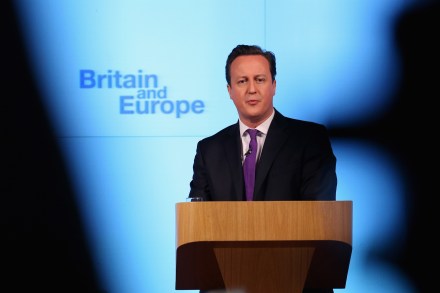
Counter-insurgency operations, as any army officer could tell you, are a messy business in which the consequences of failure are always easier to measure and appreciate than the rewards of victory. Moreover, even limited success in one area - the destruction of the enemy's 'human resources', for instance - can be offset by the manner in which that success is achieved. Short-term success cannot be confused with long-term stability. And therein lies one of many paradoxes: counter-insurgency operations frequently involve starting fires to put out other, larger, fires. Politics, as David Cameron might now tell you, is often much the same. The Prime Minister is, this week, fighting twin insurgencies. Each threatens his position, his authority, and his potential legacy.
Jeremy Corbyn comes to Scotland and discovers he has nothing to say

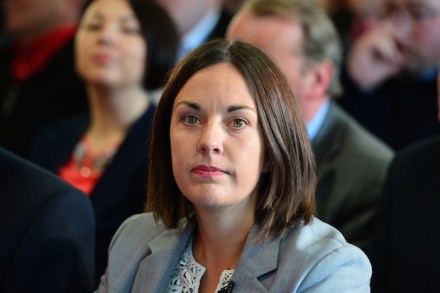
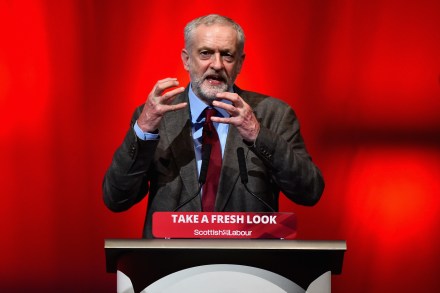
When all else fails, I suppose, you can just plead for mercy. That appears to be the message emanating from the Scottish Labour party's conference in Perth this weekend. The theme, Kezia Dugdale says, is "Take a fresh look" at Labour. OK. [Awkward silence.] Now what? The thing is, you see, that "Take a fresh look" has been the unofficial theme of every meeting of the Scottish Conservative and Unionist party since, oh, at least 1997. When you are reduced to pinching lines from the Scottish Tories you are probably in a position similar to the lost traveller seeking directions to Limerick who was told "Well, I wouldn't start from here". Here is where Labour are however and here is nowhere good.

The SNP’s attitude to English votes for English laws is as hypocritical as it is tedious

Is anyone so dreary as the man who's never happy except when he's unhappy? Perhaps only the man who ceaselessly agitates for something only to reject it when it's given him. Consider, by way of a random illustration of this phenomenon, the case of Pete Wishart, the SNP MP for Perth and North Perthshire. A year ago Mr Wishart told the BBC that so-called English Votes for English Laws (EVEL) was: "An issue that the Scottish people could not care less about". Scots were "not interested in your inconsequential spat about English Votes for English Laws". Mr Wishart had "no concern or issue" in the matter. As he put it, "The voters of Perthshire could not care less about policing in Peckham or Plymouth". What a difference a year makes.

Back in the USSR: Jeremy Corbyn hires Seumas Milne

You can't say we weren't warned. Jeremy Corbyn is nothing if not consistent. When he casts his baleful, weary, disappointed, eye around the world he knows what he sees: a world bought and sold by American gold, aided and abetted, as always, by its snivelling junior, British, partner. So Cuba is not an island gulag and Venezuela not an incompetent kleptocracy. Each is, rather, a defiant hold-out of revolutionary socialism sticking it to the Yankee man. If that means ignoring certain inconvenient truths then, well, these truths shall remain unexamined. If that means blaming Russia's invasion of the Ukraine on Nato then so be it. Because Nato, as any Dave Spart knows, is the latest means by which American hegemony is established, justified and expanded.

The Age of Nicola: Sturgeon maps out the road to independence

The problem with Nicola Sturgeon is that she is, by the standards of contemporary politics, unusually straightforward. There is little artifice and even less deceit about Scotland's First Minister. What you see is what you get; what she says is what she mostly means. That is, even when she's sidling past the truth it's clear what she really means. And so, there it was, out in the open at last: a clear confirmation that Jeremy Corbyn and his Labour party are Nicola Sturgeon's useful idiots. Sure, there may not be any need for another referendum on independence before 2020 - not least because, as matters stand, that referendum might, like last year's plebiscite, be lost - but there will be another referendum at some point. And it will be won.

Devolving abortion laws to Scotland is a poison pill

The thing about politics is that it is, you know, political. One of the consequences of Labour's Scottish immolation is that Conservative ministers no longer feel the need to consult Labour grandees about what to do with Scotland. Gordon Brown's advice is no longer required; the voices of Douglas Alexander and Alistair Darling need no longer be heard. The government, even with its slender majority, can do as it wishes. If those wishes involve a measure of mischief-making then so much the better. That is part of the context within which the government's decision to amend the Scotland bill to permit Holyrood to legislate on abortion rights should be understood. It is, if you will forgive the expression, a poison pill.

The EU referendum will offer just a pale imitation of the Scottish independence referendum

The trouble with remakes is they almost always disappoint. This is so even, especially, when they have larger budgets, bigger 'names', and higher production values. Something gets lost and for those in the know the first, original, movie will always remain the best. So it is with referendums. The plebiscite on Britain's membership of the EU is already, it is quite apparent, shaping up as a bloated re-run of the Scottish independence referendum. There are, for sure, differences between them and we shall come to some of those in due course, but a lay observer paying attention to these matters will notice that many of the lines remain the same. As so often, we have been here before. Consider, as an exemplary illustration of all this, Dan Hannan, the Tory MEP.

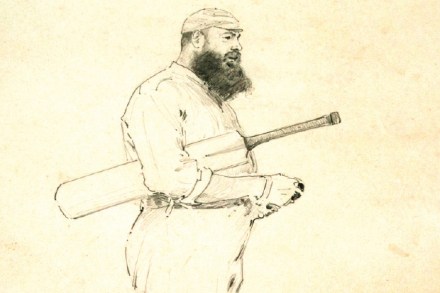
Sport’s first celebrity: W.G. Grace

Should you wish to have a good copy of the 1916 edition of Wisden, cricket’s annual bible, you should be prepared to part with at least £5,000 and, quite possibly, much more than that. This reflects its rarity — the Great War ensured that the almanac had a limited print run — but also the significance of its contents. For the 1916 edition carries the obituaries of Victor Trumper, the wondrous Australian nonpareil and of course, the greatest Champion of them all: W.G. Grace. The summer game had never seen anything like Grace before and never will again. Other cricketers have scored more runs and taken more wickets than Grace but none did so in more pressing circumstances.

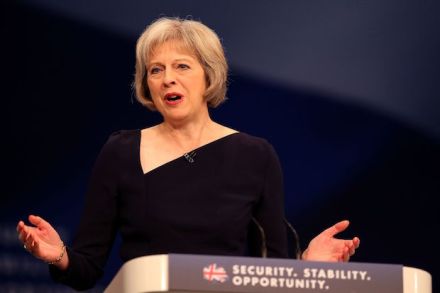
Theresa May’s immigration speech was as tawdry as it was contemptible

London, eh? What a ghastly place. A seething, impenetrable, web of humanity. A vast, choking, metropolis that is, once again, one of the dark places of the world. A vision of hell, frankly. That, at any rate, would appear to be what Theresa May, the Home Secretary, thinks. If she did not think this, if she did not consider the capital a multi-coloured blot on the face of modern Britain, she would not, I assume, have alleged this morning that "When immigration is too high, when the pace of change is too fast, it’s impossible to build a cohesive society."  There is, she added, "no case, in the national interest, for immigration of the scale we have experienced over the last decade.

Sleaze, cronyism and the SNP: the New Politics is charmingly familiar

The great thing about the 'new politics' - or at least the new politics we have lately been privileged to endure here in Scotland - is that it's just as fetid and grubby as the old politics it replaced. The band may change but the music remains the same. Consider the twin controversies swirling around the SNP. Neither, on its own, is enough to torpedo Nicola Sturgeon but, combined, they represent the largest challenge to her authority the First Minister has yet encountered. First there is the curious case of Michelle Thompson, the MP for Edinburgh West. Mrs Thomson was previously managing director of the 'Business for Scotland' group arguing for a Yes vote in last year's independence referendum.

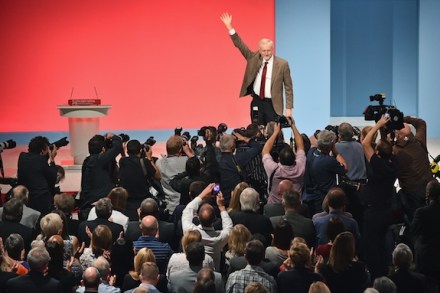
Exclusive: ‘unspun’ Jeremy Corbyn used an old speech rejected by Miliband

On its own terms, I imagine Jeremy Corbyn's speech to the Labour conference can be considered tolerably acceptable. Much of it, after all, consisted of time-served bromides with which almost no-one could reasonably disagree. It was a Marx and apple-pie speech that omitted most of Marx. And who dislikes pie? Nevertheless, what was new was not good and what was good was not new. Much of it, actually, was not new at all. I can disclose that a significant chunk of Corbyn's speech was, in its essentials, written many years ago. Not by Corbyn, of course, but by the writer Richard Heller. Mr Heller (with whom I should say I have played cricket in the past) has been offering his speech to various Labour leaders since the days of Neil Kinnock.

Jocky Come Home: a Labour misery drama that will flop

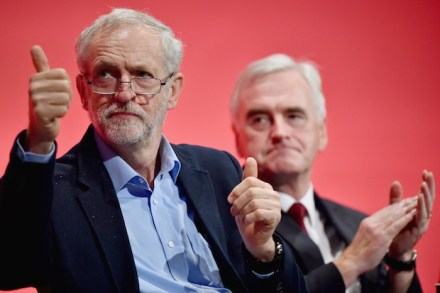
Jeremy Corbyn is supposed to come to Scotland this week. Thursday's visit will be his first since he became leader of the erstwhile people's party. Then again, he's been due to visit before only to find some better use of his time so who knows whether he can brave life beyond the wall this week? Yesterday John McDonnell, Jezzah's vicar, used his speech to the Labour conference to plead with Scottish voters to "come home" to the party. It was past time, he suggested, that voters understood that the SNP are no kind of socialist revolutionaries. Which will not come as any great surprise to most Scots. That's part of the point and one of the reasons why the nationalists have been trusted with the keys to power. They're no-one's idea of militant Trots.

Do English Tories care more about the EU than the UK?

This morning Ruth Davidson, leader of the Scottish Conservative and Unionist party, outlined the extent to which she agrees with Nicola Sturgeon, leader of the Scottish National Party. Both wish Scotland, and indeed the United Kingdom, to remain a member of the European Union. It is true, as Ms Davidson noted, that the SNP oppose even holding a referendum on the terms of British membership but it is also the case that, at least notionally, each wish, or are on record as desiring, a broadly comparable set of EU-wide reforms. Now, as Mark Wallace rightly observes, Davidson's case for continued EU membership is a purely practical one. The emotional and historical arguments for maintaining the integrity of the British union do not apply to continuing membership of the EU.

Is Labour still a Unionist party?

The answer to this question, it turns out, comes from Kenny Dalglish. The answer is mebbys aye, mebbys naw. At the weekend the Scottish party's former leader suggested Labour should have (some kind of) 'free vote' in the event of there being another independence referendum. Kezia Dugdale, the latest occupant of this poisoned throne, conceded Labour MSPs should, if there is another referendum, be free to campaign for independence if that's where their heart lies. Now, in one respect this makes sense. Labour are in a hopeless position in Scotland right now. Moreover, the party cannot recover unless it wins votes from erstwhile supporters who have crossed the constitutional aisle to support the Scottish nationalists.

Unionism’s referendum triumph has proved as bitter as it has been short-lived

Nicola Sturgeon got one thing right this morning. A year on from the independence referendum, Scotland's First Minister allowed that the plebiscite "invited us, individually and collectively, to imagine the kind of country we wanted to live in". The answer, you may be surprised to be reminded, was Britain. Surprised, because it has since become commonplace to observe that the losers have become winners and the winners losers. Scotland, everyone agrees, is a changed place even though (almost) everyone agrees that the country would still reject independence were there another referendum next month. (The economic questions that hurt the Yes campaign so badly last year are, if anything, harder to answer convincingly and reassuringly now than was the case a year ago.

The Labour party is now led by people who wanted the IRA to win

Most people in this country still have no idea who Jeremy Corbyn is. He exists in a fog of curiosity. Who is this guy? What does his election mean? Where are we going? Well, they are about to find out. I am not surprised Corbyn has handed John McDonnell the plum job of being Shadow Chancellor. He is an old comrade and wanting his reward was always likely to receive it. It's an interesting move, nonetheless. I suppose it is possible few people under 35 have much of an idea about the IRA. Unfortunately, of course, most of the people who vote are over 35 and they remember the IRA all too well. And I am not sure they will take kindly to the fact the Labour party is now led by people who wanted the IRA to win. This is no exaggeration.

The plight of Syria’s refugees deserves more than your good intentions and virtue signalling

I suppose it should not be a surprise that the virtue signalling over the appalling plight of Syrian refugees displaced by that country's monstrous civil war has now reached fresh heights of absurdity. Nor that some of the press coverage of this dreadful crisis is edging towards a post-Diana level of mawkishness. One front page this morning shouts at David Cameron, demanding the Prime Minister SHOW YOUR HUMANITY. I mean, really. Then, on ITV's Murnaghan programme this morning, Nicola Sturgeon and Yvette Cooper were asked if they would house Syrian refugees in their own homes. Obviously they had to say yes and we may now expect the same question to be asked of every politician in Britain.

Jeremy Corbyn is Britain’s Donald Trump (and vice versa)

The silly season is supposed to end tomorrow. September sidles in and normality replaces August's frivolity. The reality of winter will be with us soon enough, too. That, at any rate, is the theory but it seems, on both sides of the Atlantic, that sillyness is likely to last for some time yet. There's the twin risings of Donald Trump and Jeremy Corbyn, for instance. It might initially seem as though they have little in common but a more penetrating gaze at their improbable ascent to prominence discerns certain commonalities. Trump is the American Corbyn and Corbyn the British Trump. The difference, of course, is significant. Trump won't win the Republican nomination; it still looks as though Corbyn will be the next Labour leader.

Stripping the bark from Jeremy Corbyn will be the easiest campaign in modern political history

Lately, I've been thinking about Willie Horton and Michael Dukakis. That's what Jeremy Corbyn's rise to prominence will do to a fellow. Horton, you will remember, was the convicted murderer who never returned from a weekend furlough granted to him while Dukakis was governor of Massachusetts, and subsequently kidnapped a couple in Maryland, stabbing the husband and repeatedly raping the wife. He became the star of George Bush's 1988 presidential election campaign. Lee Atwater, Bush's most pugnacious strategist, had vowed to "strip the bark" from Dukakis and promised that "by the time we're finished they're going to wonder whether Willie Horton is Dukakis' running-mate".

Yes, Jeremy Corbyn actually is the most dangerous man in British politics

No, Nicola Sturgeon does not have much reason to be worried about Jeremy Corbyn. But the rest of the country does. To borrow from the tabloids, Corbyn is The Most Dangerous Man in Britain because, though no-one in London seems to appreciate this, he could be the man whose leadership of the Labour party leads to the end of Britain as we know it. Now I know people in England have tired of Scots banging on about the constitution. And I know that some things don't have to be viewed through the prism of the constitution. Nevertheless, it's a much more important issue than anything anyone says about trains. Or the health service. Corbyn tells the Herald today that he's not a Unionist, he's a socialist which, frankly, does not come as much of a surprise.