Alex Colville

Piracy pays: how history’s greatest buccaneer got off scot-free

In 1694 London’s streets echoed with a call to the piratical life: Come all you brave boys, whose courage is bold, Will you venture with me, I’ll glut you with gold?Make haste unto Corona, a ship you will findThat’s called the Fancy, will pleasure your mind. In a week-long orgy of savagery, women flung themselves overboard to escape gang rape The ballad was supposedly written by the ‘pirate king’ Henry Every, who was about to pull off an astonishingly daring raid. In one fell swoop he’d landed the equivalent of $20 million by today’s reckoning, and — some said — married an Indian princess to boot. He’d also vanished off the face of the earth.


In coronavirus quarantine

From our US edition

This article is in The Spectator’s March 2020 US edition. Subscribe here. I’ve been quarantined, like millions of others in China. It was bound to happen sooner or later. I traveled all the way from Beijing to the third-tier city of Jining in Shandong province, where anyone arriving from another region must be detained for 14 days. There’s no kind way to deliver the news, so a Chinese colleague broke it to me over WeChat in a gentle but firm tone. It felt like being fired or dumped. It could be worse. I’m free to leave my building, but not the walled housing compound surrounding it.

coronavirus

The whole of China is in an eerie state of shutdown

 Shanghai ‘Do you want me to scan your temperature?’ asks the receptionist, brandishing an infrared thermometer. Arriving at my hotel in Shanghai, I have a hacking, chesty cough. I picked the wrong week to contract this year’s bout of normal, perfectly healthy winter flu. In China, there is now only one illness. Like Christmas in the West, the Spring Festival (or Chinese New Year) is always the time when big cities shut down. But thanks to the coronavirus, China has entered a period of quarantine. Early in January, there was still a large crowd of skaters on Houhai Lake in Beijing, revelling in the fun of the frozen landscape. But things have moved very fast. Concert halls, museums and cinemas have shut down.

The Edition podcast: has the great Brexit divide mended?

31 min listen

First, as the news agenda is dominated by things like Huawei, HS2, and public spending, could politics be – whisper it – returning to normal? In his cover piece this week, Rod Liddle writes how, for the most part, the election result has put a lid on the civil war between Remainers and Brexiteers. One such Remainer who has reconciled herself with the result is Stefanie Bolzen, the UK Correspondent for Die Welt. She writes in the issue this week about just why Germans are so heartbroken about Brexit. Stefanie and Rod chat Brexit emotions on the podcast. Next, is there anything to be gleaned from the Chinese response to the coronavirus?

Fear and loathing in Jamaica: Caribbean slaves turn the whip on their masters

In the shadows of the British Enlightenment lurked the Caribbean sugar plantations. Masters routinely raped their slaves, punished minor wrongdoings by forcing one to shit in another’s mouth and even burnt some at the stake while growing the cane destined to sweeten the tea tables of London salons, Oxbridge dons or Hampshire parsons. It’s from this civilised viewpoint, top-down and half the world away, that we still tell the story of the abolition movement, William Wilberforce and the House of Commons, the great breakers of chains. But slaves were perfectly capable of fighting for their own freedoms, as the Harvard historian Vincent Brown shows in Tacky’s Revolt, his careful reconstruction of an understudied footnote in Jamaican history.

The third oldest profession?

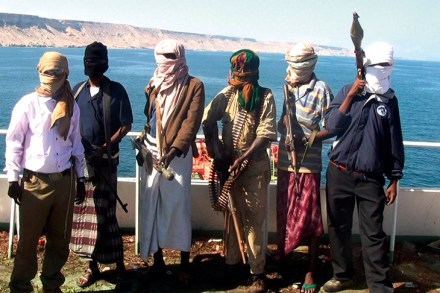
Western attitudes to piracy have dripped with hubris. In his classic history of 1932, Philip Gosse confidently argued that European empires and technological superiority had ‘done away’ with pirates entirely. He and others regretted the sacrifice of these noble savages to the march of progress. Nostalgia imbued pirates with a romantic aura as happy-go-lucky rebels, rough in appearance but pure of heart. Long John Silver aspired to be an MP; the Pirates of Penzance swilled sherry, with ‘dash it all’ their adorable attempt at foul language. Dr Peter Lehr puts the brakes on: 174 incidents of piracy were reported to the International Maritime Bureau last year, with Somali pirates responsible for only three.

Genius and geniality

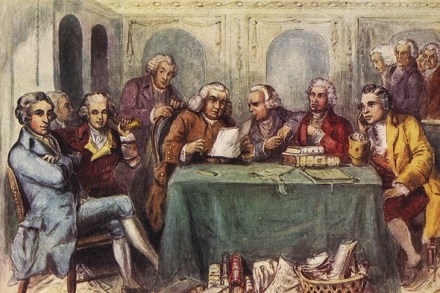
I cast my Readers under two general Divisions, the Mercurial and the Saturnine. The first are the gay part of my Disciples, who require Speculations of Wit and Humour; the others are those of a more solemn and sober Turn, who find no Pleasure but in Papers of Morality and sound Sense…Were I always Grave, one half of my Readers would fall off from me: Were I always Merry, I should lose the other. I make it therefore my endeavour to find out Entertainments of both kinds. Thus spake Joseph Addison in 1711, frustrated at the difficulty of keeping readers of The Spectator happy. Leo Damrosch, emeritus professor of literature at Harvard, appears to have taken heed when writing this detailed, gripping study of genius and geniality in 18th-century London.

An eye in the storm

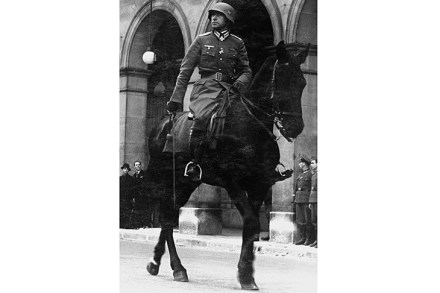
Ernst Jünger, who died in 1998, aged 102, is now better known for his persona than his work. A deeply confusing and controversial figure who loathed democracy and glorified German militarism, yet despised the Nazis, he not only bore witness to the industrial flesh-mangles of two world wars, but almost the entirety of the 20th century. His writings and insights have long earned him sage status in Germany. This, the first publication in English of his diaries from 1941–45, heightens his complexity but also makes him a more rounded figure.

Lost cities in the sands

The main attraction in the Kenyan port of Mombasa is Fort Jesus, a vast, ochre-coloured bastion overlooking the Indian Ocean. Dominating a dusty skyline of palm trees, minarets and tower blocks, it was erected during the opening cannonade of European empire. In 1505 a Portuguese armada sacked and torched Mombasa, shortly after its ‘discovery’ by Vasco da Gama. The fort stamped the city as theirs. The coming of the Portuguese is sometimes considered the beginning of African history — a story not about Africa itself, but about bemused Europeans exploring and taming a ‘dark’ continent. And if we look at Africa before 1505, we find a world as blank as one of da Gama’s maps. This has led many to believe, as G.W.F.

The woman in the shadows

Despite his having one of the most famous names in the world, we know maddeningly little about William Shakespeare. His private life was lost in the swirling debris of the early modern world. Buildings such as the Globe or New Place (the house he retired to in Stratford) were demolished in the centuries after his death. Not a single letter survives, no first drafts of the plays have surfaced and it is disputed whether his portraits even look like him. Scholars are forced to find other ways of peering into his soul. Some look to the plays and sonnets, boldly presenting fictional and contradictory poetry as concrete evidence. Others examine the objects he may have owned, but the results are hardly the stuff dreams are made on.

Fire and brimstone

Industrial factories huddle at the very edge of our world view. Most of us have never visited one, but we know what to expect. The ugly buildings. The dull work of the shop floor. The worker reduced to a mere fleshy extension of a machine, his existence condensed into a series of jerks, twists and spasms. A life at best eroded by monotony — an eternal inhabitant of Dickens’s Coketown, ‘to whom every day was the same as yesterday and tomorrow, and every year the counterpart to the last and the next’ — or at worst snatched up and tossed onto the sacrificial flames of Fritz Lang’s modern ‘Moloch’ of the 1927 epic, Metropolis. They are places either too boring or too bleak to be of interest.

The true hero of Singapore

Accounts of the founding of the British Empire once echoed the pages of Boy’s Own, featuring visionaries, armed with a flag, a faith and a funny hat, arriving in exotic lands untouched by civilisation. Overcoming great odds, they would kick-start the regions’ histories, show the locals the proper way to live and extend the imperial pink on the map a few inches before sailing off into the history books. Cook in Australia, Rhodes in Africa, Clive in India: in the popular imagination, the Empire was built by remarkable men, all by themselves. Singapore was no exception — and the myth endures to this day.