Agnès Poirier

Matt Ridley, William Cook, Owen Matthews and Agnes Poirier

28 min listen

On this week’s Spectator Out Loud: Matt Ridley argues that whoever you vote for, the blob wins (1:02); William Cook reads his Euros notebook from Germany (12:35); Owen Matthews reports on President Zelensky’s peace summit (16:21); and, reviewing Michael Peel’s new book ‘What everyone knows about Britain’, Agnes Poirier ponders if only Britain knew how it was viewed abroad (22:28).  Presented by Patrick Gibbons.

If only Britain knew how it was viewed abroad

A London-based foreign correspondent is probably not the target audience of Michael Peel’s latest book. Indeed, what Peel (himself a former Financial Times correspondent in Lagos, Abu Dhabi, Bangkok and Brussels) discusses in eight lively, well-researched chapters won’t come as a surprise to any of his UK-based foreign colleagues: how Britain is perceived abroad; and how little it seems to permeate the national consciousness. This blindness – or the British inability to realise how they appear to others, as opposed to the image they have of themselves – often has foreign correspondents pulling their hair in disbelief. If only Britain knew how it was seen! One senses that Peel’s return to London from Tokyo after 13 years of foreign postings must have felt like a crash landing.

Baron of the boulevards

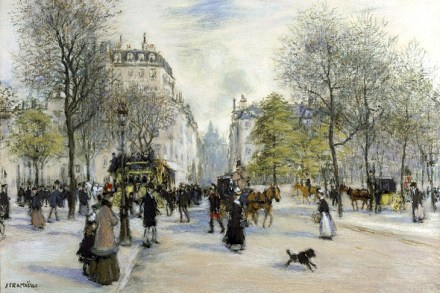
Rupert Christiansen’s City of Light opens on the evening of 5 January 1875, with the inauguration of Paris’s new opera house, designed by Charles Garnier ‘in a style of unabashed grandeur’, with its gilded and mirrored salons, shimmering candelabra and marbled colonnades, mosaics, statues, frescoes and ‘flaming gas torches enhancing a central stairwell that turned the ascending and descending audience into an impressive spiralling spectacle’. The building had been under construction for almost 15 years at vast cost and symbolised the extravagance of the Second Empire, a period in French history which lasted for 18 years, from Napoleon III’s coup in 1852 to the Franco-Prussian war of 1870.

A deep malaise

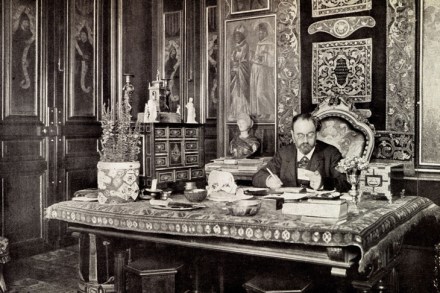
Here is a detail that says a lot. In the French translation of this latest book by the Israeli historian Shlomo Sand, the title was followed by a question mark. In the English translation there isn’t one. The author is making a statement, not asking a question. The French intellectual is dead, finished, a thing of the past. If this is supposed to be polemical, it is an epic failure. Even if Paris still retains its unique aura, everyone knows that it no longer rules the intellectual and artistic world: the likes of Zola and Sartre seem to have produced no weighty legitimate heirs. So what will The End of the French Intellectual tell us that we haven’t already heard?