Adam Sisman

How the second world war shaped the sons of its soldiers

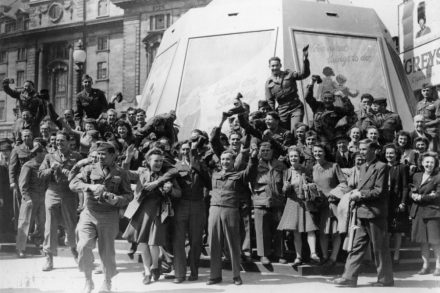
The 80th anniversary of VJ Day today marks the passing of the generation that took part in the second world war. The few surviving veterans must now be a hundred years old, or virtually so. They are departing; most have already left. This seems an appropriate moment to reflect upon the next generation, those whose fathers fought in the war and who grew up in its shadow. Much has been written about the luck of the 'baby boomers', those born in the two decades after the war, who benefitted from post-war prosperity, buying houses cheaply and seeing their values soar. Later generations have envied their affluence. But less has been written about their mindset, which was so much shaped by the recent past.
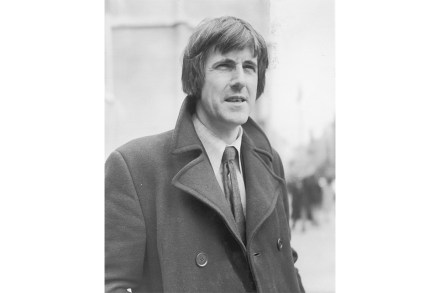
The crusading journalist who lectured on Shelley to coal miners

‘The politics of Paul Foot are an extraordinary mixture of first-class reporting, primitive Marxism, family wit and fantasy.’ This judgment is taken from a review of Foot’s first book, The Politics of Harold Wilson (1968). The reviewer was well placed to assess it, and, according to this biography, he ‘tore the book apart’. As well as being an MP, he was Paul’s uncle, Michael Foot. Born in 1937, Paul Foot came from a political family. His grandfather, Isaac, and his eldest uncle, Dingle, were both Liberal MPs; his father, Hugh, was a distinguished diplomat who, as Lord Caradon, would become a foreign office minister; and his uncle Michael became a cabinet minister and Labour’s next leader but one after Wilson.

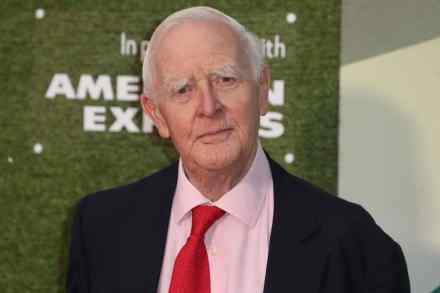
A complex, driven, unhappy man: the truth about John le Carré

It is often said that the age of letter-writing is past. This forecast seems to me premature. I have edited three volumes of letters, in each case by writers labelled (though not by me) as ‘the last of their kind’. Yet here is another one, and I feel confident that more will follow. Few now write letters, but those who still do tend to take care what they write. And it will be some decades before we have used up the legacy of the living. John le Carré, who died almost two years ago at the age of 89, was one such. His work is likely to be reassessed over the next few years and his place in the canon is not yet secure. But he is undoubtedly the pre-eminent spy writer of modern times, and arguably the definitive chronicler of the Cold War.

A divided city: the Big Three fall out in post-war Berlin

When did the Cold War start? Not when the second world war ended. There were many differences between the Soviet Union and its western allies, but they did not then seem insuperable. It was not obvious that the post-war world would be divided by ideology. On the contrary, the victorious United Nations hoped for an era of peace. The Americans planned to pack up and leave Europe as soon as possible. The future of Germany had been decided before a single Allied soldier had crossed onto German soil. Meeting at Tehran in November 1943, the Big Three — Roosevelt, Churchill and Stalin — had agreed that defeated Germany would be under military rule, divided into three zones of occupation, one each for America, Britain and Russia.

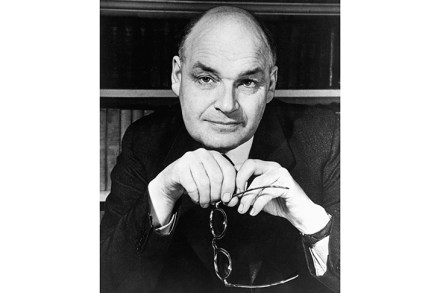
Arthur Bryant: monstrous chronicler of Merrie England

If you want to judge how much society has changed, you might do worse than visit a few secondhand bookshops. Obsolete volumes rest undisturbed on their shelves. The more popular they once were, the more unwanted copies accumulate. An almost inevitable presence nowadays is Sir Arthur Bryant, in his time a bestselling writer on historical subjects but now slumbering among the Great Unread. To browse in one of his books is a nostalgic experience. Their very titles — English Saga, for example, or Set in a Silver Sea — are evocative.

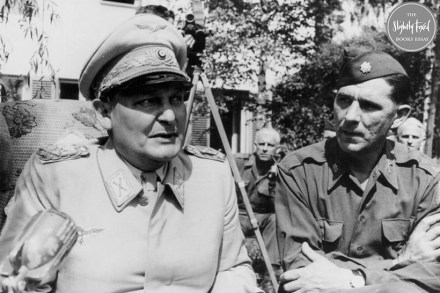
The hunt for the Führer

From our US edition

I cannot now remember when I first read Hugh Trevor-Roper’s The Last Days of Hitler (1947). My memory is confused by the fact that I knew the author in old age and was to become his biographer; Trevor-Roper himself told me about the extraordinary circumstances in which he had come to write the book. In September 1945 he had been awaiting discharge from the army so that he could resume his pre-war role as an Oxford don, when he was asked to undertake an urgent investigation into the fate of the Führer. This was then a mystery. In January, as the Allied armies invaded Germany, Hitler had retreated to an underground bunker below the Reich Chancellery in Berlin, to escape Allied bombing; his last months would be spent in these eighteen small and windowless rooms.

hunt führer