Venus

Goddesses and courtesans: six centuries of the female body in art

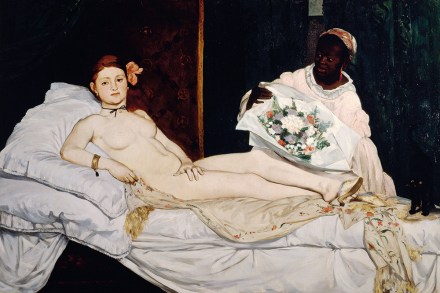
This is a book that many of us might like to have on our coffee tables – beautifully produced, not too heavy and full of pictures of pretty ladies, many of them with no clothes on. Its purpose is to show not only how artists have viewed the female body from the Renaissance to the present but also to explain how this body has been used to express both emotion and the attitudes of the day. Take Hiran Powers’s 1845 marble sculpture of a naked woman in chains, entitled ‘The Greek Slave’. This appeared after Britain had abolished slavery but before the American Civil War had put an end to it in the US. Thanks in part to the statue’s symbolism, beauty and perhaps also to its slight but titillating hint of bondage and thus of female subjection, it touched many nerves.
A surprising number of scientists believe in little green men

In 1928, a young physicist and engineer named Karl Jansky began working at Bell Telephone Laboratories, tasked with investigating any sources of static that could interfere with long-distance radio communication. Cobbling together a system of antennae on a merry-go-round, he successfully found that thunderstorms were annoying in just this way. But there was a small bit of noise left over, and he kept scanning the sky to locate the culprit. To his surprise, he eventually found it was coming from Sagittarius in the centre of the Milky Way. He christened it ‘star-noise’. We now know that he had correctly identified the emanations from a supermassive black hole; and, quite by accident, he had invented the new science of radio astronomy.

Pictures at an exhibition

From our US edition

Deeply learned and with a style all his own, Marco Grassi is as at home with Duccio as with Norton Simon; Bronzino as with Bernard Berenson; a painting on his desk as with a ‘Last Supper’ in Florence’s Basilica of Santa Croce. In the Kitchen of Art presents Grassi’s most memorable essays over a span of nearly 20 years. Beginning with a previously unpublished memoir of his Florentine upbringing, and continuing with in-depth critical discussions of the greats of Italian art along with recollections of the grandest collectors of the 20th century, this book shows the art world in the round.

grassi