Hull

Finally: a museum that refrains from moralising

Hull is a city of many quirks, but I didn’t expect a mermaid. Seriously: an actual mermaid, mounted in a case on the top floor of the Maritime Museum. From head to fishtail she’s about a foot and a half tall, and look away now if you treasure your illusions, because even allowing for the taxidermy process it’s clear that Disney has not been entirely frank with us. Her skin is leathery and the colour of tar. Her glass eyes stare beadily, and she bares tiny teeth in a silent, eldritch shriek. ‘Probably a monkey stitched to a fish,’ the curator told me. The Spectator always gets the inside track. Two old favourites – the stuffed polar bear known to locals as Erik and a 40ft right whale skeleton – are back Still, there are no spoilers on the signage.
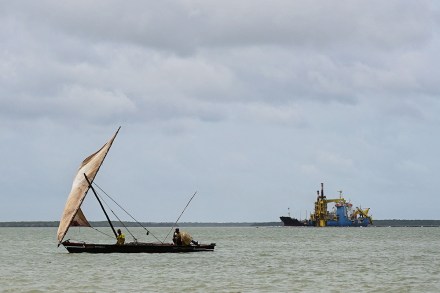
Global fish stocks have been perilous for decades – so why is still so little being done?

The great American activist Aldo Leopold once argued that to be a modern environmentalist was to suffer a world of wounds as you endured the losses inflicted on one cherished organism after another. No one, then, can suffer more anguish than the campaigner for the world’s fishes. In this wide-ranging, heartfelt, meticulously assembled account of our oceans Rose George shows why. She tells us that there are four million fishing vessels worldwide, the most appallingly efficient belonging to China, the EU, Taiwan, Japan, Russia and the USA. It is primarily these giant industrial regimes that have driven four-fifths of the planet’s fishes to the edge of sustainable limits. Much of this damage was done decades ago. Even in the 1970s the North Atlantic fisheries were declining.

Two of a kind: Monica Jones proved Philip Larkin’s equal for racism and misogyny

By the time Philip Larkin died in 1985, he’d long since achieved national treasure status: his poems were critically admired as well as widely read; his reticence (‘the Hermit of Hull’) was a matter of affectionate respect; and his cantankerous published remarks about ‘difficulties with girls’, children, left-wing politics, and ‘abroad’ were generally embraced as proof of valiant individualism — or possibly a grouchy kind of joke.