Horses

The film producer with eyes on the Derby

I broke into a skip last week as I walked up the steps of Carlton House Terrace towards the Turf Club, under the watchful eye of Frederick, Duke of York, up on his plinth. I have a habit of skipping and scrunching up my nose with my knuckles when I’m very happy; apparently, it’s quite an alarming sight for people walking towards me. But I was just bursting with bonhomie, and my feet were full of it. My day had got off to a good start at Oxford railway station. A bloke who wasn’t, shall we say, dressed for lunch at the Turf, dropped his ticket as he walked along the platform. And everyone, except one woman and I, looked the other way. I nodded to her as if to say ‘I’ve got this’, and went in pursuit with the errant ticket.

The secret to Andrew Lloyd Webber’s racehorse success

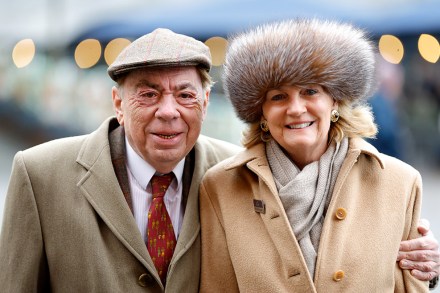
You meet an eclectic bunch of people in the horse-racing business. Yet it was at prep school 55 years ago that I first met Simon Marsh, who is the guiding light at Andrew and Madeleine Lloyd Webber’s Watership Down stud near Newbury. ‘Bog’, as we knew him, didn’t reappear after the summer holidays and word got to us that a garage door had fallen on his head. We were told to clear his locker. RIP Bog Marsh, we thought. Many years later, someone called ‘Pie’ Marsh arrived in Lambourn. He looked and sounded like Bog and had a slight dent in his head, but apart from that he was very chipper. It turned out that Bog had skulked off to Harrow where he’d scooped up two F-grades in his A-levels. There must have been difficulties with the third subject.

My meeting with ‘The Godfather’ of flat racing

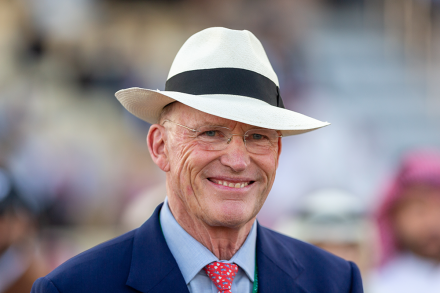
Trainer John Gosden is a colossus in Newmarket, the centre of the horse-racing industry. Two-and-a-half-thousand horses are trained here and the most sought-after bloodstock is also bred in the surrounding studs, then traded in the sales ring at Tattersalls. Forty-seven years ago, Gosden left Vincent O’Brien’s yard in Tipperary, Ireland, to set up in California – with just three horses. Since that pioneering venture, he has conquered the racing world and is now considered to be ‘The Godfather’ of flat racing in this country. So my heart should have been dancing at the prospect of shooting the breeze with him last week at his Clarehaven stables on a gloriously sunny afternoon, and looking at his three-year-olds, who have taken all before them this season.

‘I always have a smile on my face up there’: jockey Sam Waley-Cohen on the art of winning 

Last week, I had a commuter-hell day. The Great Western train to London was standing room only, horribly delayed, and the tea trolley was a non-runner. The Circle line broke down, and black cabs were rarer than an outsider winning the Derby. All this meant I was late to meet Grand National-winning jockey and all-round racing hero Sam Waley-Cohen. I was due to see Sam at 4 p.m. at the chic members-only watering hole Kensington Roof Gardens. And boy, did I now need a sharpener. But it was the timing of our meeting that had been playing on my mind throughout my cursed journey. It reminded me of the brilliantly wicked punchline delivered by John Arlott, one of the great cricket commentators. The New Zealander Bob Cunis stepped up to bowl at the Oval.

I love Cheltenham… but there’s only so much chaos I can take

Flipping heck! Thank goodness the Cheltenham Festival only happens once a year. There’s only so much chaos and controversy my liver can take. But oh boy, did the 230,000 racegoers who turned up have some good craic. Although Willie Mullins swept the board in the big races, nine UK-based trainers got on the score sheet, winning 13 races, just two short of the Irish. A big improvement on recent years. If Thursday night’s post-racing horse sale at Cheltenham is anything to go by, however, the dominance of Irish trainers in the big races is set to continue. The star of the sale this year was a stallion called Goliath Du Berlais, who stands at Normandy-based stud Haras D’Etreham. Three of his sons sold for £400,000 and the fourth made £530,000.

The sword of Damocles is hanging over Cheltenham

What better way to limber up for the Cheltenham festival than lunch with Richard Phillips? Thirty years ago, Richard was heralded as the next big thing. From his yard in Adlestrop, he trained his first Cheltenham winner, La Landiere, in the Cathcart Chase in 2003. He also won big races with Noble Lord, Time Won’t Wait and Gnome’s Tycoon. But fate had other ideas for him. Richard, a brilliant speaker and raconteur (think Ben Pauling crossed with Rory Bremner), was beset with problems. Tricky owners and repeated bouts of viral infections in a yard drags you down, as I know all too well. Still, his loss is our gain. The racing world now has a wonderfully rounded observer, and he is my all-time favourite to shoot the breeze with over lunch.

The future of racing is in the Middle East

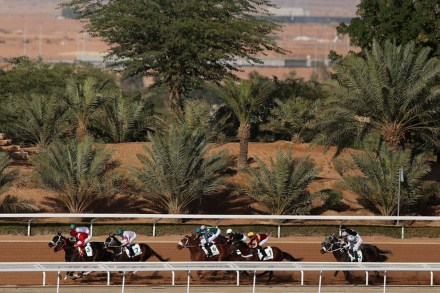
You can always judge a country by the reception you get at passport control. America is aggressive. Don’t even think of answering ‘certainly not’ when asked if you packed your own suitcase. But when I arrived in Saudi Arabia last week, I was greeted by the most friendly, charming man, even though he was an Arsenal fan. He must have had a busy week with the Prince of Wales’s entourage arriving the day before. Which football teams do equerries and royal reporters support? Probably not Millwall. The future of horse racing, a sport conceived in the UK, is now in the Middle East I was of course here in Riyadh for the Saudi Cup – the richest horse race in the world, with £15 million up for grabs.

How to cope with losing: a trainers’ guide

When the celebrations are kicking off in the winners’ enclosure, I dare say being a racehorse trainer looks glamorous. But for some, the dark days, clouded by defeat and despair, don’t make up for the good times. Even for the most level-headed, an extraordinary amount of resilience is required to endure a long career. Nicky Henderson understands this more than most. Under ordinary circumstances, I might have thought that going all the way to Val d’Isère for a day’s skiing was a bit of a trek. But I would have gone a lot further to have lunch with Nicky last week, after the awful time he had at the Cheltenham Trials day. Every trainer copes with the bad days differently.

Cocklebarrow gives Cheltenham a run for its money

The second-best day of the year is finally here. Obviously, nothing beats the opening day of the Cheltenham Festival – and it will be even better this year when Mambo-numberfive wins the Arkle – but Cocklebarrow Races in the Cotswolds are a short-head runner up. You can rely on the weather to be foul: if there isn’t mud up to your knees, the ground will be frozen solid. But the dogs love it and as your car sinks up to its axle, you have plenty of time to be proud to be British – while you wait for the tractor to pull you out. An extraordinary amount of planning by our volunteer committee goes into the day.

How to befriend Sudan’s guerilla commanders 

Juba, South Sudan After the 43°C heat of the day in Juba, sundown brings a merciful reprieve. My dearest friend Ken pours me a dram of Glen Deveron, without ice or water, and I realise it’s going to be a long evening with the man from Midlothian. In Juba, it turns out, one can find the finest single malt whiskies, thanks to intrepid Eritreans who run the local grog shops. After a couple of glasses, our conversation goes back to the time we were together in the same burning heat some years back, in the border town of Bentiu, planning our logistics for a journey north into the Nuba mountains. I had hired Ken as a fixer on the TV film I was making with a producer named Danny.

What makes a good trainer?

We’re spoilt for choice in the Cotswolds. There’s a brilliant National Hunt trainer in every valley and the villages are stuffed with good pubs. In spite of competition from names synonymous with the biggest races – Jonjo O’Neill, Nigel Twiston-Davies and Kim Bailey, not to mention a stack of other talented operators – it’s Ben Pauling whose star is rising. I’ve been very fond of Ben since he was a nipper. We’re both sons of Chipping Norton farmers, so a SML (Sensible Monday Lunch) tends to be both a pleasure and also a disappointment that it isn’t a PFL. (You can work that out for yourself.) But where to meet?

My House of Lords dinner disaster

It was just a straightforward dinner in the bosom of the House of Lords, talking to members of the Jockey Club. What could possibly go wrong? When I rashly accepted with gay abandon the invitation to speak to them after dinner, I’d forgotten that I’d been quite punchy about the club over the past decade in the Daily Telegraph. Forgotten, that is, until I arrived at the Victoria Tower Gardens gate to the welcoming grunt of: ‘Well, you’ve been bloody rude about us in the past, so let’s see what you’ve got to say for yourself now.’ I could see one of the more senior members of the club was itching to give me a good whack with his walking stick.

Only the Tote can save British racing 

For the past 30 years Robin Oakley has taken you through the front door of the horse-racing world and kept you in the best of company. There’s not a chance of me lasting that long, and more often than not when I try to shine a light on the sport’s brilliant mix of heroes, narcissists and geniuses it will be via the back door. Alex Frost falls firmly into the genius category, so I went to see him in London last week – and I arrived bang out of sorts. My Oura Ring informed me that I had 26 low blood oxygen incidents during the night and my sleep apnea mask is making weird noises. And combining microdosing Mounjaro with getting soaked in the wrong gear at the Countryside Day at Cheltenham had made me ‘a bit off’.

After 30 years, it’s farewell to The Turf

It was Frank Johnson who as The Spectator’s editor asked me to mix my then day job as the BBC’s political editor with writing this column. For someone starstruck by racing as a 12-year-old, bicycle propped against the old Hurst Park racecourse wall to watch the jousting jockeys in their myriad colours flash by, the opportunity was irresistible. It felt like a pass into a magic world: mingling in the winners’ enclosure with the titans of the sport, arriving at bustling stable-yards in the early hours amid the swish of brooms and clatter of buckets, relishing frosty mornings on downland turf as strings of skittish two-year-olds learned their trade.

My most profitable day on a racecourse ever

The Champions Day finale at Ascot gave us, as it should, the best race of the season. Thanks to weather patterns that for once provided not soggily risky October ground but perfect ‘good’ going, few quality horses ducked the meeting. In the Champion Stakes, arguably the three best ten-furlong horses in Europe – Delacroix from Ireland, Ombudsman from England and Calandagan from France – took each other on. In the Eclipse, Aidan O’Brien’s Delacroix had chinned Ombudsman in the dying strides. Delacroix then collected the Irish Champion Stakes at Leopardstown, with Ombudsman absent because his trainer John Gosden didn’t fancy ‘running against multiple entries from one stable on a track with a short straight’ (whose stable could he have had in mind?).

Gambling tax hikes could kill British racing

Back in the days when politicians were real flesh and blood rather than social media pushovers, I sat down with the then-chancellor Kenneth Clarke for a BBC interview. ‘Live or pre-record, Robin?’ he asked as we were mic’d up. I have long relished his reply when I confirmed it was the latter: ‘Pity. I always prefer the lives. It’s that extra frisson you get from feeling that, in a mere half-sentence, you can destroy your entire career.’ Many of us like to add a little risk to our lives – if you include playing the National Lottery some 22 million people in Britain have a gamble in the average month – and betting on horseracing has always added a hefty frisson to my pleasures. It helps to make racing the most companionable sport there is: ‘How did yours do in the last?

My favourite memory of Geoff Lewis

To be a great jockey takes character as well as ability and Geoff Lewis, whom we have lost at 89, had that in spades. As the sixth of a Welsh labourer’s 13 children, he put in a 5.30 a.m. milk round before he went to school. When the family moved to London, and before he started on five shillings a week as an apprentice to Ron Smyth in Epsom, he was a diminutive pageboy at the Waldorf hotel, a role that wasn’t aided by his severe stutter. ‘It was sometimes so bad,’ he once said, ‘that if I paged somebody they’d probably left before I could get the name out.

Being a jockey is a tough ride

It has been quite some year for jockey-churning, the latest example being the mid-season decision by owner-breeder Imad Al Sagar to drop Hollie Doyle as his retained rider. ‘A change of strategy,’ said racing manager Teddy Grimthorpe after Hollie’s 38 winners for the partnership including three Group 1s on Nashwa. It was nevertheless an eyebrow-raiser since the chosen replacement for Hollie, the rider of more than 1,000 winners including the first Classic success for a woman, is champion jockey Oisin Murphy. Oisin of course is one of the best riders in the world, as good at his post-race reporting and analysis as he is in the saddle, but his availability is the question. He already has retainers with Qatar Racing and Prince Faisal which will take priority.

‘Boldness was his friend in betting and in life’: A tribute to the great Barry Hills

I have always enjoyed Royal Windsor Racecourse, as it styles itself. It may not have quite so many dignitaries popping in from the castle up the road as Royal Ascot does, but it has long been famed for its friendliness and approachability. Jockeys moving from the weighing room to join their mounts under the parade ring trees pick their way between picnics and the Pimm’s and Caribbean cocktail outlets, readily pausing for autographs. In times long past, a former clerk of the course once responded to jockeys complaining about the cold autumn changing room by bringing in a bottle of whisky from the Stewards’ Room.

The racing victory I’ve enjoyed the most

Allegedly the most effective rain dance in the world is that performed by Native American Hopi Indians. The biennial 16-day rite conducted by the Snake and Antelope fraternities involves participants jiving around a column of rock in feathered dress carrying snakes in their hands and mouths. As our dry spring moves into what could be an even drier summer, the local shops in Newmarket, Lambourn and Middleham might be wise to stock up on feathers and plastic reptiles. Fortunately, before Sandown’s key evening meeting last Thursday there had been just enough precipitation to take the sting out of the ground and embolden trainer Ed Walker to run his talented Almaqam, an entry in the Prix de l’Arc de Triomphe, in the feature event, the Group 3 Brigadier Gerard Stakes.