Giselle

Today’s ballerinas are too perfect

‘Ballet is woman,’ Balanchine once gnomically pronounced. A remark not to be taken too literally, but essentially true. Like every afflicted balletomane, I can map out my lifelong passion for the art in terms of my adoration from afar of a succession of ballerinas – any awe I feel for their male counterparts is something quite different. First for me came Margot Fonteyn, of course – though I saw her only through the autumn of her career, when her body was stiffening and she relied on some divine inner grace to make an effect. (Meredith Daneman’s magnificent biography illuminates this weirdly complex woman, with her steely self-control, enormous generosity and

One of the best productions of Giselle I have ever seen

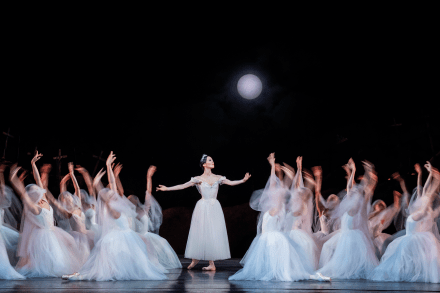
Giselle is my favourite among the 19th-century classics. Blessed with a charming score by the melodically fertile Adolphe Adam and a serviceable but resonant plot, the drama – loosely based on a story by Heine – holds water without being swollen by superfluous divertissements. Its principal characters – the village maiden Giselle and her nobleman-in-disguise seducer Albrecht – are complemented by strongly drawn subsidiary figures: Giselle’s jealous swain Hilarion, her anxiously protective mother and the merciless Queen of the Wilis who presides over Giselle’s afterlife. There’s plenty for the corps to do, as well as a jolly pas de deux in which younger dancers get a chance to shine as

A jewel in the English National Ballet’s crown: Giselle reviewed

Since its première in Paris in 1841, Giselle has weathered a bumpy ride. For St Petersburg in 1884, Petipa gave Coralli and Perrot’s original choreography the once-over and Fokine grafted on further innovations when Diaghilev brought the ballet to London in 1911. Despite casts led by Pavlova, Karsavina and Nijinsky, it bombed here with critics and audiences, who considered its archetypal Victorian plot of the innocent village maiden betrayed by the local squire prissy and musty. Only a generation later, when the likes of Markova and Ulanova assumed the title role, did the scenario’s mythic simplicity find new life, albeit in versions that departed quite radically from the primary text.

Expressive and eloquent: Northern Ballet’s Three Short Ballets reviewed

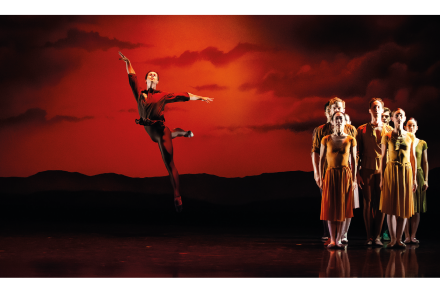
Ballet companies have become dismally timid about exploring their 20th-century heritage: everything nowadays must be either box-fresh new or a fairy-tale classic, which seems to me a recipe for an unbalanced diet. So I’m pleased that under the directorship of Federico Bonelli, Northern Ballet is pluckily dusting off neglected treasures of the recent past. Last year brought Hans van Manen’s exquisite Adagio Hammerklavier (1973) back to life; this year, it’s the turn of Rudi van Dantzig’s setting of Strauss’s Four Last Songs (1977), danced to the recording made by Gundula Janowitz and Herbert von Karajan. A dark angelic figure, hungry for some grim reaping, hovers over four youthful couples in

Exhilarating, frightening and hilarious: Made in Leeds – Three Short Ballets reviewed

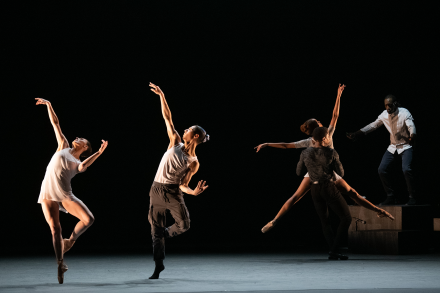
Good, better, best was the satisfying trajectory of Northern Ballet’s terrific programme of three original short works, which moves south to the Linbury Studio at the Royal Opera House at the beginning of November. The company has a new director in the amiable Federico Bonelli, formerly a principal with the Royal Ballet, and he has several problems to address, not least the shortage of richly characterful dancers among the senior ranks. But this triple bill should boost everyone’s morale, and the audience at the Leeds Playhouse was enthralled. First up was Wailers, Mthuthuzeli November’s elegiac return to the world of his childhood in a parched South African township. Bourréeing on