Anglicanism

How would you sell Christianity today? with Rory Sutherland

30 min listen

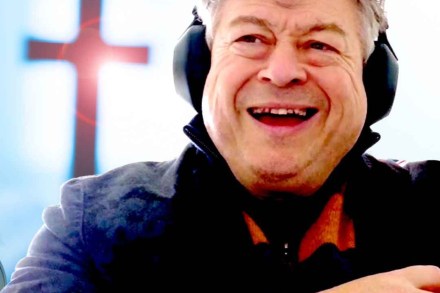
Advertising guru – and the Spectator’s Wiki Man – Rory Sutherland joins Damian Thompson to try and tackle the question ‘how would you sell Christianity – today?’ If religions have previously thrived by providing a form of social network and an ‘elevated trust mechanism’, perhaps there ways in which they can adapt for modern society – especially as many people appear to be turning away from conspicuous consumption and searching for meaning. In this Easter special they ponder: are religious people less likely to be alcoholics? Does driving make you a better person? And are Churches today akin to the carrier pigeon of yesteryear? Produced by Patrick Gibbons.

How would you sell Christianity today? with Rory Sutherland

Who is Sarah Mullally?

45 min listen

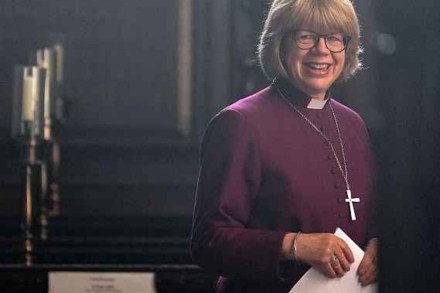
One week from the enthronement of Sarah Mullally as the new Archbishop of Canterbury, her biographer Andrew Atherstone – Professor of Modern Anglicanism at Oxford University – joins Damian Thompson for this episode of Holy Smoke. This marks the second profession she has risen to, having first been the most senior nurse in England & Wales. Archbishop Mullally has led an ‘ordinary, suburban’ life and is by all accounts well-liked by her congregations but what do we know of her views on some of the most controversial topics in her in-tray: abortion, gay blessings and safeguarding – to name but a few. Is it fair to say she is the

Who is Sarah Mullally?

What hope is there for the Church of England today?

A familiar defence of Anglicanism holds that flowers of principle bloomed in the mucky soil of compromise. Yes, this idea runs, the Church of England that evolved from Henry VIII’s marital strife was indeed a theological hotchpotch; but there is nevertheless much to be said for a tolerant strand of Christianity forming a middle way between Roman Catholic and hardline Protestant alternatives.   The perceived breadth of Anglicanism has long remained its selling point. Like the proverbial Australian farm, it is (or was) a Church with few fences but many wells. Elasticity over matters of secondary importance used to apply at a structural level. The old system involving autonomy for the

Is the Anglican Communion dead?

29 min listen

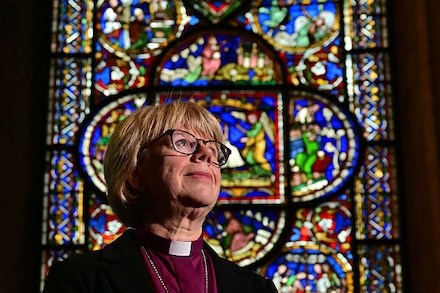
In the space of a month, the Church of England has acquired its first female Archbishop of Canterbury, a majority of the world’s Anglicans have left the Anglican Communion in protest at the mother Church’s willingness to bless same-sex relationships – and the House of Bishops has suddenly backed away from introducing stand-alone gay blessings. The situation is chaotic. In this week’s Holy Smoke, theologian Andrew Graystone talks to Damian Thompson about the almost insoluble problems that will face Archbishop Mullally after she is enthroned in January.  Produced by Patrick Gibbons.

What can we expect from the first female Archbishop of Canterbury?

19 min listen

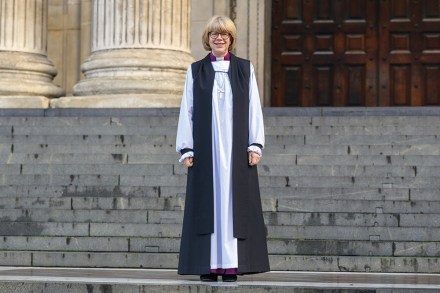
Dame Sarah Mullally has been announced as the new Archbishop of Canterbury. Previously the Bishop of London, she becomes the first woman to lead the Church in its almost 500 year history. She also had a 40 year career as a professional nurse, rising to be the most senior nurse in England and Wales. The Rev’d Marcus Walker, rector at St Bartholemew the Great in the City of London, joins Damian Thompson to react to the news – what can we expect from her leadership? Produced by Patrick Gibbons.

Which are the ‘Twelve Churches’ that made Christianity?

40 min listen

What links the Church of the Nativity in Bethlehem and St Peter’s in Rome with the 16th Street Baptist Church in Birmingham, Alabama, and Canaanland in Ota, Nigeria? These are just some of the churches that Anglican priest and writer the Revd Fergus Butler-Gallie highlights in his new book Twelve Churches: An Unlikely History of the Buildings that made Christianity. The Anglican priest and writer joins Damian Thompson on Holy Smoke to explain how each Church not only tells a story but also raises a surprising dilemma for modern believers. Fergus aims to tell the history of the Churches ‘warts and all’ and argues that, from Turkey to Britain, today’s Christians

How has John Henry Newman inspired Pope Leo XIV?

31 min listen

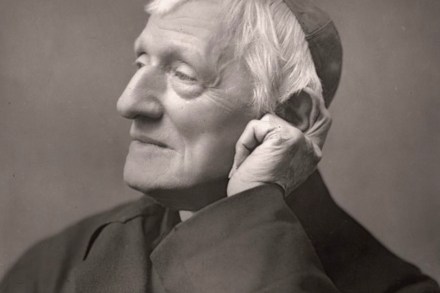
St John Henry Newman (1801-90) is perhaps the most influential theologian in the history of English Christianity. Yet, as Damian Thompson discusses with Fr Rod Strange – one of the world’s leading authorities on Newman – he was a divisive figure, though perhaps not in the way one might imagine. One of the founders of the Oxford Movement, Newman was widely acknowledged as the most gifted intellectual in the Church of England. In 1845 he converted to Rome and was eventually made a cardinal. Thus he had a unique viewpoint on Church doctrine and dogma. But what is Newman’s significance today? Although he is universally celebrated, conservative and liberal Christians,

Is God an Englishman?

32 min listen

Bijan Omrani joins Damian Thompson to talk about his new book God is an Englishman: Christianity and the Creation of England. They discuss the spiritual and cultural debt the country owes to Christianity. The central question of Bijan’s book is ‘does it matter that Christianity is dying in England?’. The faith has historically played a disproportionate role in many areas of English life that we take for granted now – for example, by shaping both charity and the welfare state. Yet this is influence is often ignored as congregations shrink and the UK slides into secularism. But are there unexpected grounds for hope? The publication of God is an Englishman has coincided with a modest but surprising

Justin Welby has cemented his reputation – for having a tin ear

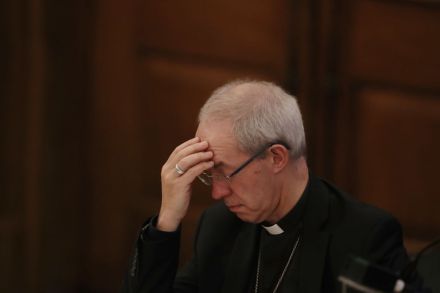
This is an excerpt from the latest episode of the Holy Smoke podcast with Damian Thompson, which you can find at the bottom of this page: The former Archbishop of Canterbury, Justin Welby, is back in the news following his interview this week with the BBC’s Laura Kuenssberg. The interview – his first since he resigned last November – was clearly Welby’s attempt to draw a line under the abuse scandal that cost him his job.  The 2024 Makin report concluded that the Church of England missed many opportunities to investigate the late John Smyth, one of the most prolific abusers associated with the Anglican Church. However, the biggest headline

The delicate balance between God and Caesar in modern Britain

At a well-reported political meeting at London’s Queen’s Hall during the first world war the preacher and suffragette Maude Royden used a phrase that would pass into history. ‘The Church shall go forward along the path of progress,’ she argued hopefully, ‘and be no longer satisfied to represent the Conservative party at prayer.’ ‘Conservative’ would soon slip to ‘Tory’, and one of the most popular and potent political epithets of the 20th century was born. There was (and is) much evidence for Royden’s famous phrase. An Anglican-Conservative complex dominated much 19th-century politics when most English — indeed much British — politics could be effectively divided along the lines of church