
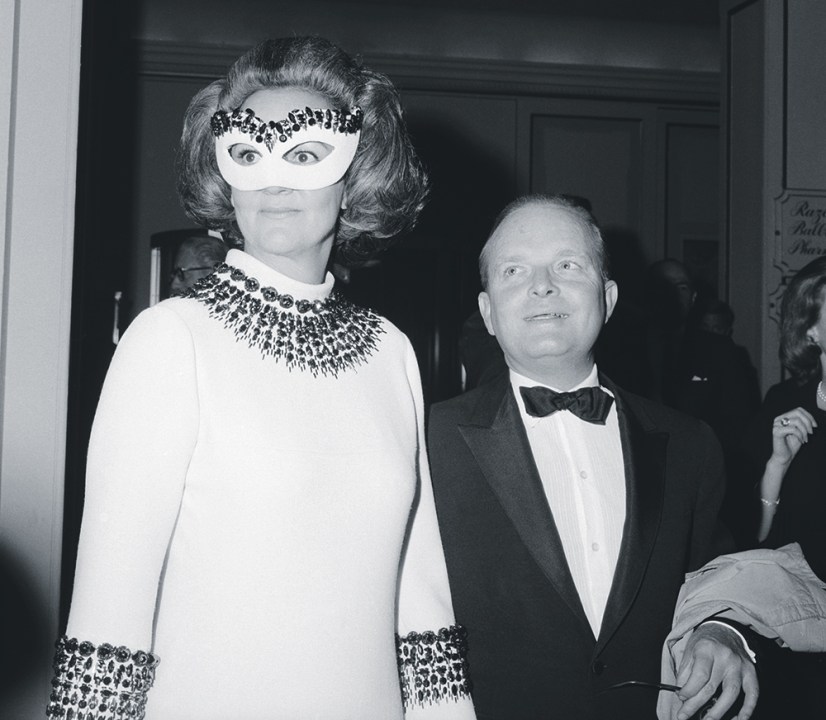
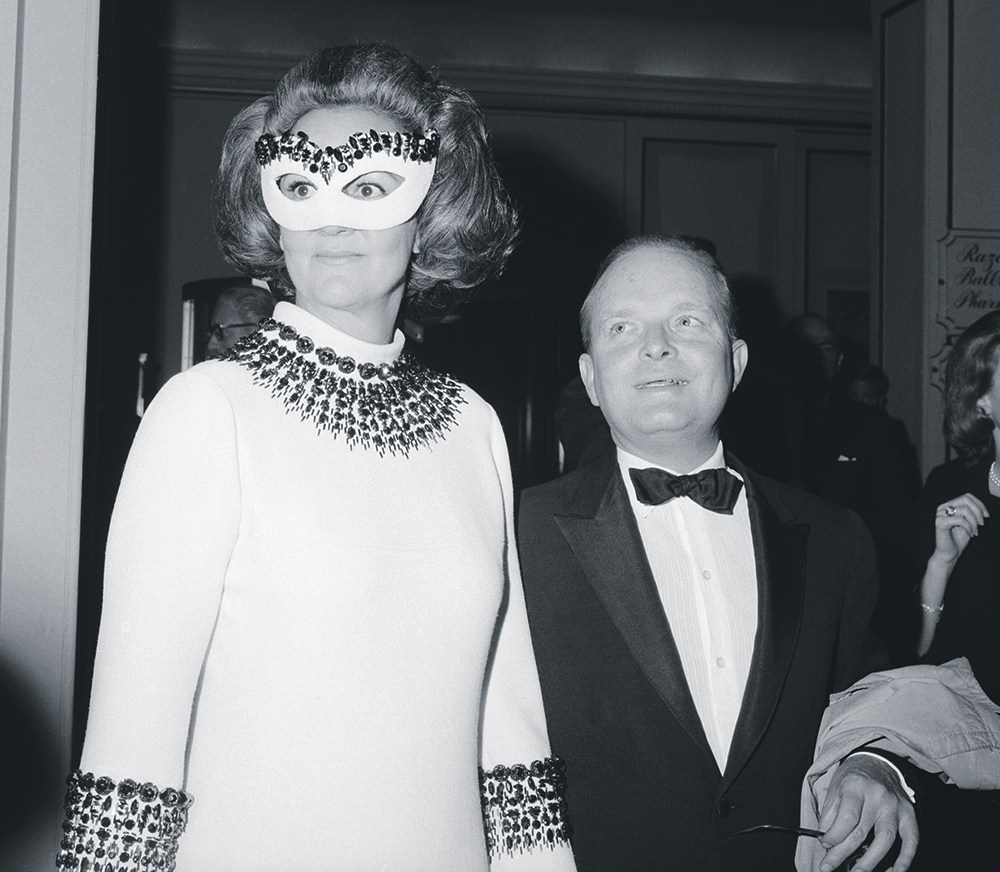
In 1966 Truman Capote was on a roll. The diminutive author was still a much in-demand dinner guest in the townhouses and grand country estates, and on the luxury yachts of the rich and famous, notably those of his coterie of wealthy, well-bred female “swans.” This was due to his ability to spin a riveting, gossipy, and usually risqué story, told in his trademark high-pitched southern lilt. But at the age of 42 he had also finally found significant literary success – eclipsing even Breakfast at Tiffany’s – with his “non-fiction novel” In Cold Blood.
That summer, it was impossible to open a paper or magazine without finding a gushing profile of the man. So, when he announced that he was throwing “the most wonderful party New York has ever seen” in the form of a bal masqué (a masquerade ball), it was instantly the hottest ticket in town and country. And the night of November 28, 1966, remains a source of much fascination and conjecture, even as its 60th anniversary arrives.
‘When an invitation says black tie optional, it is always safer to wear black tie’
Capote’s genius was to invite a heady mix of Hollywood royalty and genuine blue bloods, millionaires, “swans” and their spouses, writers, pop stars, politicians, artists, financiers, and a smattering of ordinary people (including his doorman). It included various Kennedys, Rockefellers, Vanderbilts, and Whitneys, Frank Sinatra and Mia Farrow, the actress and activist Candice Bergen, Lynda Bird Johnson, the Maharani of Jaipur, the Italian princess Luciana Pignatelli, Marlene Dietrich, Norman Mailer, Andy Warhol, and Sammy Davis Jr. This cross-section of societal and cultural strata had rarely been seen under the same roof before, and yet Capote’s social engineering would become the blueprint for glittering parties to come, right up to the Met Galas of today.
There were 540 invitees, although many more wanted to be on the list (“People are threatening suicide,” Capote proclaimed, with some glee). The lucky few were given seven weeks’ notice of this “Black and White Dance” (as the printed invitations had it, though history has replaced “Dance” with “Ball”) at the Plaza Hotel. The 28th was a gray, drizzly day, but even so, such was the media frenzy and public anticipation, spectators and paparazzi were packed onto the sidewalks outside the Plaza hours before the first limos were expected, at 10pm.
Ateliers and designers across the city had reported that most ball guests were making a money-no-object effort when it came to outfits, so there was much speculation about what costume the host, already well known for his flamboyant, scarf-heavy style, would choose. But there would be no gaudiness from Capote on the night: he selected a classic tuxedo and accessorized only with a small mask, bought for 39 cents from the toy store FAO Schwarz.
It was, however, no ordinary off-the-peg tuxedo. This was a bespoke number made for Capote by the British company Dunhill, which had a somewhat racier image than its starchier Savile Row contemporaries. The tuxedo (which is now housed in the company’s archives) was tailored in ebony mohair wool, fastened with silk-covered buttons, and had ribbed grosgrain peak lapels, a matte material that is still used by Dunhill. Creative director Simon Holloway explains: “Grosgrain is intended not to shine [like silk] and distract, even under the brightest of red-carpet flashes.”
Even in six-decade-old photos, the writer’s choice of evening apparel exudes refined, timeless elegance. “Truman Capote’s Dunhill tuxedo cemented his legacy as one of the most brilliant and controversial figures of 20th-century literature and society,” says Holloway. “The fact that he wore Dunhill means that the ethos of the maison is forever fused to the legendary status of Capote and his Black and White Ball.”
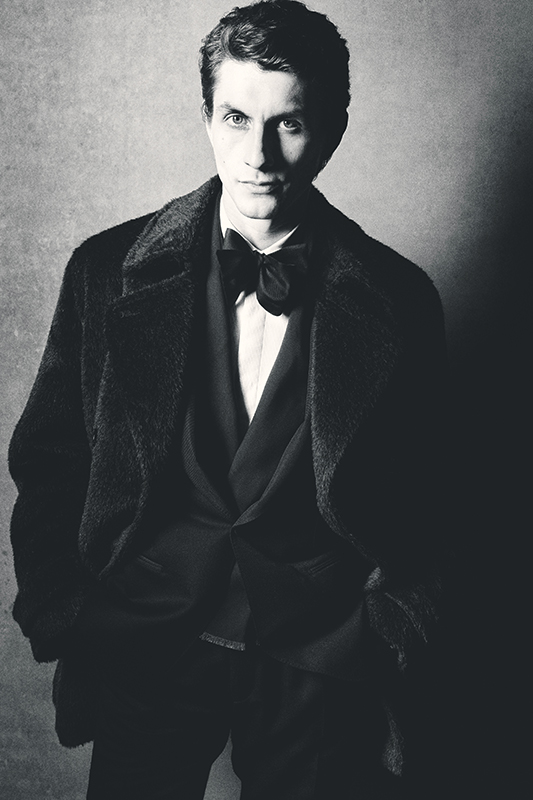
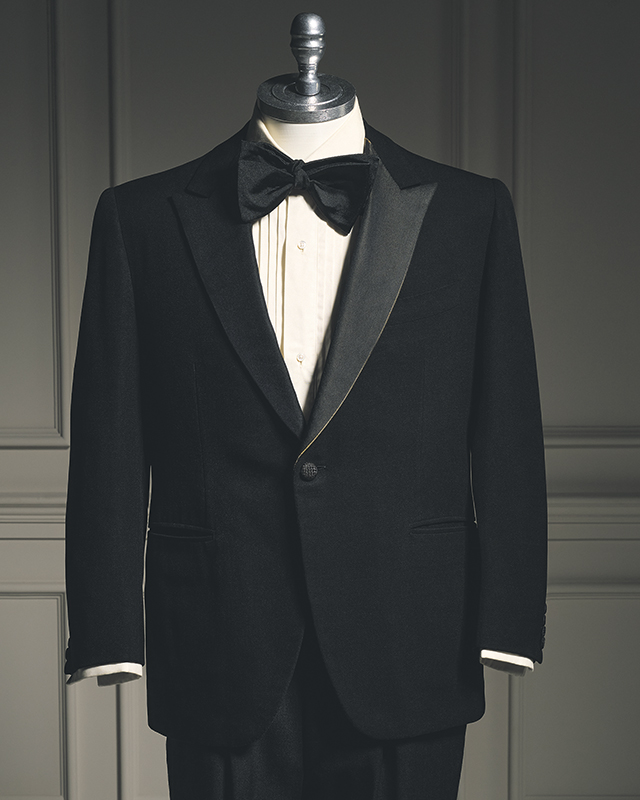
The other tuxedo kept in the Dunhill vaults was made for a man of strict sartorial standards, the Chairman of the Board himself, Frank Sinatra. “For me, a tuxedo is a way of life,” he once said. “When an invitation says black tie optional, it is always safer to wear black tie.”
Simon Holloway is inclined to agree with this sentiment: “What I love about black tie is that it’s a clear and enduring dress code. Everyone (kind of) knows the drill and is grateful for the directive on the invitation. Black tie in the wardrobe is a necessity for any well-dressed man – for parties, weddings, anything involving a stiffy.” (Referring to a luxuriously heavyweight, embossed invitation card).
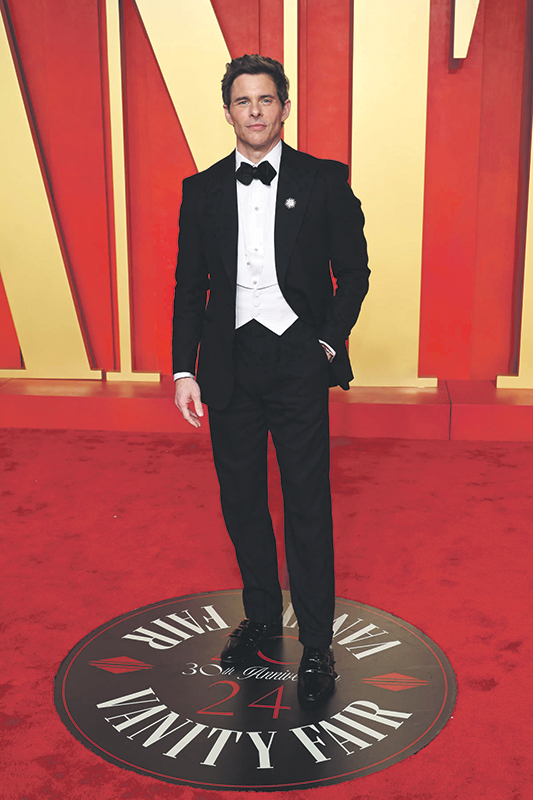
All this explains why film stars and celebrities still gravitate towards black tie on the red carpet. The likes of Pierce Brosnan, David Harewood, and James Marsden, have all taken the Dunhill route in recent years. At the 2023 Met Gala, James McAvoy and Harris Dickinson, along with Simon Holloway all opted for variations on black bespoke Dunhill (although in this case the company’s “black” was actually a deep midnight blue). Holloway completed the look with a bow tie which, let’s face it, is hard to top when it comes to after-dark style, although I suspect all three men’s attire would have received an approving nod from Ol’ Blue Eyes.
As both Sinatra and Capote understood, you can’t go wrong with black and white.



Comments