
When talk turns to which chronograph to wear behind the wheel, the triumvirate of the Rolex Cosmograph Daytona, Omega Speedmaster, and TAG Heuer Carrera are invariably mentioned as the “three kings” of car watches.
The most historic is the Speedmaster, which debuted in 1957 with an advertisement that promoted the usefulness of its “tacho-productometer” scale (tachymeter bezel) to sports car drivers. The Cosmograph, meanwhile, arrived in 1963, and was swiftly renamed the Daytona in recognition of Rolex as the official timekeeper of the Daytona International Speedway.
‘The Carrera was a platform for innovation right from the start’
Both remain inextricably linked to the world of motorsport, but it’s probably fair to say that neither chronograph has followed quite such a varied and engaging route through the past six decades of automotive history as the Carrera.
Launched in 1963, the new timepiece was the brainchild of Jack Heuer (great-grandson of Edouard, the company’s founder), who had become head of the family firm the year before. As a thrusting 30-year-old, he was keen to establish Heuer as the go-to manufacturer of driver’s wristwear for professionals and amateurs alike. But, while most watches are named after they are designed, the Carrera was christened while it was nothing more than a vision in Heuer’s mind.
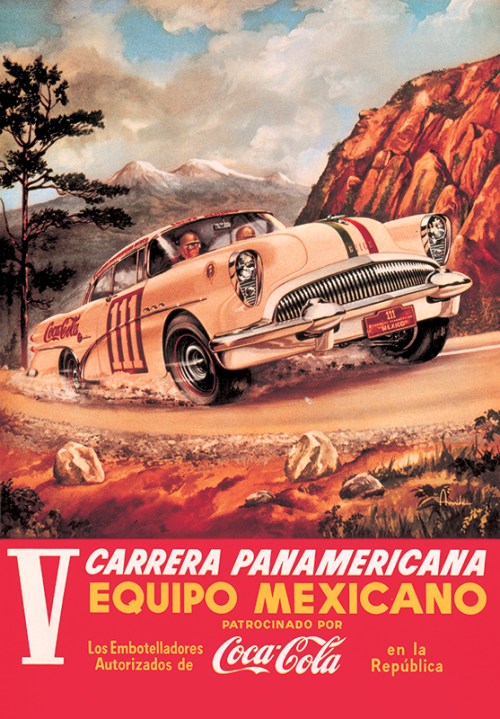
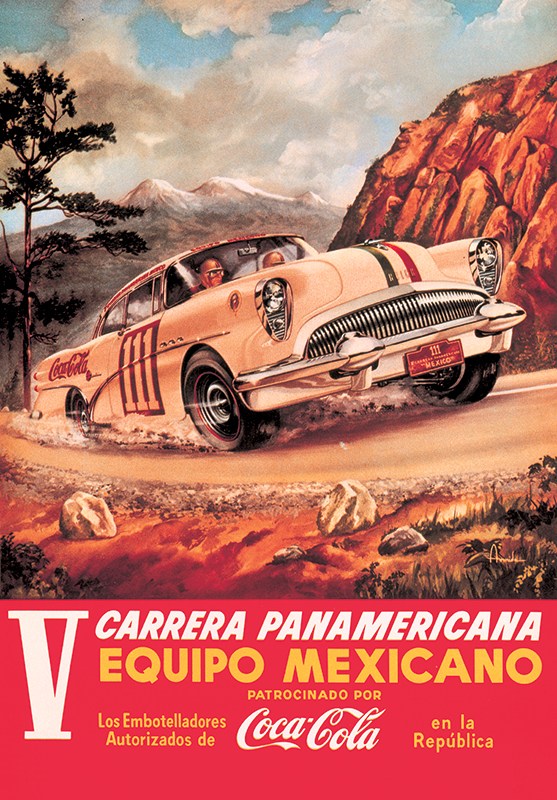
He chose the moniker after attending the 12 Hours of Sebring endurance race in Florida, where he heard thrilling tales of the madcap Carrera Panamericana cross-Mexico road race, a 2,000-mile, no-holds-barred dash inaugurated in 1950 to celebrate the country completing its section of the Pan-American Highway.
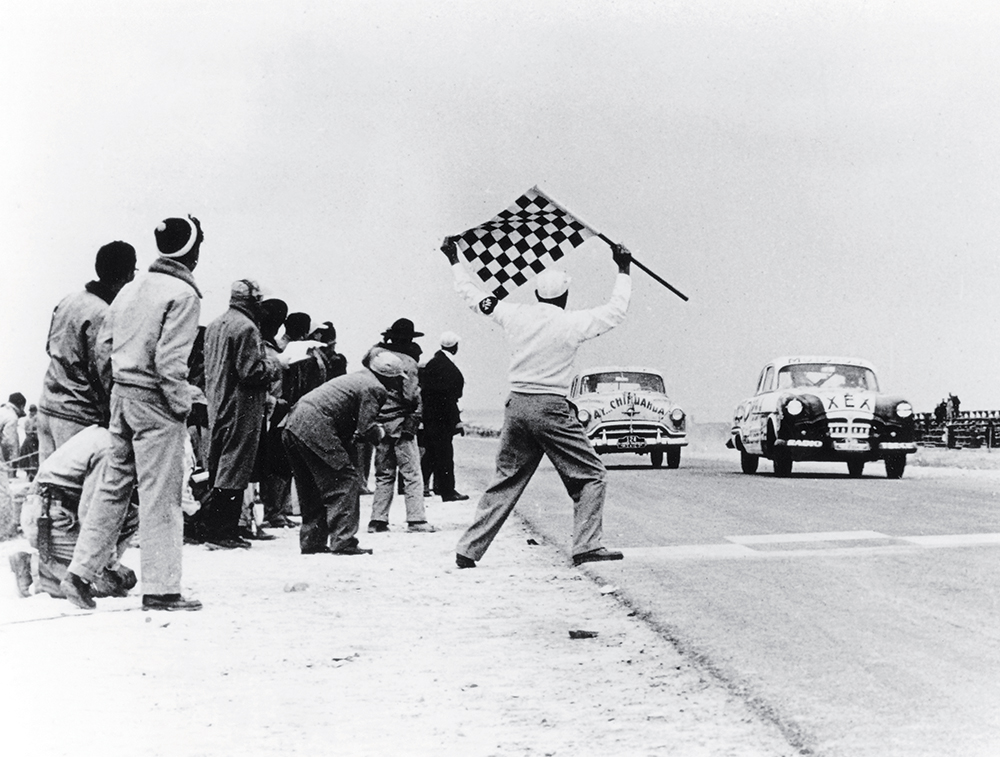
A catalog of crashes, a litany of serious injuries, and far too many deaths resulted in the race bei
ng banned after only five editions. Still the Carrera name stuck in Heuer’s head, its connotations of speed, thrills, and danger combining with its ease of pronunciation in multiple languages to make it an ideal choice for a sporty driver’s watch.
The new Carrera 12 – so called because it featured a 12-hour totalizer – made its debut in December 1963 with a price tag of $98.45, in exchange for which buyers got a 36mm steel-cased chronograph with a hand-wound Valjoux 72 movement. The Reference 2447D, as it was officially known, quickly caught on with the driving enthusiasts at whom it was aimed and was soon offered in multiple variations: the Carrera Tachy, with an inner tachymeter scale; the Carrera 45, with a 45-minute register and jumping minute hand for timing sports events; the Carrera Deci, with one-fifth of a second and one-100th of a minute graduations for decimal timing; and the Carrera Black, with a black dial for enhanced legibility.
The Carrera name even migrated from the road to the sea in the form of the Skipper, a regatta timer released in 1967 to celebrate the victory of Intrepid in that year’s America’s Cup, and the Seafarer, which featured a tide time indicator. But that nautical diversion did nothing to dilute the Carrera’s primary purpose as a driver’s chronograph that was robust, reliable, good-looking, and – Heuer’s aim from the outset – highly legible and easy to use.
The year 1969 proved a landmark for the Carrera when it became one of the world’s first chronographs to be fitted with an automatic movement. This came in the form of the newly Heuer-developed Calibre 11, which, thanks to its left-hand winding crown, gave the watch a fresh and distinctive look.
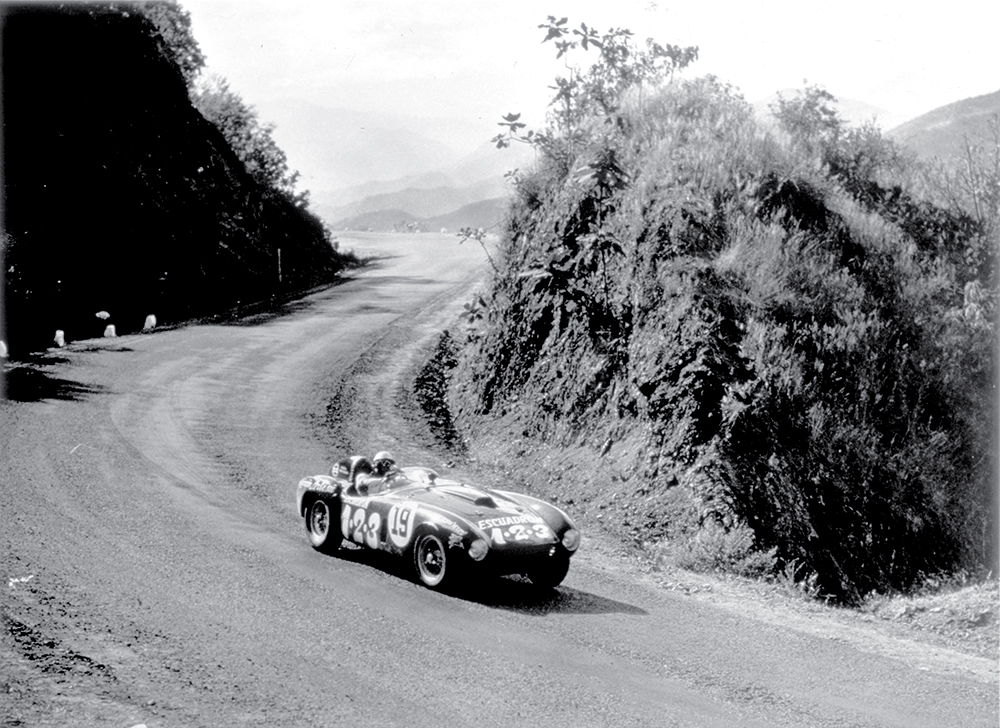
The mechanism kept the Carrera relevant throughout the 1970s, while Heuer’s famous shield logo proved prolific on billboards, grand prix cars, and drivers’ overalls at racing circuits around the world, with the watches themselves appearing on the wrists of the greatest racers of the era. Among them were Mario Andretti, Jacky Ickx, and Ronnie Peterson, all of whom were gifted examples of the Reference 1158CHN – the gold-cased version of the Carrera – as part of Heuer’s sponsorship of the Ferrari F1 team between 1971 and 1979.
But by the early 1980s, mechanical chronographs such as the Carrera were looking decidedly dated. In addition to their inability to record time as accurately as the quartz-powered models that were now deemed “state of the art,” they cost far more to produce and to buy, leading to the apparent death of the classic Carrera that so many motorsport fans had come to know and love.
In 1985, however, Heuer was bought by tech investment company Techniques d’Avant Garde (hence today’s TAG Heuer), a firm which, among other things, owned a 50-percent stake in the McLaren F1 team and built the Porsche-based turbocharged engines which helped it win four world championships between 1984 and 1987. The association ensured TAG Heuer retained its status as motorsport’s best-known watchmaker, with the Carrera rising from the ashes in 1999, a year after TAG Heuer was sold again, this time to luxury goods giant LVMH.
It was the early days of the renaissance in mechanical watchmaking, as well as being a time when the popularity of all things vintage was rapidly growing. And with historic motorsport also on the up, and the LVMH marketing machine firing on all cylinders, it was the ideal moment to bring back the Carrera as a revived “classic” that closely resembled one of the originals. The successful reintroduction of the nameplate led to a bewildering array of models, which, in reality, drastically veered from Heuer’s original remit to produce a practical, easy-to-read chronograph.
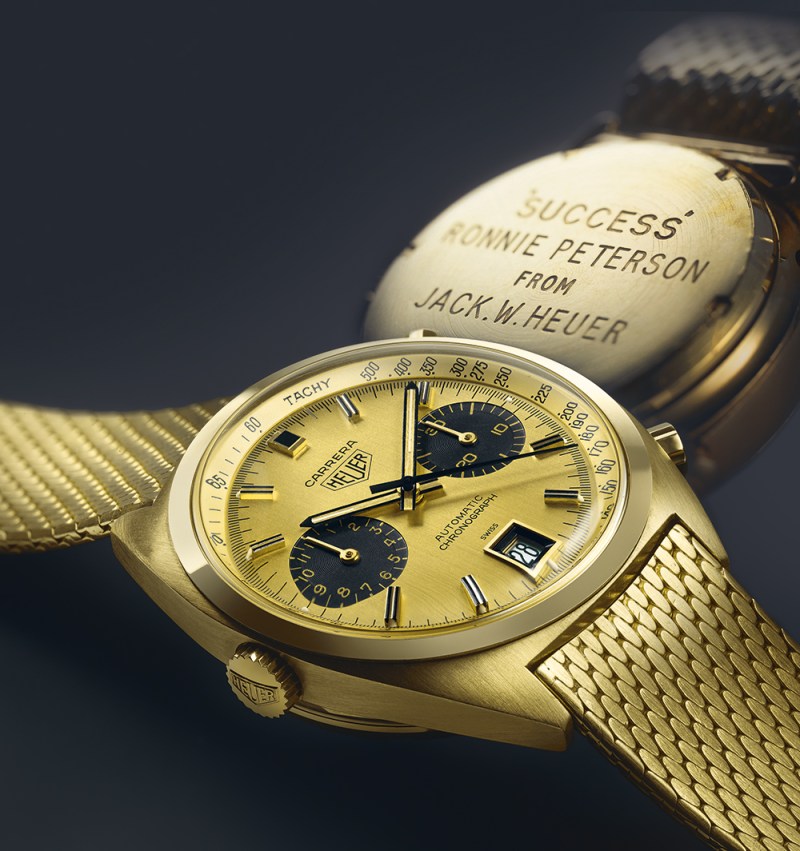
Ref. 1158CHN
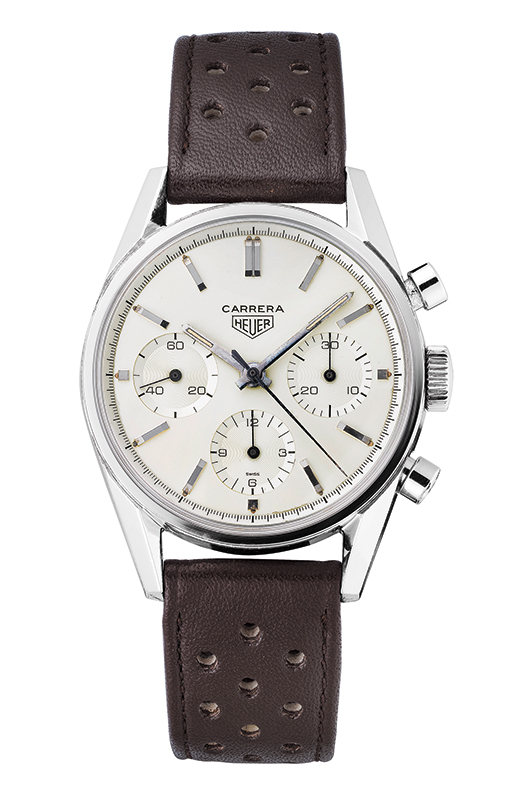
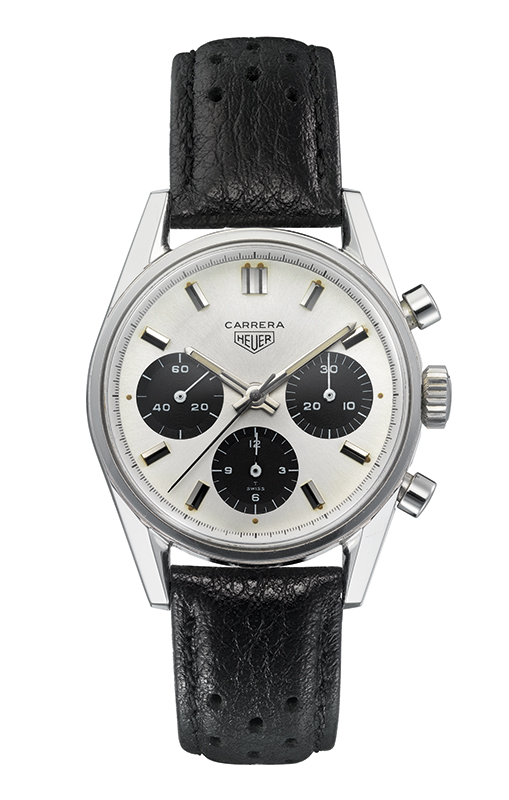
As the early years of the 21st century passed, TAG Heuer unveiled multiple Carreras, including production models and concept watches, which took the line in myriad unexpected directions. There was the Calibre 360 Concept Chronograph of 2005, the first mechanical wrist chronograph to measure and display time to one-100th of a second; 2007’s Carrera RS, with a Rotating System display; the 2010 Grand Carrera Pendulum, which used magnetism as a substitute for a hairspring; and in 2012 the Carrera Mikrogirder, with a chronograph hand that could orbit the dial a dizzying 20 times per second.
But the Carrera’s rightful status as the quintessential, gimmick-free tool watch was restored for the model’s 60th anniversary in 2023, when the 39mm “glassbox” design was introduced and promoted with a short movie starring Ryan Gosling to increase its appeal to younger buyers.
‘The advancements just kept coming, including the arrival of the Calibre 11 movement in 1969’
The shaped-and-shouldered look of the glassbox crystal and a new, curved dial revisited Jack Heuer’s original goal of legibility by making the watch easy to read, despite its case being a relatively retro 39mm in diameter. The glassbox also allowed the watch to be made slim, while behind the dial an upgraded version of the Heuer 02 movement (the TH20-00) featured all-new oscillating weight and bidirectional winding.
In true Carrera tradition, multiple variations of the glassbox design have appeared since its launch, including a chronograph tourbillon and, the most technically ambitious of all, the Carrera Split-Seconds Chronograph launched at the beginning of this year. The split-seconds function of the in-house TH81-01 movement allows the watch to be used to time multiple events in quick succession and brings a modern twist to the Carrera line with a titanium case and transparent, sapphire crystal dial that gives a view on to the highly finished 350-part mechanism. With its $127,000 price tag, the watch lifts the line into the sphere of connoisseur collectors, taking it, some say, too far beyond the “tool watch” honesty that has always been part of the Carrera’s appeal.
But, according to Nick Biebuyck, TAG Heuer’s heritage director, the Carrera’s move into the highly complex sphere of haute horlogerie was an inevitable part of its evolution. “The Carrera was a platform for innovation right from the start,” he says. “Jack Heuer designed it to bring new levels of chronograph legibility and, by creating the tension ring beneath the crystal, set a fresh benchmark in terms of water resistance and durability. From there, the advancements just kept coming, including the arrival of the Calibre 11 movement in 1969, which made the Carrera the first commercially available automatic chronograph.”
The Carrera Classics of the late 1990s were also the first heritage revival watches to be produced by a major brand, Biebuyck notes: “And the Carrera was subsequently chosen as the line that would showcase innovation throughout the watchmaking renaissance of the early 21st century. The Split-Seconds Chronograph was simply the logical next step.”
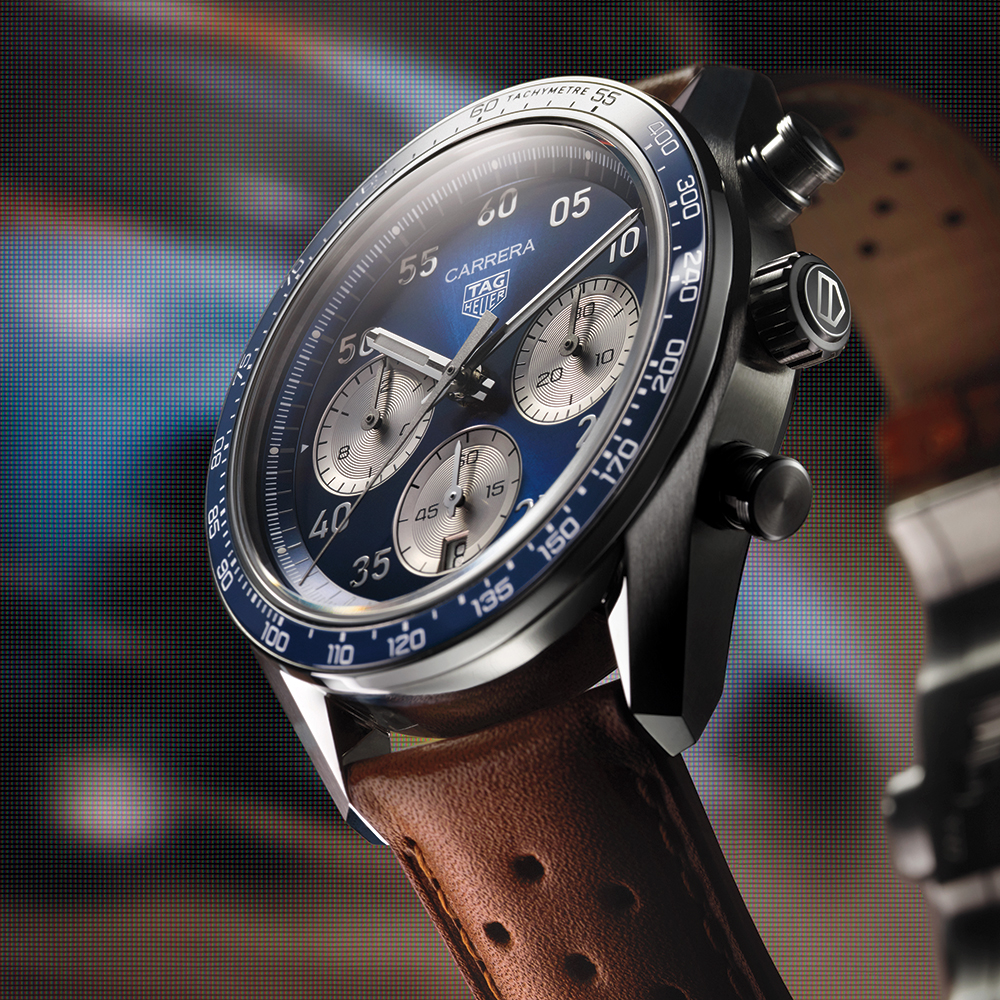
But fans of simpler, more affordable, more “honest” Carrera styles need not despair, as another new addition to the line is a significantly revamped version of the Chronograph Sport model first seen in 2020. The new version, launched during September’s Spanish Grand Prix, of which TAG Heuer was the title partner and official timekeeper, shrinks the case from its statement 44mm diameter to a more of-the-moment 42mm, and reduces the thickness to a little more than 14mm, making the watch less obtrusive and easier to wear.
The smaller dimensions have not, however, diluted the Carrera’s core design feature of “readability.” Bold minute markers and legible sub dials ensure it’s a usable tool watch, while the Carrera line’s automotive roots are echoed in piston-shaped push pieces and a steel bezel with a ceramic insert featuring a tachymeter scale for speed and distance calculations.
In a final sporting touch, a “victory wreath” is engraved on the upper right strap lug. The sapphire crystal caseback, meanwhile, gives a view of the nicely decorated Calibre TH20-00 in-house movement, which offers an impressive 80 hours of power reserve. The watch is available in five variations – with a blue sunray dial on either a matching steel bracelet or a perforated leather strap, or with a teal green, silver, or black opaline dial, all of which are supplied on a steel bracelet.
The F1 stars of the 1970s would have loved it.
Bracelet models, $6,850; blue dial model with perforated leather strap, $6,650; tagheuer.com





Comments