Tuscany

Tuscan escapades: Villa Coco, by Andrew Sean Greer, reviewed

From our UK edition

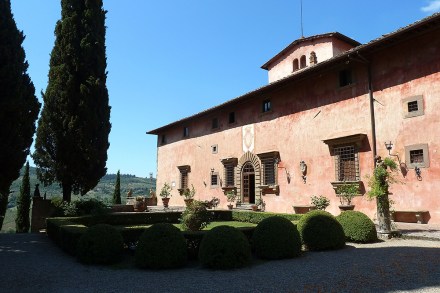
The comic novelist Andrew Sean Greer won the Pulitzer Prize for Less, a chronicle of the longings and humiliations of modern life. But now, he suspects, we’d all like an escape. ‘Whatever happened to the charm novel?’ he asks in his new outing, thinking of the lighter works of Nancy Mitford and Graham Greene. Since they are apparently out of fashion, he has decided to write his own. Villa Coco follows a young American archivist, hired to catalogue the antiques in Tuscany of an aged baronessa, known to her friends as ‘Coco’, only to find himself drawn into increasingly absurd adventures instead. He arrives in late summer, with all the American fantasies of Italy in tow: ‘A confection of movies and food... pasta and accordions and Leonardo and cheese.
Vindictive to the last: a Nazi atrocity in Tuscany

From our UK edition

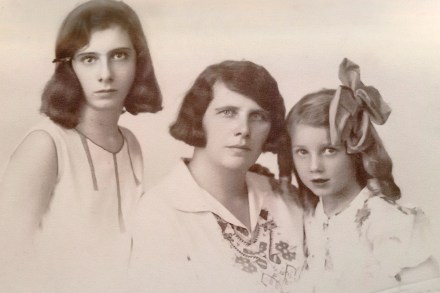
Late one evening in 1994, an Italian magistrate walked into a storage room at the military prosecutor’s offices in Rome. There his eye was caught by a 6ft-high wooden cupboard, curiously positioned so that it faced the wall. His interest piqued, he pulled the cupboard around and opened its doors. Inside were stacks of documents dating from the mid-1940s. In all, there were 695 long-lost war crime investigation files, detailing more than 2,000 incidents that had taken place in Italy during the fascist period. Picking up the story, the Italian media dubbed the cupboard the ‘wardrobe of shame’ – which quickly became a metaphor for what Thomas Harding calls ‘Italy’s general amnesia about the fascist past’.

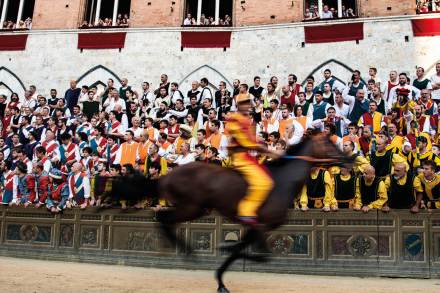
The majesty of Siena’s Palio

Twice a year, an almost deathly silence falls on the Tuscan city of Siena. It is the moment just before the rope drops in the Piazza del Campo to signal the start of the Palio, the city’s ancient horse race and fiercest rivalry. Siena’s Palio is as mad as it is old. Ten horses and ten riders, representing ten of Siena’s seventeen contrade, or districts, race three laps of the city’s main square at breakneck speed before thousands of screaming spectators, in a tradition dating back to 1633 — the year Galileo was convicted of heresy for insisting that the Earth revolved around the Sun. Every summer, two palii are held: one on July 2, in honor of the Madonna di Provenzano, and one on August 16, the Palio dell’Assunta during the feast of the Assumption. What’s at stake?

Palio

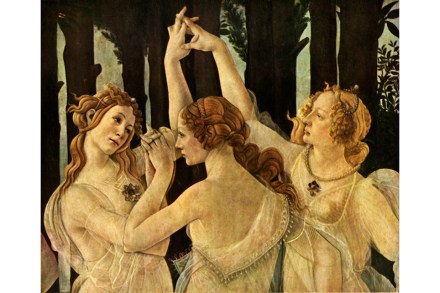
Turmoil in Tuscany: The Three Graces, by Amanda Craig, reviewed

From our UK edition

The title of Amanda Craig’s enjoyable and provocative ninth novel might conjure the dancing trio in Botticelli’s ‘Primavera’ (which we visit in the book, set in Tuscany); but the three graces here are Ruth, Diana and Marta, elderly expat friends who meet for weekly gossips over coffee, ‘united by age, exile, the love of dogs and their disinclination to discuss their infirmities’. The women may be less beautiful than Botticelli’s, but they are certainly more formidable. By the end of the first chapter they’ve already smashed a car window to rescue an overheating dog.

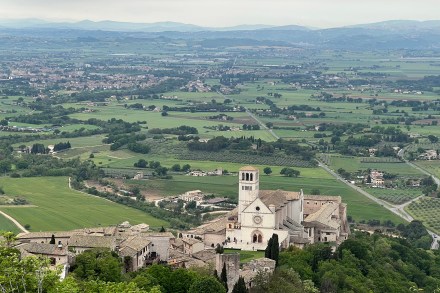
Umbria: Italy’s underrated gem

Nestled in the Apennine Mountains due east of Rome is the region of Umbria, a hidden gem at the heart of Italy. It's characterized by lush green countryside, rolling hills carpeted in olive groves and picturesque medieval hilltop towns. The region has the beauty of Tuscany but without the mobs of tourists. Its food is the best Italy has to offer — fresh, traditional, high-quality and spectacularly tasty. The senses, then, are satisfied — but Umbria also harbors a rich religious legacy. Home to some of Catholicism’s most titanic saints — Francis and Clare of Assisi and Benedict of Nursia — and dotted with ancient and medieval churches of great beauty, it's as much a pilgrim’s paradise as it is a tourist’s Italian dream.

umbria

Happy hours

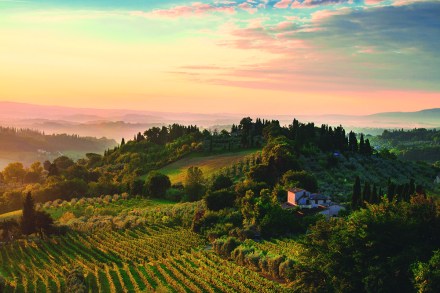
A family of peacocks is sunning itself in our villa garden. They all look extraordinarily happy and composed, especially the baby one for whom (like us, come to think of it) this is a whole new experience. But then, the 150 hens wandering in and out of their coops painted like beach huts don’t look exactly overburdened themselves. Nor do the sheep, pigs and cows in their 220 acres of lush Tuscan terrain near the Merse river.

tuscany