The guardian

Worried your child is being radicalised? Try this tip 

From our UK edition

A couple of weeks ago, the Guardian published an article entitled: ‘“I feel like I’m losing her”: the families torn apart by older relatives going far right’. It was full of heart-rending tales from metropolitan liberals about how their dim-witted parents had been duped into believing anti-Muslim conspiracy theories by following people like Rupert Lowe on social media. One particularly exasperated man suggested a course of therapy for his mother, fearing that she might want to join Reform. But is it really the online radicalisation of elderly parents that’s putting families under pressure in the run-up to the local elections? I suspect it has more to do with their children, particularly their daughters, embracing a toxic strain of identity politics imported from America.
The Guardian’s shameful double standards

From our UK edition

The Guardian thinks of itself as Britain’s fearless liberal conscience, trigger-sensitive to racist ‘dog whistles’ in the language and editorial judgements of everyone except itself. It takes a special interest in cartoons published by right-of-centre newspapers which are accused of bigotry.  When the Murdoch-owned Herald Sun ran a cartoon depicting Serena Williams throwing a tantrum, the Guardian reported that News Corp had ‘come under global condemnation for publishing a racist, sexist cartoon’, supplementing multiple news stories with several condemnatory op-eds.

Tracking the Trump transition

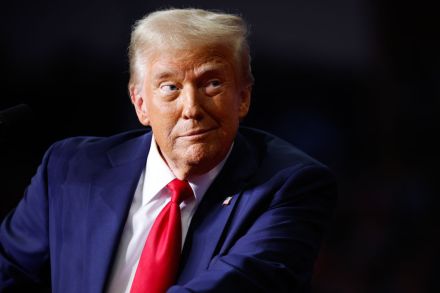
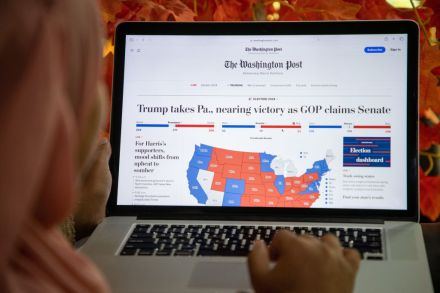
Donald Trump has successfully won his second term, which means it’s time for him and his allies to buckle down and fervently start hiring for the incoming administration. Prior to his election, Trump announced that his transition would be chaired by former head of the Small Business Administration Linda McMahon and billionaire businessman Howard Lutnick, with assists from Trump’s sons as well as former Democrats Robert F. Kennedy Jr. and Tulsi Gabbard.The president-elect made his first pick for his administration on Thursday, announcing that his campaign co-manager Susie Wiles would be his chief of staff. She will be the first ever woman to hold this key White House post.

dc

Is a DC ‘journalist brain-drain’ even possible?

The flawed logic of the anti-Trump sex strike No one really knows what a second Trump administration will hold for America — given the breadth of his coalition of contradictory factions, some of his voters are bound to be disappointed. But the prospect of the Donald’s mere presence back in the White House has led to a spasm of outrage on social media, with young women and members of the LGBTQIAA+ community fearful of the erosion of “rights” in case Trump, J.D. Vance and the Republicans eschew the campaign manifesto and draw instead from the Heritage Foundation’s more hardline Project 2025 agenda.Drastic measures are being mooted.

Johann Hari’s career-long trouble with the truth

British fabulist Johann Hari is at it again. After revealing he used Ozempic to lose forty pounds in his tell-all book, the alleged journalist still hasn’t shed his penchant for telling porkies. While the miracle drug made him “listless,” “strangely muted” and “emotionally dulled,” it hasn’t killed his energy for dreaming up facts.  In his latest book, Magic Pill: The Extraordinary Benefits and Disturbing Risks of the New Weight-Loss Drugs, Hari alleged that food critic Jay Rayner had lost pleasure in eating at even the finest Parisian establishments after taking Ozempic. The catch: Rayner has never used Ozempic or any other weight-loss drug.

johann hari

Why do MPs send nude pictures of themselves?

From our UK edition

Adam Dyster has gone to work for the shadow Defra secretary Steve Reed. I admit this is not an appointment which would normally trouble the political scorers, but it is a straw in the wind. Mr Dyster was, until recently, the adviser to both the chairman and the director-general of the National Trust. As Zewditu Gebreyohanes points out in her new pamphlet, ‘National Distrust: the end of democracy in the National Trust’, it was against the interest of the Trust that Mr Dyster advised both, since it blurred the necessary governance difference between the trustees and the management. Mr Dyster was previously, in the Jeremy Corbyn era, the national organiser of Labour’s environment campaign, influencing, he says, the party’s general 2017 election manifesto.

Freddy Gray, Kate Andrews & Lloyd Evans

From our UK edition

20 min listen

This week Freddy Gray takes a trip to Planet Biden and imagines what would happen if little green men invaded earth and found a big orange one back in the White House (01:15), Kate Andrews finds herself appalled by the so-called ‘advice’ routinely handed out to women that can be at best, judgemental, and at its worst, slightly bullying (12:51), and Lloyd Evans spills the beans on searching for love on his recent blind date, courtesy of the Guardian (07:13).

Could I find a girlfriend on a Guardian Blind Date?

From our UK edition

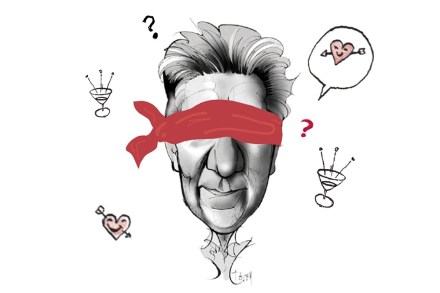
Free grub, free booze and the chance to fall in love. That’s the deal offered by Blind Date, a matchmaking strand in the Guardian that brings together lonely hearts and asks them to spill the beans. When I applied for this enticing freebie I had no expectation of being chosen, but my email was answered within hours. Amazing. Randy singletons are in short supply among Guardian readers. I was asked to describe my ‘interests’, which are rather limited. I tend to avoid travel, sport, art, museums, cars, planes, movies, pubs, music, parties, dancing, eating out or holidays. I’m never invited to dinner by anyone or ‘for the weekend’, thank God. I avoid TV, and my idea of hell is ‘a walk in the countryside’.

Chris Mullin’s eye for the absurd remains as keen as ever

From our UK edition

Journalists seldom get to the top in politics. They find it hard to trot out the dreary virtue-signalling that political communication often requires. Chris Mullin, I suspect, finds it almost impossible. He was a Bennite, but the Bennites quickly discovered he was unreliable. The Blairites might have welcomed him had they not suspected, rightly, that he would get the line wrong sooner rather than later.  There’s an endearing vanity in the way Mullin reports every kind remark made about his previous published diaries The only journalist to have made the top job in politics is Boris Johnson, and he crashed and burned. My friend Denis MacShane, who has ability and charm, also crashed and burned on his way up.

Guardian writer doesn’t get why Americans love fall

We Americans are used to the Brits weighing in on our affairs. I try to view their concerns with compassion, as a hard-to-kick habit leftover from the pre-Revolution days, or an endearing tendency they can’t help, like when your mother continues to remind you to wear a coat in winter even after you’re well into your forties. But our English cousins have finally crossed the line. Writing for the Guardian, Arwa Mahdawi vilifies that which we Yanks hold most sacred: “the season they call ‘fall.’” According to Mahdawi, autumn is “overrated” “rubbish.” Instead of pumpkin-spicing everything, she suggests we elevate another squash variety, “the humble courgetti,” as our favorite flavor profile of the season. I simply cannot let such abuse go unchallenged.

Guardian editor gets £150k pay bump

From our UK edition

It's a tough time for struggling families across the country. Inflation, price increases, a cost-of-living crisis and taxes going up. But one place where belts are remaining decidedly un-tightened is the editor's office at the Guardian, where champagne corks have been popping at the latest company accounts. For Katharine Viner– the editor-in-chief of the progressive periodical – has seen her pay rise by 42 per cent (or £150,000) to a whopping £509,000 in the year to April. It came after the newspaper's parent company, Guardian Media Group (GMG), hailed its best results since 2008. Good news all round then surely? Most in the media would accept that if the Guardian had a very successful year then why shouldn't they reward its leaders?

The Guardian goes for J.K. Rowling

From our UK edition

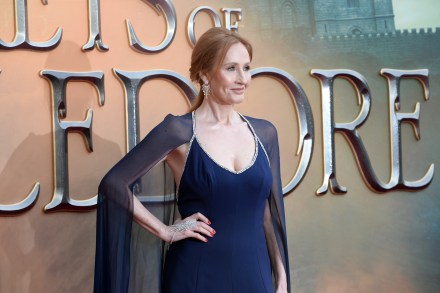
It seems that taking gratuitous swipes at J.K. Rowling has become something of a competition for liberal broadsheets on both sides of the pond. First, the New York Times took a potshot at the Harry Potter creator for its new marketing campaign trumpeting 'independent journalism.' And now the Guardian – keen to prove that, it too, is achingly right on – has published a piece which implies that Rowling's views on same-sex spaces are somehow more controversial than domestic abuse. Grim. The latest jibe at Britain's greatest living writer came in a piece detailing the controversies around the production of the Fantastic Beasts film.

The ten most-read Steerpikes of 2021

From our UK edition

Farewell then 2021 – what a year it's been. Twelve months of Covid craziness brought with it ample opportunities to lampoon the great and the not-so-good in British public life, from narcissistic royals to inept Europhiles.  Below is a round-up of Steerpike's most read articles from 2021, covering some of the year's biggest moments such as the vaccine procurement wars and the death of Prince Philip to lighter episodes like Prince Harry's thoughts on freedom of speech.  But while the dilettante Duke and Duchess of Sussex took both bronze and silver medals, gold could only go to the Guardian for its attempted self-immolation over how to cover transgender issues.

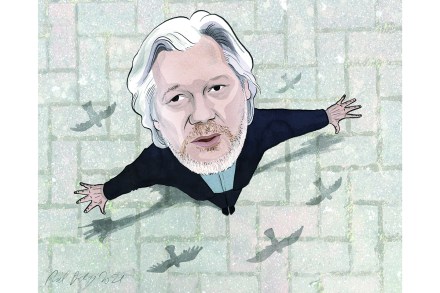
Will the right save Julian Assange?

In late 2018, Nils Melzer, the United Nations Special Rapporteur for Torture, was contacted by lawyers representing WikiLeaks publisher Julian Assange, asking him to intervene on their client’s behalf. ‘I was like, “No. Not this guy. Isn’t this the rapist hacker guy?”’ Melzer recalls. He ignored the email. Three months later, the lawyers contacted him again, this time warning that Assange’s extradition to the US — where he faces 17 counts of violating the Espionage Act for obtaining and publishing secret military and diplomatic documents — could be imminent.

assange

Foreign opportunists are turning Britain into a corporate car-boot sale

From our UK edition

The snatching of a 12 per cent stake in BT by French entrepreneur Patrick Drahi, last seen here when he bagged Sotheby’s for $3.7 billion two years ago, could be a good thing if it injects dynamism into the telecoms giant’s late-running plans to install high-speed broadband across the UK. But it’s also part of a wave of fast--moving foreign money hunting undervalued UK assets — which is positive if it fuels capital investment for growth, negative if it makes nothing but fast bucks for private investors. The logic is simple. The private equity fraternity is laden with cash and global in outlook; what it sees in London is an appetising menu of companies trading on average earnings multiples of around 14 times, compared with roughly 23 times in the US.

There is no justification for supporting the IRA

From our UK edition

Roy Greenslade held a number of prominent positions in Fleet Street over the course of a long career. But he spent the largest part of it at the Guardian, where he berated other journalists for their writings. A similar stance was adopted by him from his position as professor of journalism at City, University of London, from where he lectured students on media ethics and gave evidence to the Leveson Inquiry. At the same time he became slightly notorious outside of Islington for his support of the IRA. Whenever Gerry Adams had something self-pitying or self--exculpating to say, Roy was there as his loyal mouthpiece. In 2000 this magazine ran a piece by Stephen Glover which identified ‘a pro-Republican cell within the Guardian’.

Suzanne Moore’s departure is a sad day for the Guardian

From our UK edition

Who runs a newspaper – and especially a great liberal newspaper – in a digital age when liberalism often seems to be in retreat, menaced by its enemies internal and external? In the not-too-recent past, the question would be easily answered: the editor, supported by his (for in the past it was usually ‘his’) senior journalists ran the paper. Things are more complicated now. At least they appear more complicated at the Guardian and at the New York Times. At both papers, each the proud inheritors of certain liberal traditions, one may no longer say with confidence that editorial control of the paper resides with the editorial staff. This evening, the columnist Suzanne Moore announced she is leaving the Guardian.

The coming stitch-up

To look upon a freshly painted wall is to behold a smooth surface; to look at it through a magnifier is to see a rough and irregular landscape — but turn the magnification up sufficiently and see it become regular again, a geometric matrix of atoms held in molecular bonds. Keep magnifying and you enter the unimaginably messy realm of the subatomic, a weird place of eldritch geometries and smeared-out, probabilistic motion. The world is smooth and rough, orderly and messy, all at once, depending on how closely you look.

tangled web

Suzanne Moore: I was hurt that so many of my ‘colleagues’ denounced me

From our UK edition

I have been trying to write about a great unpleasantness for some time: the trans debate that we don’t really have. Men go to Woman’s Place meetings. So do trans women, it’s not a separatist organisation. But for some godforsaken reason the Labour leadership hopefuls thought they might endear themselves to their lost ‘red wall’ voters by signing pledges calling Woman’s Place and LGB Alliance ‘trans-exclusionist hate groups’. I was appalled to see that the signatories included Lisa Nandy, who is bright, and Rebecca Long-Bailey, who isn’t. Anyway, having been asked not to write about this subject for months (I still have the police reports from the threats I received last time), I insisted.

Cartoonists have a right to free speech

From our UK edition

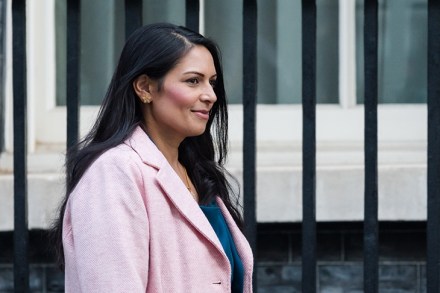
I’m no fan of Steve Bell, the Guardian cartoonist. I can’t say I’ve ever laughed at one of his squibs, which are witless and crude. Some would call him ‘fearless’, but he just seems cruel and over the top to me. When the Guardian finally puts him out to grass, which surely won’t be long, he will disappear into the inkwell of history. But having said all that, I would defend to the death his right to produce his tasteless cartoons, as well as the right of his newspaper to publish them. Last week, the Guardian printed a Steve Bell caricature of Priti Patel sitting next to Boris in the House of Commons that was widely condemned as ‘racist’. The reason?