Oman

The UAE and Oman could be the big winners from the Iran war

Sixty years ago, I first gazed out on the Strait of Hormuz from the Musandam peninsula of Oman. I was there as private secretary to my godfather, Selwyn Lloyd, who had been Britain’s foreign secretary during the Suez Crisis. The previous evening our host, Sultan Said bin Taimur, the ruler of Oman for nearly 40 years, commented gloomily: ‘When two fish are fighting in these waters, the British are behind it.’ I estimate that I must have made at least 250 visits to the Gulf states in the intervening six decades.
The Gulf states have a big decision to make about Iran

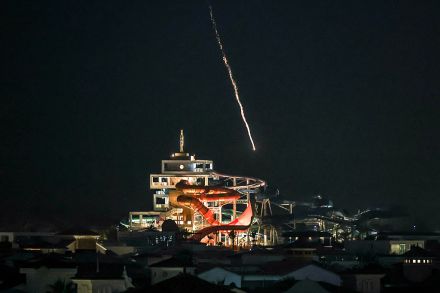
Iran threatened harsh retaliation in the wake of the American-Israeli attacks that killed the country’s supreme leader and many of its senior commanders. Its response consisted of a barrage of missiles aimed at Israel. So far, so predictable. Yet, at the same time, Tehran chose to direct its firepower at neighboring Gulf states, countries that have been encouraging diplomacy and warning against war. Iran’s actions are an object lesson in how to alienate your friends and neighbors. So far, they have continued to employ the rhetoric of de-escalation. But that’s untenable if Iran continues to target their territory The Iranians targeted Saudi Arabia, the United Arab Emirates, Qatar, Bahrain, Kuwait, Oman and Jordan. Explosions rocked the Saudi Arabian capital Riyadh.

gulf

I Dream of Lamu

An hour after the propeller plane lifts away from Wilson, Nairobi’s regional airport, it is arching over the blues and greens of the Lamu archipelago; a pattern of islands that extend 130 kms to the Somali border. Views of Lamu, which is also the name of the island and the stone town, have the dreamlike quality of an acid trip; the candy-pink minaret of the main mosque rising over coralline houses in the oldest, continuously inhabited, settlement on Kenya’s Swahili coast. And beyond the hazy shoreline, confetti-scatterings of white are the dhows that powered the fortunes of this former hub and deep-sea port. These criss-crossed the Indian Ocean on seasonal monsoon trade winds swapping ivory and slaves from the African hinterland for silks and spices from India, Yemen and Oman.

Will Oman ever get over its empire?

From our UK edition

Muscat looks different than just about every other Gulf capital. There are neither skyscrapers nor demonstrations of obvious opulence. But at first glance, Oman doesn’t seem so different than some older parts of Dubai or Abu Dhabi. There’s money; there’s men in traditional, flowing garments and women in burqas; there’s beautiful buildings funded by oil profits.  Yet Oman is a peculiar place straddling past and present. There are echoes of empire, a people yearning for Oman to reclaim its status as a major geopolitical player, and a government facing the difficult task of preparing for a post-oil future. Omani became independent in 1951 after 60 years of soft British colonisation.

Letters: It’s time for the common cup to return to communion

From our UK edition

The Bull of Oman Sir: There was one significant omission in the cast of characters mentioned by Charles Moore in his notes on the Sultan of Oman’s armed forces (Notes, 19 February): General Sir Timothy Creasey KCB . The omission is all the more surprising given the key role Margaret Thatcher played in getting General Tim to take up the Sultan’s invitation to go back out to Oman as deputy commander in chief and chief of defence staff. Having been instrumental in achieving a satisfactory resolution of the insurrection in Dhofar as a senior loan service officer, General Tim was highly regarded by the Sultan but he was not keen to take up the offer of direct employment.

What would Thatcher have made of Putin?

From our UK edition

When Sir Tony Brenton writes a letter to the Times, as he frequently does, it always says at the bottom that he was British ambassador to Moscow. The uninformed reader could be forgiven for thinking the sub-editors have got it back to front and he was actually Russian ambassador to London. Sir Tony’s message in every letter is ‘It’s all Britain’s fault’. In his latest, his particular target was the Foreign Secretary, Liz Truss, after her visit to Moscow. He said she ‘might usefully recall Margaret Thatcher’s wise message to Mikhail Gorbachev sent in 1985 as perestroika began to take off: “We know that you have as much right to feel secure as we do”’. It is hard to think of a less apt comparison.