Jk rowling

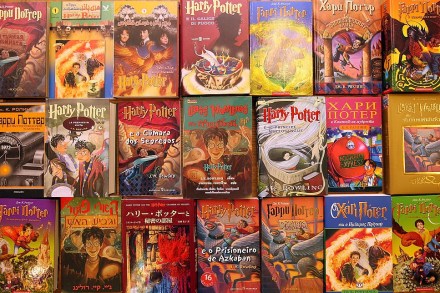
Is HBO’s Harry Potter series a worthwhile gamble?

The actor Andrew Garfield attracted some controversy recently when, promoting his new family film The Magic Faraway Tree, he revealed that he had seen the Harry Potter series for the first time. “I know it’s controversial and we shouldn’t be putting money in the pocket of inhumane legislation right now, through she that shall remain nameless,” Garfield said. “There are so many beautiful artists that worked on those films. I have a newfound appreciation for all of the artists, and Daniel is great.” While Garfield’s appreciation of Daniel Radcliffe’s modest acting abilities as Potter might be greater than that of other viewers, his cautious decision to liken the films’ ultimate creator J.K.
JK Rowling

The Epstein scandal has morphed into a moral panic

That’s it, I’m out. I’m finished with the Epstein scandal. This morning I read about a man who is on the cusp of cancellation because he once sent a flirtatious email to Ghislaine Maxwell, years before her crimes were known about. This is getting ridiculous. It feels like MeToo on steroids. There’s a medieval vibe of finger-pointing and rumor-mongering The man is Casey Wasserman. He’s chair of the Los Angeles 2028 Olympics. And there are hollers for him to stand down. All because he once got digitally horny with Ms Maxwell. "I think of you all the time," he wrote in one email. "What do I have to do to see you in a tight leather outfit?" he asked. That’s it. A little bit of lame middle-aged wooing.

Claire Foy and the future of celebrity activism

When the actress Claire Foy – still best known for her deservedly award-winning performance in The Crown – was interviewed recently by Harper’s Bazaar to promote her new film H is for Hawk, an adaptation of the Helen MacDonald memoir, she must have expected an easy ride. Estimable title though Harper’s Bazaar undoubtedly is, few would confuse it with a hard-hitting investigative magazine. Yet Foy made some remarks that have blown open the whole vexed question of what the point is of actors getting involved in public discourse, and whether they should, instead, stick to reading other people’s lines. Foy said, when asked about her public opinions, that it was not her place to sound off on social or wider issues.

claire foy

Transgenderism proves people will believe anything

From our UK edition

For years, the World Professional Association for Transgender Health (WPATH) has wrapped itself in a guise of medical expertise, advising doctors, schools and corporations in America about how best to treat the hundreds of thousands of people who have mysteriously become confused about which sex they are (personally, I’d recommend a quick dart to the loo to pull down their pants). In truth, WPATH is an advocacy organisation whose storm troopers comprise manic men in dresses who hate women but also think they are women. Get your head round that. Last year, a trove of intra-organisational emails exposed the recklessness of its indiscriminate promotion of ‘gender-affirming care’ (neither affirmative nor care) for ostensibly transgender minors.

Stephen King, The Long Walk and Charlie Kirk

Under normal circumstances, the author Stephen King should have been feeling pretty good about things and himself at the moment. The latest film of one of his works, Francis Lawrence’s horror-thriller The Long Walk, opened in American cinemas this weekend and has been met with almost unanimously rave reviews, many of which have called it a more socially aware, darker Hunger Games. He recently published a Maurice Sendak-illustrated retelling of Hansel and Gretel, which brings his trademark dark and macabre sensibilities to the age-old fairytale. And his last novel, Never Flinch, was, naturally, a bestseller – as all his books have been since he first published Carrie, over half a century ago in 1974.

Tory men are letting down women

From our UK edition

Some of my good male friends, Tories, are sick of terfs. I can see it in their shifty eyes, in the way they won’t quite look at me when terfy issues creep into conversation, but stare gloomily at the skirting board. Terf stands for Trans Exclusionary Radical Feminist, and terfs are women who insist that you can’t change your biological sex, and that the whole notion that some humans are born in the wrong body is not only daft, but catastrophic for our culture and our children.

The Guardian goes for J.K. Rowling

From our UK edition

It seems that taking gratuitous swipes at J.K. Rowling has become something of a competition for liberal broadsheets on both sides of the pond. First, the New York Times took a potshot at the Harry Potter creator for its new marketing campaign trumpeting 'independent journalism.' And now the Guardian – keen to prove that, it too, is achingly right on – has published a piece which implies that Rowling's views on same-sex spaces are somehow more controversial than domestic abuse. Grim. The latest jibe at Britain's greatest living writer came in a piece detailing the controversies around the production of the Fantastic Beasts film.

Care about the trans debate? Ask yourself this question

From our UK edition

J.K. Rowling is talking about sex and gender again, which means a lot of people are getting angry. It’s striking how the prospect of a woman eloquently stating her opinions and refusing to stop stating them – even when she has been told to shut up – seems to make some people unhappy. Because Rowling admirably refused to do as she’s told and be quiet, this is becoming a familiar story. 'Famous author wades into trans row' is good copy. And it gets angry clicks on social media. None of this changes the minds of people already immersed in this stuff, of course. Those people remain a minority.

Now JK Rowling takes on the critics

From our UK edition

Away from the scenes in eastern Europe, a very different terf war was playing out on Twitter yesterday between JK Rowling and former New Statesman journalist Laurie Penny. The latter is a consistent and very public critic of Rowling's views on sex and gender, having previously suggested the Harry Potter author is a transphobe for whom the label 'terf' – 'trans exclusionary radical feminist' – seems applicable. Penny, one of Tatler's top 100 'people who matter' in 2012, has been complaining bitterly that her latest literary offering has been panned by the critics.

The New York Times takes aim at J.K. Rowling

From our UK edition

It looks like the New York Times is at it again. In recent years, America's least-reliable news source has developed a strange view of Britain — or at least since the Brexit vote in 2016. In the NYT’s world, the UK is a desolate place, where locals huddle round bin fires on the streets of London, gnawing on legs of mutton and cavorting in swamps during the summer, ever fearful of the despot Prime Minister, Boris Johnson. Just last month the paper's international edition ran a front-page comment piece claiming the country would 'sleepwalk into tyranny' thanks to our 'ever more spiteful nationalism.'  Now though it seems the Brit-bashing has a new outlet: attacking this country's greatest living writer.

The attacks on J.K. Rowling only prove her point

From our UK edition

It is often said that J.K. Rowling is uncancellable. So rich and bankable is the Harry Potter author — now a modern-day folk devil due to her views on transgenderism — it is almost inconceivable that she could be deprived of her livelihood or pushed entirely out of polite society. But her deranged haters are certainly giving it a good go. The demonisation of Rowling has taken a decidedly Stalinist turn of late. Her crime? Making some mild criticisms of gender ideology and holding to deeply old-fashioned views like believing in biological sex. The cultural elite might not be able to deprive Rowling of her income, but they can try to erase her name from the very work she has created.

The Independent’s double standards for J.K. Rowling

From our UK edition

It's fair to say that J.K. Rowling's latest intervention has put the cat amongst the pigeons. The Harry Potter author criticised Police Scotland's new policy for trans suspects after the force confirmed it will record rapes by offenders with a penis as carried out by a woman if they identify as female, regardless of whether they have legally changed gender. Rowling's implicit criticism of this move – riffing on Orwell that: 'War is Peace. Freedom is Slavery. Ignorance is Strength. The Penised Individual Who Raped You Is a Woman' – has sparked a terrific backlash, with much of it seeming to come from angry, pompous middle-aged men.

Why the targeting of J.K.Rowling is so terrifying

From our UK edition

I know from bitter experience that you don’t have to be a best-selling author to be hounded by the trans ideologues. You don’t have to be an evil witch to be cancelled by the spoiled kids you made famous. You don’t even have to say you think gender identity is a load of poppycock to be accused of transphobia. And yet, once again, J.K.Rowling has been targeted by trans activists. Her crime? To speak up for women's sex-based rights. The Harry Potter author has revealed that on Friday 'three activist actors' turned up on her doorstep. According to Rowling, the trio 'took pictures of themselves in front of our house, carefully positioning themselves to ensure that our address was visible'. The resulting photographs were then plastered across the internet.

Why wealth matters in the free speech debate

From our UK edition

The divide between the rich and the poor is obvious in Britain today. Whether in terms of income, geography or political outlook, the cleavage between the haves and have-nots widens conspicuously. It has become a source of much snobbery and resentment. But there is another field in which this division can be witnessed, yet all too often goes ignored: free speech. Increasingly, the freedom to express your political opinions has become the privilege of the rich, while the poor – or even those on middle incomes – now fear to say what they like. This is especially the case when it comes to talking about gender, race and Brexit.

We are living through a frenzy of conformity

From our UK edition

Reality seems thinner these days. As I walk along the high street, passers-by drift apart as though afraid of crossing auras. Three months of lockdown has made this repulsion of human contact a matter of instinct. I can’t help but see this tendency reflected in the escalating intolerance and hostility on social media. So at the start of the week I decide to spend a few days away from Twitter. It’s not the ideal forum for civilised debate at the best of times, but even some of those I respect are now behaving like poorly socialised children who’ve just learnt some flashy new expletives. J.K. Rowling is bombarded for holding views about biological sex differences that would have been considered self-evident only a decade ago.

Harry Potter’s dwindling popularity is a great shame

From our UK edition

Teenagers are no longer reading Harry Potter books in their legions, it emerged this week, as J.K. Rowling’s series dropped out of the top ten favourite books for secondary school pupils. Instead, teens are reading books aimed at primary school children. This is disquieting news. Of all the books teenagers can access, they should be reading the Harry Potter books. They're not perfect, of course. For one, the storylines are derivate: orphan raised by aunt and uncle encounters a bearded old man, goes on an epic journey with his buddies, undergoes tasks and magic training, and defeats ogres before encountering the dark lord in his lair. Our hero emerges victorious! Star Wars anyone? Lord of the Rings?