
I have spent a good deal of my working life, as well as much of my social life, in London restaurants. I would estimate that since the early ’80s, I have eaten in a London restaurant approximately 1,300 times, a figure that could easily be increased by the number of breakfasts I had in the noughties and 2010s; it’s no exaggeration to say there were times, possibly three times a week, when I ate twice, sometimes three times a day in the Wolseley, Jeremy King’s powerhouse venue in Piccadilly. It was a brisk walk from my office in Hanover Square, I knew I could get in and out (one course, usually the chicken salad, no wine or coffee) in 70-75 minutes, and, saliently, people (my guests) liked going there. So did I, and not for the reasons you think; I always wanted to feel safe in a restaurant, wanted to feel wanted, wanted what we all want, wanted to feel comfortable. For me, this was when having a good table meant everything.
Trevor Gulliver, who with Fergus Henderson started the groundbreaking St. John, way over in Clerkenwell, where London’s watch shops used to be, says you should “never have lunch with someone in a hurry,” which might explain why we’ve never had one.
Of course, for many the business lunch was traditionally some kind of journey without end, a pilgrimage in some respects, an ordeal that could easily slip – unnoticed, but somewhat inevitably – into dinner. I once worked with a brilliant publishing director who would arrive earlier than most people in the office, work like stink, and then at 12.45 would walk with purpose to Le Caprice (another restaurant run by Jeremy King and Chris Corbin), 20 minutes away, where he would stay, with his guest, until at least five or six o’clock. His opening gambit would always be, “A glass of bubbles?” – which would set the tone for the afternoon. He was a master of the business lunch, and he made the company a fortune. I went to a few of his lunches as a kind of enthusiastic amateur (in reality, I was never a convincing wingman), and I was always amazed he could remember the often complex nature of the deals he secured over three bottles of wine.
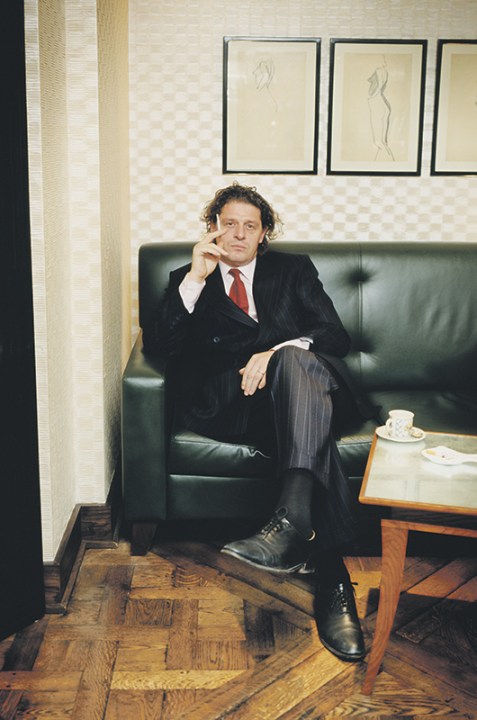
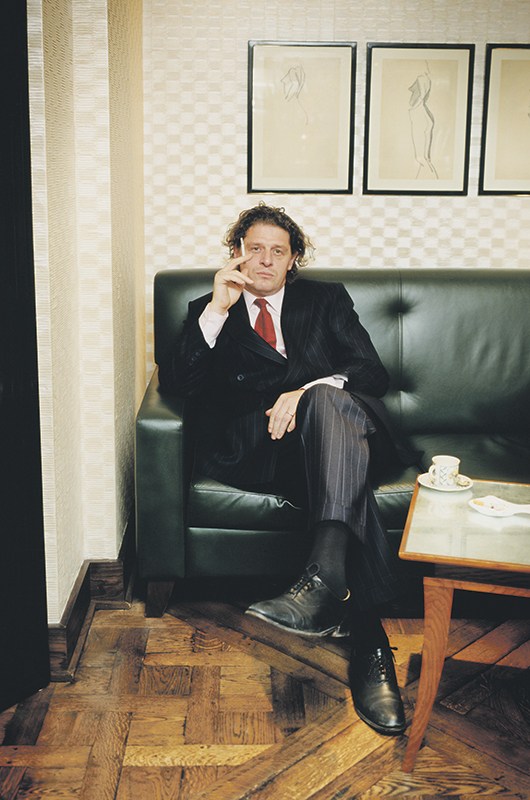
“To want to own a restaurant can be a strange and terrible affliction,” wrote Anthony Bourdain in Kitchen Confidential. “What causes such a destructive urge in so many otherwise sensible people?” Well, many of them are in this book: Marco Pierre White, Gordon Ramsay, Jeremy King, Angela Hartnett, and all the rest, culinary mavericks who have all left their mark on London. Table Hopping is less a book about restaurants and more of a social history of London, a compendium of the places we convened, the places we met our partners, and perhaps later publicly dispatched them. The book travels all the way from soup to nuts, from the appetizers to the bill, and from the pavement to the table, hopefully reminding us that – on their day, with a good wind, a corner table, and a full cellar – restaurants remain the essential social fabric of our great cities, and of our time, places which adroitly capture styles of life and spots of time, which feed our souls as well as our bellies, and which we often carry with us forever, reminding us what is good about our lives and the lives of London.
Did you get a good table?
Table Hopping: The Secret History of London Restaurants from Langan’s Brasserie to the Wolseley by Dylan Jones is published by Simon & Schuster in the US, $35






Comments