
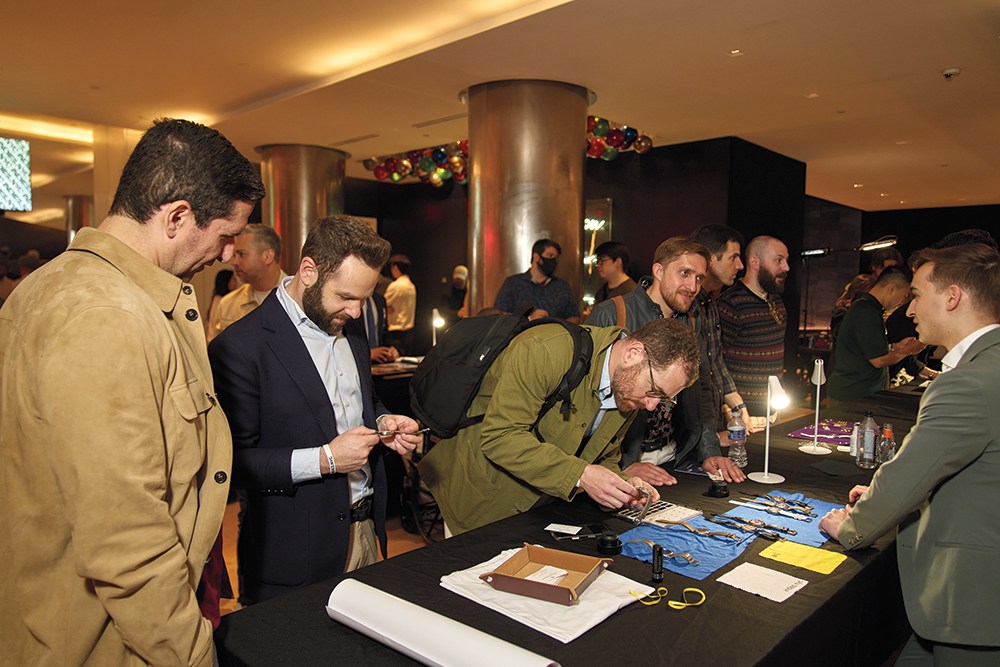
There are now so many watch events in New York that owning a timepiece has become almost incidental. On Monday there might be 100 or so people at Bucherer TimeMachine. Then Tuesday could bring something smaller at Material Good or The Armoury, followed by a brand dinner, a Phillips auction preview, or a watchmaker arriving from Switzerland armed with six watches and no intention of returning with any of them. The faces become familiar but each time, the crowd grows.
It would be easy to dismiss this as New York mistaking itself for the entire United States. Yet it is better understood as a test bed for something happening across the country. Windup Watch Fair now travels to Dallas, San Francisco, and Chicago before returning to Manhattan. Intersect brings independent brands together with enthusiasts in Austin, Charlotte, Los Angeles, and New York. Watch Week Aspen spreads events across its downtown area, while District Time in Washington, DC, has grown from a microbrand meeting into a substantial annual show.
What connects these events is a distinctly American willingness to gather, ask direct questions, and develop strong opinions about watches few had heard of six months earlier.
Kathleen McGivney has seen this culture develop almost from its beginnings. RedBar, the global collective for watch enthusiasts of which she is now CEO, started in New York in 2007. “I think the most dramatic change in the NYC watch scene is the size of the community,” she says. “When RedBar started, most of the collector community was online in niche forums; now there are multiple watch clubs and multiple watch events every week.”
The appeal of these is not solely horological. There is champagne, gossip, and the harmless theater of everyone trying to be the first to notice what others are wearing. But the interest is unparalleled as watches are removed, passed around, and examined. Someone mentions an unknown maker and half the room begins searching for them on Instagram.
‘What they are seeking from smaller makers is a different kind of relationship, one defined by an intimate focus on the craft and deep transparency’
The Armoury’s director of design and communication Elliot Hammer believes design and watchmaking are enjoying a fertile moment, attracting established collectors as well as the merely watch-curious. “New York’s cultural pull is so big that every watchmaker or brand will make it their first stop,” he says. “Native or not, New Yorkers are very curious, appreciate excellence, and aren’t afraid of having an opinion. Right now, there’s a confidence in the collector community that is very exciting.”
That confidence may be the big point of difference in the US. American collectors are not abandoning Rolex, Patek Philippe, or Audemars Piguet, but what is disappearing is the assumption that serious collecting must begin and end with them. The most interesting watch in the room may now come from a young independent, a revived historical name, or a microbrand whose founder answers customer emails personally. Such companies offer something the great manufactures cannot always provide – proximity. As McGivney points out, it is considerably easier to meet the founder of Christopher Ward than the CEO of Rolex.
Jon Cruys co-founded Indies.NYC around this phenomenon. Although the salon grew out of the New York community, its membership now reaches across the US. Its earliest visitors were committed indie watch enthusiasts, but Cruys increasingly sees collectors of the major Swiss brands arriving, ready to experiment. “What they are seeking from smaller makers is a different kind of relationship, one defined by an intimate focus on the craft and deep transparency,” he says. “Many of these collectors have felt disconnected from traditional retail and distribution systems, where allocation can feel out of reach.” Independent makers offer a seductive alternative. Their scale also allows them to take risks that would cause considerable alarm in a corporate boardroom.
This widening of taste is also visible in the secondary market. Paul Boutros of Phillips regards this rise as a development rather than a trend. New collectors may begin with an independent, while established buyers place F.P. Journe, Kari Voutilainen, or Roger W. Smith beside Rolex and Patek Philippe. Most are simply looking for exceptional watches, regardless of whether the maker has two centuries of history or a workshop containing three people and an anxious-looking dog.
New York may offer the clearest glimpse of this wider American scene, but the energy travels through RedBar chapters, regional fairs, and collectors returning home with new names to investigate. The American watch crowd is united less by taste than by curiosity, sociability, and a growing refusal to collect according to somebody else’s approved list. New York is simply the loudest room in a much larger house.
Must watch
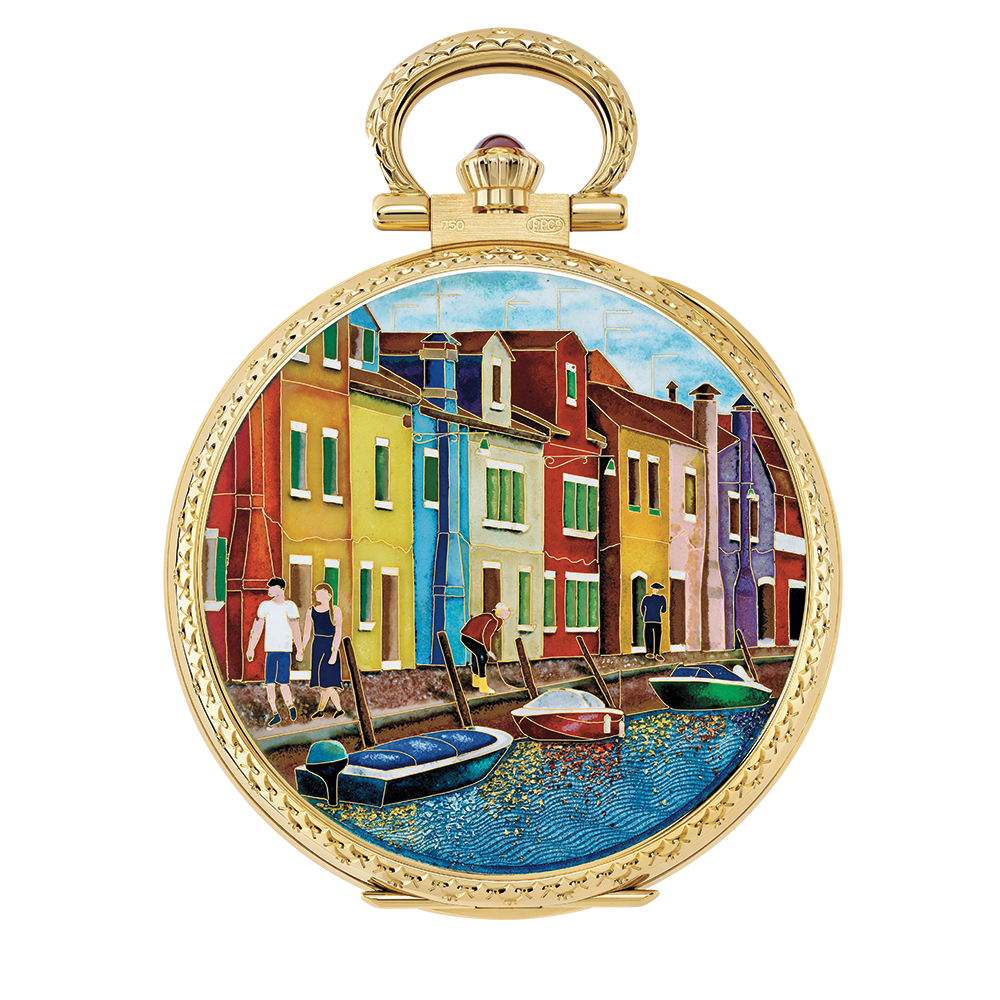
For horology and art lovers heading to Italy this fall, Patek Philippe’s Watch Art Grand Exhibition should be a fixture. The scale is akin to a museum, with watchmakers, enamelers, and engravers at work, and pieces from the company’s collection on display that would otherwise require a trip to Geneva to see.
The next edition takes place in Milan from October 2 to 18, bringing around 500 watches to CityOval. Some will come from the Patek Philippe Museum, whose holdings include some of the finest surviving watches from five centuries of European horology. Others will be Rare Handcrafts pieces, which are often unique or made in tiny numbers, using enameling, miniature painting, engraving, and marquetry. They are normally bought quickly so seeing a group of them together is a rarity.
Previous editions have also introduced watches made for the host city, which helps explain why collectors treat these shows as events more than exhibitions. And as a city that already understands the pleasures of design, workmanship, and beautiful things taken extremely seriously, Milan should be a perfect fit.
Admission is free, with timed tickets available at watchart2026.patek.com



Comments