
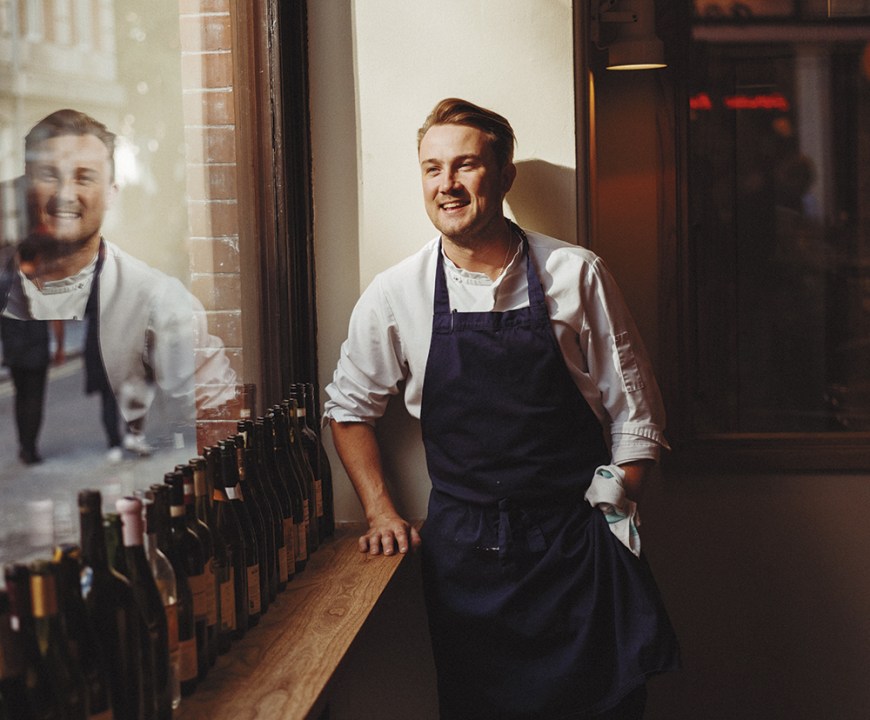
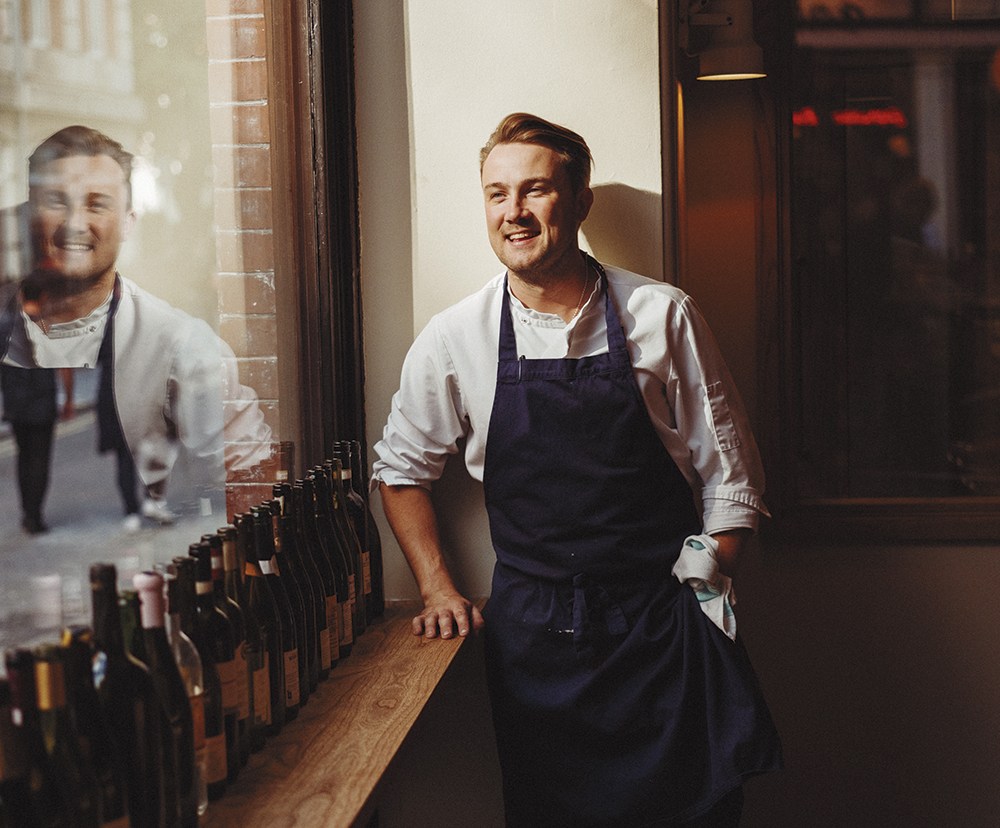
It’s hard to get excited about airplane food. But that is exactly what Michelin-starred Welsh chef Tomos Parry did when United Airlines approached him to take a chance on their first- and business-class services.
The man behind Brat in London’s Shoreditch and Mountain in Soho, Parry gained acclaim for his unfussy yet flawless menus. There’s an innate confidence to him, both as a person and as a chef – he is composed, self-aware, and observant. To oversimplify, his kitchens, dominated by a flame-kissed charcoal grill, apply a Basque methodology to British produce. It’s deceptively simple: a menu item such as “whole turbot” ascends to a higher place.
‘My biggest thing was I want the lamb to come from Wales. United were like, fine! I didn’t think they would be flexible’
This is why cheffing for an airline – an atmosphere where produce shrivels and air pressure numbs – feels almost reckless. But Parry was intrigued. “The people that really made this happen are Chef’s Table,” says Parry, referring to the production team behind the successful Netflix series.
Launched in 2015, it’s the longest-running food series on the streamer. This is thanks largely to its creator and director David Gelb, whose standout 2011 documentary Jiro Dreams of Sushi resulted in the brilliant New York Times headline: “Make Sure the Nigiri Doesn’t Miss Its Cue.”
“He’s the brains behind it,” says Parry, referring to Gelb. “He’s a trailblazer because he created these shows about chefs in a style that had never been done before. So that made me very interested. They’re super credible and well researched.”
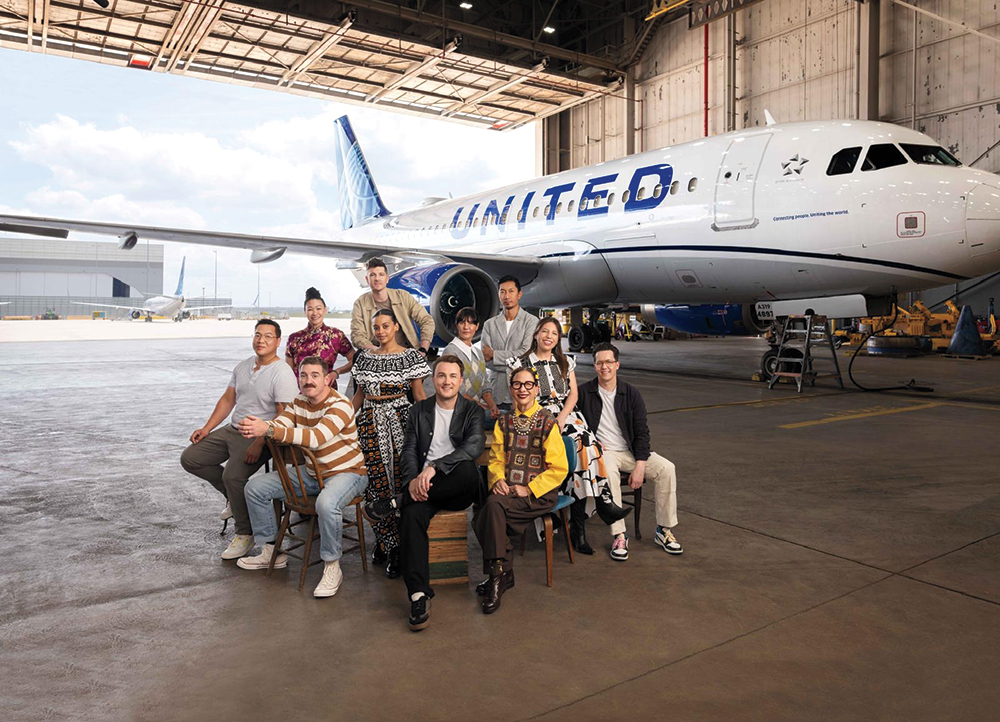
The pitch? United Airlines had asked Chef’s Table to find 11 chefs from across the world to create regionally inspired menus to serve their busiest routes of London, Tokyo, São Paulo, Los Angeles, and more. It came together quickly – from first phone call to meals 35,000ft up in the sky was a matter of months.
A perfect storm of cost-cutting, cowardice, and cabin dryness, airplanes are the very antithesis of the Michelin-starred kitchens Parry is accustomed to. He imagined the ingredient sourcing and preparations would be “hard to control,” working under a behemoth like United. “My biggest thing was obviously I use Welsh produce and Celtic-British produce. I want the lamb to come from Wales. And they were like, fine!”
Parry continues: “I didn’t think that United would be flexible,” but they surprised him. “They said we can’t get you the salmon, but we can get this trout, for example. And then they bought a grill, to grill all the food before going on the plane.” And listening to Parry, this isn’t just a grill. It’s the grill.
There was also, for Parry, a reeducation. Airplane food spends nearly as much time waiting around as the passengers, and meals are transported from neighboring kitchens to the airports. “They get high security like drivers – almost like royalty.” And this isn’t just to protect the perfectly portioned Welsh lobster salad with grilled peach, tomato, and fennel herb. “It’s to stop the food from being intercepted… poisoned. Security goes with the food at all times,” he explains.
And then there’s logistics. United serves about 30,000 meals a day. “Basically, I made a dream menu and I sent it, and then they told me what was possible,” Parry says. That dream menu has just been updated, opening with a smoked trout salad served with golden beetroot, fennel mayonnaise, toasted buckwheat, watercress, and dill; followed by grilled turbot with parsley and garlic potatoes (a Brat staple); and finishing with Parry’s twist on United’s sundae cart, featuring salted vanilla ice cream, poached pears, and coffee granita with additional toppings, such as pumpkin seed praline and thyme honey.
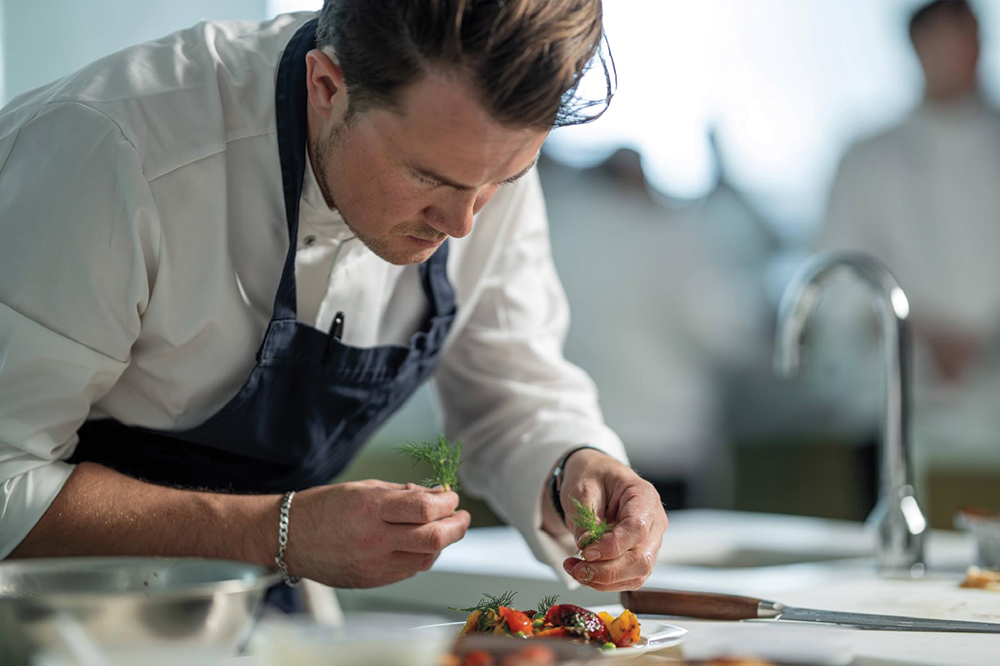
The United partnership is not lucrative, and it is unapologetically time consuming. But what it has done is introduce Parry to a swathe of new customers and fans. It also initiates a toe-dipping into the American market. What chef doesn’t dream of opening doors in Manhattan? When pressed on this, Parry only gives a wry smile.
His focus at the moment is what it has always been: the food. “It’s a simplicity of the ingredients. We pick everything out.” Parry knows every supplier, every farm, every fisherman. It’s a narrative we’ve all heard before, but with him, I believe it.
“Authenticity for me means that I know everything from beginning to end. It’s a bit like composing music and playing every instrument.”




Comments